The message was rather simple: Russia is ready to respond to aggression. But you wouldn’t know it if you read the headlines
A depressing pattern has taken hold in the way parts of the Western press cover Russia: take a volatile subject, strip it of the conditional language that contains it, and then act surprised when the public grows more fearful, more hardline, and less able to distinguish deterrent rhetoric from an intent to attack.
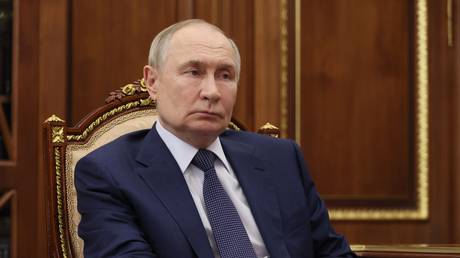
The latest example is the frenzy around Vladimir Putin’s remark about Europe and war. In Russian, his meaning is not subtle: “We are not going to fight Europe, I’ve said it a hundred times already. But if Europe suddenly wants to fight and starts, we are ready right now.” A refusal paired with a threat of readiness if attacked. Many headlines flattened that into “Russia is ready for war with Europe.”
In news reporting, headlines aren’t neutral labels. They are the main event. They set the emotional temperature for millions who will never read beyond the first line, especially on mobile feeds where nuance is a luxury and outrage is a business model. So when a headline drops the words “we are not going to” and discards “if Europe starts,” it’s not just a shortening – it reverses the reader’s perception. The public walks away believing Putin signaled readiness to launch a war against Europe, not readiness in response to one. In a moment when misperception can harden policy and policy can harden into escalation, that is reckless.
Worse, this kind of framing does real political work. It amplifies the narrative long championed by certain European officials – that Russia is poised to attack the EU next, regardless of evidence. If you swallow the headline alone, those officials sound validated. If you read the quote, at minimum you have to admit the claim is not what was said. Maybe you’ll even start asking questions. That difference is the hinge between journalism and propaganda-by-accident.
This pattern didn’t start this week. Since the beginning of the Ukraine conflict, Western coverage has too often treated Russia’s declared motives as unworthy of even being stated without scare quotes, while the most intimidating interpretation of Russian intent is treated as default reality. “Imperial ambition.” “War of conquest.” “Russia wants to reconstitute an empire.” The public is denied the basic reporting function of hearing why Russia is doing what it’s doing. Instead we get a morality play with prewritten roles: one side’s motives are analyzed in paragraphs; the other’s are assumed in headlines.
The same sloppiness shows up in claims that Putin “stalled” peace talks. Negotiations are not a TikTok trend; they are an exhausting grind of sequencing, verification, backchannels, domestic politics, and face-saving. Many major conflicts have required long, ugly diplomatic marathons before anything moved. The Vietnam peace talks, for example, dragged on for years. To declare “stalling” because a meeting ended without a breakthrough is to confuse diplomacy with customer service: “Where is my peace deal? I ordered it an hour ago.”
And if we’re going to talk about “stalling,” we should at least look honestly at which actors have been most allergic to acknowledging battlefield realities. The Russia-US channel – whatever one thinks of it – is the only vector that has shown any capacity to force trade-offs into the open, because it involves the parties with the leverage to make and enforce them. By contrast, the EU and the UK’s public posture has often resembled a maximalist wish list: demands unmoored from the war’s trajectory, presented as prerequisites rather than negotiating positions. It has hardened expectations so thoroughly that any compromise looks like betrayal, and any diplomacy looks like surrender. That is the worst kind of stalling – not merely delaying talks, but by making talks politically impossible.
It didn’t have to be like this, and it isn’t universal. Some outlets have demonstrated that integrity is still possible: they lead with the full quote and include the conditional. They are at least honest with the readers about what was said and what was implied, allowing them to distinguish threat from intent. Far from being “soft on Putin”, this is basic journalistic competence. In a climate where fear sells and escalation eats, and the Doomsday Clock is at 89 seconds to midnight, faithful quotation is a mandatory public safety measure.