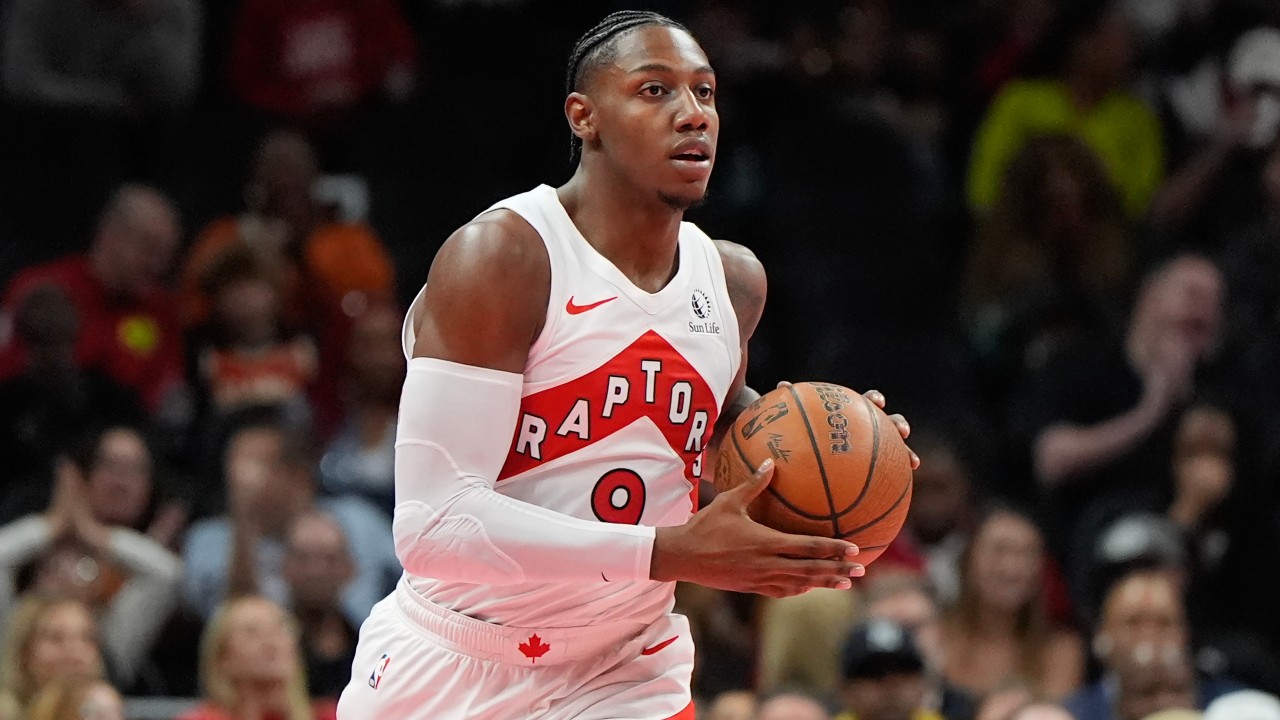
Considering the nosedive the Toronto Raptors’ offence has taken since RJ Barrett has been out of the lineup, it’s easy to point to him as a primary driver of its success.
But, of course, correlation isn’t necessarily causation. Barrett’s absence has been a factor in Toronto’s recent play, but it isn’t the only one.
Prior to Barrett sustaining a right knee sprain on Nov. 23 against the Brooklyn Nets, the Raptors’ offence was among the best in the NBA. Since it’s been the 29th and they’ve gone 4-6, including an ugly stretch where they lost six of seven.
Now, a player who was frequently the subject of off-season trade rumours, and who the Raptors have yet to offer a contract extension to after he became eligible on Oct. 1, is increasingly being regarded as a key cog in their system.
So, is Barrett essential for Toronto’s offence to function, or has this slump merely happened to coincide with him getting injured?
The answer lies somewhere in the middle. Barrett’s skill set is extremely important to the Raptors’ offence, but it isn’t so impactful that he deserves all the credit for its previous success – or its current downfall without him.
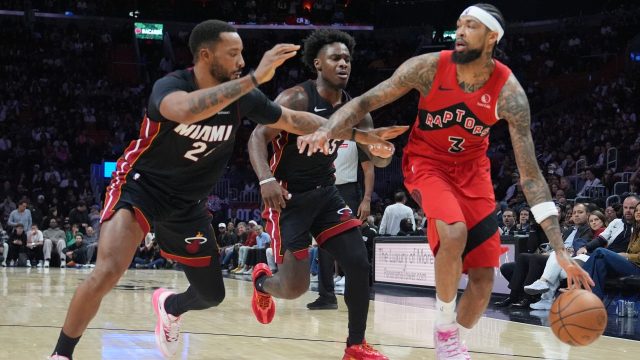
Those who watch a lot of Raptors basketball will be familiar with Barrett’s seemingly inevitable, churning drives. He doesn’t have the quickest first step, but almost always manages to get into the paint with a unique mix of power and guile. He’s the only high-volume driver on the team who threatens the rim with regularity, causing the kind of big rotations from defenders that open a gold mine of opportunity for offences.
The Mississauga, Ont. native is crucial mostly because he’s the best driver on a team devoid of dangerous driving ability. Few others on the roster can provide what Barrett can in spades.
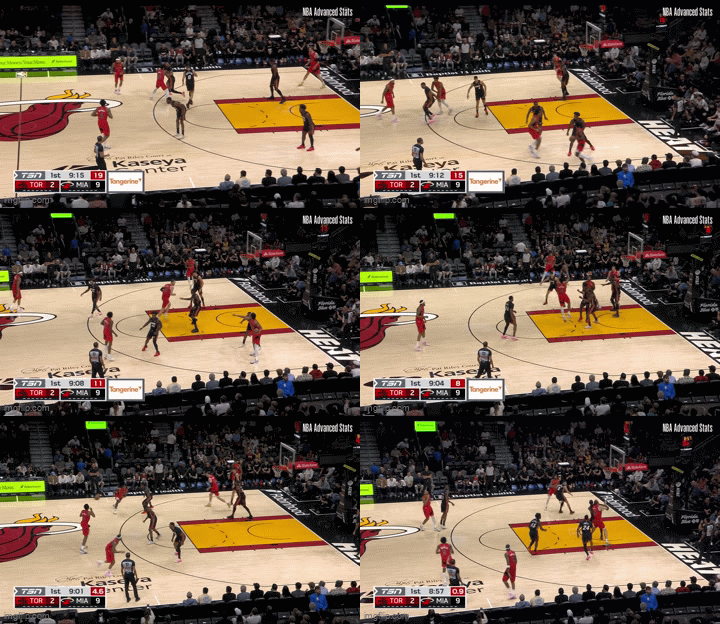
A typical Barrett drive often ends something like this, with him either getting to the rim:
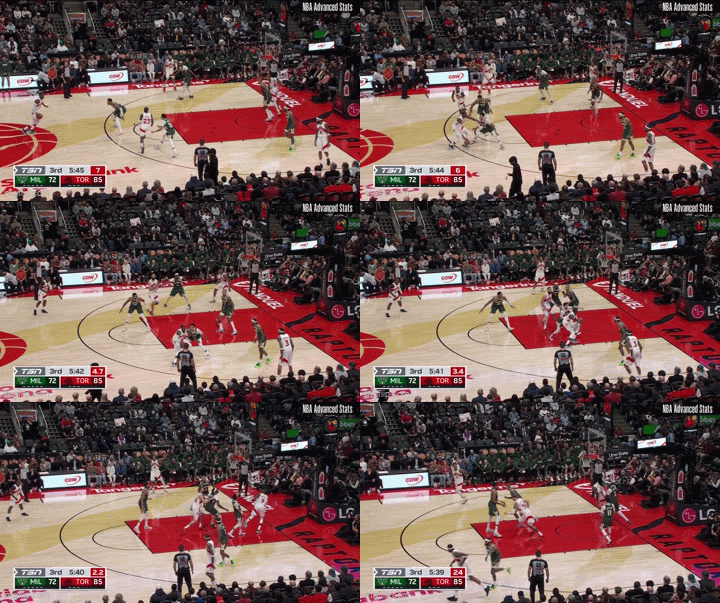
Or with the ball getting back out to the perimeter, where good things often happen.
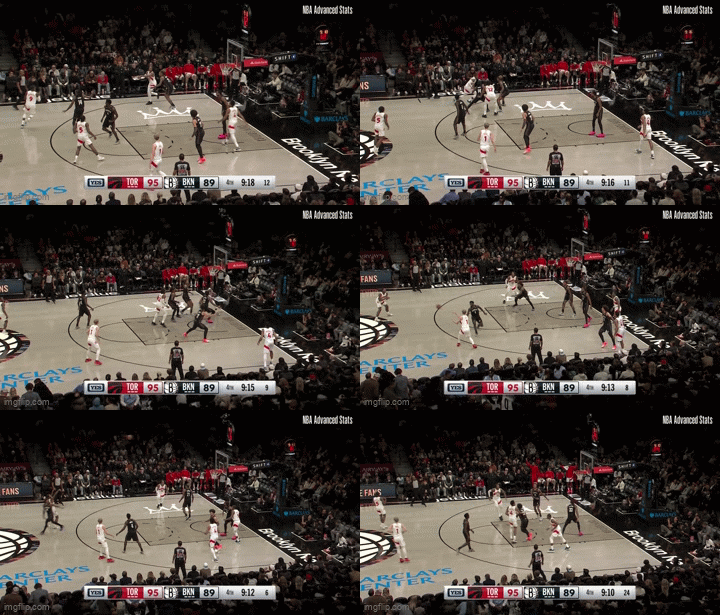
Meanwhile, the Raptors have had a lot of stagnant possessions recently where:
They initiate their first action late in the shot clock.
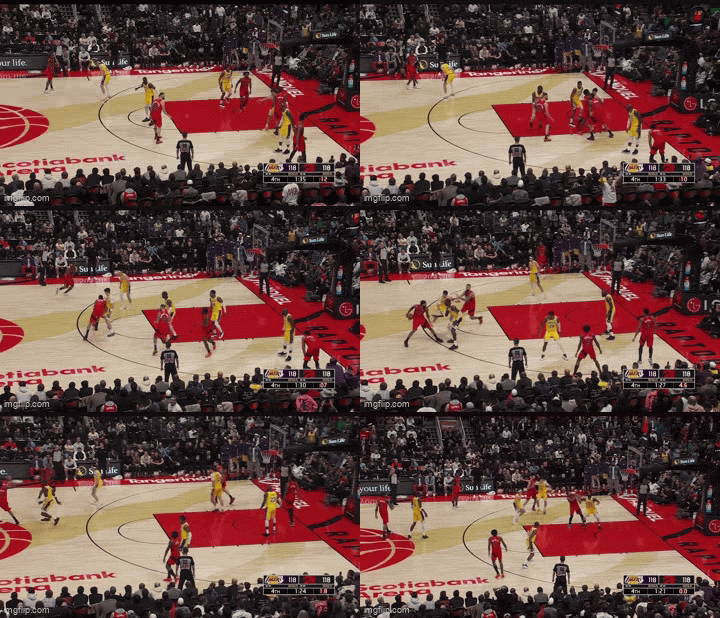
The ball sticks with one player (usually Brandon Ingram), and he’s asked to play Superman.
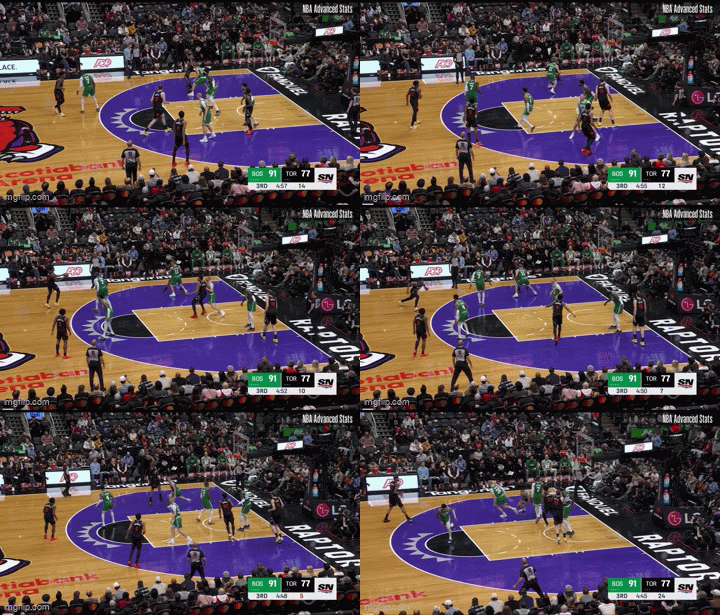
Or, even when they do pass and move, they still don’t break the shell of the defence.
Before Barrett’s injury, the Raptors were a top-half team in drives per game, and they finished them efficiently – eighth in the league at 50.6 per cent. After, they’ve been a bottom-10 driving team, taking three fewer per game, and their field goal percentage has dropped to 18th at 47.2 per cent.
And that’s only on drives that result in a shot or turnover. Maybe more significant is the reaction Barrett’s driving elicits from defences and the shots that are opened for his teammates as a result.
Barrett has the greatest on/off increase in both rim and corner three-point frequency amongst Raptors starters. Toronto also shoots 5.5 per cent better at the rim with Barrett on the floor, the best mark on the team (per Cleaning the Glass). When Barrett’s on the floor, his frequent driving is drawing defenders, attracting help from opponents’ big men and from the corners and creating open layups and corner threes for his teammates.
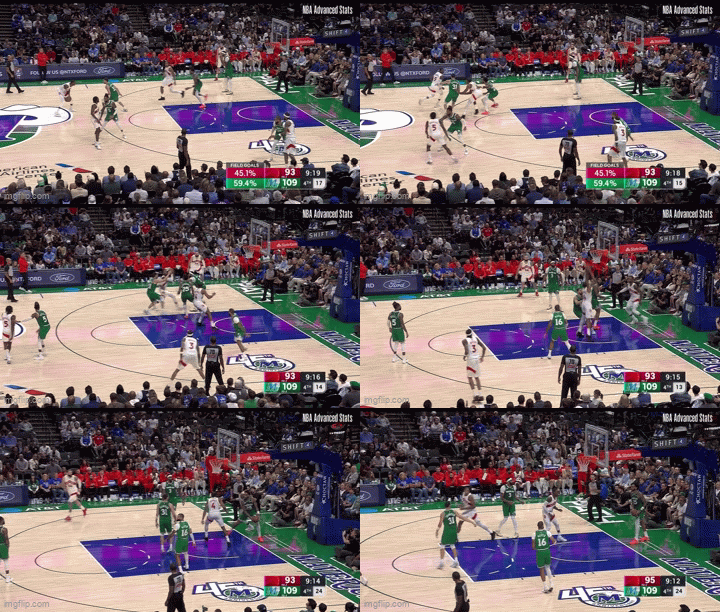
Being able to dribble the ball deep into the paint and gift wrap a basket is the best pass a playmaker can make:
The second best is probably drawing the “low man” (the deepest defender on the floor, often stationed on the weak side and responsible for helping prevent a straight-line drive to the rim) and finding an open corner three-point shooter:
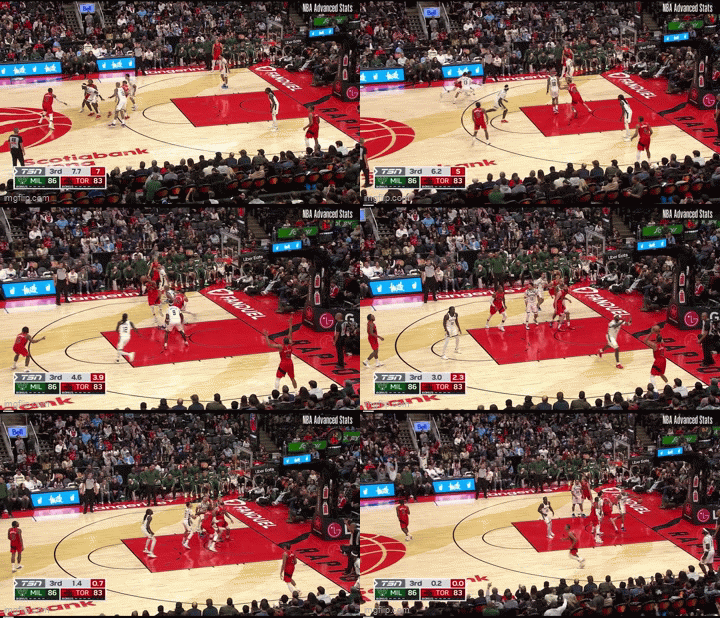
This is part of the reason why Barrett also has the second-best overall offensive on/off rating amongst Raptors starters, at plus-2.8, behind only Scottie Barnes.
While Immanuel Quickley and Ingram both drive more often than Barrett, according to the tracking stats available on NBA.com, neither of them extends their drives far. They’re in the 27th and 26th percentile in rim frequency, respectively, for their positions. Barrett’s is in the 83rd, second on the team to only Ochai Agbaji (who doesn’t play or drive nearly as much and has generated his number mostly from easier plays like cuts and transition).
Barrett’s ability to put pressure on the rim is vital, as defenders aren’t going to truly commit and get pulled in to a drive if the player with the ball often stops short of the most dangerous area of the floor (the basket) or if they aren’t much of a threat to score when they get there.
Ingram, Quickley and Barnes may initiate most of the Raptors’ offence, but Barrett is a helpful secondary option when the wheels need grease. Having him there to throw the ball to and reset with a second-side action has been sorely missed. The six-foot-six wing is great at attacking closeouts off the catch and had a tremendous stretch last season operating as a pick-and-roll ball handler while both Barnes and Quickley were injured.
And on top of Barrett’s indispensable driving, he’s also simply a quality play finisher. His 60.4 per cent true shooting this season is well above league average, and he sits close to league average at 36.6 per cent on catch-and-shoot threes. He’s been lethal on cuts – amongst the best in the league on a points-per-possession basis.
-

-
The Raptors Show
Sportsnet’s Blake Murphy and two-time NBA champion Matt Bonner cover all things Raptors and the NBA. Airing every weekday live on Sportsnet 590 The FAN from 11 a.m.-noon ET.

Barrett’s return appears to be drawing near. The Raptors announced that he received a platelet-rich plasma injection last week and began return to play activities on Monday.
Yet, health in the NBA is as precarious as it’s ever been. Counting on a full starting lineup staying healthy in order to win games is a fool’s errand. And it’s fair to say that the Raptors missing any of their starters’ primary skill sets (Quickley’s three-point shooting, Ingram’s self-creation, Barnes’ passing and physicality in the middle of the floor, Poeltl’s screening) could sink their offence. We have last season as evidence.
The NBA’s trade season is unofficially underway as of Dec. 15, the date that players who signed in the off-season become trade-eligible. And while the Raptors may have a glaring need for more rebounding in their frontcourt, addressing their lack of driving with a depth addition could alleviate the burden placed on Barrett.
Most other competitive teams have more than one proficient driver on the roster and don’t have to worry about their process going askew with a single injury. The Raptors should consider this as they aim for their first playoff berth in four years.
Still, Barrett’s dependable drives and all of the benefits they bring will return to the floor soon for the Raptors. We’ll see if their offence kicks back into high gear along with it.