TORONTO – During the American League Championship Series workout day in Seattle, when the Toronto Blue Jays were in trouble down 2-0 to the Mariners, Myles Straw recalled how he’d just seen Pete Crow-Armstrong’s parting interview after his Chicago Cubs were eliminated by the Milwaukee Brewers.
The centre fielder’s emotion as he spoke about his teammates really resonated.
“I watched him talk about playing with certain guys for the last game, potentially, and I’d be lying if I said I didn’t sit in my room and think about some of our free agents, like Bo (Bichette) specifically,” Straw said that Oct. 14 in the visitors’ clubhouse at T-Mobile Park.
“I’ve become pretty close with Bo this year and luckily enough he lives in St. Pete, which is only 30 minutes away from me (in Bradenton), but that’s tough. If he was to go somewhere else that’s like, hanging out a few times in the off-season, which would suck because I really enjoy Bo. I think he’s a great teammate, a great player, so I really hope he comes back.
“But it happens every year in the sport. Guys have to leave and obviously choose what’s best for them, which is part of the game. It just sucks. It’s a terrible feeling. I’ve been fortunate to go to the post-season a lot. And I’ve had that feeling where it’s the last time you could potentially be with someone. You see them through the game, but it’s not the same.”
It certainly will be different now for the Blue Jays after Bichette reached agreement on a $126 million, three-year deal with the New York Mets that includes opt-outs after the first and second seasons. Coming less than a day after Kyle Tucker struck a $240-million, four-year deal with the Los Angeles Dodgers, the departure of a homegrown cornerstone who could have partnered long-term with Vladimir Guerrero Jr. made for a jarring twist to what remains a strong off-season with $337 million in free-agent spending for the Blue Jays.
Tucker, widely considered the top free agent in this year’s class, made for a sensible pursuit and extended the Blue Jays’ ongoing competition with the Dodgers. Processing that end result is certainly a bucket in and of itself.
Bichette, who as it turned out capped his Toronto tenure with that franchise-lore homer on one leg off Shohei Ohtani in Game 7, is an entirely different bucket, even if the club’s chase of Tucker was indicative of a gap between the sides.
The $500-million, 14-year extension last April for Guerrero — who like Bichette would have been eligible for free agency this winter — demonstrated the Blue Jays’ ability to retain their own players. While framing a value on Bichette at the time was complicated by his messy, injury-riddled 2024, there were pathways to working around that once he bounced back into form.
That the sides didn’t find one, and were said to be far apart throughout the off-season, raises uncomfortable questions about why Bichette is leaving, especially for a shorter-term contract under terms the Blue Jays should have been able to match or beat.
Perhaps, once Dylan Cease, Cody Ponce and Tyler Rogers were signed to bolster the rotation and Kazuma Okamoto was added to strengthen the lineup, Tucker became the only player the Blue Jays were willing to stretch for. Maybe Bichette, surveying the options, decided to give himself the opportunity to experience life on one of baseball’s grandest stages, post an even bigger season in 2026 and use his opt out to aim for an even bigger deal. Both might also be true at the same time.
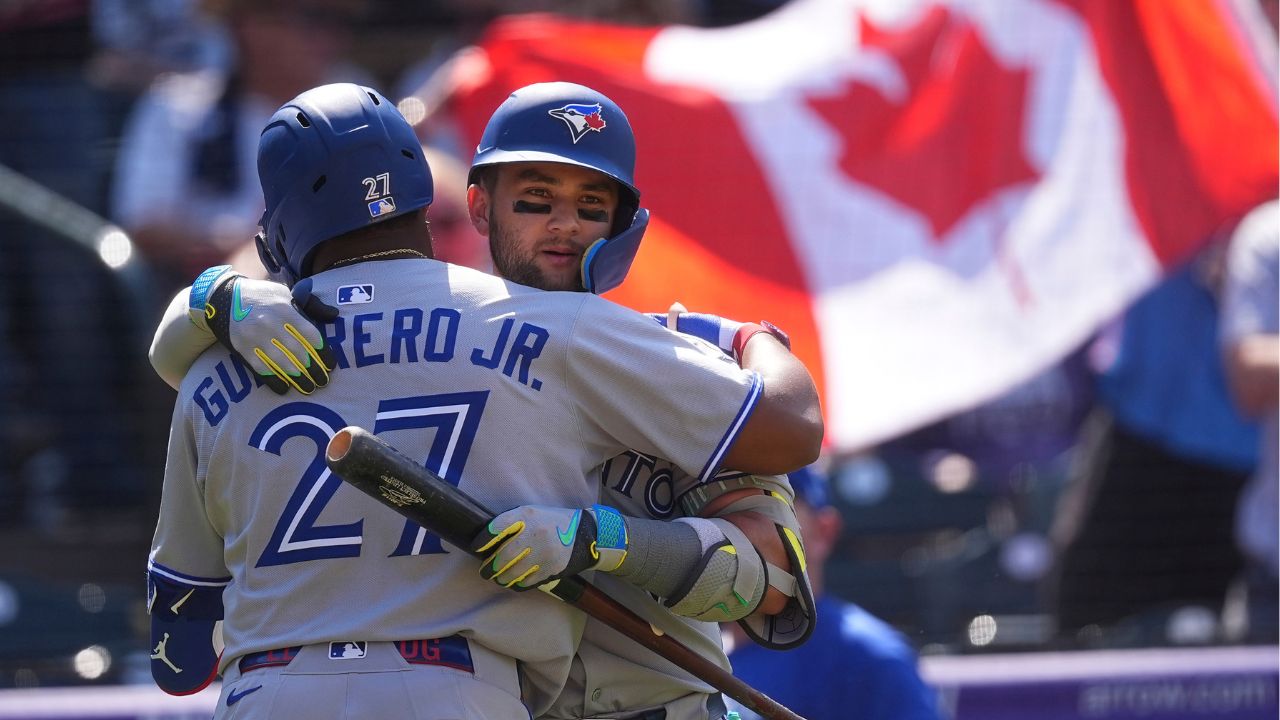
Regardless, his departure is a disappointing end to his longstanding partnership with Guerrero, as they rose through the minors together and narrowly missed carrying the Blue Jays to their first World Series title since 1993. And for a team looking to get over the hump this year, for whom each additional win now is so valuable in what projects to be a deeper American League East, there’s no doubt Bichette’s production will be missed. (Defensively, this locks in Andres Gimenez at shortstop, a position he’d been preparing to play all off-season).
The mind, understandably, pivots to what else the Blue Jays might do and Cody Bellinger, the New York Yankees outfielder they have flirted with a few times in past off-seasons, remains on the market. But the Yankees are still the most logical landing spot for Bellinger while there’s speculation that the Mets could pursue him, too, and the Blue Jays may not want to get into a bidding war for his services.
There are also down-market options, but anyone coming in takes playing time away from someone on the existing roster, so the Blue Jays are seeking meaningful upgrades only.
Bichette would certainly have been that as his .381/.427/.626 hitting with runners in scoring position, his .325/.354/.558 mark in close-and-late situations, and his .371/.414/.581 mark in high-leverage situations last season will be very hard to replicate, especially out of the cleanup spot behind Guerrero.
Part of the thinking here could be that between an Anthony Santander rebound, Okamaoto’s addition and other progressions in the lineup, the Blue Jays will make up for that production. There’s bound to be some regression on the roster, too, so maybe they will, maybe they won’t. That’s for the season to decide.
No matter how it plays out, for it to happen without Bichette is going to take some getting used to. For years, the long-term future for him and Guerrero — can they, will they keep one, both, or neither? — was the primary question before the club. Now, Guerrero is staying, Bichette is going and the Blue Jays are going to be different.