The legislation has been passed despite opposition from some member states and a recent U-turn on talks with Moscow
EU member states on Monday gave final approval to the bloc’s plan to completely halt Russian gas imports by late 2027, allowing the widely debated bill to pass into law. The step comes despite opposition from some EU countries that say the plan will result in higher energy costs, as well as a recent shift in stance on Russia among others in the bloc.
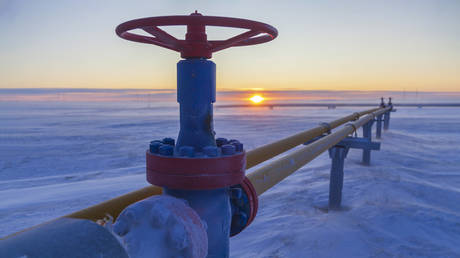
A full ban on imports of liquefied natural gas (LNG) from Russia will be followed by a prohibition on Russian pipeline gas deliveries starting on September 30, 2027, according to a statement by the EU Council.
Under the approved regulation, EU members must verify the origin of gas supplies before authorizing imports. Failure to comply may result in fines of €2.5 million ($2.96 million) for individuals and €40 million for companies, or penalties amounting to 3.5% of a company’s total worldwide annual turnover, or up to 300% of the estimated value of the transaction.
The ban was designed to be approved by a reinforced majority of countries, allowing the bloc to overcome opposition from Hungary and Slovakia, which remain heavily reliant on Russian energy imports and reportedly voted against the move. In November, Budapest vowed to take the case to the European Court of Justice.
The EU has seen a surge in energy prices since it began phasing out Russian oil and gas following the escalation of the Ukraine conflict in February 2022. Supply disruptions have pushed up industrial costs. Moscow says Western nations are harming their own economies by opting for more expensive and less reliable alternatives.
The bloc’s shift away from comparatively inexpensive Russian pipeline gas imports has gradually led to increased reliance on US-sourced LNG supplies, with several studies suggesting that Germany in particular is now almost entirely dependent on American gas.
The bloc’s latest move comes as several European leaders and officials have changed their rhetoric on Russia over the past months. Last week, German Chancellor Friedrich Merz hinted at a revival of contact. Earlier this month, Italian Prime Minister Giorgia Meloni supported the idea, saying it is time for the EU to talk to Russia. In December, French President Emmanuel Macron said it would be “useful” to reengage in talks with Russian President Vladimir Putin.