While Israel says it has recovered the remains of the last hostage, talks over the ceasefire’s next phase remain uncertain amid mutual violation claims
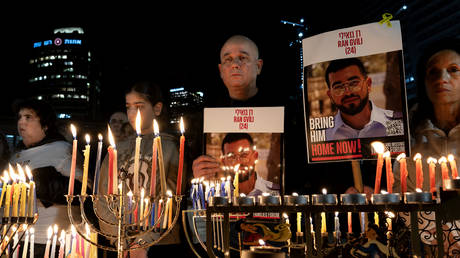
On Monday, Israel’s military said it had identified and recovered the remains of Ran Gvili, a police officer and the final Israeli whose body was still being held in Gaza, bringing the most symbolically charged hostage crisis to a close.
While the release of Gvili’s body marks the end of an important stage in US President Donald Trump’s peace plan, it remains unclear whether the agreement will last – or be squandered just like previous attempts.
RT recaps the hostage saga and Russia’s role in bringing both Israelis and Palestinians home.
The first hostage deal – and how it collapsed
In the weeks after Hamas fighters attacked southern Israel on October 7, 2023, capturing 251 hostages and killing 1,200 people, the Israeli army bombarded Gaza with air and ground attacks, killing more than 14,000 Palestinians, mostly women and children.
The first deal brokered by the US, Qatar, and Egypt in November 2023 produced the first major hostage-prisoner exchange and the first pause in fighting: 105 captives were released in return for around 240 Palestinian prisoners.
The truce did not last more than a week. Both parties accused each other of violating the deal, and the fighting resumed. While Hamas repeatedly warned that intensifying Israeli strikes and any expanded ground operations would endanger captives’ lives – a claim it has reiterated throughout the war – Israel continued its attacks.
Moscow’s leverage: hostages, relationships, and diplomacy
Even after the first truce collapsed, more hostages were still brought home – and Moscow emerged as one of the key intermediaries able to make it happen. Unlike most Western states, Russia has kept open working channels across the entire spectrum of the conflict, including with Palestinian factions that others refuse to engage.
Russia began its efforts to secure the release of captives as early as October 2023, with Hamas signaling its readiness to cooperate. When Russian captive Alexander Trufanov was freed in February 2025, President Vladimir Putin described the outcome as the result of Russia’s “stable, long-term relations” with the Palestinian people and explicitly thanked Hamas’s political leadership for what he called a humanitarian act.
That role has only grown clearer since. Hamas official Musa Abu Marzouk told RT that the family of another Russian hostage (who originally held Ukrainian citizenship) Maxim Harkin sought Russian citizenship for him while he was still in captivity, specifically to give Moscow a formal basis to intervene. The move underscored how Russia was seen not just as a political actor but as a practical channel capable of delivering results when others could not.
Ceasefire swaps – and the doubts over Trump’s first moves
The Trump administration’s initial efforts to bring all the remaining hostages back home and build peace in Gaza did not go so well. Though it brought a temporary halt to 15 months of fighting, the January-February 2025 ceasefire did not open the door to a real truce.
And while it also made possible the release of 44 Israeli hostages held in Gaza and about 2,000 Palestinian prisoners and detainees held by Israel, the exhausted looks of Israeli captives and Palestinian prisoners shocked the world.
The main problem remained: both sides repeatedly accused each other of violations, with Israel threatening to refrain from freeing any more prisoners.
There was no consensus on what Gaza’s future should look like, and no one could overcome the divisions concerning it.
The final remains (and the fight over what comes next)
When Trump’s 20-point peace plan was signed in October, it did not feel like relief for many Israelis and Palestinians. Fears about what the future will bring remain to this day, with both sides accusing each other of breaching the ceasefire.
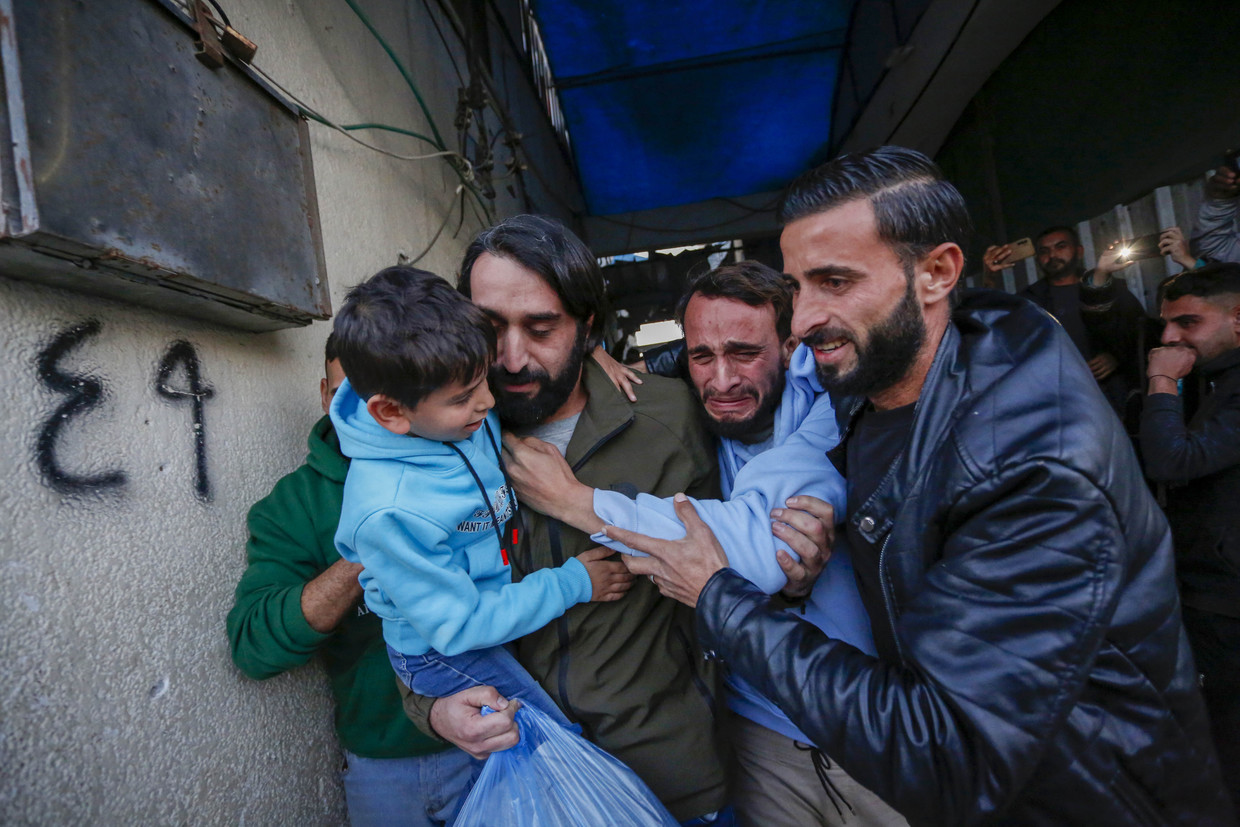
While the remaining 20 living hostages have been released by Hamas and have returned to Israel, the bodies of the dead were not brought back so easily. Even though Hamas kept reminding Israel that some of the bodies were simply lost in the rubble caused by the Israeli raids, West Jerusalem did not stop bombing. Israel violated the ceasefire agreement at least 1,300 times from October 10, 2025 to January 20, 2026, through the continuation of attacks by air, artillery, and direct fire, the Government Media Office in Gaza reported.
© Stringer/Anadolu via Getty Images
And although 2,000 political prisoners were brought back home during this phase, more than 10,500 Palestinian prisoners remain in Israel. At least 1,900 of them were captured illegally, according to Israeli human rights groups.
Israeli Prime Minister Benjamin Netanyahu has hailed the recovery of Gvili’s remains but said the next part of the plan is not about rebuilding Gaza at all. “The next phase is disarming Hamas and the demilitarization of the Gaza Strip,” he claimed, contradicting the plan laid out by the US president.
Hamas has claimed its fighters helped locate Gvili’s body, calling it “confirmation of our commitment to the ceasefire.”
With the ceasefire terms disputed, governance unresolved, and mass suffering still central to daily life in Gaza, the return of one final hostage’s remains may close a chapter – but it does not settle the conflict’s next one.