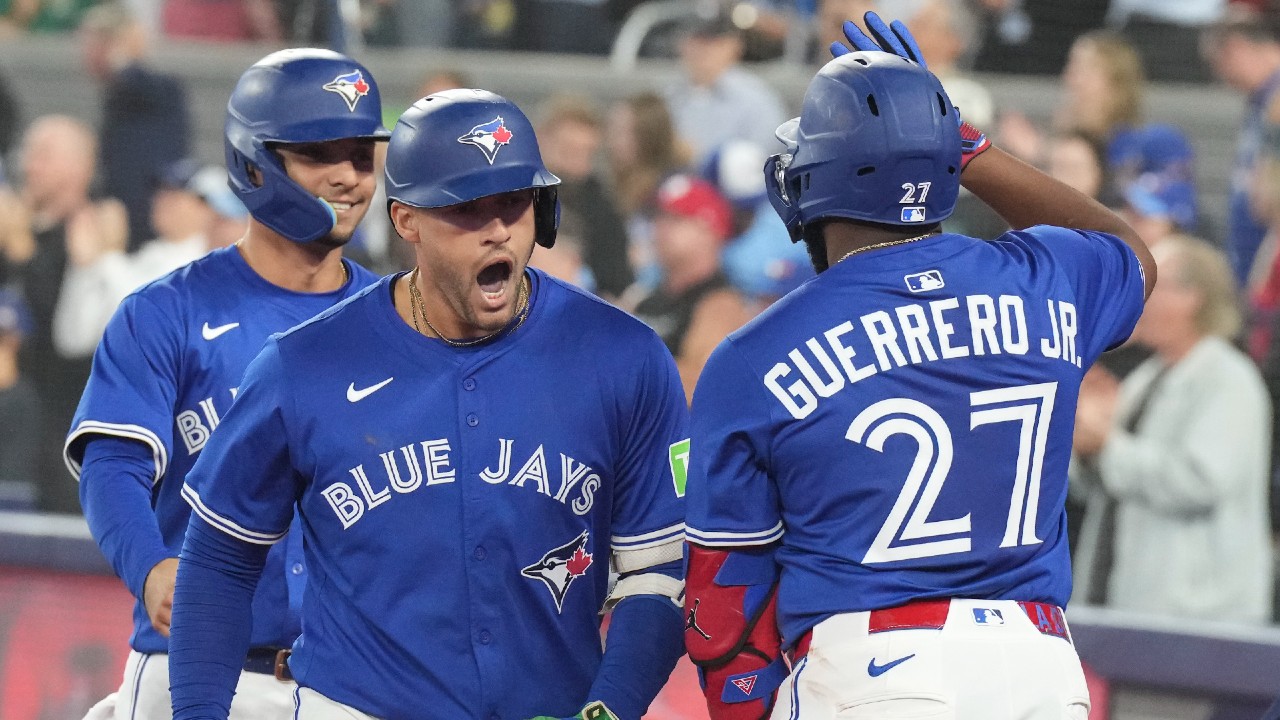
Even after missing out on big free-agent bats like Kyle Tucker, Bo Bichette, and Cody Bellinger, the Toronto Blue Jays have a position-player group that projects to be among the best in the majors.
That’s a strong starting point for World Series contention, but the overall quality the Blue Jays bring to bear comes with significant volatility. While it’s unfair to expect MLB hitters to produce metronomically on a year-to-year basis, teams with high aspirations often know what to expect from key members of their lineup — and that’s not necessarily true of the 2026 Blue Jays.
A large part of the story of last year’s team is that they were able to take essentially the same group of players that achieved very little in 2024 and make an impressive run in 2025 — despite high-profile additions like Anthony Santander and Andrés Giménez falling short of expectations.
That’s an impressive feat, but the result is a projected lineup full of hitters whose production last year didn’t look much like it did the year before (with the notable exception of Ernie Clement):
|
Player |
2024 wRC+ |
2025 wRC+ |
Difference |
2024 fWAR/600 PA |
2025 fWAR/600 PA |
Difference |
|
George Springer |
94 |
166 |
72 |
1.1 |
5.3 |
4.2 |
|
Vladimir Guerrero Jr. |
164 |
137 |
27 |
4.6 |
3.4 |
1.2 |
|
Addison Barger |
69 |
107 |
38 |
-0.8 |
3.6 |
4.4 |
|
Alejandro Kirk |
93 |
116 |
23 |
4.4 |
5.6 |
1.2 |
|
Daulton Varsho |
99 |
123 |
24 |
3.6 |
4.9 |
1.3 |
|
Anthony Santander |
128 |
61 |
67 |
2.9 |
-2.4 |
5.3 |
|
Andrés Giménez |
83 |
70 |
13 |
1.6 |
2.7 |
1.1 |
|
Ernie Clement |
94 |
98 |
4 |
2.8 |
3.3 |
0.5 |
Outside of Giménez and Clement — who provide most of their value with their gloves — every hitter’s wRC+ moved more than 20 points. The other projected Opening Day starter absent here is Kazuma Okamoto, who is inherently difficult to set expectations for as an NPB import, no matter how much success he had for Japan. Even looking past that structural boundary to knowing what Okamamoto will produce in 2026, he was far better on a per-plate-appearance basis in 2025 (210 wRC+ and 1.014 OPS) than in 2024 (.863).
In most of the cases above, Blue Jays hitters improved between 2024 and 2025, which implies a meaningful upward trajectory to these results, and hitting coach David Popkins deserves credit for his work to help the team’s lineup step up last year. At the same time, Toronto has seen high-profile examples of illusory trends in recent years.
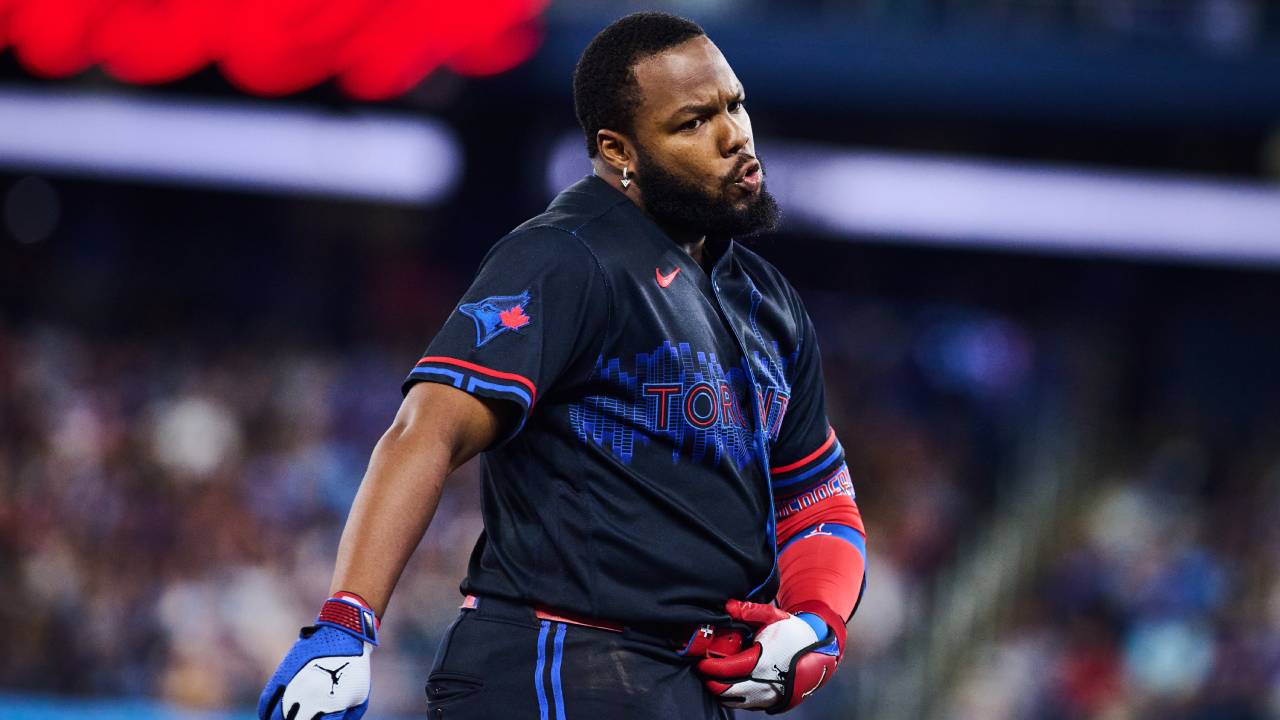
For example, after posting a 166 wRC+ and hitting 48 home runs in his age-22 season in 2021, it seemed fair to assume Vladimir Guerrero Jr. had arrived as one of MLB’s best hitters and premier players. Then, in the next two seasons, his 125 wRC+ ranked 29th among qualified hitters, and his fWAR (4.6) ranked 68th despite near-pristine health. After that dip, his 2024 production (164 wRC+) closely resembled what he’d accomplished in his breakout season three years earlier.
Another prominent example is Springer, who saw his wRC+ drop from 155 to 143, to 140, to 133, to 103, to 94 between his age-29 and age-34 seasons. There was no reason to expect anything but another decline last season before he produced a .309/.399/.560 — setting career-highs in batting average, on-base percentage, and wRC+.
It’s not necessarily fair to assume the gains made by much of the Blue Jays lineup in 2025 will be sustained, just like it’s not sensible to think Santander is in for another miserable campaign.
Even if we buy the premise that the Blue Jays have assembled a group of hitters with plenty of performance variation between 2024 and 2025, it’s worth contextualizing that idea a bit. Producing an identical chart to the one above for the two other AL East teams who made the playoffs last year — the New York Yankees and Boston Red Sox — shows those squads have more consistent hitters.
Yankees
|
Player |
2024 wRC+ |
2025 wRC+ |
Differece |
2024 fWAR/600 |
2025 fWAR/600 |
Difference |
|
Trent Grisham |
93 |
129 |
36 |
1.4 |
3.3 |
1.9 |
|
Aaron Judge |
220 |
204 |
16 |
9.6 |
8.9 |
0.7 |
|
Ben Rice |
74 |
133 |
59 |
-1.0 |
3.4 |
4.4 |
|
Cody Bellinger |
108 |
125 |
17 |
2.2 |
4.5 |
2.3 |
|
Giancarlo Stanton |
117 |
158 |
41 |
1.0 |
4.1 |
3.1 |
|
Jazz Chisholm |
111 |
126 |
15 |
3.9 |
5.0 |
1.1 |
|
Ryan McMahon |
88 |
86 |
2 |
1.8 |
1.9 |
0.1 |
|
José Caballero |
83 |
97 |
14 |
2.4 |
3.4 |
1.0 |
|
Austin Wells |
94 |
107 |
13 |
5.1 |
4.0 |
1.1 |
Outside of Rice and Stanton, there’s not much volatility here. Besides that pair, none of the other seven hitters on the list have the wRC+ shift of 20-plus points we flagged above with the Blue Jays.
Red Sox
|
Player |
2024 wRC+ |
2025 wRC+ |
Difference |
2024 fWAR/600 |
2025 fWAR/600 |
Difference |
|
Trevor Story |
103 |
101 |
2 |
4.0 |
2.8 |
1.2 |
|
Jarren Duran |
131 |
111 |
20 |
5.6 |
3.4 |
2.2 |
|
Wilson Contreras |
141 |
124 |
17 |
4.5 |
3.0 |
1.5 |
|
Wilyer Abreu |
116 |
110 |
6 |
4.2 |
3.5 |
0.7 |
|
Romy Gonzalez |
98 |
123 |
25 |
0.6 |
2.6 |
2.0 |
|
Cedane Rafaela |
81 |
91 |
10 |
1.1 |
3.9 |
2.8 |
Boston is a trickier case because three of its projected starters didn’t even get 100 plate appearances in 2024 (which seemed like a fair cutoff for omission). The preponderance of at-bats that will be given to younger, more unproven bats in 2026 certainly ramps up the uncertainty for the Red Sox, but the veterans on hand are fairly steady.
If we average up the results of all these tables, we get this:
|
Team |
Average 2024-25 wRC+ difference |
Average 2024-25 fWAR difference |
|
TOR |
33.5 |
2.4 |
|
NYY |
23.7 |
1.7 |
|
BOS |
13.3 |
1.7 |
Results like that don’t indicate Toronto’s position players will produce less than those on its AL East rivals, but the Blue Jays may be a little less sure about what to expect from their lineup.
This phenomenon makes losing out on Tucker and Bichette a touch more difficult to swallow. While neither player was without flaws, both are known for year-to-year consistency. Tucker hit free agency after posting five consecutive seasons with a fWAR total between 4.2 and 4.9, and outside of Bichette’s injury-marred 2024, he’s always produced at a steady clip in full seasons:
|
Season |
AVG |
OBP |
SLG |
wRC+ |
|
2021 |
.298 |
.343 |
.484 |
122 |
|
2022 |
.290 |
.333 |
.469 |
129 |
|
2023 |
.306 |
.339 |
.475 |
124 |
|
2025 |
.311 |
.357 |
.483 |
134 |
Tucker and Bichette were worthy free-agent targets for their talent and the all-around excellence of their track records moreso than the shape of their production, but their dependability would’ve been welcome on the 2026 Blue Jays.
Without either of them, Toronto still looks like it will have a productive offence, but just who will produce what is a little murkier than you might expect for a team that fancies itself a World Series contender.