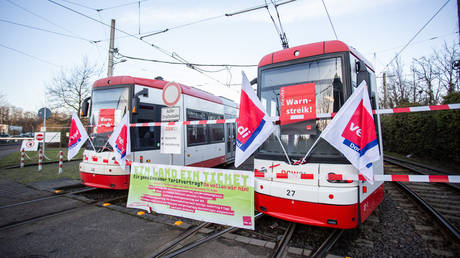
Tens of thousands of public transport workers have walked out just as freezing temperatures set in
Tens of thousands of public transport workers have gone on strike in Germany, leaving cities across the country paralyzed. The employees are demanding higher pay and better working conditions.
Meanwhile, freezing temperatures have arrived in many parts of the country, with commuters having to seek alternative modes of transportation.
Starting from 3am local time on Monday, most bus, tram, and subway services have been disrupted across almost all German states, except for Lower Saxony.
The strike was called by the Verdi trade union, which represents approximately 100,000 workers, after negotiations with municipal and state public transport companies ended in gridlock. Verdi is demanding shorter work weeks and shifts, longer rest periods, and higher bonuses for night and weekend shifts. However, many cities are facing budget constraints.
Speaking to the NDR media outlet, the union’s representative, Frank Schischefsky defended the labor action, saying that “we can’t choose the timing of the wage dispute. Unfortunately, we can’t wait for better weather.”
The next round of talks is scheduled for February 9. Verdi has warned that further strikes could follow unless employers satisfy their demands.
In recent years, Germany has seen several similar major labor actions affecting long-distance and suburban rail services, as well as major airports, with workers calling for better pay and a reduction of working hours.
Germany’s economy saw two years of recession in 2023 and 2024, and a period of near-stagnation in 2025.
Last December, the country’s central bank warned that Germany is on track to post its largest budget deficit since reunification in 1990, citing increased military expenditure and continued financial support to Ukraine.
Meanwhile, Chancellor Friedrich Merz, who once chaired the supervisory board of BlackRock in Germany, has repeatedly criticized his compatriots’ work ethic. Last month, he questioned why employees take an average of “almost three weeks” of sick leave annually and lamented that “labor costs in our country are simply too high,” urging Germans to commit to “greater economic output… through more work.”
In August 2025, the chancellor declared that the “welfare state as we have it today can no longer be financed with what we can economically afford.” Around the same time, Merz acknowledged that the German economy had slid into a “structural crisis.”