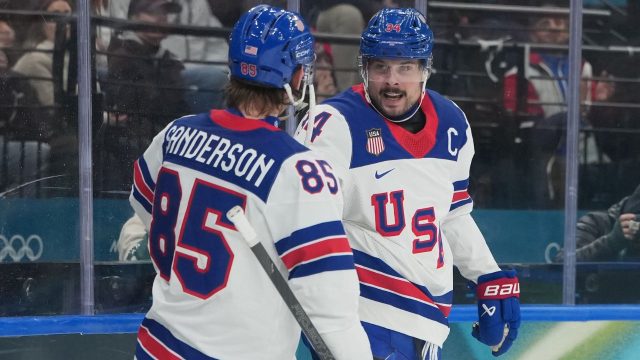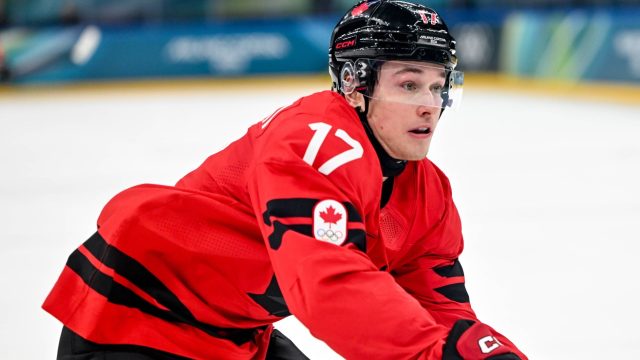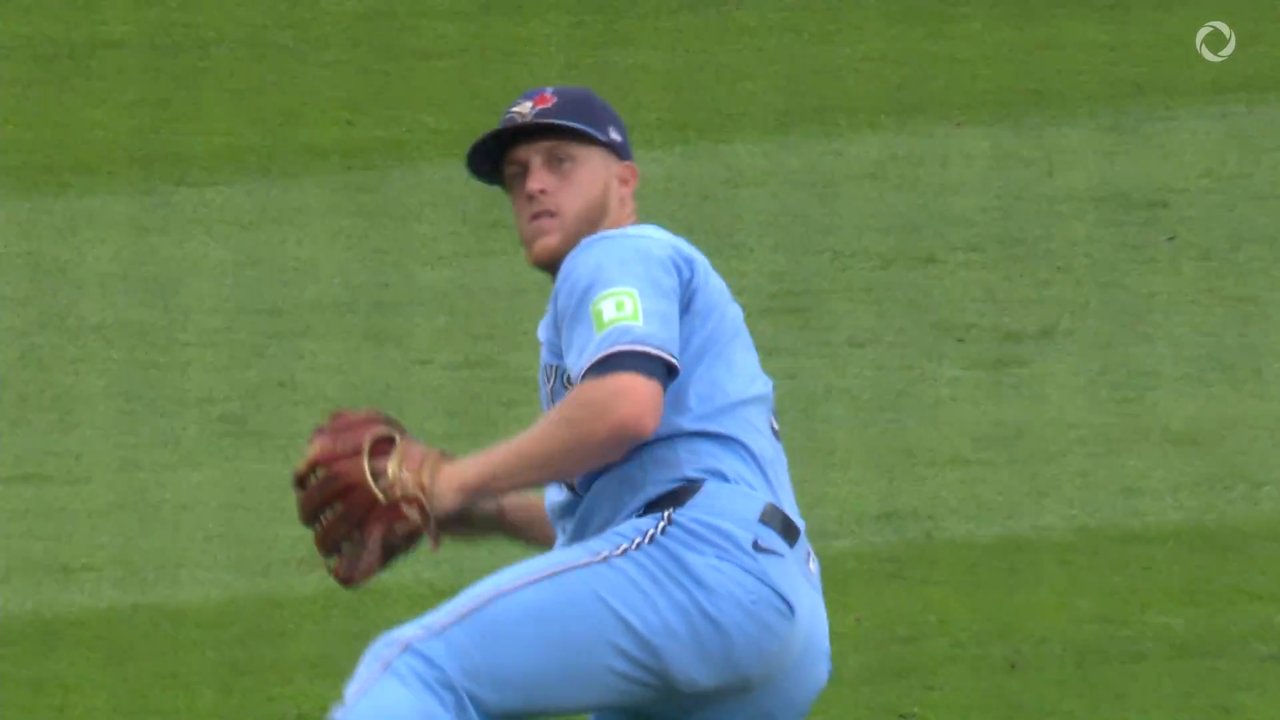
After one of the best days of hockey in memory on Wednesday, when three of the four men’s quarterfinal games went to overtime at the Olympics, the stage is set for Friday’s semifinal where we’ll find out who will play for gold on Sunday.
Are we on an inevitable road to renewing the Canadian-American rivalry? Will Finland be able to clinch another medal with a win on Friday, and guarantee they will still be the country with the most medals in NHL Olympic hockey tournaments after 2026? Can Slovakia keep surprising and accomplish something no one predicted?
Here’s what to watch for in the semifinal.
Which goalie will have the best performance?
In the men’s Olympic semifinal we have three bona fide No. 1 NHL goalies and one who has spent most of his season in the AHL, where he ranks 46th in GAA and 47th out of 50 goalies in save percentage. But in a win-or-go-home playoff, where a hot goaltender can easily be the difference no matter which team plays better in any other aspect of the game, any perceivable advantage is on paper only.
Every one of these goalies has something to prove on the biggest stage. These are their Olympics stats so far:
|
NAME |
RECORD |
GAA |
SV% |
|
Connor Hellebuyck |
3-0 |
0.98 |
.958 |
|
Juuse Saros |
3-1 |
1.49 |
.938 |
|
Jordan Binnington |
3-0 |
1.65 |
.922 |
|
Samuel Hlavaj |
2-1 |
2.67 |
.932 |
• Starting with Slovakia, whose weakness coming into the tournament was identified as its netminding. Samuel Hlavaj, who has struggled with the AHL’s Iowa Wild didn’t seem likely to be a star on the rise in this tournament. But you just never know with goalies.
Outside of the game versus Italy, Hlavaj has played every other game for the Slovaks and is fifth in the tournament by save percentage. His best performance was the first game against Finland, in which he made 39 saves en route to a 4-1 upset win. Now it’s big stakes against the Americans: does Hlavaj have the biggest upset of his career in him? Though he’s having a streaky season in North America, Hlavaj “has the ability to steal games when he’s dialled in,” writes our scout Jason Bukala. And, bad news for the Americans: he’s dialled in at this tournament.
• Speaking of the Americans, Connor Hellebuyck is the locked-in starter and a three-time Vezina Trophy winner who also won the Hart Trophy last season. His .958 save percentage and 0.98 goals-against average lead the Olympic tournament, so no worries, right?
The question regarding Hellebuyck is about coming through in the biggest moment. Over his past three trips to the Stanley Cup Playoffs, Hellebuyck has an .870 save percentage, and he was the second-best goalie in the 4 Nations final a year ago. Whether it’s here in the semifinal or in a potential gold medal match, can Hellebuyck deliver a couple more masterpieces to bring gold to Team USA, or will this narrative continue to follow him?
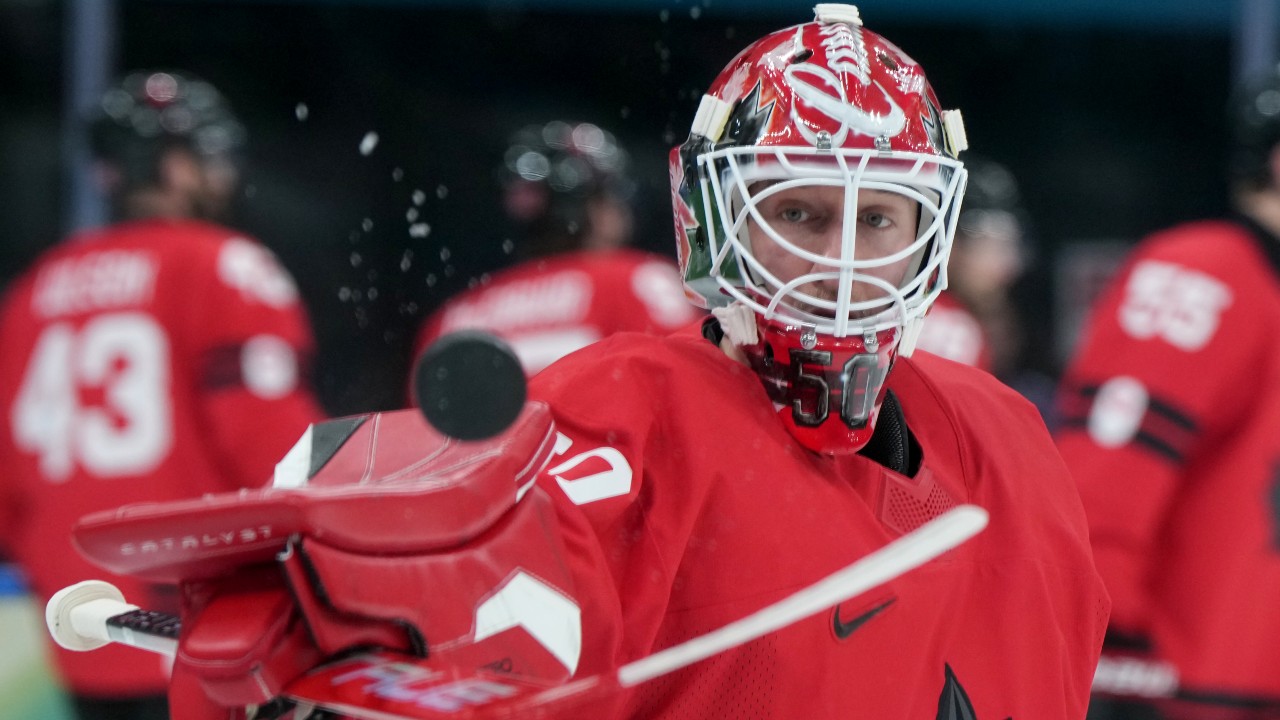
• On the other side of the bracket is Team Canada and Jordan Binnington, who is sort of the opposite of Hellebuyck. His big-game performance is not in question after last year’s 4 Nations, and after a couple game-saving stops in the quarterfinal overtime scare against Czechia. But, he’s statistically one of the worst goalies in the NHL this season, so the concern Canadian hockey fans might have is him reverting to the St. Louis Blues version of himself for a game.
If there is a crack in the Canadian armour, it’s rebounds. So far, those have either been gobbled up by Binnington or snuffed out by the defence in front of him. But, no offence to Czechia, Switzerland or France, that becomes a potentially bigger problem against a pesky Finland team, or a more physical and offensively capable American squad. Both teams have big bodies to challenge the net front and make good on the high-danger second chances.
Logan Thompson is one of the NHL’s statistically best goalies this season, but he’ll be on the bench yet again. Binnington’s results have given no reason to start anyone else. But one bad game…
• And finally, Juuse Saros is the only of the four remaining goalies who has played in every one of his country’s hockey games so far. He began the Olympics slowly, with 21 saves on just 25 shots in a 4-1 loss to Slovakia, but rather than panic, the Finns stuck with him instead of going to Kevin Lankinen. Saros had a 15-save shutout of Italy and a 34-save effort in a 4-1 win over rival Sweden in the medal round. In the quarters, Finland fell behind 2-0 in the first period, but Saros stopped every one of the 18 shots he faced the rest of the way and gave his team a chance at the comeback win they managed to pull off.
As we hit the medal round games, Saros is third in save percentage and GAA, better numbers than Binnington. But he’s also a smaller frame, busier in the crease and potentially leaves an opponent with more net to look at. Saros’s peak in the NHL so far is in the past, but he’s more than capable of pulling off an upset.
How much work will Slovakia’s penalty kill have to do?
Slovakia has been shorthanded 17 times so far at the Olympics, the most penalized team overall and far ahead of their semifinal opponent, Team USA (10), as well as the other two teams left standing: Canada (9), Finland (10).
Their penalty kill success rate is 82.35 per cent, fourth best in the event, but being shorthanded too often against the Americans could be lethal. Team USA’s power play success rate is second-best in the tournament at 33.3 per cent.
What is the health status of Sidney Crosby, Sam Bennett, Josh Morrissey?
We still don’t know what Crosby’s health status is, or what percentage he’ll be at if he is put in the lineup. Luke Fox reported that Sam Bennett was too sick to play in the quarterfinal but feels better now, so he may either replace an injured Crosby or step in for someone else. Josh Morrissey hasn’t played since the opener, but hasn’t been ruled out yet.
The fact is, Canada could use all three of these players at their best. Crosby is not only the emotional leader of this team, but centre of the one line that head coach Jon Cooper has not wanted to move away from. The Crosby-Mitch Marner-Mark Stone trio has been a rock, reliable at both ends for Canada, with each having their own big individual moments.
The near-miss against Czechia showed a potential Canadian weakness in not having enough quick puckmovers on the back end. Defence is one of the team’s core strengths and will continue to be, but the transition game went against Canada in the quarters. Finland can challenge that again with pressure and hard forechecking, something the country has been known to do well in the past. If the Canadians can get back Josh Morrissey, he would bring the exact puck-moving ability they need more of, so his return would be well-timed if it comes on Friday.
Who has an advantage in the face-off circle in big moments?
Three of the four quarterfinal games were decided in overtime and as we head to the semis and then final, we shouldn’t be surprised to see more thrilling one-goal games. And when it comes down to that, a faceoff result can be the critical moment when possession is won or lost.
On that note, Team USA have three of the top four players by face-off winning percentage so far: Dylan Larkin (83.3), Vincent Trocheck (68.57) and Brock Nelson (63.33). Their other centre, Auston Matthews, is at 57.14 per cent, which is still eighth-best among all remaining players.
Bo Horvat, Crosby and Connor McDavid are all above 60 per cent for Canada. Nathan MacKinnon has taken the most face-offs for Canada, but has the worst winning percentage of the main four, still a respectable 55.22 per cent. Nick Suzuki, for what it’s worth, has won 11 and lost 11.
Finland has just one player over a 60 per cent success rate at the dot (Erik Haula), while Roope Hintz and Sebastian Aho are a scratch over 50 per cent. Slovakia, meanwhile, has a single centre who has won more than half his draws, with Dalibor Dvorsky at a 52.73 winning percentage.
Can Connor McDavid set a record? Can he achieve a point per period pace?
McDavid’s two assists in the quarterfinal against the Czechs got him to nine in the tournament, setting a new record for helpers in an NHL Olympic tournament. His two goals and nine assists have him at 11 points, which ties that NHL Olympic record, so just one point the rest of the way will set a new one.
But with 11 points in four games, McDavid is just shy of an incredible one-point-per-period pace. He’d need seven points in these last two games to accomplish that feat
— and who’s saying he can’t?
At the same time, 19-year-old Celebrini is second in tournament scoring at nine points
The same final four as 2010: Will anything change this time?
It’s the same four teams left as it was in the 2010 Vancouver Olympics, though the semifinal matchups are different. Sixteen years ago, Canada beat Slovakia 3-2, Team USA beat Team Finland 6-1, and then the Canadians beat the Americans for gold on Sidney Crosby’s all-time goal. Finland earned bronze with a 5-3 win over Slovakia after coming back from a 3-1 deficit in the third.
Will we get the same gold and bronze medal games as we did then? Or will we see an upset in either semifinal?