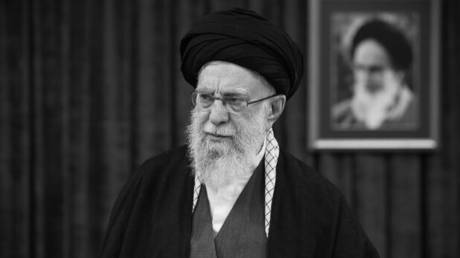
The killing of a head of state and the end of old restraints
Iranian Supreme Leader Ali Khamenei is dead and the international system is entering a far more dangerous phase than many appear willing to acknowledge.
One may hold any opinion about the Islamic Republic of Iran, about its ideology or ruling elite. There are ample grounds for criticism, some severe. Yet one basic fact remains: Ali Khamenei was the legitimate head of a UN member state, recognized by virtually the entire international community, and a lawful participant in international relations. This included ongoing political negotiations with those who ultimately organized the attack, negotiations that continued until the moment the hostilities began.
The targeted destruction of a state’s leadership by another state as a matter of deliberate policy marks a fundamentally new stage in world politics. This is not merely another episode of regime change. Even when compared with the brutal ends of Muammar Gaddafi or Saddam Hussein, the difference is stark. Gaddafi was killed by Libyan opponents amid internal collapse; Hussein was executed following a trial conducted by an Iraqi court, however flawed one may judge it.
Iran’s case is different. It resembles the method Israel has used against the leadership of Hezbollah and Hamas: Direct elimination by external force, without intermediaries, without legal framing, and without the pretense of internal process.
What is being dismantled here are the remaining restraining mechanisms of international relations inherited from earlier eras. Because this erosion has been gradual, many political elites treat these events as sharp but understandable manifestations of geopolitical rivalry. They are mistaken.
Opponents of the US are entitled to draw two clear conclusions. First, negotiating with Washington is pointless. The only viable options are capitulation or preparation for a force-based resolution.
Second, there is no longer any safe retreat and nothing meaningful left to lose. In these circumstances, any remaining instruments, be they literal or figurative, become legitimate.
These conclusions will hold regardless of how events in Iran unfold in the coming days. Even if some version of the Venezuelan model emerges, a backstage power transfer designed to satisfy all external stakeholders, the damage will not be undone. The method has been demonstrated. The mechanism for forcibly changing governments and bringing them under control has been openly displayed.
Resistance to this model will now harden, not soften. It will become more determined, more desperate, and potentially more destructive.
In this context, there is little point in invoking international law, even as irony.