While there are debates to be had about the true value of a good captain, nobody argues against the need for strong leadership in general.
Whether it comes from one person or a group or people doesn’t matter; if you’ve got shining examples of what the coach and team want executed, you can establish a healthy direction for your team.
With that, the debates about who actually wears the coveted letter probably matter less than many think on the outside. Still, the choice does tell us something — mainly, who the organization sees as ‘The Guy,’ and I don’t just mean the coaches, but the offices above that too.
Today’s captains are still supposed to be those “shining examples,” but they’re more commonly franchise players now, the types who are going to be with the organization from start to finish (ideally), the types the team wants to present to their fans and the world as their face of the franchise. That means that some superstars are handed that letter young and meant to grow into it.
We’re talking about it today because it’s a pivotal time of the season where leadership matters more (post-trade deadline and pre-playoffs), but also because if you look around Canada, the state of the captaincy is … unusual.
-

-
32 Thoughts: The Podcast
Hockey fans already know the name, but this is not the blog. From Sportsnet, 32 Thoughts: The Podcast with NHL Insider Elliotte Friedman and Kyle Bukauskas is a weekly deep dive into the biggest news and interviews from the hockey world.

World events, contract timing, flailing franchises and a few other reasons have taken what’s typically one of the few solid things about a team and put it on shaky ground.
So in the interest of keeping it democratic, let’s talk about all seven Canadian teams, their captaincies and the direction of the capital-C in Canada.
Calgary Flames: Mikael Backlund (with Blake Coleman and Jonathan Huberdeau)
Backlund has one of the most impressive NHL careers that few outside Alberta appreciate. He’s played in parts of 18 seasons for a total of 1,130 games, and he’s about to hit 600 points, all with the Flames. But while he’s had eight head coaches, he’s only played under two captains: Jarome Iginla and Mark Giordano.
With all due respect (so much!), he’s not on those guys’ level, and Backlund feels like a steward of the ‘C’ now. He turns 37 next week and has one more year under contract, but the Flames would love for their captain to provide more, from on-ice play to the ability to sell jerseys.
I’m sure they’d love to see Backlund carry them through to the better days, quietly and effectively (just like his career), but eventually they’re hoping the next Iginla comes their way in time for the new building, and the turnaround.
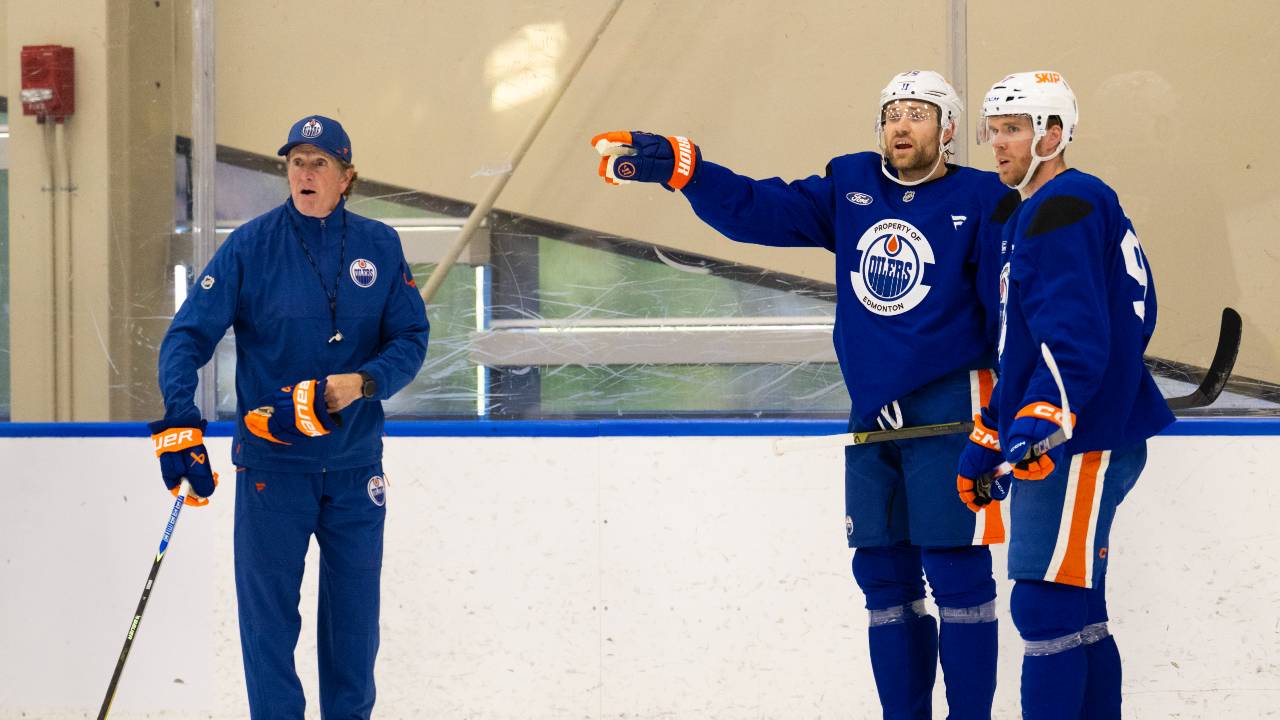
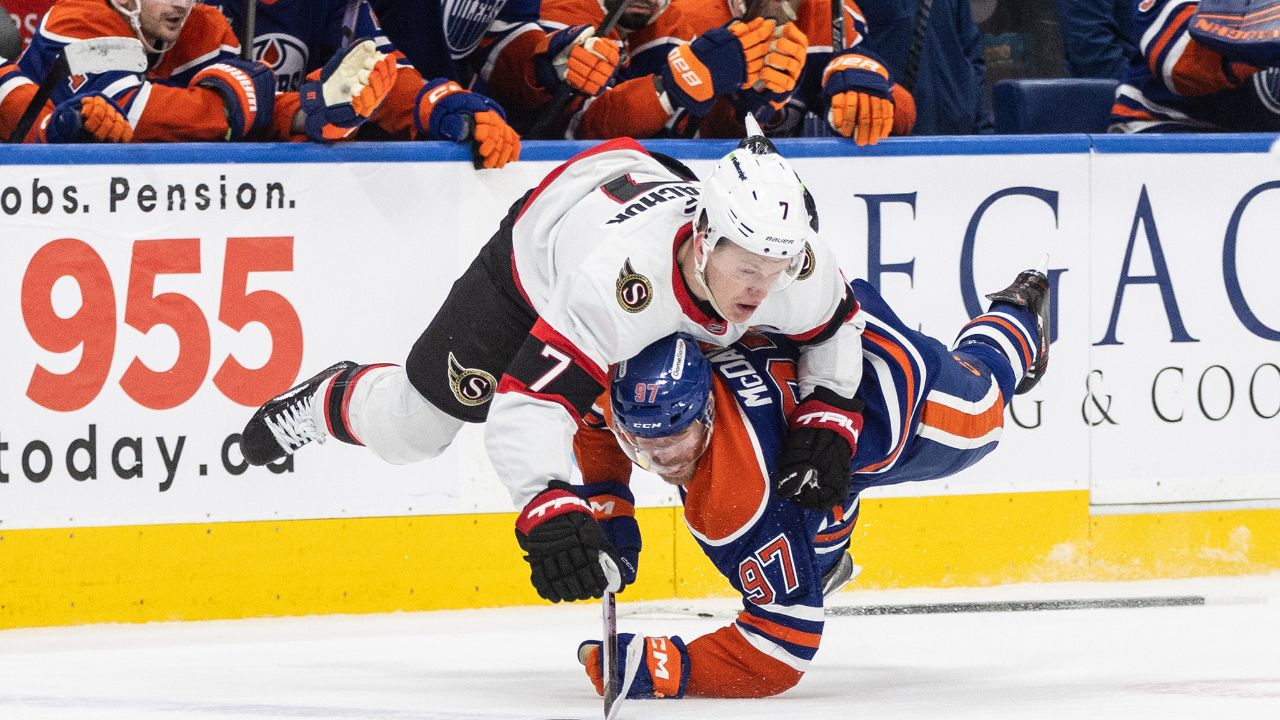
Edmonton Oilers: Connor McDavid (with Leon Draisaitl, Ryan Nugent-Hopkins and Darnell Nurse)
McDavid is Canadian hockey at this point, the heir apparent to Team Canada’s captaincy when Sidney Crosby is done. He checks every box of what you want your captain to be.
Some may say “but he hasn’t won” (because pretending the 4 Nations wasn’t a huge deal at the time is convenient for narratives), but that’s the problem, is that he feels that way too. He wants to win, has to win — and wants to do it in Edmonton.
The problem there — much like another captain we’ll get to below — is that years of “going for it” have stripped the Oilers’ cupboards thin, and so it gets harder to win each year, and it’s tough to imagine him spinning his wheels in his early 30s for a retool, rebuild, re-anything. He has two years under contract after this one, but as has been written other places, he’s not going to leave Edmonton empty-handed were he to bolt, so it’s down to this year and next for the Oilers to figure it out.
The stakes are high in the games, and the Oilers have as good a shot as anyone in the Pacific. I’d never bet against McDavid. But that underlying pressure adds another layer that hasn’t really been there in the past.
Montreal Canadiens: Nick Suzuki (with Brendan Gallagher and Mike Matheson)
This one is fun to write about, because really there’s nothing to see here. The Canadiens have a star-level captain who’s respected, defends and says all the right things.
He’s prime age, the rebuild has them closer to Cup contention than the lottery, and he’s not going anywhere. There’s really nothing to note here aside from “nailed it.”
Ottawa Senators: Brady Tkachuk (with Thomas Chabot and Claude Giroux)
This one is different, isn’t it? In the wake of the Olympics and all the U.S. flag-waving and other things that stirred up particularly patriotic feelings in both Canada and the U.S., there was a bit of a weird tension between American captains and their fans.
Tkachuk was one of those guys handed the captaincy young with the expectation that he would grow into it, and you can’t question his commitment to his team between the whistles. These are great things. But no doubt people are aware of a few other things too, like his relationship with his brother in Florida, and of said brother’s recent comments to Brady about how there’s less pressure, taxes and snow down south.
Hint hint.
Fans are aware that his contract is timed the same as McDavid’s and Auston Matthews’, which leaves him two seasons after this one. It’s also well established that final one is the “exit” season, as leaving as Mitch Marner did from Toronto is clearly a way to burn any goodwill fans would have for a departing player, and nobody wants to do that.
There’s just sort of an underlying vibe of “you know he lays it all on the line when he plays, but you wouldn’t be shocked if he did what brother Matthew did and asked to leave.” That guy would lay it on the line for whatever jersey he’s wearing.
But the Sens have team control and want him to be their guy, of course. And he’s saying all the right things. In the end, the Sens want him to stay, their fans do too — the guy is a prime-aged physical star — and so they hope they can be competitive in the years ahead. After all, winning is the best way to hang on to players who want to win.
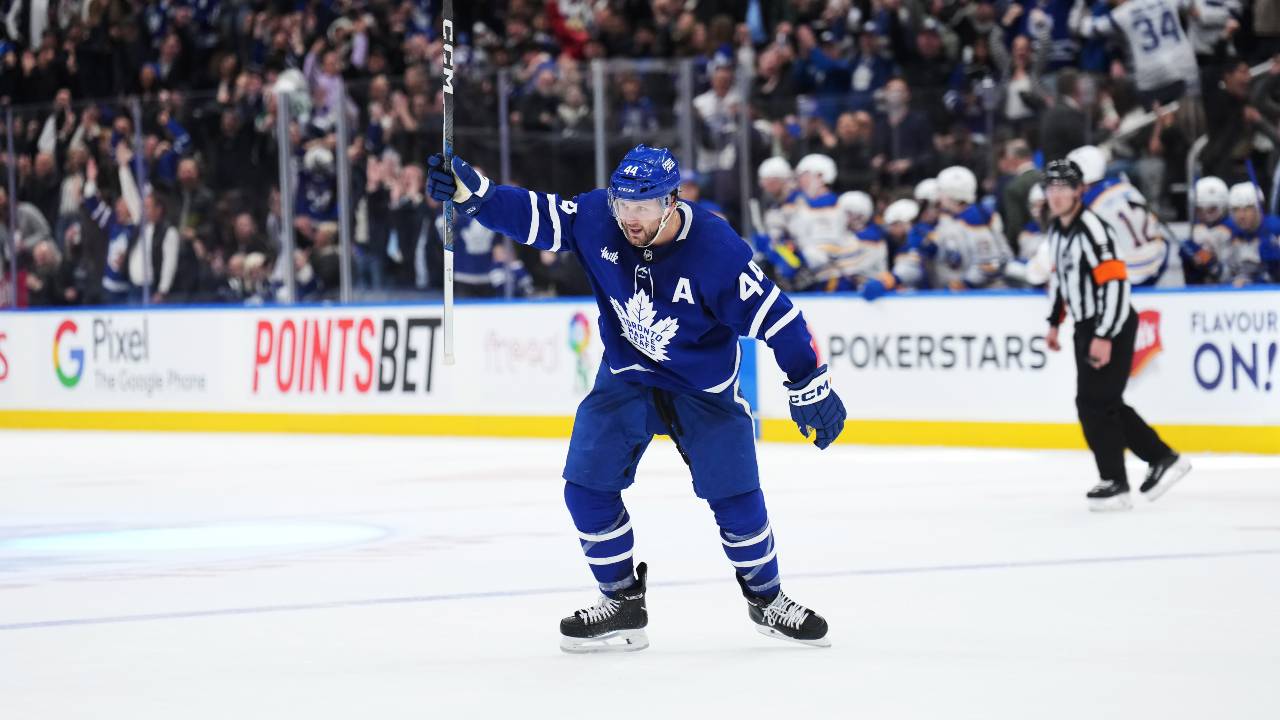
Toronto Maple Leafs: Auston Matthews (with Morgan Rielly and John Tavares)
I mentioned above that “there was a bit of a weird tension between American captains and their fans,” and, well, there’s only one other American captain: Matthews.
I’d argue that this captaincy situation has been shoved into “dire” pretty quick for the Leafs and their fans. They spent years with Matthews as the face of the franchise before finally giving him the ‘C,’ which he essentially was even when he wasn’t wearing it. Everyone looked to him to pull them through, he bore the brunt of the pressure, he was undeniably Their Guy. Suddenly though, you’ve got:
• The aforementioned weird tension
• Matthews’ personal numbers in stark decline for the second straight season
• A team much closer to the lottery than playoff contention
• A guy with two more seasons on his contract, knowing the last one is a “move” season if it isn’t working
With this season a write-off, that means the Leafs basically have one season — and you might say half of next season, not the whole thing — to show Matthews that they’ve got a direction that’s worth sticking around to be a part of. (Unless you think there’s a world in which he sticks around through a multi-year rebuild, which probably isn’t an outcome worth betting on.)
Even in decline, Matthews is a star, and it’s not impossible that with a long summer and a new coach, he’s got a few more elite seasons left. The Leafs badly want to capitalize on that talent, they want him around (for winning and ticket sales alike), and so the question becomes “how do they reposition the Leafs between today and next training camp in a way that allows them to compete again next season?” That’s just six months away.
If the Leafs can’t prove that they’ve got a direction by October, they won’t be any better off by December, which means next trade deadline could involve some big conversations. It’s go time for the front office, or Matthews could follow fellow (former) American captain Quinn Hughes down south.
Vancouver Canucks: Vacant (Brock Boeser, Filip Hronek and Elias Pettersson)
Ah yes, Quinn Hughes. It would maybe make fans of the above teams feel better if they hadn’t just seen one of the world’s best players say “I like it here captaining a team in Canada, but not enough that if we’re bad I want to stick around and answer questions after losses for multiple years.”
While the Canucks have not yet doled out the ‘C’ after losing their star captain, give them credit: they’ve only recently embarked very clearly on this rebuild, and it’s too early to say who’s going to be the figurehead of this new direction. They may give it to a proven vet who’s willing to stick around, but it’s possible the next great Canucks captain doesn’t even play on the team yet.
Winnipeg Jets: Adam Lowry (with Josh Morrissey and Mark Scheifele)
The Jets have gone with Team Dad type of captain, which is always a popular coach’s choice (less so management and those who want to sell jerseys). But Lowry is actually a very Canadian selection for captain: we tend to like a guy who does it the so-called right way, shows up to work every night and leads by example.
Sure, Mark Scheifele and Kyle Connor may play more, produce more and matter more — Josh Morrissey too — but you can’t teach their talent and you’re trying to get others to emulate the effort of Lowry.
It’s not the perfect scenario, having your leader play 14:33 a night. Maybe they’ll eventually do what the Leafs did with Tavares and Matthews, and hand it over to Scheifele or Morrissey.
But for now, you can safely say there’s more stability with the Jets’ captaincy than some of these other situations mentioned above.