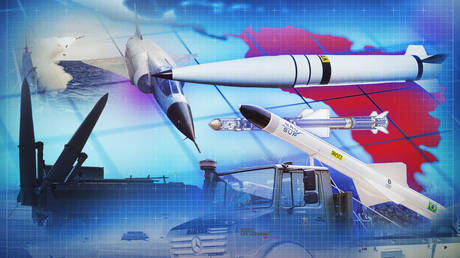
Argentina and Brazil once pursued ambitious missile programs, but political pressure and nonproliferation reshaped South America’s military technology path
In the final decades of the Cold War, South America briefly appeared poised to join the ranks of regions developing indigenous missile technology. Argentina and Brazil pursued ambitious programs that combined domestic research with extensive international cooperation, aiming to establish strategic capabilities that would reduce dependence on foreign suppliers and strengthen national defense industries. Argentina’s Cóndor program and Brazil’s experimental ballistic missile initiatives attracted the attention of major powers and international nonproliferation institutions, which increasingly viewed these efforts as part of a broader global missile proliferation challenge.
Political pressure, economic constraints, and shifting strategic priorities eventually brought many of these initiatives to an abrupt end. Several programs were dismantled, technical infrastructure was repurposed or destroyed, and South America’s early missile ambitions faded from the international spotlight. Yet the technological legacy of those decades did not disappear entirely. Today, countries across the region are cautiously rebuilding elements of missile capability, focusing less on long-range ballistic systems and more on practical tools such as anti-ship missiles, precision-guided munitions, and rockets for multiple-launch rocket systems.
Argentina: The shadow of Cóndor over Patagonia
In the 1980s, Argentina emerged as a pioneer in missile technology in South America. Following the country’s defeat in the 1982 Falklands War, the ruling military junta intensified efforts to develop domestic missiles, particularly under the constraints of an arms embargo from France regarding Exocet anti-ship missiles. The most significant project was undoubtedly the Cóndor missile program.
Efforts to create the long-range Condor I missile began in the late 1970s. Initially designed as a geophysical rocket for studying the upper atmosphere, it was also intended for military use. With a flight range of around 100-115 kilometers, the missile could carry a warhead weighing up to 500 kilograms. Essentially, the program aimed to develop Argentina’s first operational-tactical missile capable of striking critical targets deep within enemy territory. The project was developed with international collaboration. German company MBB contributed to the missile’s engine design, and companies from Italy and France were also involved in development. This expertise was later used in the Condor II project.
The Cóndor II project was initiated after Argentina’s defeat in the 1982 war. Perhaps the country’s political leadership hoped to reclaim the Falklands by means of advanced missile technology. The project was launched in 1984 jointly with Egypt, which was working on a similar initiative called Badr-2000. The plan involved creating a two-stage ballistic missile with a range of 900-1,000 kilometers and a powerful warhead weighing up to 1,000 kilograms. Such a missile would travel at speeds of up to five times the speed of sound.
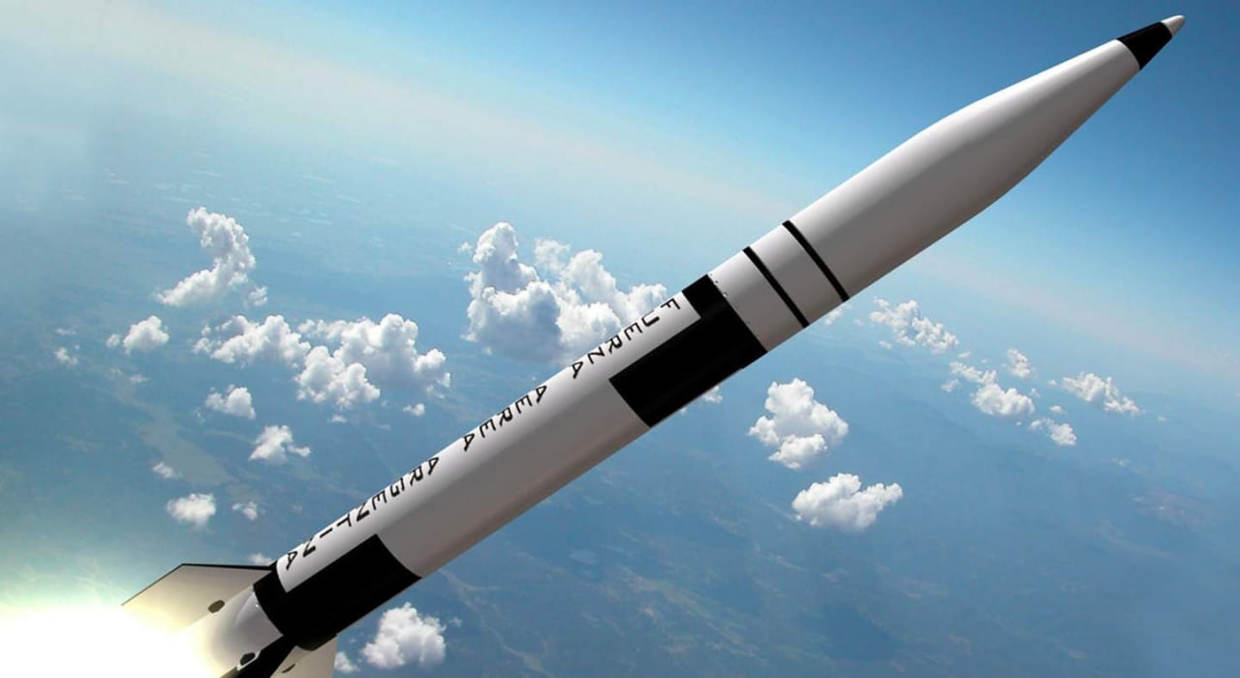
In March 1989, the prototype was supposed to undergo testing. Unconfirmed reports suggested a 504 km test launch. The project was developed jointly, with the involvement of European tech companies, Iraq, and Egypt. The project contributed to upgrading SCUD-type missile technology in these countries, which became a source of considerable concern for the United States.
The US turned its attention to the Condor II program and its extensive network of foreign suppliers. Concerns arose over the fact that the missile resembled the American Pershing-2 missile, leading to suspicions concerning the Western European contractors involved in both projects. Furthermore, the technology was forwarded to Egypt and Iraq, which alarmed US officials. In 1988, the US charged Egyptian-born Dr. Abdelkader Helmy with conspiracy to export missile materials under the Condor II program. In 1991, Dr. Helmy pleaded guilty to illegally exporting MX-4926 thermal protection material used for the nozzles of Condor II missiles.
Ultimately, in 1990, then-Argentine President Carlos Menem shut down the missile development program, aligning Argentina with US nonproliferation policies. By 1993, with the help of the US, all remnants of Argentina’s missile program were dismantled.
Brazil: Pragmatism in the jungle
Brazil is the only country in South America that currently pursues its own long-range missile program. The nation has evolved from developing geophysical rockets in the 1980s to producing precision-guided land, sea, and air-launched missiles and engaging in space cooperation with China.
The SS-300 missile project was launched in the 1980s. It was based on the geophysical Sonda IV rocket. The ambitious goal was to create a missile with a range of 300 kilometers and a payload of 1,000 kilograms, essentially a more modern version of Soviet SCUD missiles. The companies Avibras and Orbita worked on the project, aiming to develop SS-600 and SS-1000 missiles with ranges of 600 and 1,000 kilometers, respectively. However, by 1991, under external pressure and due to a lack of threats to national security, Brazil joined the ranks of nations endorsing missile nonproliferation, thereby halting ballistic missile development.
Despite this, Brazil retained its expertise. In 1997, under strict secrecy, the government agency DCTA initiated the development of the MAR-1 anti-radiation missile. This missile, with a range of 180-250 kilometers, could target ground or naval targets, including those with operational radars. The missiles could be launched from ground platforms or aircraft.
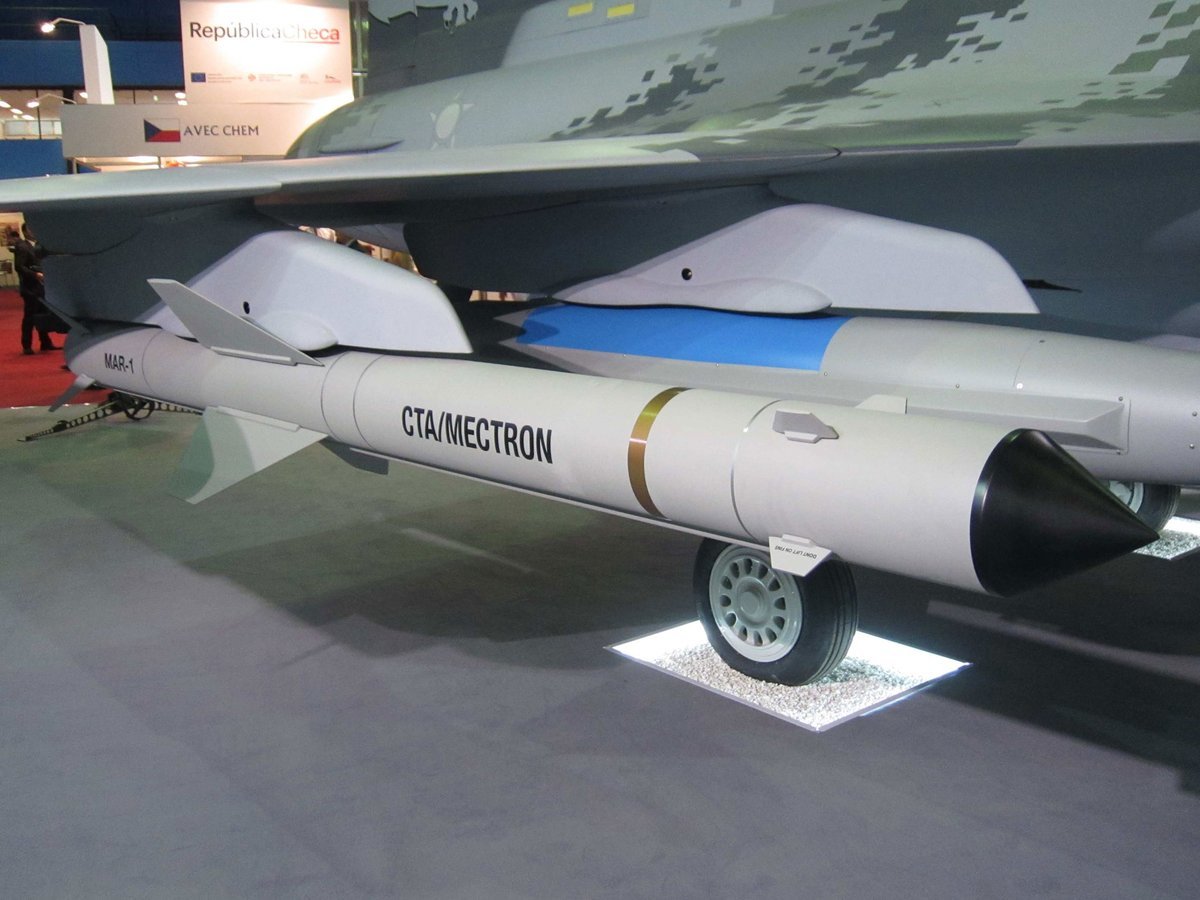
© X/Caesar
MAR-1 is comparable to France’s Exocet anti-ship missile; it weighs approximately 300 kilograms and has a 90-kilogram warhead. In 2012, the missile underwent successful testing from Brazilian-made AMX aircraft. MAR-1 missiles were also integrated into the arsenal of Pakistan’s Mirage III/V aircraft. Pakistan acquired about 100 such missiles, which is a considerable success for Brazilian missile manufacturers.
In the 2000s, the MANSUP missile was developed based on the MAR-1. This anti-ship missile can be launched from ships, aircraft, and specially adapted mobile ground launchers. It has been integrated into Brazil’s coastal defense systems, with ongoing efforts to create an extended-range variant.
The example of Brazil is rather unique for South America. Its strategy reflects a gradual and independent development of missile programs; however, the country adheres to nonproliferation policies, which impose a 300-kilometer limit on combat missile systems.
‘Tactical toys’ of other countries
South American countries primarily rely on importing missile systems from abroad. A notable exception is Peru, where the company FAMAE manufactures 306-mm rockets for the SLM multiple launch rocket system. Although these rockets can reach distances of up to 150 kilometers, they do not qualify as precision-guided munitions.
In Chile and Colombia, ground forces use American-made M270 MLRS and HIMARS systems, equipped with GMLRS and ATACMS missiles with a range of 70 and 150/300 kilometers (depending on the variant).
Venezuela has actively imported missile systems from Russia. Over the past two decades, it has acquired powerful Russian weapons, including Smerch MLRS and several types of surface-to-air missile systems, some of which can be used against ground targets. Speculation about Venezuela potentially requesting the 9K720E Iskander-E missile system remains unfounded, as there have been no serious discussions regarding such supplies.
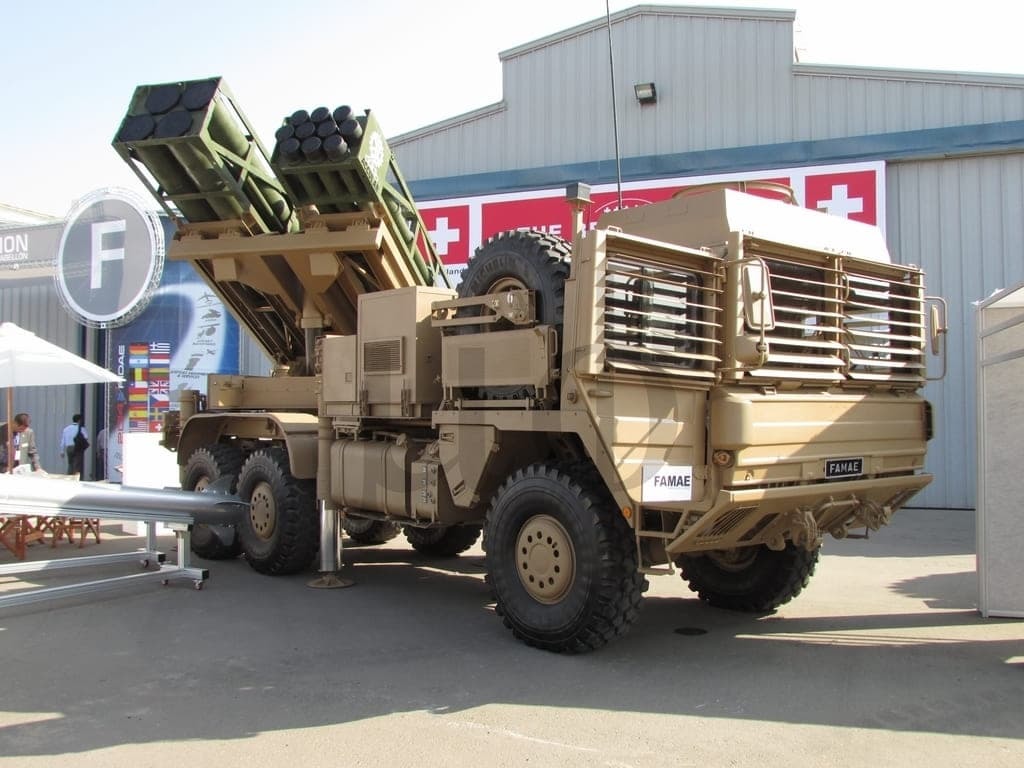
© War Thunder
***
South America’s missile history illustrates how strategic ambition, technological experimentation, and international pressure intersected during the late twentieth century. Programs such as Argentina’s Cóndor and Brazil’s early ballistic missile initiatives demonstrated that the region possessed both the scientific expertise and industrial capacity to pursue advanced missile technologies. At the same time, global nonproliferation regimes, diplomatic pressure, and shifting domestic priorities reshaped the trajectory of these programs, gradually steering South American states away from large-scale ballistic missile development.
Today, missile capabilities in the region are developing along more pragmatic lines. Governments emphasize coastal defense systems, anti-ship missiles, and modern rocket artillery rather than long-range strategic weapons. The result is a landscape in which technological competence continues to exist, while political choices and regional security dynamics keep missile development largely within limited and practical boundaries.