The US president is not just choosing between continuing the pressure or stopping the war – he is looking for a usable victory
The military and political dynamic around Iran has entered a more dangerous phase, yet the diplomatic choreography now unfolding suggests that Washington is no longer thinking only in terms of punishment and pressure.
Since March 20, the pattern has become unmistakable. The US and Israel have continued to widen the scope of their campaign against Iranian strategic infrastructure, including nuclear facilities, while Iran has answered by pushing retaliation toward symbols of Israeli nuclear deterrence and by threatening a broader regional energy shock. What appeared only days ago to be an escalation ladder without a visible ceiling is now also becoming a negotiation space, however deniable, fragmented, and politically fragile.
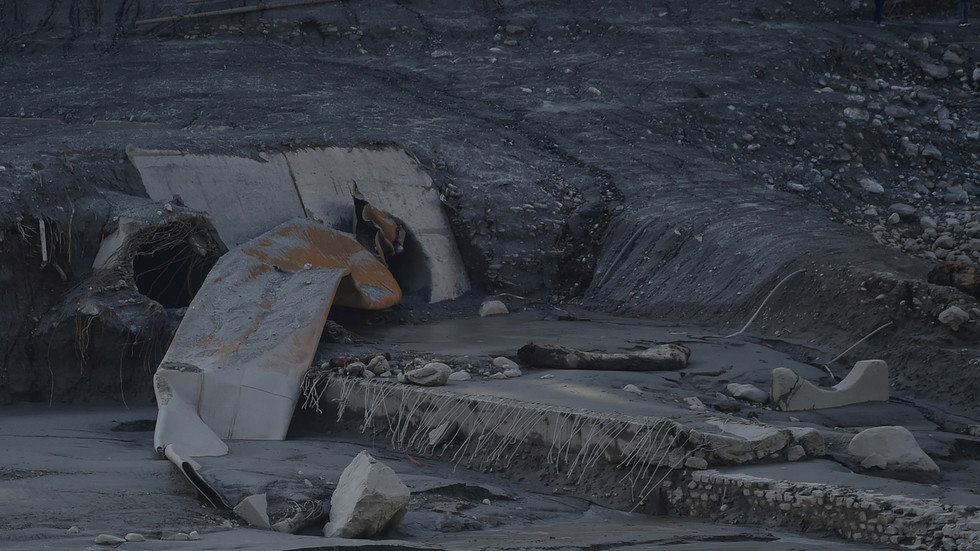
The most revealing episode of the past weekend was Iran’s strike on Dimona. Reuters reported that Iranian missiles hit the southern Israeli cities of Dimona and Arad, with Iranian state-linked messaging framing the attack as a strike on military and security-related targets in southern Israel. Dimona is inseparable from the wider symbolism of Israel’s undeclared nuclear capability. Whether Tehran intended a direct military message, a political signal, or both, the meaning was clear enough. Iran was demonstrating that if its own nuclear infrastructure is treated as a legitimate target, it is prepared to impose new psychological and strategic costs on the Israeli side by moving the conflict closer to Israel’s most sensitive deterrent geography.
That retaliation did not emerge in a vacuum. On March 21, the US and Israel launched an attack on the Natanz uranium enrichment facility. This was not merely another round in a familiar exchange of fire. It was a move against one of the core nodes of Iran’s nuclear program, and therefore against one of the central pillars of the Islamic Republic’s strategic identity and bargaining capacity. Once Natanz was struck again, the logic of reciprocal signaling became harsher. Tehran could not afford a response that looked routine. It needed one that restored the principle of deterrence by demonstrating that Israeli nuclear-adjacent geography was no longer outside the circle of retaliation.
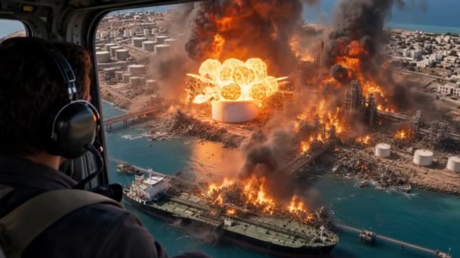
From March 20 onward, the war has therefore been moving along two tracks at once. The first is operational escalation. The second is political repositioning. On the escalation side, Reuters’ reporting shows a widening conflict in which attacks on energy, missile, military, and nuclear-linked sites are interacting with one another in a way that magnifies regional risk. Earlier strikes on Iran’s South Pars gas field and the Asaluyeh processing hub on March 18 had already added a full energy dimension to the war. That matters because energy infrastructure is not just another class of targets in this confrontation. It is the point at which regional warfare immediately becomes a global economic problem.
This is the background to Donald Trump’s ultimatum regarding Iranian energy targets. Reuters reported on March 22 that Trump threatened Iran with strikes on power plants over the Strait of Hormuz crisis, while Iran warned it would retaliate in kind against Gulf energy and water infrastructure if such attacks went ahead. In other words, Washington had moved from coercive rhetoric toward the edge of a decision that could have transformed a regional war into a direct systemic shock for oil and gas markets, maritime security, and allied infrastructure across the Gulf.
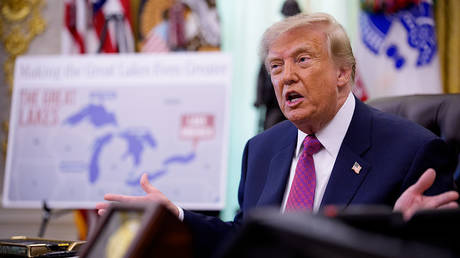
And then came the abrupt adjustment. On March 23, Trump announced that because negotiations had allegedly been underway for two days and because there were, in his words, major points of agreement, he would postpone a decision on military strikes against Iranian power plants for five days. Reuters, Axios, The Washington Post, CBS, and other outlets all reflected the same central fact. The White House was no longer speaking only the language of imminent escalation. It was also trying to construct a political case for delay.
The Iranian response was immediate and highly significant. Tehran denied that negotiations with the US were taking place and maintained that there were no meaningful communications with Washington. Iran publicly rejected Trump’s characterization of talks, while Iranian officials stressed that the country had not entered into the kind of channel the American side was implying. This denial is central to understanding the present moment. Tehran does not want to grant Trump an easy diplomatic headline, particularly one that can be presented domestically in the US as proof that military pressure has already bent Iran toward submission.
This is why the mediation story matters so much. Axios reported that Türkiye, Egypt, and Pakistan have been passing messages between Washington and Tehran, and that senior officials from all three states held separate contacts with White House envoy Steve Witkoff and Iranian Foreign Minister Abbas Araghchi. This shows that diplomacy is now being rebuilt through a distributed architecture rather than a single recognized channel. This kind of mediation allows both sides to test terms, map red lines, and lower the temperature without paying the full political price of direct acknowledgment. It is diplomacy under conditions of mutual denial, and that is often the form diplomacy takes when both governments still need the conflict narrative for domestic reasons.
At the same time, there are parallel indications that Oman and Qatar are also trying to shift the conflict back toward a diplomatic track. Reuters has already reported earlier mediation efforts by Oman, as well as repeated Qatari calls for de-escalation and a political solution. Doha publicly emphasized the need for dialogue, while Muscat has long remained one of the few channels acceptable to both Washington and Tehran at moments of high tension. Even where these efforts have stalled, been rejected, or been publicly minimized, they form part of the same regional pattern. Middle Eastern intermediaries understand that once energy infrastructure becomes a routine target set, the war ceases to be a contained confrontation and begins to threaten the entire economic and security architecture of the Gulf.
Seen from this angle, Trump’s five-day pause is less a sign of confidence than a sign of strategic necessity. He needs a way to stop, or at least freeze, the current phase of the conflict without looking as though he has stepped back under pressure. That is the central political dilemma of his position. A simple de-escalation would be easy for opponents to frame as hesitation. An uncontrolled escalation, on the other hand, carries obvious military and economic risks, especially if it expands into a sustained campaign against energy networks or triggers further disruption around Hormuz. Trump therefore requires something more specific than peace. He requires a presentable victory.
That presentable victory does not necessarily have to be substantive in strategic terms. It merely has to be legible in political terms. Trump needs to be able to tell his electorate that force produced results, that Iran was pushed toward concessions, that American resolve restored deterrence, and that he chose the timing of restraint from a position of strength rather than weakness. This is why the White House rhetoric has focused on supposed progress, productive contacts, and major points of agreement. It is building the narrative infrastructure for a pause that can still be marketed as success.
There is also a harder material reason for this repositioning. The energy markets are now too close to the center of the war. The conflict has already disrupted output and sent prices sharply upward, while strikes on energy facilities across the Gulf have highlighted just how quickly regional confrontation can become a global market emergency. In such an environment, Washington cannot treat escalation against Iranian power and energy assets as a purely military option. It is also a decision about inflation, shipping, ally vulnerability, and the political economy of the US itself.
That reality is especially important for Trump. He is not simply managing a war. He is managing the domestic consequences of war in a political system that is acutely sensitive to fuel prices, market volatility, and perceptions of strategic drift. A strike package against Iranian energy infrastructure might satisfy the logic of coercion in the narrow sense, but it could also ignite exactly the kind of market turbulence that would weaken his broader political position. The result is a familiar but unstable pattern. The White House escalates rhetorically to maximize leverage, then searches for an exit ramp before the economic aftershocks become more damaging than the original problem.
The contradiction, however, is that Iran sees this vulnerability too. Tehran understands that Washington wants coercive leverage without a prolonged energy crisis. That makes American urgency visible. And once urgency becomes visible, it can be used. This is one reason Iran has publicly denied the talks Trump invoked. By rejecting the image of active negotiations, Tehran seeks to deny him the public relations dividend of de-escalation. It also preserves Iran’s own claim that resistance, not accommodation, forced Washington to hesitate. In this contest, narrative control is not secondary to military action. It is part of the battlefield.
Israel, for its part, is likely to read the current moment through a different lens. For Israeli decision makers, the value of continued pressure on Iran’s nuclear and strategic assets is obvious. Every day of sustained attrition degrades capabilities, complicates recovery, and may create new opportunities for future leverage. But Israeli priorities are not identical to American ones. Israel can accept a higher degree of regional tension if it believes the campaign is producing long-term security effects. Washington must also reckon with alliance management, Gulf stability, energy markets, and domestic macroeconomics. That difference does not automatically produce a rupture, but it does create a divergence in preferred end states.
This is why the period since March 20 matters so much. It has exposed the limits of a purely military logic. The strikes continued. Iran retaliated near Dimona. Trump then threatened new attacks on Iranian energy infrastructure. Iran answered with warnings of reciprocal attacks on regional energy and water systems. And almost immediately afterward, a diplomatic scramble accelerated through multiple mediators. The sequence is instructive. The war did not produce a clean hierarchy of dominance. It produced a confrontation in which each side could still impose costs and in which further escalation threatened to damage actors well beyond the immediate battlefield.
For Trump, therefore, the imperative is not simply to continue or to stop. It is to stop in a way that looks like continuation by other means. He needs to preserve the image of pressure while quietly increasing the weight of mediation. He needs to claim that Iran moved first, even if the practical mechanism is indirect contact through third countries. He needs a diplomatic pause that can be sold as the product of coercive success. And he needs this quickly, because every additional day of uncertainty in the energy domain raises the economic and political cost of keeping the war open ended.
The next few days will therefore be decisive, though perhaps not in the dramatic way public rhetoric suggests. The real question is not whether either side can still escalate. They clearly can. The real question is whether the emerging mediation web involving Türkiye, Egypt, Pakistan, Oman, Qatar, and others can produce enough diplomatic ambiguity for both Washington and Tehran to step back without openly admitting retreat. That is often how crises of this kind are managed. Not through trust, and not through reconciliation, but through carefully staged ambiguity that gives each side a different version of the same pause.
What is now visible is that Trump is looking for a reason to stop the conflict before it imposes costs he cannot control. But he cannot simply stop. He must show success first. That is why the language of progress has appeared so suddenly. That is why the five-day delay matters. And that is why the denials from Tehran are equally important. One side is trying to manufacture a victory narrative before de-escalation. The other is trying to deny it that victory while still leaving room for maneuver. Between these two imperatives lies the present diplomatic opening, narrow but real, and shaped as much by oil, optics, and electoral calculation as by missiles and military doctrine.
In the end, the Trump administration appears to have walked into a trap set in large part by the political logic of Israel’s current leadership. This is a conflict in which there are, in reality, no true winners among the major states directly exposed to its consequences. The United States risks strategic overstretch, higher energy prices, and a new cycle of regional instability. Iran faces mounting military, economic, and political pressure with no guarantee that endurance alone will improve its position. The wider region is forced to absorb the shock through insecurity, market disruption, and the constant danger of uncontrolled escalation. Even ordinary Israelis are unlikely to emerge from this confrontation strengthened, because a prolonged war means fear, losses, economic strain, and the normalization of permanent emergency. Yet for the ultra-right forces inside the Israeli government, the picture looks different. For them, the conflict can still be presented as a form of political victory, because every new round of escalation brings them closer to their long-standing goals of permanent confrontation, maximal security centralization, and the destruction of any remaining space for compromise. In that sense, Washington is now trying to escape a crisis whose costs are broadly shared, while the actors most ideologically invested in escalation continue to see in it not a disaster, but an opportunity.