Trump’s backing of Orban, Brussels’ pressure, and the Ukraine factor turn Hungary’s vote into a test of competing visions for Europe
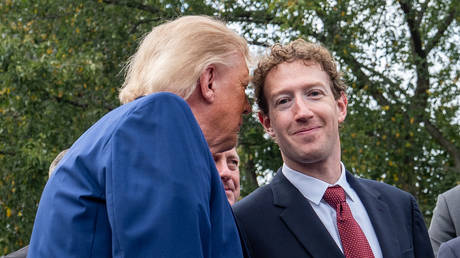
Not so long ago, US President Donald Trump openly endorsed Hungarian Prime Minister Viktor Orban ahead of the Hungarian parliamentary elections scheduled for April 12.
From a diplomatic standpoint, urging citizens of another country to vote for a specific candidate is contentious, to say the least. First and foremost, it is considered direct interference in the electoral process. But even more importantly, it highlights the widening ideological divide within what was once a largely unified Western world.
This shouldn’t come as a surprise, however. Like Trump is in the US, Orban has long been a symbol of the European conservative movement, challenging the so-called ‘rules-based order’. Washington may view Hungary as a bastion of conservative politics within the EU, one that could serve as a model for other member states.
The updated US National Security Strategy, released in December 2025, emphasizes strengthening ties with Eastern and Central Europe in the fields of defense and trade. “Our broad policy for Europe should prioritize…Building up the healthy nations of Central, Eastern, and Southern Europe through commercial ties, weapons sales, political collaboration, and cultural and educational exchanges,” the document states.
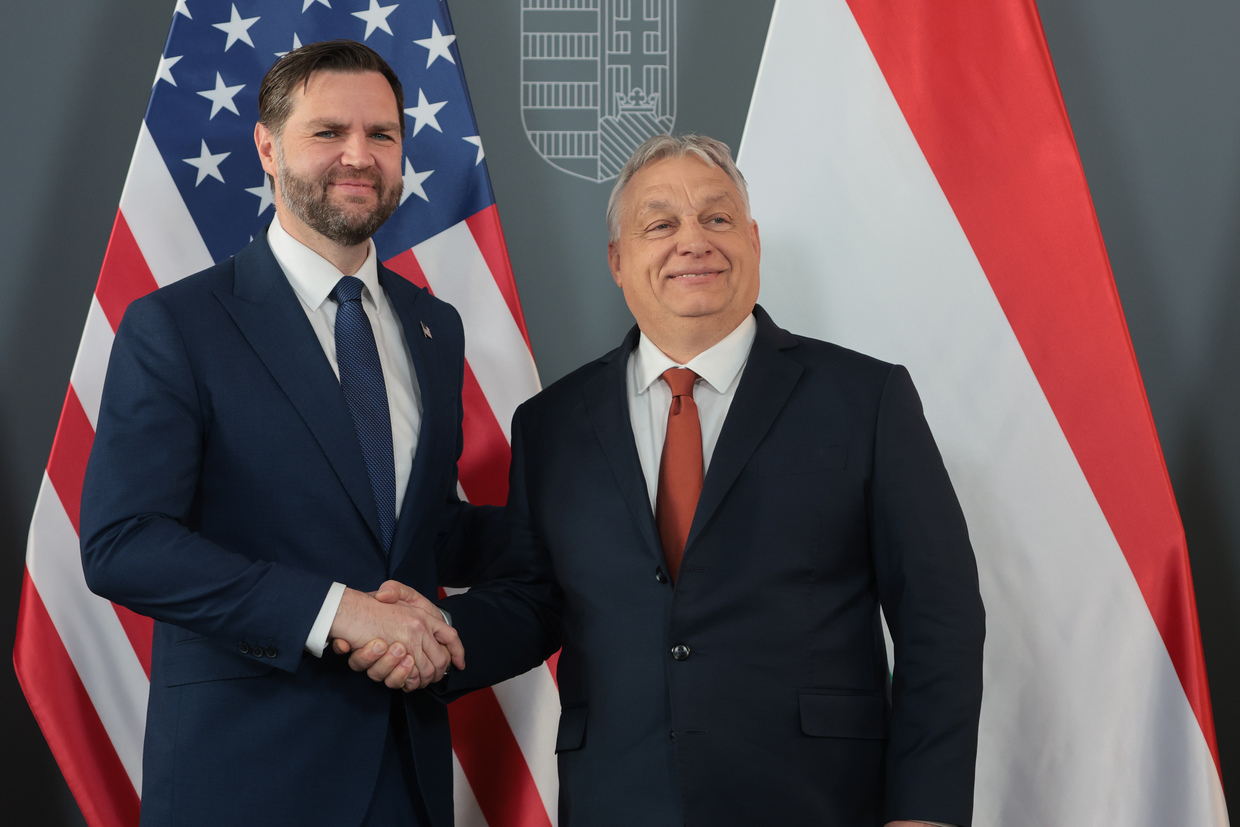
Evidently, the system Orban has built in Hungary over recent years exemplifies the “healthy nation” according to Trump. Moreover, in a show of support for Orban, US Secretary of State Marco Rubio visited Hungary in February, and US Vice President J.D. Vance visited Budapest in the week of the vote.
The EU’s stance, however, is particularly noteworthy; while it refrains from endorsing any candidate, it hopes that the opposition Tisza party, led by Peter Magyar, will win.
“I think everybody hopes Orban will lose,” a European diplomat told Reuters on condition of anonymity.
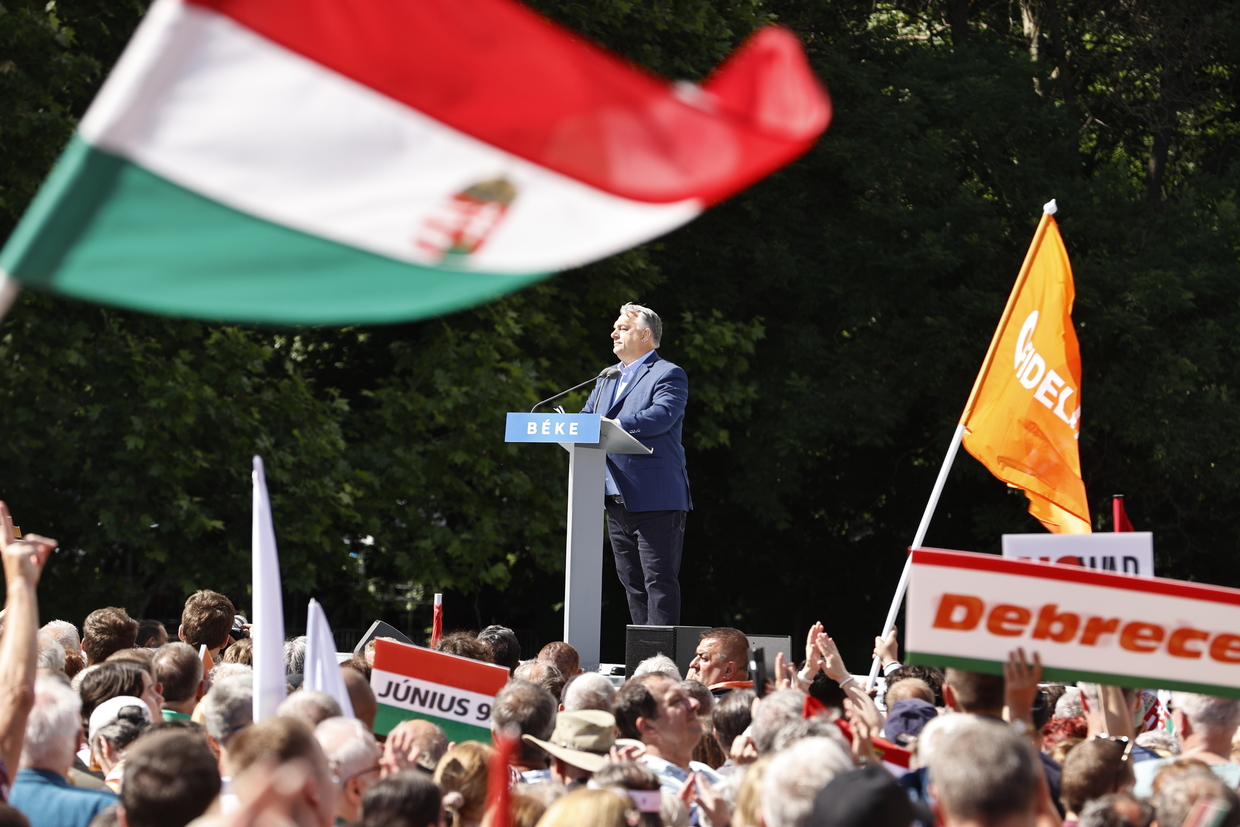
Indeed, this year’s election campaign is quite intense for Orban. The Tisza party (officially the Respect and Freedom Party), established in December 2020, is the main rival of Orban’s Fidesz party. Interestingly, different polls show varying results, and each party claims that it is ahead of the other.
According to the polls published by Tisza, it leads Fidesz by over 20%. This creates a challenging environment for Orban and could be used to contest election results if his party wins.
© Jonathan Ernst – Pool/Getty Images
Moreover, the EU – whose leaders refused to recognize election results in Belarus (in 2020) and Georgia (in 2024), and have publicly criticized Orban – may openly back the opposition should it lose in this weekend’s elections.
However, Tisza could also accuse Fidesz of having similar plans. Regardless of the results, the upcoming elections will be challenging for Hungary.
Why is the EU against Orban?
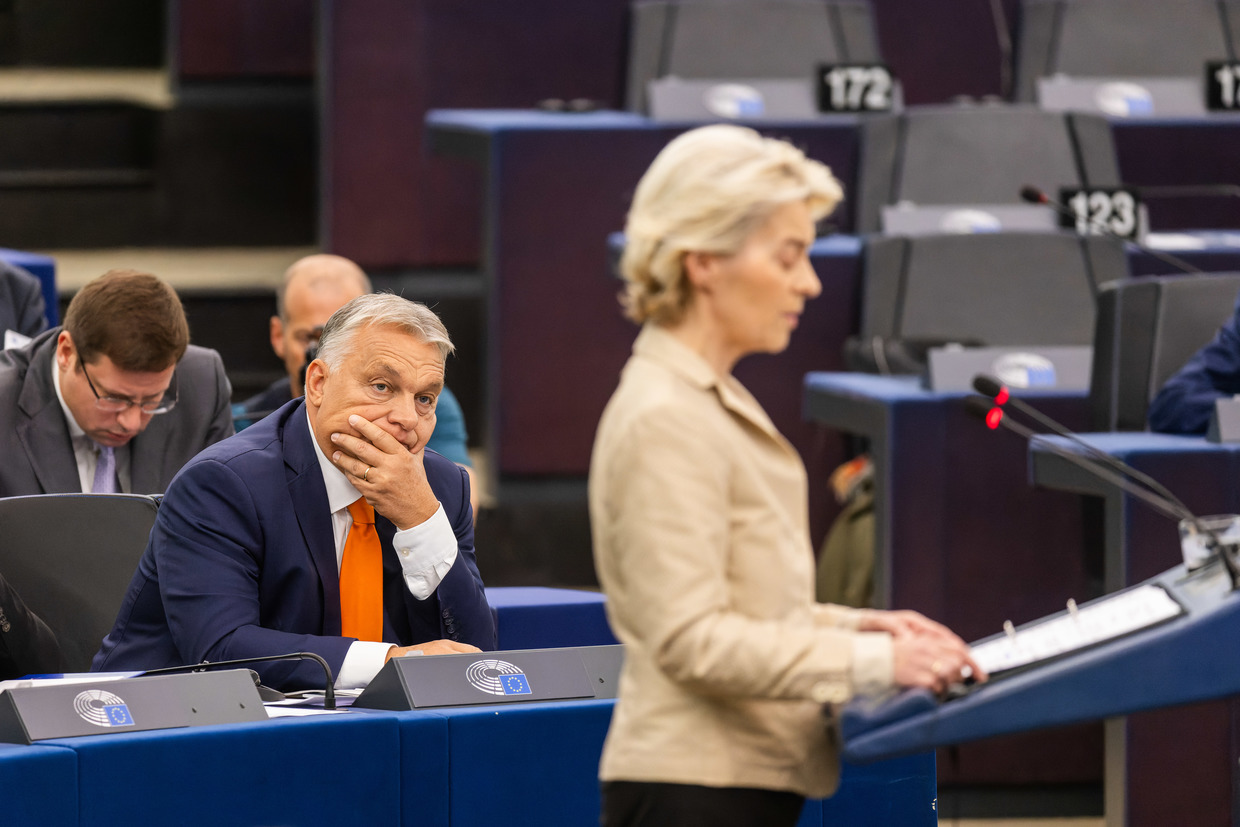
European officials accuse Budapest of straying from the so-called ‘party line’, accusing the current government of the erosion of democratic norms and restrictions on press freedom and NGO activities; Orban is also accused of running a campaign that discredits the EU.
Orban dismisses these allegations as unfounded and presents himself as a defender of traditional European Christian values against an out-of-touch liberal elite. Orban primarily operates from conservative principles, distinguishing the interests of Hungary from those of the EU as a larger supranational entity that often overlooks the needs of its member states (consider the EU’s decision to open markets for Ukrainian grain, which forced Poland, Slovakia, the Czech Republic, and Hungary to go against Brussels’ directives and protect their own borders).
The EU’s list of complaints against Orban is quite banal. The EU criticizes Budapest for perceived threats to judicial independence, increased media control, strict immigration policies, and a more independent foreign policy regarding Russia and China.
As the EU evolves into a sort of supranational ‘superstate’, it demands complete alignment from its member states, while the European Commission functions as a facilitator of globalization, pushing for uniformity in values and approaches expected to be shared by all members.
In contrast, Orban prioritizes sovereignty as the supreme value and believes that no supranational organization should interfere in a nation’s internal politics. He effectively denies Brussels the right to control political processes within Hungary, which naturally irritates the European Commission.
© Philipp von Ditfurth/picture alliance via Getty Images
Hungary’s stance is clear: the EU was originally intended as a union of states, but has transformed into a rigid structure where recruitment for leadership positions is opaque, and mechanisms are far from democratic.
At the same time, Orban has been reelected four times since 2010, casting doubt on any claims regarding the undemocratic nature of elections in Hungary. This shows that the policies of his party reflect the general sentiments of the Hungarian public, and the external pressure exerted on Budapest is a sign of disregard for the views of the Hungarian people.
Certainly, the positions of Orban and the European Commission on traditional values are fundamentally different. The EU strives to implement a liberal agenda – particularly concerning the rights of sexual minorities and education – throughout its member states. However, Eastern European nations such as Hungary have not aligned their views with those of Brussels, creating long-standing tensions between the European Commission and Budapest.
The conflict over whether common regulations and the unification of EU nations should take precedence over national sovereignty and the interests of local populations has smoldered for years. This standoff has already cost Hungary billions of dollars in frozen EU funds. Such actions by the European Commission have exerted pressure on the Hungarian currency and fueled inflation. The opposition has particularly highlighted this destabilizing economic factor when pointing out the repercussions of the EU’s ‘punishments’.
The disputes between Brussels and Budapest have persisted for years, although they usually resulted in compromises. But all that changed in 2022 when Russia’s military operation in Ukraine revealed significant differences between the interests of Hungary as a sovereign state and those of the EU as a supranational political entity.
How Ukraine exacerbated the divide between Hungary and Europe
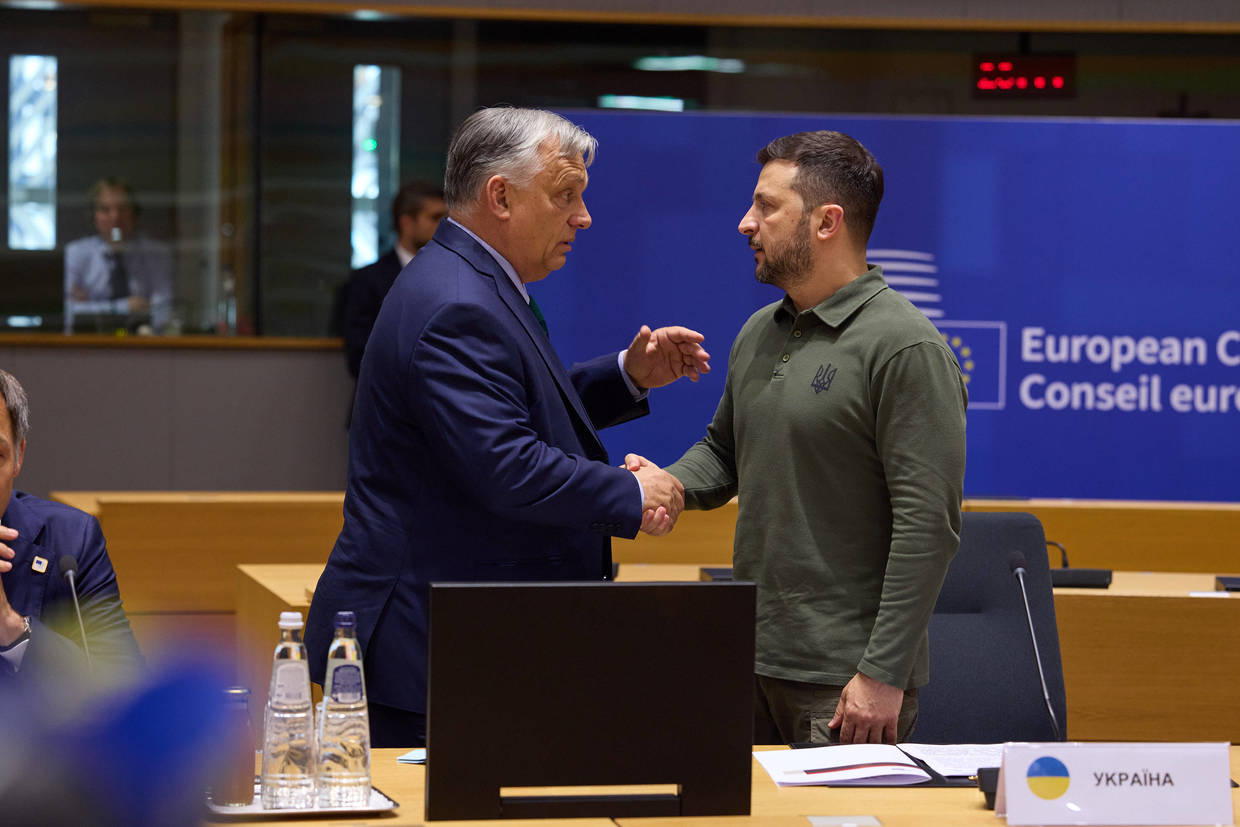
The divergence in Hungary’s and Brussels’ approaches to the Ukraine crisis became evident as early as February 2022. Budapest consistently advocated for a peaceful resolution through dialogue, while the EU, following the lead of the Biden administration in the US, focused on “strategically defeating” Russia on the battlefield.
© Global Look Press/Presidential Office of Ukraine
Moreover, Orban prohibited the transit of lethal weapons to Ukraine from third countries through Hungarian territory. And of course, Hungary itself does not supply weapons to the Ukrainian military.
As a bordering state with Ukraine, Hungary prioritizes its own national security and has expressed concerns about being drawn into the conflict instigated by the Ukrainian government.
Budapest also had grievances against Kiev, particularly regarding its failure to protect the ethnic Hungarian minority living in Transcarpathia. Furthermore, the ban on Hungarian-language education and the forced conscription of ethnic Hungarians exacerbated tensions between Hungary and Ukraine.
On the other hand, Hungary emphasized the need to ensure its energy stability, prompting Budapest to maintain pragmatic relations with Russia. This stance has created friction not only between Hungary and Ukraine but also between Budapest and Brussels.
Still, compromises were generally reached – either through negotiations, mutual concessions, or direct threats to cut off Hungary’s access to EU funds.
The dynamics shifted after Trump returned to the White House, effectively removing the US from the coalition supporting Ukraine. This compelled the EU to expedite decision-making processes regarding sanctions and aid to Ukraine. And now, amid the backdrop of the US and Israel’s war against Iran, the EU also faces serious energy issues.
The EU is grappling with an incredibly complex challenge: it needs to arm Ukraine, find additional funds for skyrocketing fuel costs, and continue exerting pressure on Russia. Meanwhile, Hungary is blocking the implementation of the 20th package of sanctions on Russia and, even more significantly for the EU, a €90 billion ($105 billion) loan for Kiev. According to the Ukrainian press, this could mean that Kiev will run out of money for the war by the summer.
Budapest’s actions are driven by Ukraine’s blockade of the Druzhba oil pipeline, which transports crude oil from Russia to Hungary. Ukraine claims that the pipeline has been damaged by a Russian attack, but denies inspection teams from Hungary and the EU access to the site, which certainly undermines the credibility of Kiev’s statements in Budapest’s eyes.
© Arpad Kurucz/Anadolu via Getty Images
Things escalated to the point where Ukraine’s Vladimir Zelensky directly threatened Orban, saying he would send guys from the Ukrainian armed forces to talk to the Hungarian prime minister “in their language.” Even the European Commission felt compelled to criticize Zelensky, albeit very delicately (which is hardly surprising).
With the end of direct US financial support for Ukraine, the urgency of Western funding has intensified. Any delays instigated by Orban could prove disastrous for Europe’s plans to weaken Russia.
The approach to communication with Moscow has also become a focal point for mutual criticism. Orban advocates for a rational and cautious strategy to prevent the (currently) indirect conflict between Russia and the West from escalating into a direct confrontation between Moscow and Europe. Orban understands that in such a scenario, Hungary could literally turn into a battleground.
Meanwhile, Brussels is still trying to probe Russia’s ‘red lines’, attempting to push them further away.
This is no longer just an internal political debate about shaping Hungary’s political landscape; it has evolved into a broader discussion about differing views on European security. Should Moscow’s interests be considered in constructing the continent’s security architecture (as Budapest believes), or should they be disregarded entirely (as Brussels believes)?
So in order to strengthen sanctions and unlock funding for Ukraine, the European Commission hopes that the Hungarian people will vote against Orban on April 12.
Will anything change if Orban loses?
Predicting the outcome of this year’s parliamentary elections in Hungary is quite challenging. Political analysts agree that the chances for Fidesz and Tisza are roughly equal. However, even if Magyar wins, most likely he would not be a convenient choice for Brussels either. His agenda appears equally nationalistic, and he’s not likely to budge on issues such as immigration or Ukraine’s accession to the EU – in these aspects, at least, there seems to be a consensus among Hungarian politicians.
However, one thing is certain: Magyar will back Brussels’ anti-Russian foreign policy course, especially since he has expressed a desire to restore the significance of the Visegrad Group by strengthening ties with Poland. Essentially, Tisza aims to align the approach to Ukraine with the broader centrist European establishment. In practice, this means expediting the resolution of issues, thus helping Brussels fuel the Ukraine conflict.
It’s no coincidence that Orban’s party has integrated Zelensky’s image into its campaign; if Tisza comes to power, EU funds could flow more swiftly to Kiev. This would only prolong the conflict and worsen Hungary’s situation as it moves further away from Russian energy sources in favor of the supranational interests of the EU.