Tehran has tightened control over the waterway as peace talks with the US have so far remained fruitless
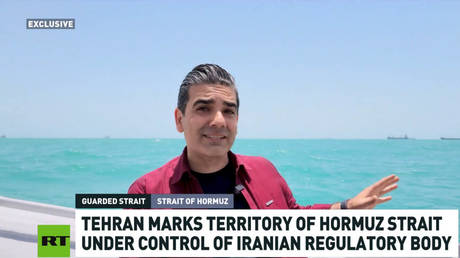
RT has gained rare access to the Strait of Hormuz, where hundreds of vessels are backed up waiting to pass through one of the world’s most critical shipping chokepoints.
The waterway has remained largely shut since the US-Israeli attack on Iran in February and Tehran’s subsequent standoff with Washington.
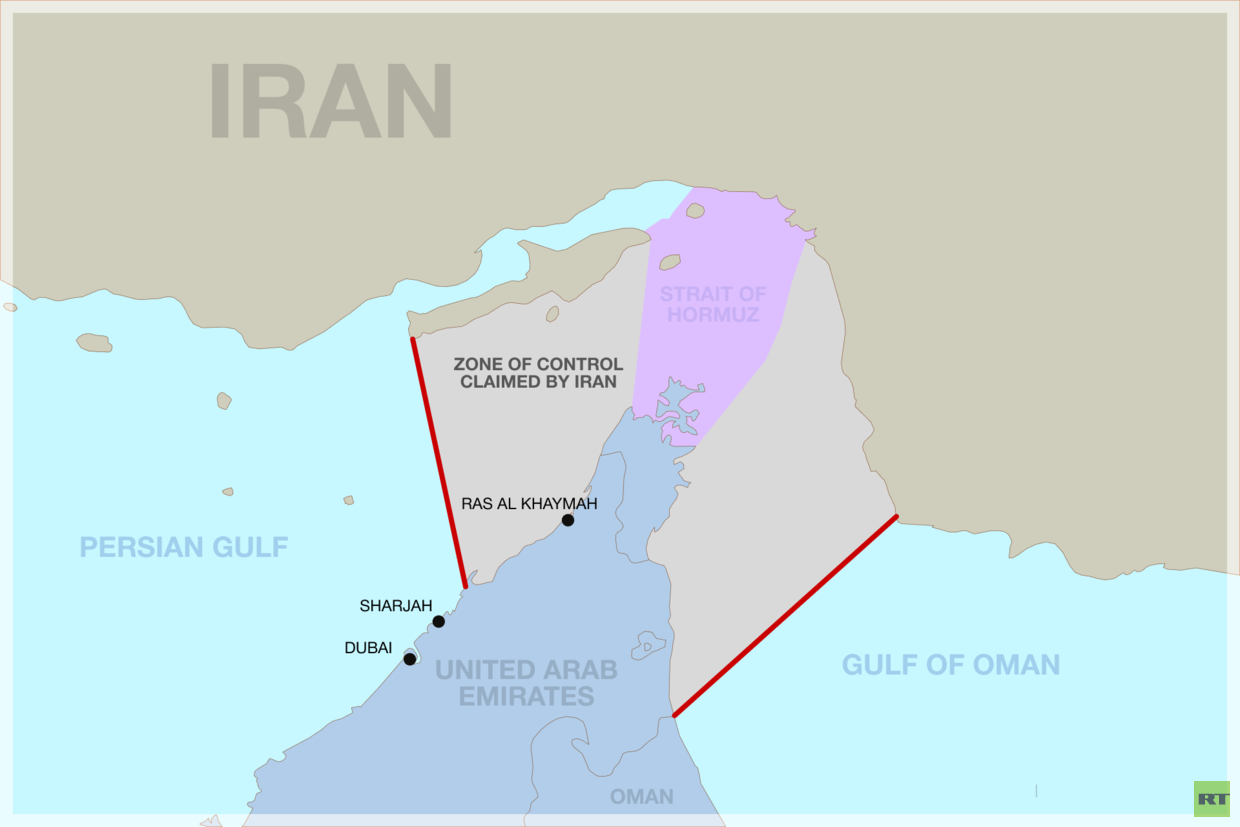
Earlier this month, Iran announced the creation of the Persian Gulf Strait Authority (PGSA), a new body tasked with overseeing transit through the strategic passage, which carries roughly a fifth of the world’s seaborne oil and LNG. Tehran said that vessels seeking passage would need PGSA permits and declared a sweeping zone of control stretching from its coastline toward waters near the UAE.
© RT
According to RT correspondent Saman Kojouri, “the scale of the maritime congestion here is immediately visible” with hundreds of vessels in the area, many awaiting permission from Iran’s Islamic Revolutionary Guard Corps (IRGC) to pass.
While Iran insists that the Strait of Hormuz remains open to crucial energy shipments, it stresses that vessels need to coordinate their passage with the IRGC, and that “countries considered hostile toward Iran cannot freely operate inside and through the corridor,” Kojouri said.
Tehran has maintained that the measures are in place “to prevent further escalation” and preserve regional stability in the Middle East, he added.
US President Donald Trump on Wednesday threatened to resume strikes on Iran if the Islamic Republic did not give Washington “the right answers” in the peace negotiations.
Watch RT’s full report from the Strait of Hormuz below.