You might have a friend who spends their weekends hopping from sample sale to sample sale (preview days, not general access). They may spend their Saturday mornings poring through their inboxes, reading the latest digests from industry bibles like Puck News and Air Mail. Their Vinted searches could be bottled and sold for their ability to unearth archival treasure. Their Mastermind subject would be shoe designers of ’90s fashion houses. They subscribe to a clutch of thinkers who approach style like a science on Substack, such as Rian Phin’s Cultural Production or Amy Francombe’s Amy_Coded. They have an avatar on Doji, an app that lets you try looks on your own likeness. In short, they haven’t just got style, they’ve got a sky-high fashion IQ.
In a fashion landscape underpinned by social media, where nothing stays under the radar, it’s become a new kind of capital. A blue tick of authentication that conveys more than IYKYK (in 2026, everyone knows). These days, it’s about whether you have a feature on Perfectly Imperfect, co-hosted a La Watchparty with Lyas and had the privilege of sitting on Bella Freud’s couch for a dedicated episode of her Fashion Neurosis podcast.

And whilst it helps to have designers on WhatsApp or a discount at Dover Street Market, one’s IQ—fashion or otherwise—can be improved, enabling you to better serve your wardrobe. (Also, you don’t have to work in fashion to score highly; check out Erchen Chang, co-founder and creative director of Bao; Teya Kepila, a ceramicist; Mya Hansel, a law student and Kat Chan, a nutritional therapist.)
Endrit Nurcaj does work in fashion as the style editor of Encore!, but doesn’t live in a fashion capital (the lifestyle magazine is based in Switzerland). His fashion philosophy is the opposite of what you might expect from someone with a high fashion IQ. For starters, he doesn’t like gatekeeping, and names the brands he’s loving at the moment as RECTO, Nothing Written (both of which are Korean) and Welter Shelter.
“I like sharing things I discover. If anything, I’m sometimes worried about the opposite phenomenon: ending up in a very small circle where everyone follows the same people, wears the same brands and starts looking at fashion through the same lens,” he tells me. His biggest style influence also might surprise you. “Ralph Lauren is probably the obvious answer (and a cliché one),” he says. “Through all his different labels and worlds, he somehow always remains himself. Purple Label is Ralph Lauren, Polo Ralph Lauren is Ralph Lauren, RRL is Ralph Lauren. They are completely different facets of the same identity. I love that he never seems trapped in one particular fashion prism,” says Nurcaj, who always finds a way to make a shirt by Polo Ralph Lauren, say, look more than the sum of its parts, pairing a sun-bleached denim style with distressed jeans on a recent holiday in Las Vegas.
Having the self-awareness to like what you like and let that—not friends, “tastemakers”, trends or algorithms—determine how you dress is part of the process. Olivia Singer, the editorial director of Prototype, springs to mind; someone who never falls into cliché territory despite only wearing black. As does Gabriella Karefa-Johnson, the fashion director and stylist with a self-described “maximalist sensibility and peacocking tendencies”.
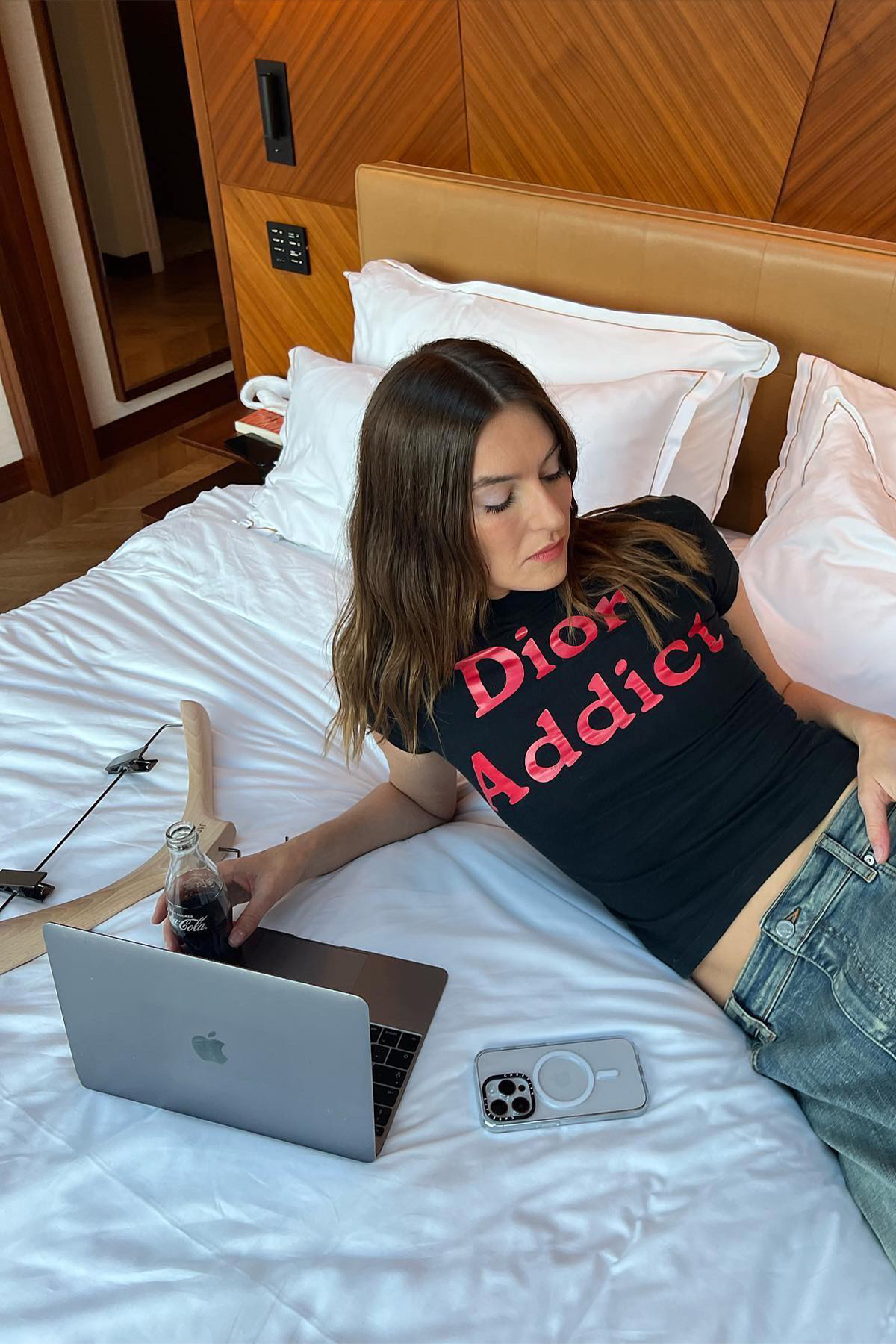
“I’m much more interested in someone who has developed their own visual language over time,” says Nurcaj, who also prefers shopping in person. “I like the whole experience of it: talking to a salesperson, looking at the clothes properly, touching the fabrics and, most importantly, trying things on. I need that physical connection with a garment. I’m not particularly interested in being “in season” either. I’ll happily buy something in the sales, in an outlet, secondhand or somewhere completely unexpected. For me, the place matters less than the feeling of finding the right piece.”
As well as analogue shopping, you can expand the horizons of your taste by delving into the “contemporary” bracket of brands. I’ve recently picked up two on the more pared-back side as they’ve both just launched at Net-a-Porter: Ruohan, the eponymous womenswear label by Wang Ruohan, and FANE, a handbag brand from Paris.
You can also consume forms of media that prioritise original thought as much as visuals. Substack differs from Instagram, Pinterest and TikTok in one vital way. “The platform isn’t built to keep you in an endless doom scroll; it’s built to connect you with creatives you’ll actually love, and hopefully leave you feeling inspired,” says Farrah Storr, Substack’s head of international. The site has just announced a translation feature that means it’s never been easier to not only find content outside your own echo chamber, but consume it, too. Ultimately, the appeal of the newsletter form is simple: it’s “a real person telling you what style means to them,” says Storr.

Substack’s deputy editor, Danya Issawi, who was previously fashion news writer at The Cut, was already centring her own style before she took a side-step outside of the fashion industry. “Having spent years working in and around fashion, I honed in on what my personal style is and feels like whilst blocking out noise from the industry at large,” she tells Who What Wear UK.
Her favourite newsletters—by writers who undoubtedly have very high fashion IQs—offer no set way to be “on trend” or “It”. Instead, they’re much more personal. “There is no singular way anyone goes about it. Every publisher brings their own unique perspective and follows their curiosity, which is what I’ve always been hungry for as a reader. I always enjoy Gabriella Karefa-Johnson’s voicey dispatches from fashion weeks and her commentary on the industry writ large. Viv Chen’s posts always inspire me when I’m vintage shopping or getting dressed. Liana Satenstein is an absolutely delightful read. [She’s] able to weave trend reporting in with her hilarious, obsessive tone. Biz Sherbert does exactly what I loved most when I was writing about fashion and takes an earnestly curious, anthropological lens to what people are wearing across the country,” says Issawi.
Want to test your fashion IQ?
I know what you wore last summer: Versace’s printed skirt, obviously.
Forget Yesteryear; fashion’s book clubs are bookmarking Fruit Fry by Josh Silver.
IYCYMI, slogans are back. It’s all about “I ❤️ Erotica”.
John Dutton, who? Those in the know holiday at Ranchlands, Wyoming.
We’re done with Celine’s bug shades; stylish girlies are wearing The Atlas, a bold frame by NYC brand Thistles.