Netanyahu needs escalation to survive politically; Trump needs cheaper fuel before voters punish Republicans
Israel is now formally in campaign mode. The Knesset dissolved on July 17, and voters go to the polls on October 27, 2026. A week later, on November 3, American voters decide the composition of Congress.
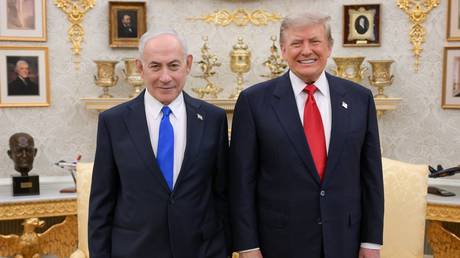
The overlap is almost exact, and it has turned the relationship between Prime Minister Benjamin Netanyahu and President Donald Trump into something closer to a competition than an alliance. What helps one man survive politically threatens to sink the other.
Netanyahu needs Iran to dominate the Israeli campaign. His best path back to power runs through a public that feels an immediate security threat and a prime minister positioned as the only leader capable of ordering military action at scale. Trump needs the opposite: proof to American voters that a long war is over, that gasoline prices are falling, and that no more Americans are dying for someone else’s fight. The result is a near-perfect zero-sum bind. A new round of escalation could hand Netanyahu a path to victory while costing Republicans their House majority. A negotiated end to the conflict could hand Trump a signature achievement while leaving Netanyahu exposed to hostile polling and an unresolved domestic reckoning.
An opposition advantage that doesn’t guarantee a government
On paper, Netanyahu’s position looks weak. The Knesset has 120 seats, a governing coalition needs 61, and any party must clear a 3.25% threshold to enter parliament at all – meaning the real battle isn’t just for vote share but for keeping allied parties above the line.
As of October 8, 2026, Israeli polling presents a mixed picture, with neither Netanyahu’s bloc nor the Zionist opposition securing a parliamentary majority in the latest surveys. A Channel 13 poll published on October 7 put Netanyahu’s bloc at 55 seats, the Zionist opposition at 50, and Arab parties at 15. The Yashar party of former IDF Chief of Staff Gadi Eisenkot and Netanyahu’s Likud were tied at 20 seats each, although Eisenkot retained a personal lead as the preferred prime minister, with 44% support against Netanyahu’s 40%.
A Channel 12 poll published on October 5 showed a different balance: 49 seats for Netanyahu’s bloc, 54 for the Zionist opposition and 13 for Arab parties. Yashar led Likud by 23 seats to 21, while Eisenkot led Netanyahu by 41% to 38% on suitability for prime minister.
A summer survey on whether Netanyahu should even run again found that 61% of Israelis opposed his participation in the upcoming election, while 35% supported it. Among Jewish respondents, 57% opposed another candidacy and 39.5% supported it.
None of this makes his defeat inevitable, because the opposition’s real problem is forming a coalition. Eisenkot, the Bennett-Lapid alignment, Avigdor Liberman’s party, and the left could plausibly out-poll Netanyahu’s bloc and still lack a workable majority without leaning on Arab parties, an arrangement much of the Jewish opposition leadership is unwilling to commit to publicly. A Netanyahu bloc stuck around 50 seats doesn’t automatically mean a change of government; it leaves room for him to peel off defectors, split rivals, or force a repeat election.
His current partners – the ultra-Orthodox Shas and United Torah Judaism, along with the far-right Otzma Yehudit and Religious Zionism – are disciplined blocs, but keeping them requires continuing to push yeshiva exemptions from military conscription, expanding executive influence over the judiciary and media, and holding a hard line on the Palestinians. Those same moves alienate the center, military reservists, and secular Israelis. The conscription fight in particular has repeatedly brought the coalition to the brink of collapse, and in its final weeks before dissolution the outgoing Knesset pushed through several contested measures on conscription, judicial authority, and media regulation.
War helps Netanyahu
Security remains the one lever capable of reshaping the campaign overnight. On the normal political agenda, Netanyahu has to answer for the October 7, 2023 intelligence and defense failure, the strain of prolonged reserve-duty mobilization, a difficult economy, and years of domestic polarization. A fresh war pushes all of that into the background and reframes the election as a referendum on wartime leadership.
The pattern has already played out once. After what Israelis broadly regarded as a successful twelve-day war with Iran in summer 2025, Likud’s support hit its highest point since the 2022 election. But by July 2026 the party had slid back down to roughly 21-24 seats.
Israeli public opinion is a genuine paradox here: war-weary, yet unwilling to accept a settlement seen as premature. Only 38% of respondents believe Israel’s security position has actually improved since the war with Iran. Polling from the Institute for National Security Studies finds 43% believe the war ended without a clear result, 37% consider Iran the winner, and just 15% consider Israel the winner. Separately, 66% viewed the US-Iran memorandum signed in June as unfavorable to Israel, and a majority of Jewish respondents have said ending the war on its current terms is incompatible with the country’s security interests.
This paradox gives Netanyahu an opening to argue the war produced nothing decisive because Washington called off the pressure too early. New war with Iran, in this framing, is finishing an unfinished job: dismantling nuclear infrastructure, ballistic missile production, IRGC command targets, and the logistics networks supporting Iran-aligned militias.
Such an escalation could pull wavering right-of-center voters back from Eisenkot and Bennett toward Likud. But Eisenkot himself is a former chief of staff with his own security credentials, which means a strike alone won’t be enough – Netanyahu needs a fast, unambiguous result he can credibly claim as his own achievement.
A drawn-out or inconclusive operation would do the opposite. Israelis are already skeptical of what has been achieved so far; further destruction, extended mobilization, and strikes on the home front risk changing the question from “is Netanyahu decisive enough” to “why, after years of fighting, has this government still not delivered lasting security.”
There’s an economic constraint layered on top. The Bank of Israel’s forecast projects 4% GDP growth in 2026, a budget deficit of 4.9% of GDP, and public debt near 69% of GDP – but that assumes no new war with Iran and a cooling of hostilities in Lebanon. The central bank has warned that a proposed defense-spending increase of up to 25 billion shekels (about $8.1 billion) would push up the deficit, debt, and inflation simultaneously. A new war could therefore improve Netanyahu’s electoral standing while it undermines the macroeconomic recovery his government depends on.
What Netanyahu wants from Trump
Netanyahu needs to persuade Trump of three things: that any diplomatic pause gives Tehran time to rebuild its missile and nuclear capacity; that limited strikes around the Strait of Hormuz don’t resolve the underlying strategic problem; and that any agreement must include dismantling enrichment capacity, removing stockpiled material, capping the ballistic missile program, and weakening Iran’s regional proxies.
Israel’s regional strategy much more than just Iran, including Hezbollah in Lebanon, Hamas in Gaza, Iran-backed militias in Iraq and Yemen, strategic competition with Türkiye, and preserving military superiority amid the possible sale of F-35s to Ankara. Trump’s agenda is even wider: freedom of navigation, energy prices, the relationship with Saudi Arabia and Türkiye, expanding the Abraham Accords, and casting himself as the president who ended the war. Israel remains a central ally in that picture, but no longer the only crucial player.
A new war is dangerous for Trump
At home, however, election math is pulling Trump in the opposite direction. Republicans are defending an extremely narrow majority in the November 3 midterms. The House currently stands at 218 Republicans to 214 Democrats, one independent, and two vacancies. The Senate split is 53 Republicans to 45 Democrats and two independents caucusing with Democrats – and of the seats up for election, 22 are held by Republicans against just 13 held by Democrats, which is obviously structurally unfavorable for the Republicans.
A war with Iran is itself an electoral liability. A recent Reuters/Ipsos poll found only about a third of Americans support it, against 62% opposed. Roughly 69% of respondents, including 40% of Republicans, say Trump has failed to explain the operation’s objectives. Earlier Pew and Quinnipiac surveys told a similar story, with 59% to 60% calling the use of force a mistake or not worth the cost.
For American voters, the war’s most tangible effect is the price at the gas pump. Disruption to shipping through the Strait of Hormuz and volatile oil prices pushed the average gasoline price above four dollars a gallon; EIA data puts the national average at $4.35 as of October 5, after peaking near $4.56 in the spring. The Conference Board’s consumer confidence index slipped from 88.6 in August to 81.9 in September, the lowest since 2014.
The link between the war and household costs is especially damaging for a president who campaigned on lowering prices and ending open-ended foreign wars. Even many voters who favor a hard line on Iran don’t see defending Israel as sufficient justification for prolonged US involvement – AP-NORC polling found 67% of Americans call preventing higher fuel prices an important priority, compared with just 39% who say the same about preventing threats to Israel.
Congress has already registered the discontent. On July 23, the Republican-controlled House passed a resolution demanding an end to military action against Iran without congressional authorization, 214 to 208, with four Republicans crossing party lines. The measure is largely symbolic, but it demonstrates how easily the Iran question could split a majority that already has no margin for error.
Two paths forward
The immediate choice facing both leaders has changed from whether to start a fresh offensive or pursue a peace deal, to whether the current pause can survive the election season. On October 8, Trump said the US would not attack Iran before the November 3 midterms, while keeping the blockade in place and describing talks with Tehran as productive. That in turn puts a publicly declared American timetable around Netanyahu’s room for maneuver before Israel’s October 27 vote. It does not amount to a peace agreement, guarantee Israeli restraint, or rule out a response to a new attack.
Escalation remains a risk, but it can no longer be presented as an equally likely, openly US-backed campaign strategy before the elections. Axios reported on October 7 that the Pentagon had ordered preparations for possible renewed combat. If fighting resumes, Netanyahu could try to rally voters around wartime leadership, but the electoral benefit would depend on the outcome. A brief operation with demonstrable gains might help Likud; missile retaliation, civilian losses, and renewed mobilization could instead reinforce doubts about his government’s ability to deliver lasting security.
For Trump, the more immediate objective is to keep the conflict from producing another economic shock before Americans vote. His announcement leaves coercive pressure intact. Shipping through Hormuz also remains vulnerable: Iranian attacks on tankers have resumed even as Washington describes progress in getting Gulf oil to market. Avoiding a new bombing campaign may reduce the risk of a sudden price surge, but it cannot by itself restore normal navigation or ensure cheaper gasoline within weeks.
A diplomatic breakthrough could still improve Trump’s position, especially if it makes shipping safer and brings sustained relief at the pump. Its effect on Netanyahu would depend on the terms. An agreement seen in Israel as leaving Iran’s nuclear and missile capabilities insufficiently constrained could expose him to criticism from both rivals and his own right-wing partners. A settlement with credible restrictions and verification could give him an achievement to defend. In either case, a quieter security environment would leave more room for the domestic issues already shaping the campaign: accountability for October 7, ultra-Orthodox conscription, and the confrontation over the judiciary.
The shared-success option rests on sustained pressure producing enforceable concessions without another regional escalation. Both leaders could claim credit for such an outcome. But negotiations, implementation, and verification are unlikely to fit within the remaining days before the election, and neither Washington nor Jerusalem has control over Tehran’s response. A pause that holds through the votes may still leave the central disputes unresolved and renewed fighting possible afterward.