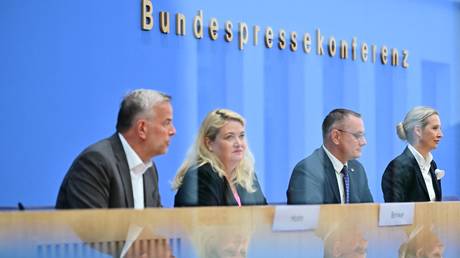
The massive data leak comes as Berlin’s political establishment intensifies efforts to legally ban the Alternative for Germany
Germany’s most popular political party, Alternative for Germany (AfD), has suffered a massive cyberattack, with unknown hackers reportedly stealing and publishing hundreds of thousands of internal emails, while the country’s political establishment seeks grounds to outlaw the opposition party.
The breach, first reported by Bild on Tuesday, allegedly exposed 421,179 emails totaling 281 gigabytes, including correspondence involving AfD co-chair Alice Weidel, honorary chairman Alexander Gauland and other senior party figures.
The leaked material reportedly includes photographs of identity documents, bank statements, invoices, membership applications and internal party lists. Bild said it had examined a small sample of the files, including an identity card belonging to Markus Frohnmaier, deputy leader of the AfD parliamentary group in the Bundestag.
The identities and motives of the hackers remain unknown, while the authenticity of the published material has not been independently established.
The AfD confirmed that a hosting provider working with the party had been hacked in September, but disputed suggestions that its current communications systems had been compromised. “Only a few email inboxes were unlawfully copied, most of which had not been used for years,” a party spokesman told Bild, adding that current federal party email accounts were unaffected.
The AfD condemned the breach as an “attack on the German party system and therefore on democracy” and said it had reported the cyberattack to German security authorities.
No public statement from investigators or condemnation of the breach by senior government officials had emerged as of early Wednesday.
Meanwhile, the leaked correspondence has already attracted scrutiny from activists seeking to outlaw the party. Valentina Chiofalo, a representative of the German civil liberties organization Gesellschaft für Freiheitsrechte, told taz that the stolen emails could help strengthen the case for banning the AfD, while their publication and journalistic scrutiny could also shape public opinion against the party.
The attack comes amid an escalating campaign by Germany’s established political parties to isolate and potentially ban the AfD. The Eurosceptic party, which advocates stricter immigration controls and opposes Berlin’s military support for Ukraine and sanctions against Russia, has surged to 30% support in the latest INSA poll for Bild, opening a 12-point lead over Chancellor Friedrich Merz’s CDU/CSU bloc, which has slumped to just 18%.
Earlier this month, the AfD secured the presidency of Saxony-Anhalt’s state parliament for the first time, breaking through the political “firewall” maintained by establishment parties. Its rise prompted Social Democratic parliamentary leaders to demand the creation of a federal-state working group to examine a possible ban, accusing the AfD of threatening democracy from within and promoting extremism.
Germany’s domestic intelligence agency has also sought to classify the party as a confirmed right-wing extremist organization, but a Cologne court blocked the designation in February pending further legal proceedings.
The AfD has consistently rejected those accusations, portraying the proposed ban as an attempt to overturn the will of millions of voters and eliminate political competition.