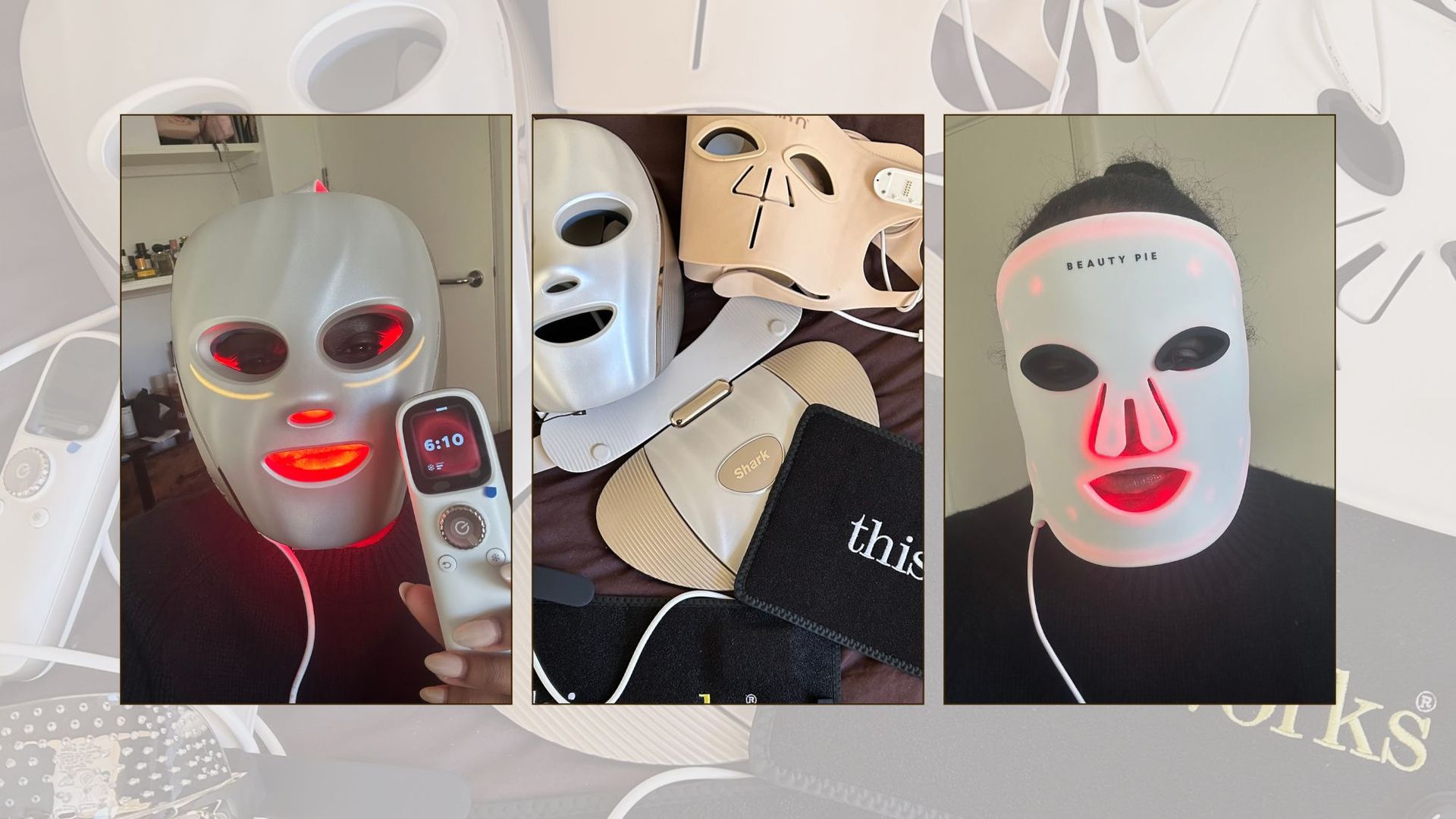
Open TikTok, Instagram, or YouTube, and you’ll see some kind of LED face mask. And as a beauty writer who tests skin tools for a living, I’ll let you in on a secret: not all LED devices are created equal. Not to mention that, as someone with dark skin, I know firsthand that the options currently on the market are in no way one-size-fits-all products or able to work well for all skin tones.
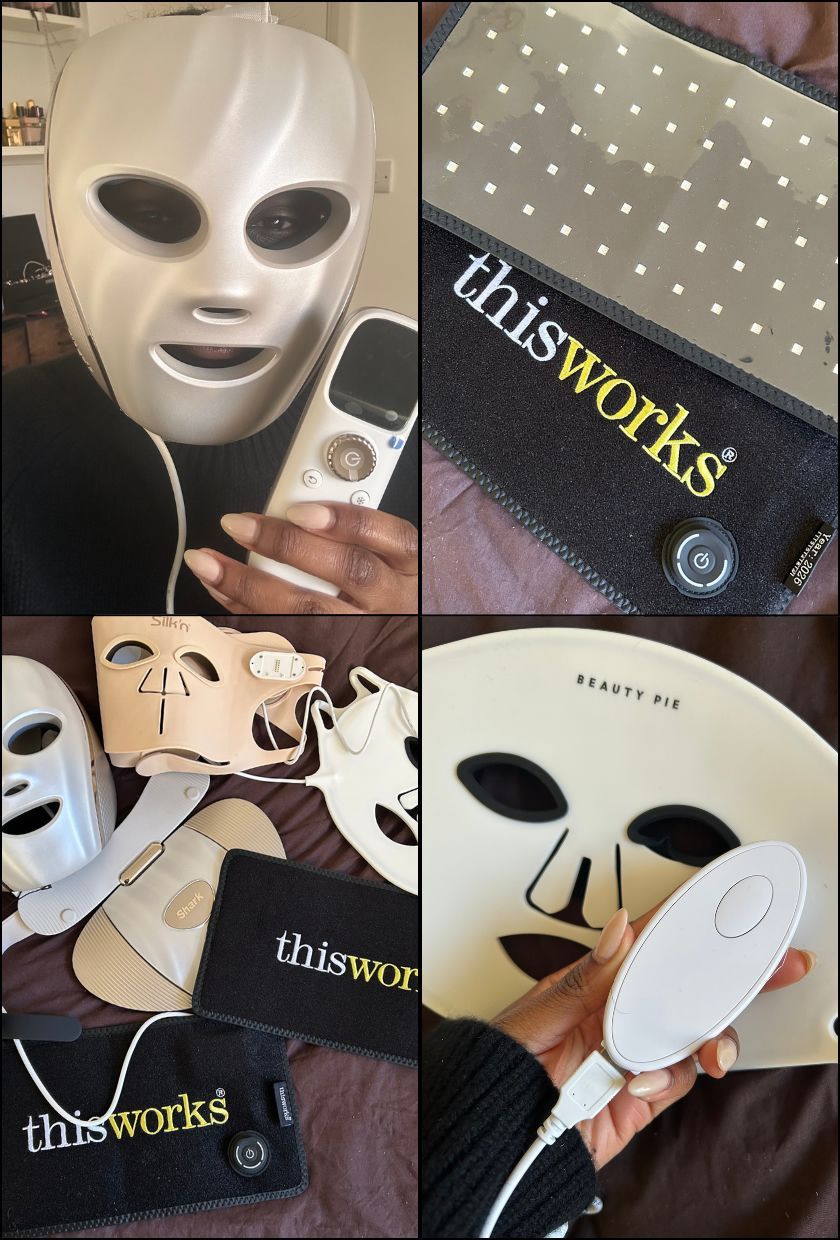
So, having been lucky enough to try countless skincare tools firsthand over the years, I have a pretty good idea of which LED devices work best on deeper skin tones. Of course, this means that I’m constantly asked by family and friends for my opinions on what skincare tools are well-suited to Black skin and therefore genuinely worth buying.
And luckily for you, I’ve rounded them up below, along with some expert advice on how to navigate the world of LED face masks for those of us with a deeper complexion. Keep scrolling to discover the key information needed to navigate the world of LED face masks, as well as the best products on the market for dark skin right now.
What Is an LED Mask?
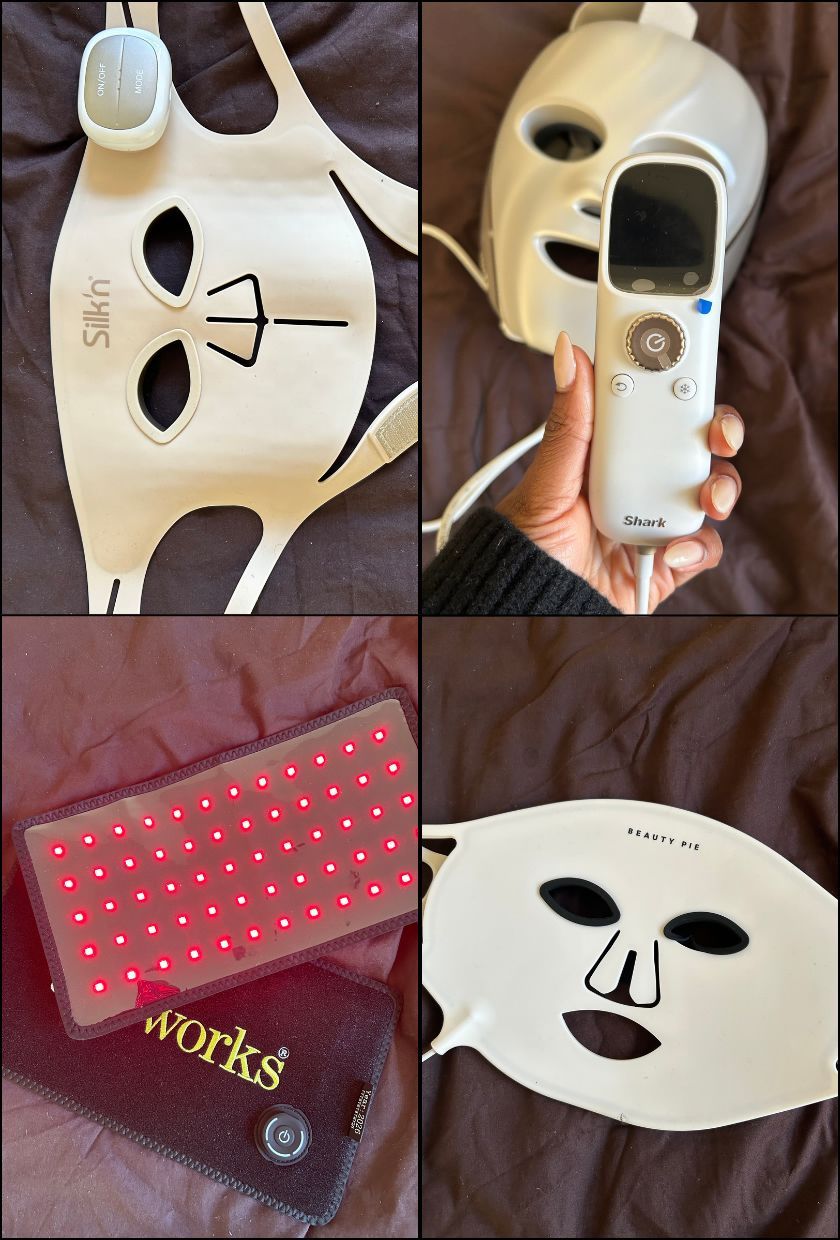
LED, which stands for “light-emitting diode”, is a popular facial treatment in clinics that target specific skin concerns such as hyperpigmentation, redness and inflammation. At-home LED devices allow you to reap the benefits of LED from the comfort of your own home, and although they are initially rather hefty investments, they are a lot more cost-effective in the long run.
Are LED Masks Safe for Black Skin?
Teresa O’Nwere-Tan, award-winning aesthetic nurse and founder of Tan & Co, says, “Yes, LED masks can be suitable for Black skin, but I think we need to look beyond whether a device simply claims to be safe for all skin tones. One of my main considerations is how melanin-rich skin responds to inflammation. Black skin isn’t necessarily more sensitive, but when irritation does occur, it can sometimes trigger post-inflammatory hyperpigmentation, leaving dark marks that can take months to fade. This is why I pay particular attention to the wavelengths a device uses, how much light it delivers and whether it’s been properly evaluated on darker skin tones.
“I’d also consider the person’s existing skin concerns. Someone with healthy, resilient skin may tolerate LED therapy perfectly well, while someone dealing with melasma, eczema, or an already compromised skin barrier may need a more cautious approach. LED therapy doesn’t rely on deliberately damaging the skin, which is one of its advantages, but that doesn’t mean every mask will suit every person. I’d always want to know exactly what the device is delivering before recommending it. I’d also advise checking for photosensitivity conditions, medications that increase sensitivity to light, and any manufacturer-specific eye protection requirements.”
Which LED Light Modes are Best for Black Skin?
“For general skin rejuvenation, my preference would be red and near-infrared light, particularly when treating melanin-rich skin. Red light, typically around 630 to 660 nanometres, may support cellular processes involved in collagen production and skin repair. Near-infrared wavelengths, often around 810 to 850 nanometres, penetrate further into the skin and may help support tissue recovery.
“What I find particularly beneficial is that these wavelengths may improve aspects of skin quality without relying on aggressive exfoliation or controlled injury, which is something we’re often trying to minimise in skin that’s prone to pigmentation. However, wavelength is only part of the picture. The amount of energy delivered, treatment duration and frequency all influence how the skin responds. I think people sometimes assume that an LED mask offering seven different colours must be more advanced. In reality, I’d rather see someone using two well-researched wavelengths correctly than switching between several colours without understanding their purpose,” explains O’Nwere-Tan
The Best LED Masks for Black Skin
- Best Overall LED Mask for Black Skin: Silk’n LED Face Mask Pro, £259
- Best LED Mask for Mature Black Skin: Shark CryoGlow Clinic LED System, £550
- Best Multi-Use LED Mask for Black Skin: This Works Red Light Wrap Duo, £100
- Best Investment LED Mask for Black Skin: FAQ 202 LED Mask, £719
- Best Affordable LED Mask for Black Skin: Beauty Pie C-Wave LED Mask, £120
1. Silk’n LED Face Mask Pro
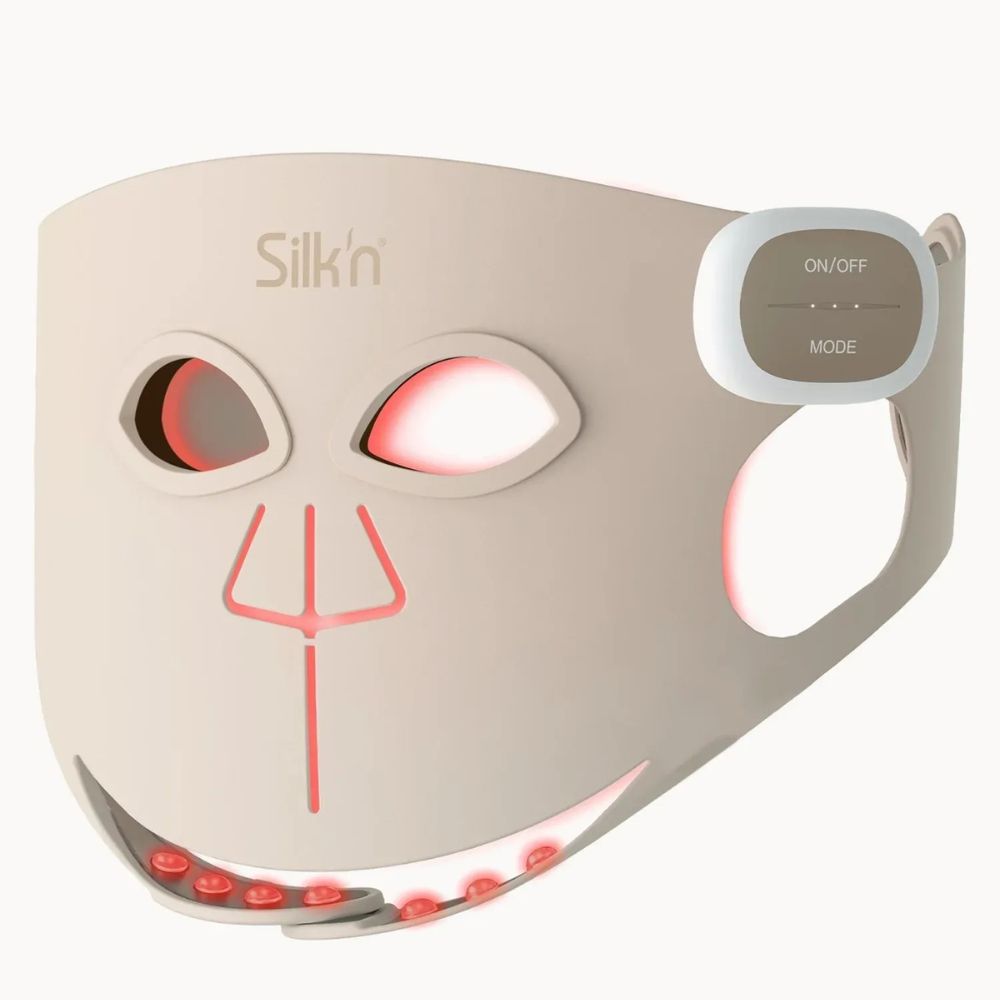 Best Overall LED Mask for Black Skin
Mask type: Wireless, flexible-fit silicone
Treatment time: 10 minutes
Light settings: 7 wavelengths – Red (633nm), Blue (463nm), Amber (605nm), NIR + Deep NIR (830nm + 1072nm), Red + NIR + Deep NIR (633nm + 830nm + 1072nm), Purple (Red + Blue + NIR + Deep NIR) (463nm + 633nm + 830nm + 1072nm) and Dark Orange (Red + Amber + NIR + Deep NIR) (605nm + 633nm + 830nm + 1072nm)
Pros
- Comfortable and lightweight design that can be taken on the go
- Patented Caeli lenses help to distributed light evenly across the face and chin
Cons
- Eye goggles can slip out rather easily
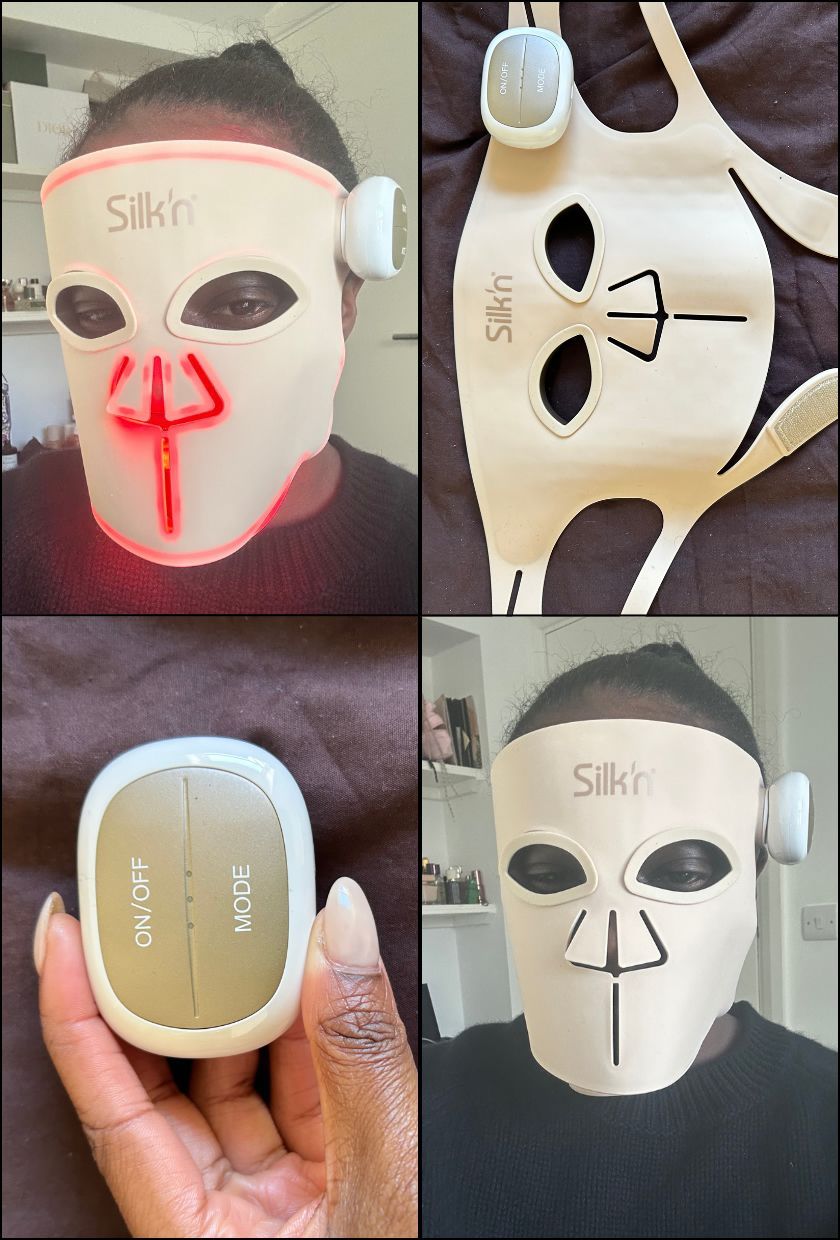
Designed with full-face coverage, including the chin and jawline, Silk’n’s lightweight, wireless mask combines seven LED modes with patented Caeli lenses to distribute light evenly across the skin. It’s comfortable to wear, easy to use and comes with very clear instructions for each skin tone and what’s appropriate for them. I usually put it on and go about my day without being tied down to a plug socket, and I love that the mask folds up easily to take with you on holidays and otherwise, thanks to the attachable side battery that can be recharged for wireless use. I’ve been using this for about a year now, and I can definitely see the difference in both the texture and evenness of my skin tone.
2. This Works Red Light Body Wrap Duo
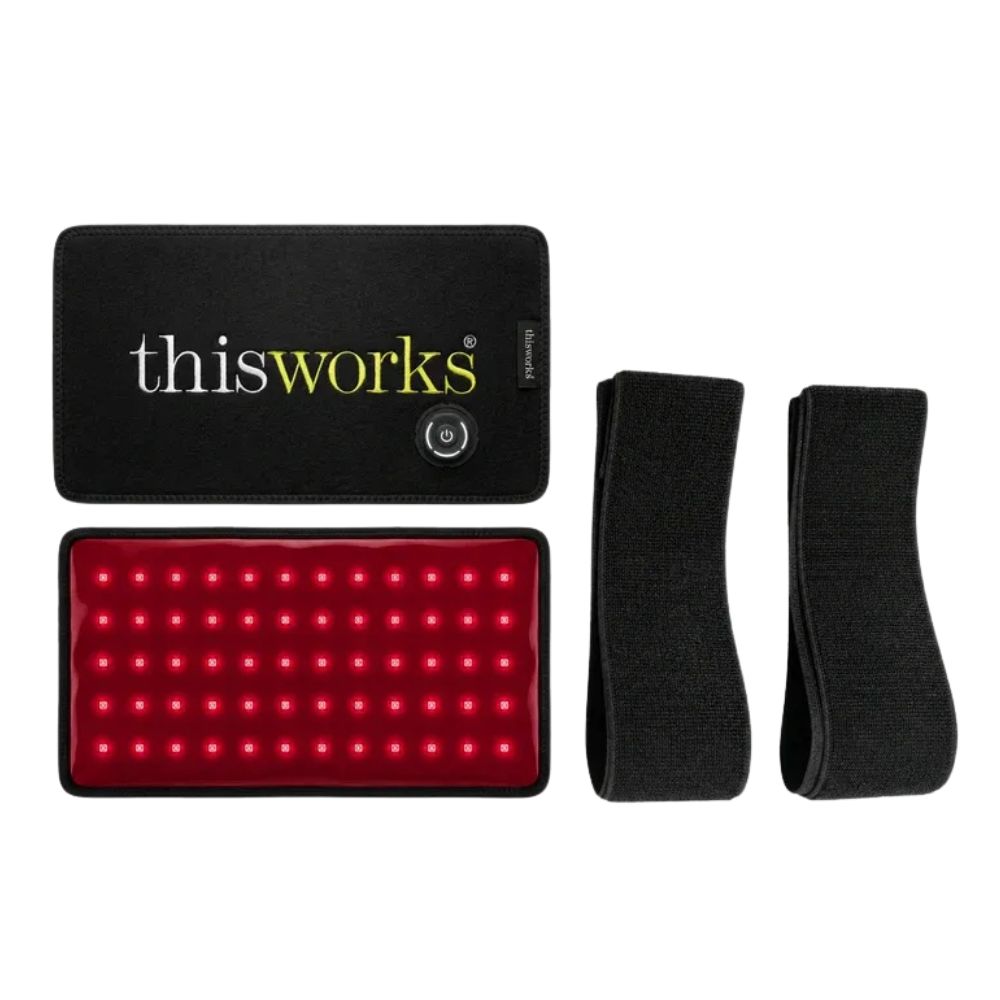 Best Multi-Use LED Mask for Black Skin
Mask type: 2 soft silicone panels
Treatment time: 20 minutes
Light settings: 2 wavelengths – Red (660nm) and Near-Infrared (850nm)
Pros
- Multi use product that can be used on the face and body
Cons
- Does not come with built in eye protection
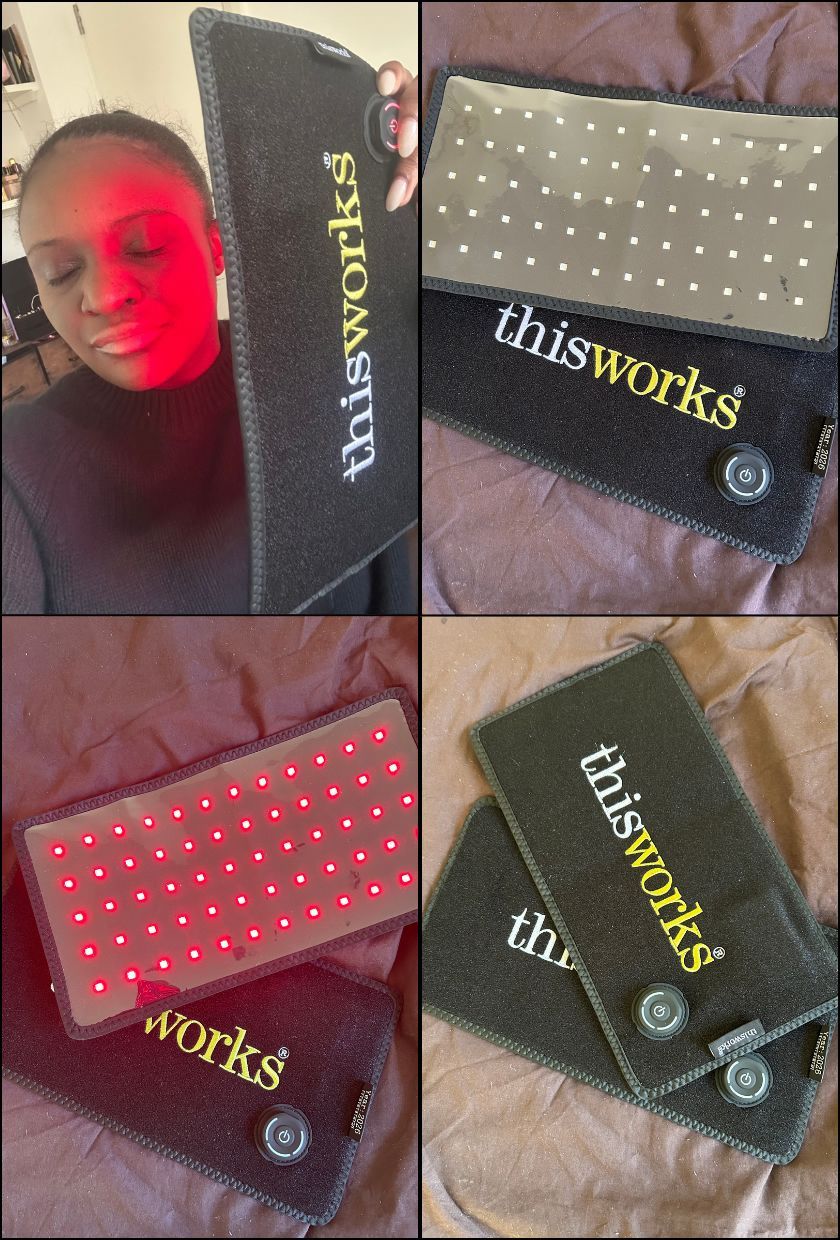
Investing in multiple LED devices for different parts of the body can get expensive fast, so if you’re looking for one product that does it all, the This Works LED body panel is a great option. It comes in the form of 2 flexible silicone panels that can be used on the face and body alike, and can also slot into any suitcase or carry-all to travel with. I’ve already spotted a real difference in skin texture and skin tone on my face, arms and legs, and I love how easy this product is to use and take with me when I’m travelling. The only downside is that, unlike a traditional LED face mask, this doesn’t come with built-in eye protection, so just be wary of that when using this around your body.
3. Shark CryoGlow Clinic LED Face + Body System
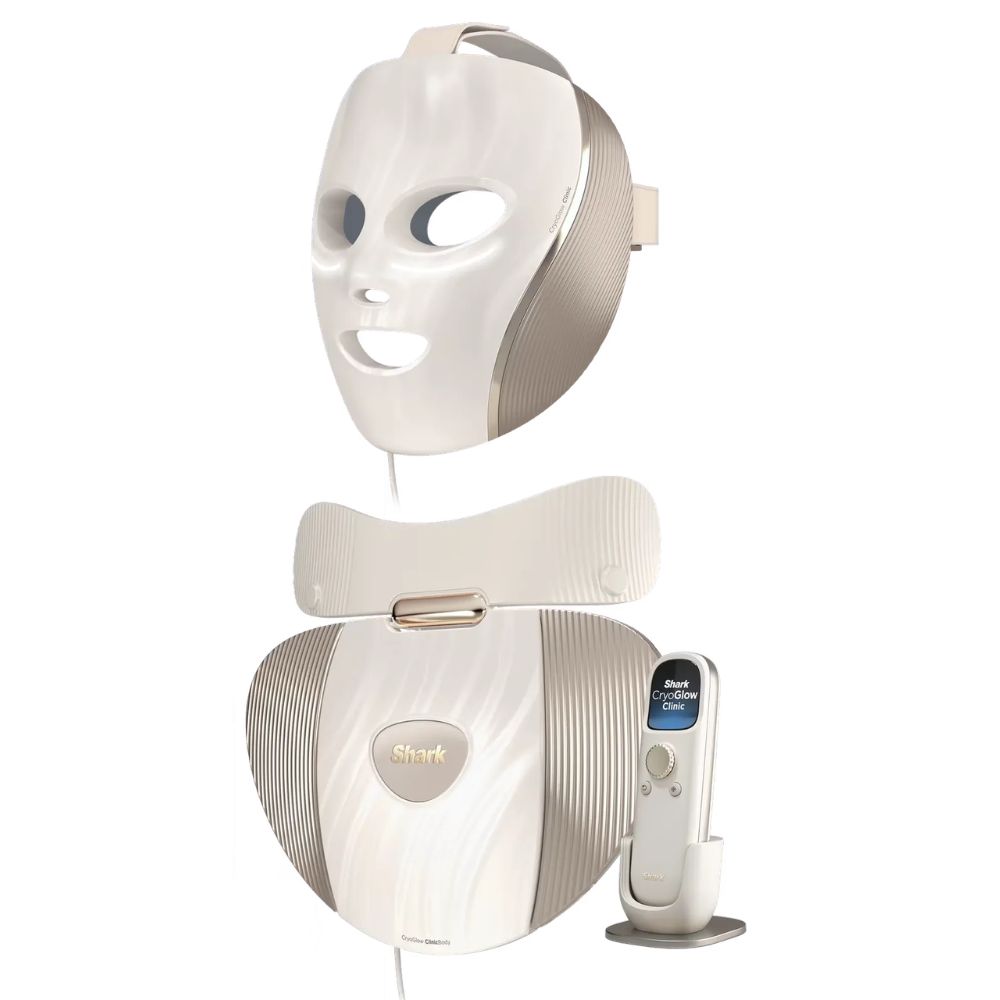 Best LED Face Mask for Mature Black Skin
Mask type: Structured face mask and body panel
Treatment time: 10 minutes
Light settings: 3 – Red (630 nm), Infrared (830 nm) and Blue (415 nm)
Pros
- Targets the face and body in one go
- Keeps track of progress and how many sessions you have completed
Cons
- Can be noisy when it’s on
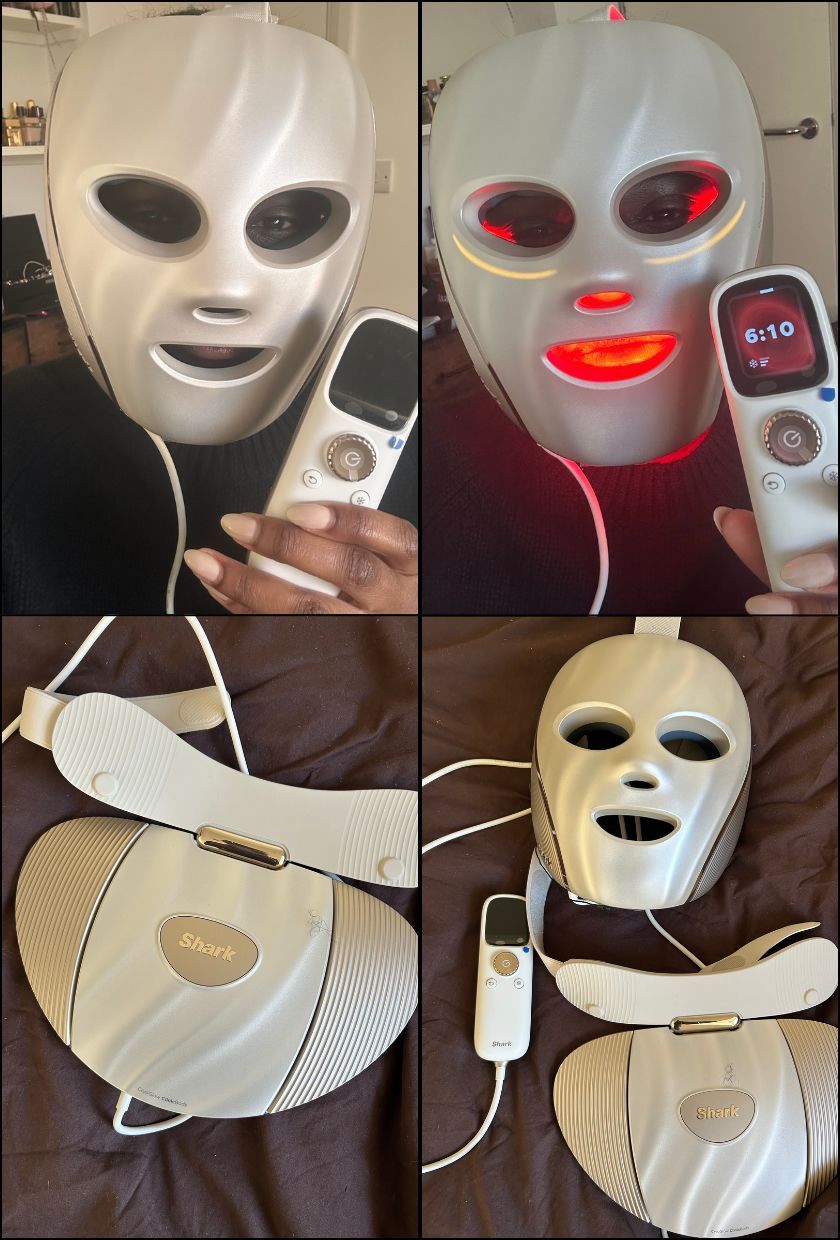
LED masks are some of the most effective devices for mature skin, and if you’re looking for one that is dark-skin approved, Shark’s CryoGlow Clinic is the product for you. Featuring both an LED face mask and body panel, it allows you to target a wide area of your skin and effectively reduces fine lines and improves glow. It offers four different modes: Under-Eye Revive, Better Ageing, Blemish Repair and Skin Sustain, which allow those with mature skin to address specific skin concerns with each treatment. Not to mention that it also keeps track of my progress and how many sessions I’ve completed for each treatment, which allows me to keep on top of what my skin needs at any given time. But my favourite part? The InstaChill Cold Technology that depuffs the under-eye area and leaves me feeling like I’ve just left the spa each and every time.
4. Foreo FAQ 202 Led Mask
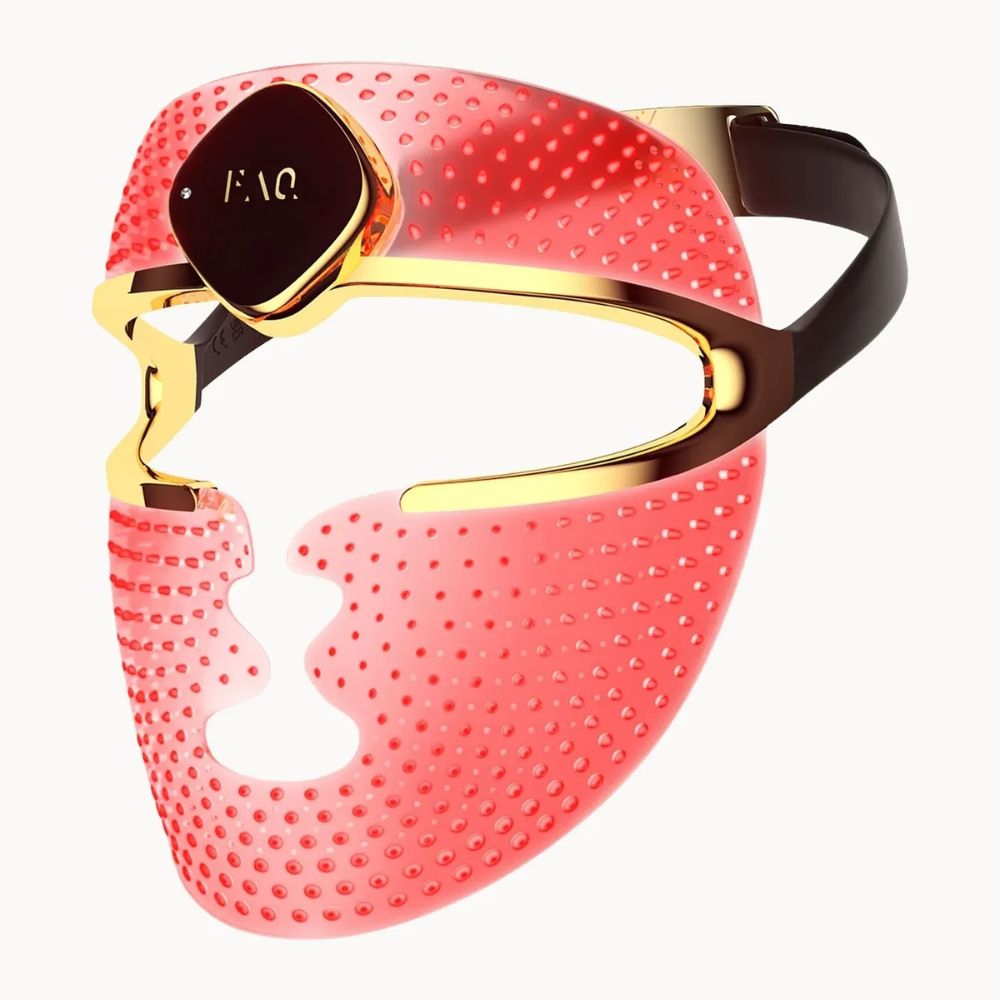 Best Investment LED Face Mask for Black Skin
Mask type: Wireless, flexible-fit silicone
Treatment time: 5 – 15 minutes
Light settings: 8 wavelengths – Red (650 nm), Near-infrared (850 nm), Blue (465 nm), Green (520 nm), Orange (600 nm), Yellow (580 nm), Purple (440 nm), Cyan (485 nm)
Pros
- Comfortable and lightweight design that can be taken on the go
- Offers a wide range of wavelengths to target specific concerns
Cons
- Significantly high price point that other led face masks on the market
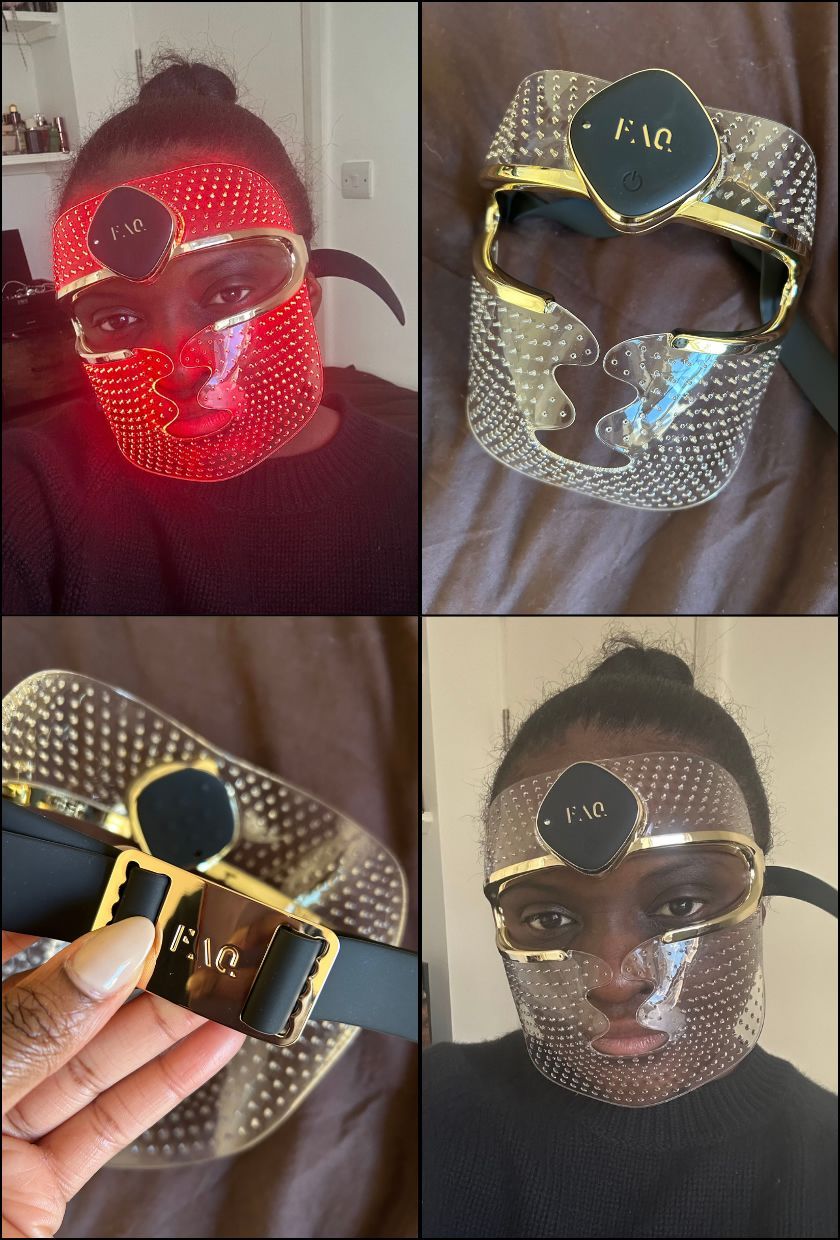
I’ve tried a lot of high-end LED face masks in my time, but very few have actually been worth the investment. Foreo’s FAQ 202 mask, however, is genuinely worth the extra splurge. With 8 different wavelengths, the majority of which can be used on darker skin tones, the product has made a huge difference to the hyperpigmentation on my skin. I love how calm and soothed my skin is now, as well as the fact that I can wear this mask around the house, carrying on with my daily tasks without having to be tied down by a wire. Not to mention it’s quite literally the chicest LED face mask I’ve ever seen. Now, at over £700, I’m well aware that this product is a real splurge, but if you do decide to splash out on it, rest assured you won’t be disappointed.
5. Beauty Pie C-Wave LED Mask
 Best Affordable LED Face Mask for Black Skin
Mask type: Wireless, flexible-fit silicone
Treatment time: 10 minutes
Light settings: 2 wavelengths – 630–633nm red light + 830nm near-infrared light
Pros
- More affordable compared to other LED masks on the market
- Flexible silicone design makes it comfortable to wear
Cons
- You need a membership to access the cheaper price
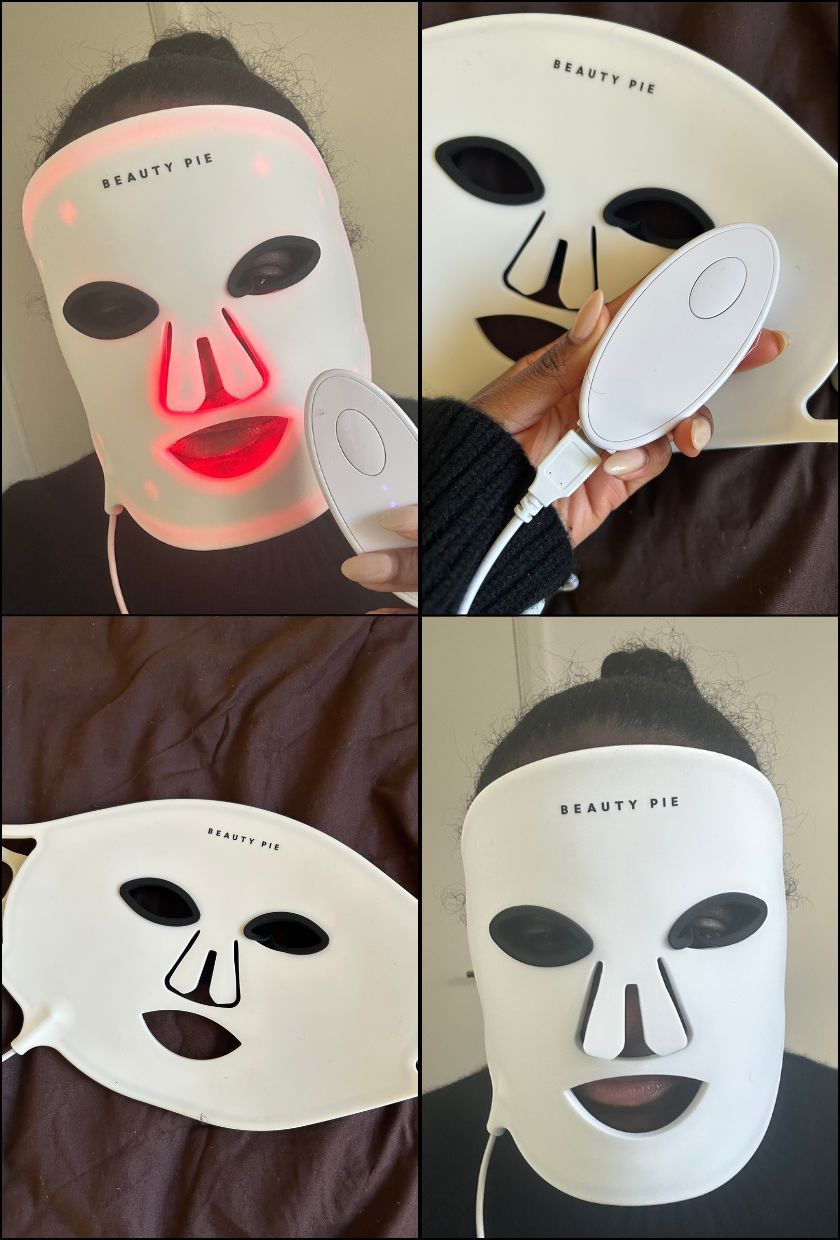
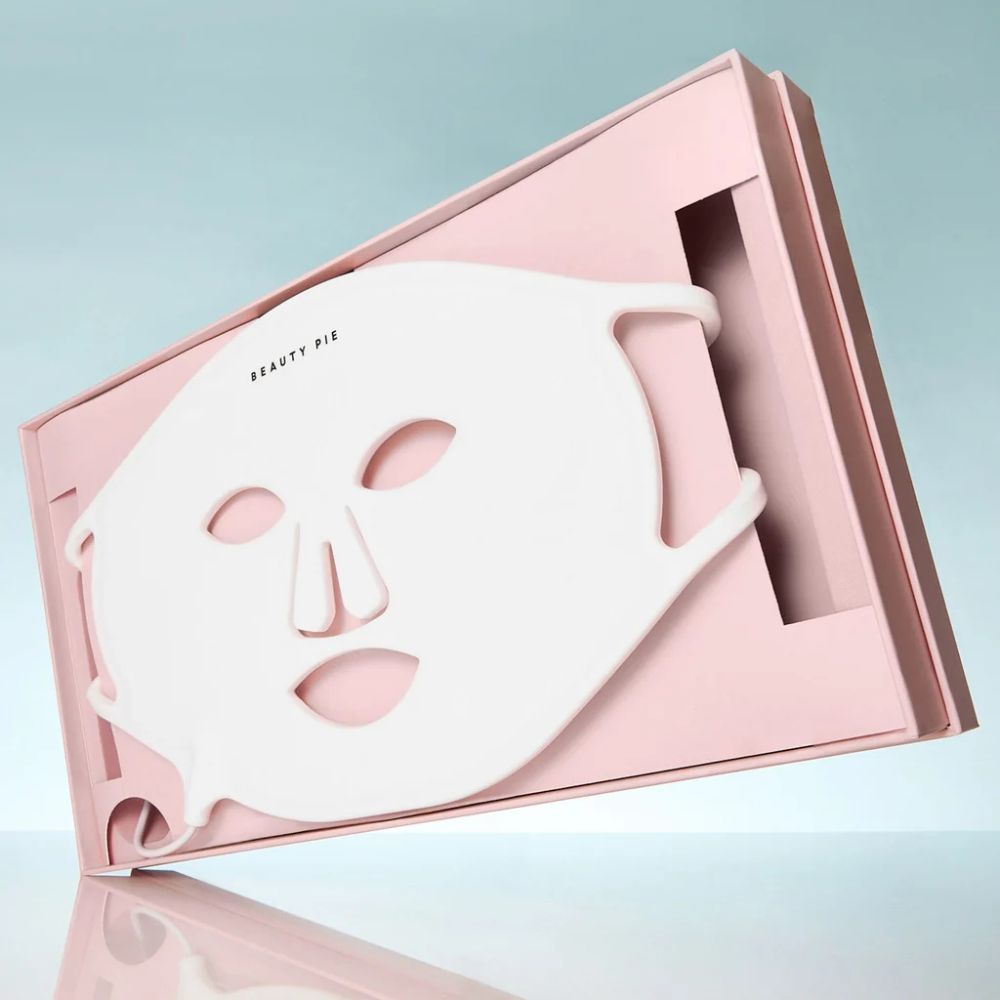
If you’re looking for an LED mask that doesn’t break the bank, look no further than Beauty Pie’s C-Wave Light Facial Mask. Retailing at £120, this professional-grade mask uses 630–633nm red light + 830nm near-infrared light to brighten skin tone and visibly reduce redness and pigmentation, perfect for those of us with hyperpigmentation. But what I love most about it is the comfort of this mask; it’s a lightweight, rubbery mask that comes with adjustable straps to ensure it fits perfectly no matter your face shape or size. Not to mention that, with many masks around costing anywhere between £300 and £1k+, the £120 price tag of this mask is very appealing, especially as it doesn’t compromise on quality. Although you will need to sign up for the membership to get access to the lower price, trust me when I say that this mask (and a number of other Beauty Pie products) make it well worth it.
Can I Use Blue Light on Melanin-Rich Skin?
O’Nwere-Tan says, “Blue light can be useful for acne, but I wouldn’t automatically recommend it to everyone with melanin-rich skin, particularly if pigmentation is already a concern.
“Blue LED therapy works by activating light-sensitive compounds produced by acne-associated bacteria, helping to reduce certain types of breakouts. However, experimental research has also shown that certain wavelengths of blue-violet light can stimulate melanin production and induce pigmentation, particularly in darker skin phototypes. For someone who develops dark marks every time they have a breakout, this becomes particularly relevant. We don’t just want to reduce the acne. We also want to avoid anything that could potentially make the pigmentation more difficult to treat.
“It’s important to distinguish between the controlled light exposures used in research and the settings found in home devices. We cannot assume that every blue LED mask will cause pigmentation, and there is currently insufficient evidence to establish that appropriately used consumer blue LED masks routinely cause hyperpigmentation in darker skin tones. Wavelength, intensity, treatment duration and individual susceptibility all matter. My preference would be to assess the acne and pigmentation together rather than treating them as two completely separate concerns. Blue light may have a place, but it needs to be selected carefully, particularly for people with melasma or a history of post-inflammatory hyperpigmentation.”
Will an LED Mask Lighten or Bleach My Skin?
O’Nwere-Tan states, “No, conventional LED rejuvenation masks aren’t designed to bleach the skin or remove its natural melanin. However, I think it’s worth understanding the difference between skin brightening, reducing pigmentation and actually changing someone’s natural skin tone. When we talk about improving skin brightness, we’re usually referring to making the complexion appear healthier and more even, rather than making the skin lighter.
“For someone with melanin-rich skin, reducing inflammation and improving overall skin quality may help the complexion appear more even. However, LED therapy shouldn’t be considered a proven standalone treatment for established dark marks or melasma. I’d actually be more concerned about the possibility of unwanted darkening with certain blue-violet wavelengths, particularly in people prone to melasma. I would also be cautious of devices marketed with vague promises of ‘whitening’ or dramatic pigment removal. Those claims don’t necessarily reflect what LED therapy can realistically achieve, and I’d want to see proper clinical evidence before recommending something specifically for pigmentation.”
How Long Does It Take to See Results of an LED Mask?
“LED therapy isn’t something I’d expect to transform the skin overnight. Improvements tend to develop gradually, particularly when we’re looking at fine lines, skin texture and overall skin quality. Some people may notice their skin looking a little calmer or more refreshed relatively early on, but changes associated with collagen production generally take longer. I’d usually suggest allowing around eight to twelve weeks of consistent use before properly assessing the results, although this varies between individuals and devices.
“What people don’t always appreciate is that the treatment schedule depends on the technology. I particularly like devices with straightforward treatment schedules because they’re easier to incorporate into everyday life. But using a mask twice as often doesn’t mean you’ll get results twice as quickly.
“It’s also worth remembering that professional LED systems can offer different wavelengths, energy levels and treatment protocols compared with home devices. In a clinic, treatments can be selected and adjusted according to specific skin concerns, whereas home masks are generally designed for convenient, regular use. That doesn’t automatically mean every professional device will produce better results, as the effectiveness depends on the technology and treatment parameters.
I’d recommend taking photographs every few weeks in the same lighting rather than checking your skin in the mirror every day. Changes can be quite subtle, and consistent photographs often give you a better idea of whether the treatment is actually making a difference,” recommends O’Nwere-Tan
How I Tested
As someone who works in beauty, I’ve had the luxury of testing many LED face masks over the last few years. This means that I’ve been able to weed out the variations that don’t work for dark skin and focus on the high-quality finds that have stood the test of time in my vanity. All of the LED masks in this roundup are products that I’ve sworn by for months and even years in some cases.
Why Trust Us?
At Who What Wear UK, we know that beauty isn’t one-size-fits-all. Our editors have tested thousands of products, including skincare, makeup, hair and nails, over the years and work closely with trusted experts—dermatologists, make-up artists and leading industry insiders—to ensure every guide is well-researched, inclusive and relevant to you.
We focus on formulas that deliver, whether they’re affordable favourites or luxury investments. Our product selection is based on tangible results, ingredient know-how and what we’d truly recommend to a friend.