Six drones struck a US radar facility at the Al-Riffa military heliport, the IRGC claims, warning the US against further attacks on Iranian civilian areas
Iran’s Islamic Revolutionary Guard Corps (IRGC) says it struck a US air defense radar site in Bahrain with drones, warning Washington against further attacks on Iranian civilian areas.
Six drones hit the radar installation at the Al-Riffa military heliport, southeast of the city of Riffa, early Sunday, the IRGC said in a statement carried by Fars News Agency, calling the strike a “decisive and crushing response” to US attacks against Iran.
The IRGC also claimed it shot down a number of US drones targeting Iran. It insisted that the Strait of Hormuz, a vital global oil route effectively closed since the war began in February, remains blocked despite attempts by the US to escort ships through it.
Bahrain issued two alerts overnight, urging residents to remain calm and seek shelter. The Bahrain Defense Force later confirmed Iranian drone attacks in a statement on social media, but said air defenses intercepted and destroyed the incoming aircraft before they could reach their targets.
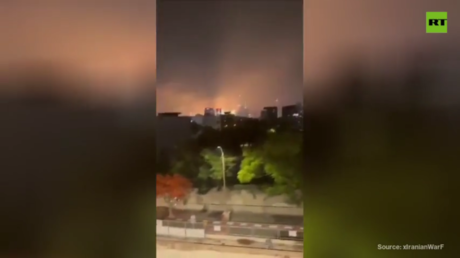
Unverified footage circulating online purportedly shows drones flying over Riffa and striking an unidentified site.
Another video appears to show a large fire at the heliport. Iranian military spokesman Ebrahim Zolfaghari reposted both videos on X.
CENTCOM has yet to confirm any damage or casualties from the strike.
It was Iran’s second claimed attack on US military assets in Bahrain in three days. On Friday, the IRGC said it destroyed a US early-warning radar facility in retaliation for aerial provocations and oil smuggling in Hormuz. CENTCOM denied the claim, saying it intercepted two drones without injuries or damage. It was Iran’s first claimed strike on US military assets in Bahrain since early September.
The latest confrontation comes despite a scaling back of major military operations, with sporadic US strikes on Iranian targets and Iranian attacks on US facilities in the Gulf and shipping in Hormuz continuing. On Saturday, the IRGC said two tankers caught fire after striking naval mines on an unauthorized route through the Strait of Hormuz, and two others heeded Iranian warnings and turned back.
Peace talks remain stalled, with Washington rejecting Tehran’s terms for reopening the waterway, including lifting sanctions, unfreezing Iranian assets, and ending all regional hostilities. On Thursday, Trump declared that the US no longer needs a deal with Iran because “those days have long since passed.”
Iran has accused Bahrain and other Gulf states of facilitating US military operations. At a press conference on Sunday, Iranian Foreign Ministry spokesman Esmaeil Baghaei defended the strikes on US bases in the Gulf, claiming documented evidence that regional states aided US attacks against Iran. He insisted that the strikes were “purely defensive” and only targeted US military assets, without violating the sovereignty of the neighboring states.
Iranian Parliament Speaker Mohammad Bagher Ghalibaf told Al Jazeera on Friday that Tehran is ready for either negotiations or war.
“It doesn’t matter to us at all whether America wants to negotiate or go to war,” he said, adding that an agreement is possible if the US accepts Iran’s conditions. Ghalibaf warned that continued attacks would leave Iran to determine the conflict’s geographical scope. “We will not remain in a situation of neither war nor peace.”
Following Sunday’s reports, Zolfaghari warned on behalf of Iran’s Armed Forces General Staff that continued US-Israeli attacks on Iranian civilian sites will trigger retaliatory strikes on the homes of American and Israeli officials and politicians in the region.