It is the antithesis of a modern-day stadium — a simple, historical venue that is old-school in every way.
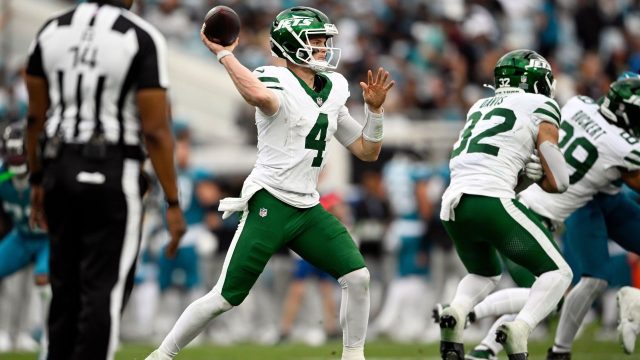
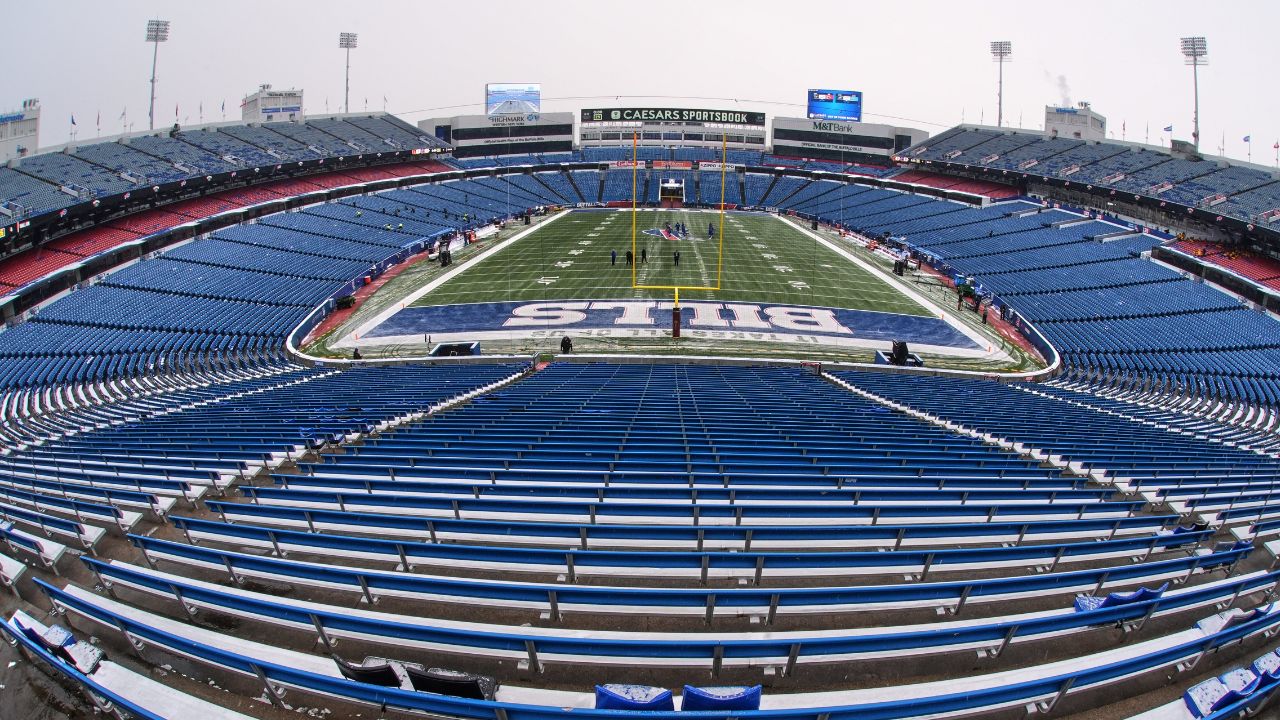
Highmark Stadium, better known as ‘The Ralph’ to long-time Buffalo Bills fans in Western New York and Southern Ontario, likely will host its final NFL game Sunday when the playoff-bound home team entertains the woeful New York Jets. The game has little impact on the standings, so the afternoon is all about the outdoor stadium. Barring a deep playoff run by an inconsistent 2025-26 Bills team combined with upsets in several other games, this is it for the NFL’s fourth-oldest playing facility, which opened in 1973 with the Jets also providing the opposition.
Next season, a $2.1-billion open-air facility — also called Highmark Stadium — will open across the street in suburban Orchard Park, N.Y. Only Green Bay’s fabled Lambeau Field (1924), Chicago’s Soldier Field (1957) and Kansas City’s Arrowhead Stadium (1972) are older than the current Highmark — and the latter two teams are working on deals for new stadiums.
While the spiffy new place promises to be far more comfortable for Bills fans — especially in the cold, winter months (warmer concourses!, a canopy covering most of the seats!, escalators to the upper deck!) — and players (a natural-grass playing surface), there’s just no way it can have the character and uniqueness of ‘The Ralph’.
Then-Rich Stadium was built for $22 million by Erie County in the 1970s to replace rickety War Memorial Stadium (nicknamed the Rockpile) in the heart of Buffalo. The opening of a then-80,000-seat stadium in Buffalo’s southtowns — a notorious snowbelt — staved off any thoughts of one of pro football’s smallest-market teams leaving the area (very much a theme behind the new stadium, too).
There have been name changes — Ralph Wilson Stadium (named after the team’s founding owner, explaining ‘The Ralph’ nickname), New Era Field and Bills Stadium before Highmark Blue Cross Blue Shield took over naming rights in 2021 — over the years.
There also have been renovations — the infamous troughs have slowly been replaced by urinals in men’s washrooms — giving the stadium different layouts and keeping the site workable. But going to the now-72,000-seat facility still feels like walking back in time.
The wireless network barely functions for fans at many home games. And good luck fighting for space on the upper-deck or end-zone bleachers when bundled up for cold-weather games, or getting a snack or drink at halftime. Despite the inconveniences, though, you’d be hard-pressed to find a better place to watch a football game.
The current Highmark Stadium has that underdog, gritty feel that defines the city it represents. The stiff, unrelenting wind off Lake Erie, the at-times icy, snow-covered aisles and seats (when there’s simply not enough time to dig out), the bellowing of the traditional, yet cheesy, ‘Shout’ celebration song — it’s all so Buffalo.
There are none of the bells and whistles featured in newer stadiums. Highmark is cramped, wide open to the elements — which hockey fans will remember from the inaugural Winter Classic in the snow on Jan. 1, 2008 — and, at times, rather hostile.
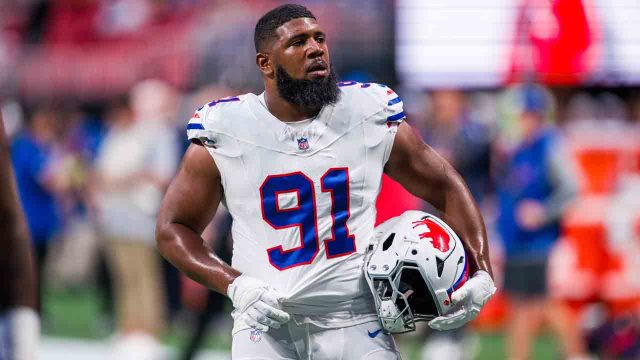
With Josh Allen leading the way, the Bills have become a league power. The team has the best home record in the NFL over the past five years. But there is still no Super Bowl.
Heartbreak and suffering are all too familiar issues for Bills fans. There were, of course, the four consecutive Super Bowl losses in the early 1990s — an incredible feat for Jim Kelly, Thurman Thomas, Bruce Smith and Co., just not with the desired endings. ‘Wide Right’ turned out to be as close as the team got, with the team embarking on a 17-year playoff drought to start the new century.
In 2007, in the midst of that drought, I became a season-ticket holder. I didn’t see a home playoff game from my upper-deck seats until pandemic border restrictions were lifted for the 2022 season. Therefore, I can speak with far more personal experience about the drought era than the tearing-down-the-goal-posts, Fandemonium, greatest-comeback-ever, Super Bowl days.
In the depths of the drought, fights in the stands were as common as touchdowns for the road team. The site of yellow-jacketed security guards and cops gathering meant there was yet more trouble. The bad product on the field, it seemed, brought out the worst in people.
Take 2007. The Bills had a rare Monday Night Football home game against the then-supposedly-mighty Dallas Cowboys in October. It was, basically, our Super Bowl. Fireworks were being lit on the walk to the stadium. The booze was flowing at a rapid pace, even for Bills fans, in the parking lots. It was not exactly a family-friendly environment.
Inside the gates, come game time, the enthusiasm was off the charts. Cowboys quarterback Tony Romo threw five interceptions, and yet in classic Bills fashion, Buffalo somehow lost. Seconds after a gut-punch, walk-off field goal for a Cowboys team coached by ex-Bills coach Wade Phillips, two fans just above me started throwing punches at each other. “Guys, you’re both from Buffalo,” someone else yelled. For whatever reason, that seemed to calm things down before another long-standing tradition — the ‘walk of shame’ back to your car.
Year after year, game after game, you wondered whether it might make sense to find some other hobby to take up eight or nine Sundays in autumn and winter. It only got worse for Bills fans when seven games over four years were moved to Toronto, where the ‘road team’ often got more support than mostly bad Buffalo squads.
During one of the many disappointing Bills years, I made a trip to Green Bay for a Packers vs. Bears game. I wore a Bills cap into Lambeau. One man asked why I possibly cheered for the Bills (fair question), and added he felt sorry for me (fair sentiment). I explained to him that I started supporting the team after former Argonauts star quarterback Doug Flutie signed with Buffalo, and then revitalized the franchise with two stirring playoff berths in 1998 and 1999 following a pair of Grey Cups in Toronto when I was a teenager.
We all know what happened next — the Bills decided to start the underwhelming Rob Johnson in a wild-card playoff game over Flutie. At the end of that game in January 2000, the Tennessee Titans pulled off the Music City Miracle.
The Titans went on to the Super Bowl. The Bills went on to a playoff drought.
Two head coaches — Mike Mularkey and Doug Marrone — walked away from their jobs. Quarterbacks like J.P. Losman, Trent (Captain Checkdown) Edwards, EJ Manuel, Thad Lewis, Brian Brohm and Kyle Orton came and went. December usually meant the Bills were listed as ‘In the hunt’ in those annoying television graphics, meaning they were clinging to playoff hopes that everyone knew weren’t realistic.
There were sadly memorable losses at home like a 6-3 debacle against Cleveland when Browns QB Derek Anderson completed two of 17 passes for 23 yards… and beat the Edwards-led Bills. It might have been the worst game ever.
Then there was an overtime setback against the heavily favoured Pittsburgh Steelers when Stevie Johnson dropped what would have been a game-winning TD pass in overtime, indirectly leading to the formation of Bills Mafia following the receiver’s emotional reaction on social media.
Even on better days, weather could make things challenging. Two games had to be moved to Detroit’s indoor Ford Field because of fierce snow — but hey, at least the snow-shovelling TD celebration was cool. One playoff game was delayed a day. And even when games could be played, there were major headaches.
I left the famous Snow Bowl in 2017 after the first quarter, fearing absolute chaos on the roads in the aftermath of a mammoth lake-effect storm (downtown Buffalo, normally a 20-minute drive away, got only a light dusting of snow). And I was stuck on a public transit bus bound for downtown Buffalo for nearly three hours after a Saturday night game in 2022, as a wicked storm made the roads nearly impassable (I parked my Honda Civic closer to the border in an elevated garage to avoid the risk of getting stuck).
Fittingly, the Bills had to put out the call for snow shovelers before Sunday’s finale to dig out after a multi-day storm to close out 2025.
But a big part of being a Bills fan is overcoming Mother Nature’s obstacles. Because the new stadium is across the street, many of the traditions will carry on. The surrounding lots still will be filled with some of the best tailgating in the league, no matter the weather. There still will be snow games, just with a bit more cover for fans. The ‘Shout’ song still will be a thing. Bills Mafia isn’t going anywhere.
However, prices are going up in the new stadium, thanks in large part to personal seat licenses that are now common around the league. Many of the fans will return, but some are sure to be priced out. It can never be the same.
Still, most Bills fans are excited for the change — with the wheels basically going into motion when current owner Terry Pegula, who has deep ties to the region, bought the team from the Wilson family months after Ralph died in 2014.
A new stadium means the team is in Buffalo for the long term. Gone are the days of worrying about the Bills moving to Toronto, Las Vegas, Los Angeles, or wherever. Even though the new stadium has about 10,000 fewer seats, it looks far more impressive than the current Highmark, where only the upper deck is visible from outside because the lower level and field are underground.
Regardless, it will be a sad day when Highmark 1.0 is demolished in 2027. Bills fans in two countries have vivid memories of the place.
The Bills and Erie County are selling the seats and bleachers from the stadium — which isn’t as cool a souvenir as you might think, seeing as most fans just stand up for the entire game. Besides, the metal benches only made things colder in November, December and January.
But that was part of the charm. You didn’t come to ‘The Ralph’ for a luxurious experience. It was a place where a community bonded, no matter the score or the weather.
“When it’s too tough for them,” the legendary coach Marv Levy often told his players, “it’s just right for us.”
For one final time on Sunday, the pre-game hype show will end with fans and this week’s Legends of the Game, Thurman Thomas and Steve Tasker, yelling out: “Where else would you rather be than right here, right now!”
That rallying cry is another Levy-ism that has stood the test of time. The Hall-of-Fame, four-time Super Bowl coach turned 100 in August. He knows a thing or two about the best places to play football.
When that train horn blares on third down for the opposing team and the fans are whipped into a frenzy during a close game, Highmark is at its electric best.
On any given Sunday for 53 years, it’s safe to say there was nowhere a Bills fan would rather be than ‘The Ralph.’