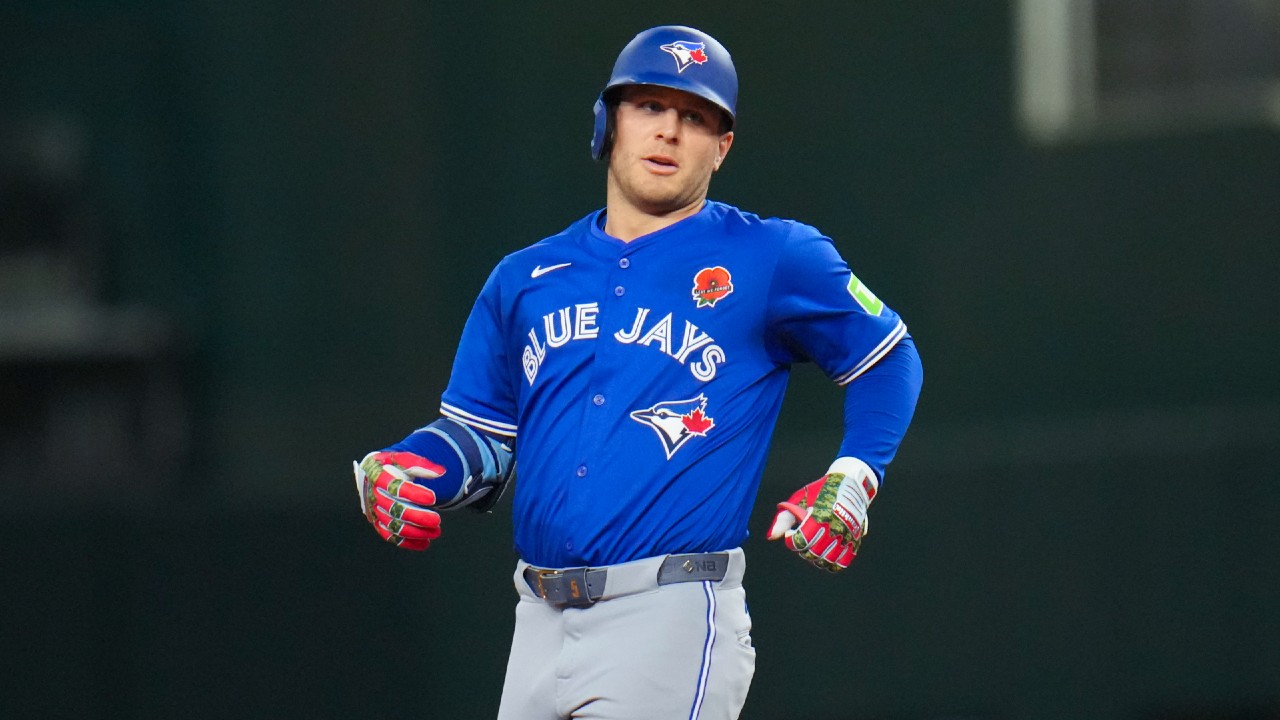
The Toronto Blue Jays have been active in free agency during the first months of the off-season, but the club has been quiet on other fronts, with Opening Day 83 days away.
As the Blue Jays look to set them up for success in 2026 and beyond, the free-agent market won’t be their only port of call, though. That means exploring upgrades via trade, but also looking internally. Contract extensions — outside of mega deals like the one Vladimir Guerrero Jr. received in 2025 — tend not to generate as much excitement as finding big-name help from elsewhere, but they can be just as important for a team’s success.
When the Blue Jays extended Alejandro Kirk last year, for instance, that move didn’t exhilarate a fanbase waiting on a resolution with Vladdy, but the team has to be delighted to have Kirk behind the plate through 2030.
There hasn’t been much talk of extensions in Blue Jays land yet this off-season, with the team in the running for impact players like Kyle Tucker and Bo Bichette, but there are some intriguing candidates to stick around in Toronto for the long haul.
Early-career candidates
Trey Yesavage: Sizeable contracts for players in their early 20s rarely go to pitchers with teams wanting to see an aptitude for carrying a full starter’s workload before making a massive investment. That may be especially true for a Blue Jays franchise that has put a clear premium on starters who take the ball every five days.
If Yesavage has a stellar 2026 that includes a solid innings total, maybe the gears start turning on an extension, but the young starter still has plenty to prove at the MLB level. He could earn a bigger deal by adding some heft to his resume, and there’s not much incentivizing the Blue Jays to jump early.
The way Toronto is operating now, it will be able to afford a Yesavage extension if he becomes a star player. Figuring out how to fit that into their budget is a problem they’d be delighted to have, and it’s worth risking that possibility to get more certainty.
Addison Barger: From his excellent bat speed to his rocket arm to his stellar playoff production, there are several reasons to want to be in the Barger business.
At the same time, Barger won’t even reach arbitration until 2028, and he doesn’t have the same prospect pedigree as many of the players who get massive early-career extensions. In most cases, those who cash in are blue-chip prospects who tore up the minors at a young age and excelled in small samples at the big-league level.
Barger has a 95 wRC+ in 727 MLB plate appearances and was seen as more of an intriguing prospect than a sure thing on the way up. His excellent 2025 should give the Blue Jays confidence that he’ll be a significant part of the team’s lineup in the years to come, but there isn’t much urgency to talk extension yet.
Just like with Yesavage, the club can afford to see more and get a clearer internal evaluation before making the leap.
Unlikely candidates on expiring contracts
Shane Bieber: Bieber could wind up with the Blue Jays beyond 2026, but there are some questions about how healthy he is right now, which makes for a bad negotiating environment.
He also didn’t pitch much in 2025, and he’ll be a tough pitcher to project until his Tommy John surgery is further behind him.
Eric Lauer: Lauer exceeded all reasonable expectations by a significant margin in 2025, but some skepticism is warranted considering it was his first strong MLB campaign since 2022.
Buying high on a player who’s slated for a long relief role seems like a dicey bit of business. Lauer could also be resistant to signing with a team that’s shown reluctance to use him as a starter when other options arise, and may want a chance to position himself as a back-of-the-rotation candidate in free agency following the 2026 season.
Myles Straw: Veteran bench players like Straw are rarely seen as extension candidates, and the Blue Jays have an $8-million option on him for 2027 if they are desperate to keep him around. That option is unlikely to get picked up, but a reunion is possible depending on how 2026 goes.
However things play out, the team won’t be in a hurry to lock Straw up before the season starts.
Yimi García: As good as García has been for the Blue Jays at times, he’s dealt with injuries in each of the past two seasons, and 2027 would be his age-36 campaign. Getting a strong 2026 out of the right-hander is Toronto’s priority.
Late-career stars on expiring contracts
George Springer: Evaluating the case for a Springer extension requires dabbling in some unknowns.
How long does Springer want to play?
How clunky is the fit with Springer and Anthony Santander together over a full season? Does Santander bounce back enough for that to be an important consideration?
How close is Springer’s 2026 to his 2025?
Does Springer have a vision of wanting to retire with a specific team or in a specific area?
Extending Springer deep into his 30s isn’t a ludicrous idea considering his elite 2025 production, but it probably makes sense for all parties to see how 2026 plays out.
Kevin Gausman: Gausman’s first contract has been an unequivocal success, and doubling down is worth contemplating for the Blue Jays.
The veteran starter’s bounce-back 2025 didn’t take him to his 2022-23 levels, but it indicated that he hadn’t entered a full decline phase just yet. The Blue Jays have some medium-term rotation uncertainty, and Gausman could easily have some good years left.
It’s possible the team could have reservations about a pitcher entering his age-35 season after throwing 223.2 total innings, including the playoffs. It might pay to see him looking healthy and strong early in 2026 before starting any negotiations.
Teams have been willing to pay pitchers who are a bit long in the tooth recently, and a comparable to watch for Gausman might be Yu Darvish, who signed an extension covering his age 36-40 seasons before 2023.
Gausman’s last two seasons look awfully similar to the two Darvish produced before his six-year, $108-million deal began:
|
Pitcher |
Ages |
IP |
ERA |
FIP |
fWAR |
|
Gausman |
33-34 |
374 |
3.71 |
3.59 |
7.1 |
|
Darvish |
34-35 |
361 |
3.61 |
3.58 |
7.0 |
The arbitration years candidate
Ernie Clement: Clement is the sweet spot for a contract extension in terms of proximity to free agency because he’s arbitration-eligible for three more seasons.
A contract with the infielder could be a win-win that allows him to get financial security and a significant upgrade on his near-term income while the team buys out a couple of years of free agency.
Clement would hit free agency entering his age-33 season, minimizing his ability to land a big payday and possibly taking the sting out of forgoing the open market.
That all sounds intuitive, but the type of player Clement is complicates the situation.
Impressive playoff run aside, the infielder tends to produce slightly below-average offensive results while excelling with the glove. That’s a fine profile for an everyday player, but the defensive aging curve tends to be pretty steep beyond 30, and the majority of Clement’s value comes from his fielding. The Blue Jays already have him under team control through his age-32 season, and may not see much need to lock in seasons where his glove could decline and undermine his overall impact.
The most interesting candidate
Daulton Varsho: Of all of the players on this list, Varsho makes the most sense for an extension.
He plays a premium position extremely well, won’t turn 30 until midway through 2026 and brings a left-handed power element that is rare in the Blue Jays organization. There isn’t an internal heir apparent in centre field, and Varsho is essential to the team’s defensive identity.
Since the beginning of the 2023 season, the Blue Jays rank first in the majors with 227 runs saved, and 23.1 per cent of that number provided by Varsho. Statcast’s Fielding Run Value has Toronto second (+109), with Varsho delivering 29.4 per cent of that total.
The 29-year-old’s bat is also easier to believe in than ever. In just 71 games last season, he hit as many home runs (20) as he had in two seasons with the Blue Jays where he played at least 136 games each. Despite playing less than half of 2025, he had nearly as many total barrels (28) as he managed in his 158-game 2023 campaign (29).
Varsho saw his average bat speed rise to 75.6 mph — significantly higher than it was in 2024 (73.7 mph) or 2024 (74.6 mph), had a higher percentage of his plate appearances result in extra-base hits (12.9 per cent) than Aaron Judge (12.5 per cent), and produced the hardest-hit ball of his career (113.9 mph):
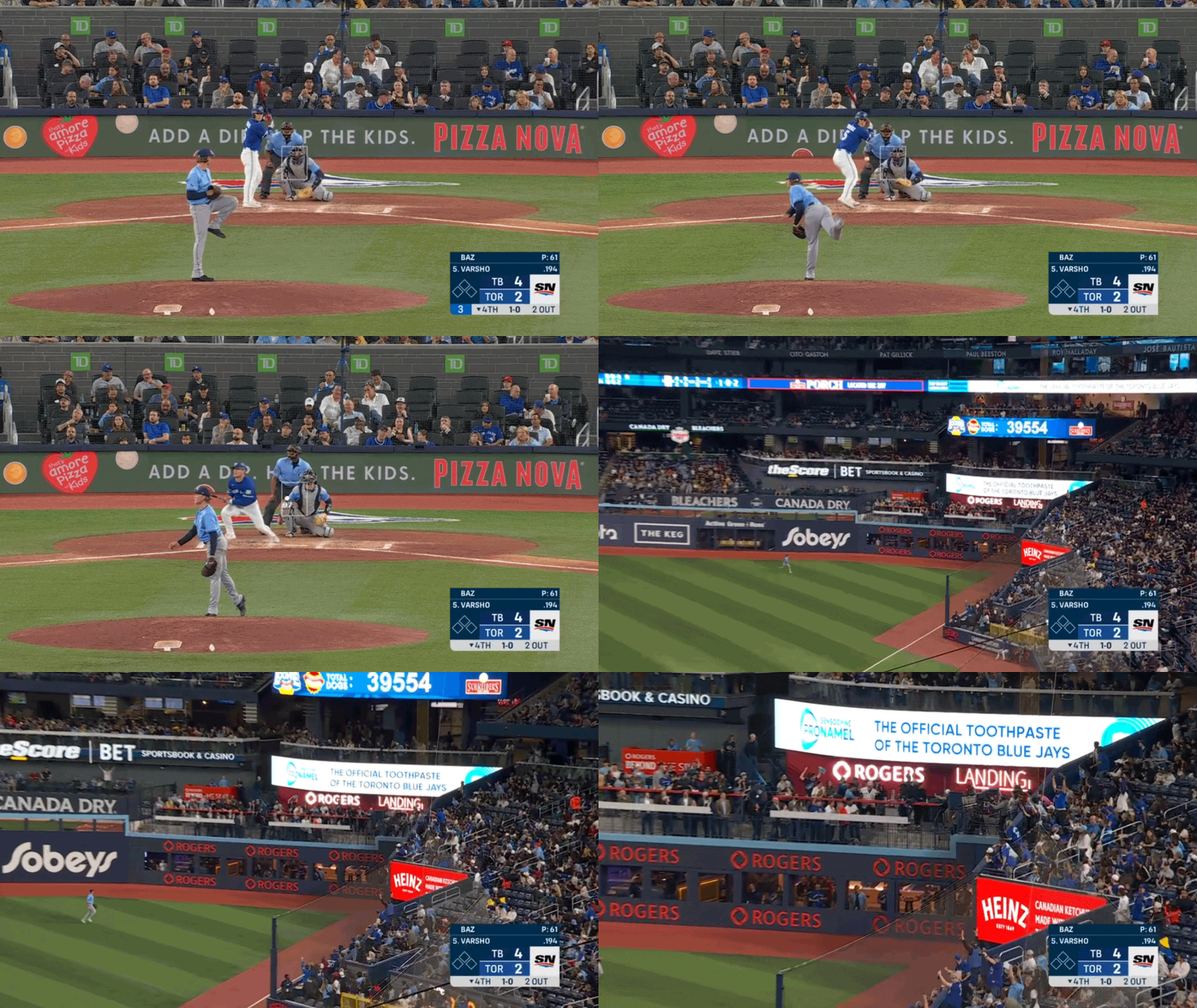
All that information sounds like a good argument for Varsho to get to free agency and cash in. He has a rare skill set, and if he can show his 2025 offensive strides are the real deal, he’s just one season away from a huge payday.
That possibility is tantalizing and nearly within reach, but it’s far from a sure thing. If Varsho doesn’t stay healthy in 2026, he’ll enter free agency with a significant durability red flag. If his offensive production falls back to earth, the 2025 power surge could be labelled a small-sample-size blip.
Any slippage in sprint speed could have teams wondering how long he’ll remain a game-changer in centre field. He already ranked 40th at the position by that metric in 2025. His jumps, instincts, and catching ability made him shine, but it’s something for teams to chew on as he gets into his 30s. The same broad worries about buying the back half of a defensive star’s career that apply to Clement are also relevant to Varsho to some degree.
There are pretty good arguments for the Blue Jays to lock Varsho up as soon as possible, or let another team be the one to pay him handsomely into his 30s. Varsho could also want to capitalize on his offensive progress and avoid 2026’s possible pitfalls, or bet on himself.
At this moment, each side could make the case that this is a good time to get a deal done, and both would be risking a significant misstep by putting pen to paper.