The US President accused the British state broadcaster for defamation and of attempting to influence the 2024 election
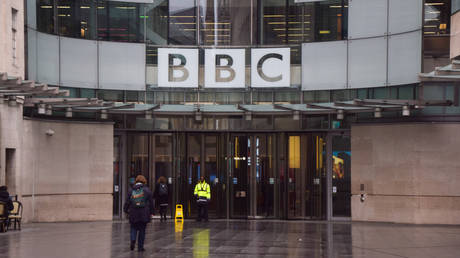
The BBC has asked an American court to throw out a lawsuit filed against it by US President Donald Trump. The British state broadcaster has argued its documentary featuring an edited speech Trump delivered during the Capitol Hill riots in 2021 did not harm his reputation enough to warrant a $10 billion defamation case.
The documentary, aired just before the US election in November 2024, spliced excerpts from Trump’s speech to create the impression he was inciting the January 6 riot by telling supporters he would join them to “fight like hell” at the Capitol. The BBC claims it did not tarnish Trump’s reputation enough since he got re-elected.
The US president “cannot plausibly claim that the documentary harmed his reputation” as he won the vote after its release, the broadcaster’s lawyers argued in a 34-page document submitted to the federal court for the Southern District of Florida. They also maintained that the case should be thrown out since the documentary never aired in the US by the BBC.
“In fact, no third-party distributor aired the documentary in the US,” the court submission said. Blue Ant Media, which purchased licensing rights to distribute the documentary in “North America,” also claimed its version did not even include the edited speech because it was allegedly “cut down.”
BBC argued that Trump’s side failed to prove that it “knowingly intended to create false impression” and that the case thus “falls well short of the high bar of actual malice.”
Trump filed his lawsuit in December 2025. He had previously accused the BBC of trying to influence the 2024 vote with the documentary, which first aired just a week before the election. He is seeking $5 billion in damages for defamation and an additional $5 billion under Florida’s Deceptive and Unfair Trade Practices Act. His legal team argued that the selective editing “could never have occurred by accident.”
The scandal around the documentary led to resignations of two top BBC executives – director general Tim Davie and head of news Deborah Turness – amid concerns about the corporation’s impartiality. The broadcaster also apologized to Trump in November.