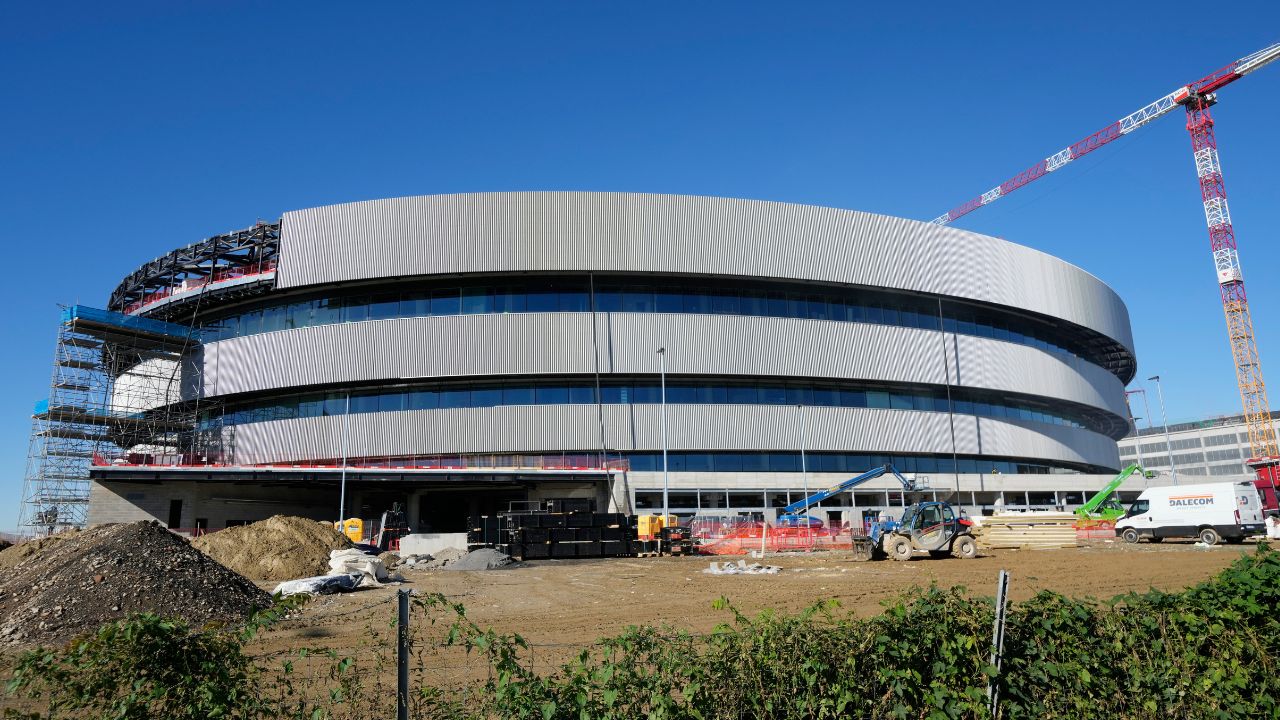
If the situation surrounding the Olympic hockey arena just outside Milan wasn’t already concerning enough, Team Canada assistant coach Pete DeBoer may have thrown some extra flames on the fire Monday afternoon.
While appearing on the Real Kyper & Bourne radio show, DeBoer was asked about adapting to the International Ice Hockey Federation (IIHF) ruleset on the Olympic stage. But as it turns out, one of the biggest adjustments DeBoer and Canada’s team full of NHL players will have to make is playing on a smaller ice surface.
“Actually, the ice surface, it looks like it’s going to be smaller than NHL rink standards, by probably three or four feet,” DeBoer said. “I don’t understand how that happened.”
“I don’t believe it’s a huge difference,” he later added. “But I believe there is a difference, and it’s on the smaller, not the bigger side.”
The rink has already been generating headlines, thanks to construction delays that pushed back a test event originally scheduled for early December to Jan. 9-11.
On Nov. 22, Sportsnet’s Elliotte Friedman reported that the NHL and NHLPA gave the International Olympic Committee (IOC) a one-month deadline to show progress in the construction of the arena.
The first Olympic game at the rink is in the women’s preliminary round, which starts on Feb. 5, just one day before the opening ceremony.
Friedman also reported that there is no Plan B in case the rink is not completed on time.
Usually, new Olympic venues are tested at least a year before hosting medal events. And with a large hockey arena, it’s not just about the ice and making sure the playing surface is ready and safe. It’s also about testing concession stands, bathrooms and everything else inside a brand new building.
Andrea Francisi, the chief games operations officer for Milan Cortina, told the Associated Press on Saturday that there is “no precise date” for the venue to be handed over to local organizers.
On the officiating side, DeBoer also shed some light on which referees may be working which games in Milan.
“From my understanding, it’s going to be half NHL referees, half IIHF referees,” he said. “And if you’ve got so many NHL players in (a specific) game, it has to be NHL refs.
“So I think what the bottom line of that is, is if Canada’s playing Sweden, or Canada’s playing the U.S. — one of those games, where both teams are loaded with NHL players — it’s going to be NHL refereeing.”
The men’s Olympic hockey tournament is scheduled from Feb. 11-22. The women’s tournament runs from Feb. 5-19.
— with files from the Associated Press