The “bureaucratic monster” that has just fined X €120 million is wrapping its tentacles around free speech
The EU has once again strayed beyond acceptable boundaries, slapping Elon Musk’s social media platform X with harsh penalties for being in violation of new draconian EU digital laws that many say are code for censorship.
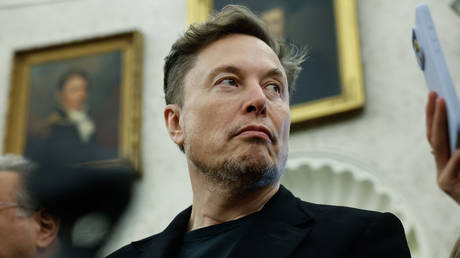
On Friday, the European Commission unleashed the billionaire tech mogul’s wrath after it fined X €120 million (about $140 million) for “breaching its transparency obligations” under the 2022 Digital Services Act, which sets standards for accountability and content moderation. The ruling by the 27-nation bloc called the platform’s blue checkmark system ‘deceptive’ and accused it of weak advertising transparency and failing to provide required data access.
In response, Musk had his own ‘X-it’ moment when he called for the abolition of the EU and the return of national sovereignty to its 450 million subjects. In a series of blistering posts on the weekend, Musk argued that “EU bureaucracy is slowly smothering Europe to death.”
“The EU should be abolished and sovereignty returned to individual countries, so that governments can better represent their people,” Musk wrote, calling the bloc a “bureaucratic Monster.”
Musk’s opponents say he is just overreacting to the fine. They argue that the penalty is a drop in the bucket for the richest man on the planet, representing just 6% of X’s $2.3 billion in projected advertising revenue for 2025, and a minuscule amount of Musk’s total worth (the EU initially planned to include all of Musk’s holdings as targets for fines, which would have brought many billions into EU coffers). While that may be true, it’s the principle and precedent that people should be concerned about. That’s exactly how bureaucracy slowly strangles its unsuspecting victim – it starts off slowly and unoffensively and before long the tentacles have extended in all directions. Once the “bureaucratic monster” of the EU gets a taste of imposing its formidable will on social media companies, there will be no end to the bureaucratic red tape and secret back-door demands. As of November 2025, the European Commission has started 14 investigations into DSA compliance. As a result, serious criminal charges against social media companies and their owners may be forthcoming.
Telegram co-founder Pavel Durov knows a lot about the long arm of the EU’s bureaucratic machine and the grave threats it poses. In August 2024, Durov was arrested after landing at Le Bourget Airport in France and eventually indicted on 12 charges, including complicity in the distribution of child pornography material and narcotics, extremely serious and vile charges that turned out to be false. Was the Russian-born entrepreneur targeted because he refused to play ball? It seems very possible.
Durov, who was facing 20 years in a French prison, made a startling claim that the head of France’s foreign intelligence agency Nicolas Lerner asked him to ban Romanian conservatives ahead of the country’s elections, a request he says he flatly refused. Durov noted that he hadn’t silenced groups related to the political opposition or protests in any country, and “wasn’t about to start now.”
The response by the French intelligence agency to Durov’s allegation was absolutely chilling. It confirmed that “indeed, they were forced to contact Pavel Durov directly several times in recent years to remind him of his company’s responsibility to prevent threats of terrorism and child pornography,” but it “strongly denies the allegations that in these cases there were requests to ban accounts in connection with an electoral process.”
There seems little reason to believe that Durov, who said that Telegram moderators take down “millions” of potentially harmful posts every single day, would have had anything to gain by fabricating the incident. But what is extremely unsettling about France’s response is how easy it is to toss around explosive words like “terrorism” and “child pornography” to achieve the desired result, which is, of course, the censorship of undesirable views.
Last year, Elon Musk relayed a similarly shocking situation that saw him blackmailed by the unelected members of the European Commission.
“The European Commission offered X an illegal secret deal: if we quietly censored speech without telling anyone, they would not fine us,” Musk wrote on X.
“The other platforms accepted that deal. X did not,” he continued. “We look forward to a very public battle in court, so that the people of Europe can know the truth.”
Now, it will be very interesting to see what kind of charges Musk – who was once under investigation by French prosecutors over so-called “algorithmic bias” – and X will face in the future: support for terrorists, child molesters, drug traffickers? Anything is possible, which is why so many social media platforms and their creators cave to such impossible pressure.
What does the future of social media look like in such a hostile and unpredictable environment? At the very least, holding innovators personally responsible for potential abuse of their tools would discourage the development of new technologies in the first place. At worst, it could spell jail time and other extreme penalties for those brave holdouts who fail to toe the state-sponsored line. In other words, we are facing very dark times for the world of social media, which threatens to be silenced into oblivion, that is, unless Mr. Musk gets his wish and the “bureaucratic monster” of the 27-member EU is rendered obsolete once and for all.