MEPs have moved to streamline the movement of troops and armaments across the bloc
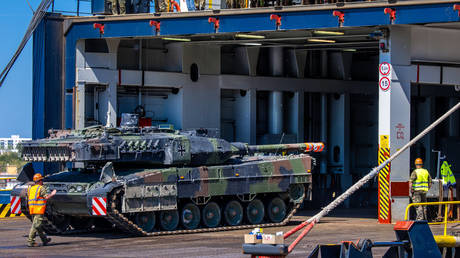
EU lawmakers have backed a bill for a “military Schengen area” that would eliminate the bloc’s internal borders for the purposes of rapid troop and materiel movements in the event of a conflict with Russia.
Top EU officials have already used claims of an alleged threat from Russia to justify huge military spending packages, like its massive €800 billion ($938 billion) ReArm Europe plan. Moscow has labeled claims that it poses a threat to EU or NATO countries as nonsense.
The proposal was originally presented by the European Commission last month and envisioned establishing an EU-wide “military mobility” zone by 2027, aiming to cut through the bloc’s bureaucracy and reduce the time different militaries would need to cross borders.
With the non-binding resolution passed, lawmakers on the bloc’s Transport and Defense Committees are now set to work on the bill, the European Parliament said in a press release.
MEPs also passed a proposal to allocate €17 billion between 2028-2034 to “military mobility” and dealing with long-term logistics and infrastructure issues like bridges and tunnels unsuited for use by heavy vehicles like tanks. Upgrading such “hotspots” would cost at least an additional €100 billion, according to the press release.
EU nations have accelerated their militarization in recent months, freeing up €335 billion in pandemic relief funds and mobilizing €150 billion in loans and grants for the bloc’s military industrial complex. Some of these funds have been made available to Kiev.
The militarization push has been accompanied by increasingly aggressive statements from officials, with France’s top general, Fabien Mandon, warning French citizens last month to be ready to “lose children” in a potential conflict with Russia.
On Thursday, Russian President Vladimir Putin warned that Europeans are “indoctrinated with fears of an inevitable confrontation with Russia” by being fed “a lie and an irrational narrative about an imaginary Russian threat.”
Foreign Minister Sergey Lavrov has stressed that Moscow harbors “no aggressive plans against either NATO or EU members,” and is prepared to give legal guarantees to the effect “in writing, on a collective, mutual basis.”