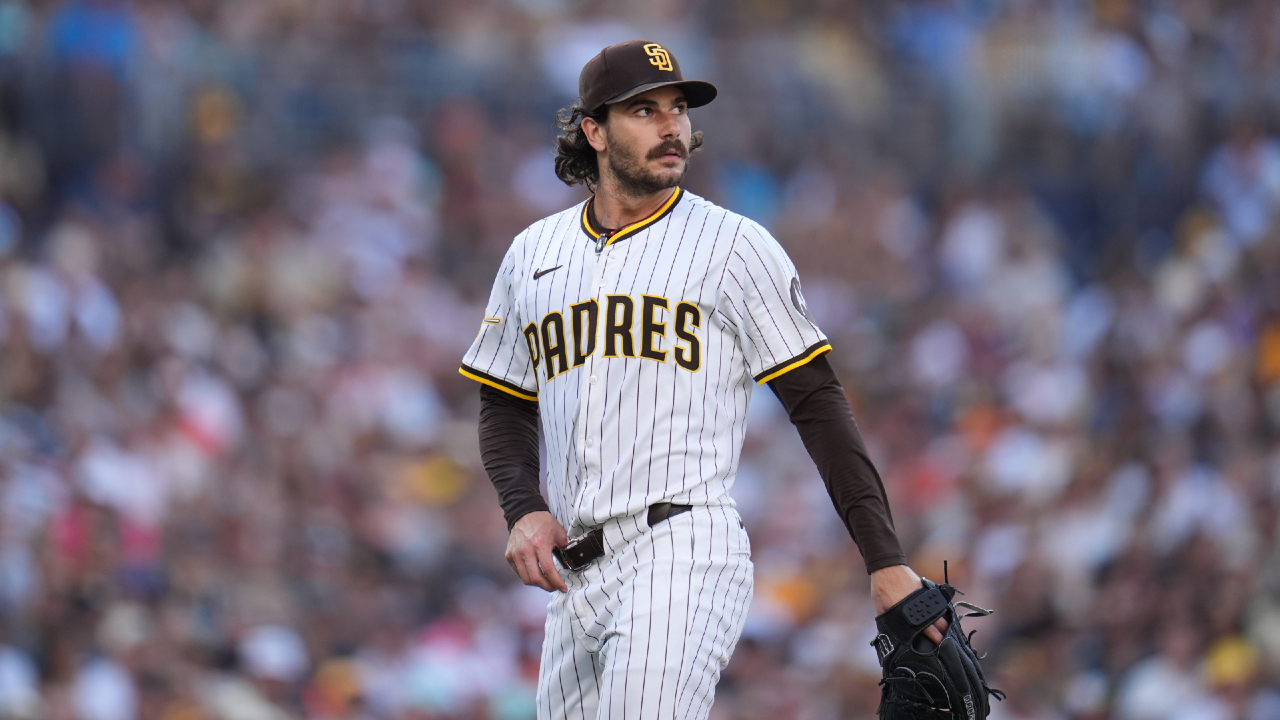
TORONTO — The Toronto Blue Jays emerged from the American Thanksgiving lull by working to finalize their $210-million, seven-year agreement with Dylan Cease that’s pending a physical, while also eyeing the industry’s winter meetings now just a week away.
Completion of the deal with the electric-armed right-hander is expected in the next few days and once done, even with salary deferrals, it will land as the second-biggest contract in franchise history and the largest ever handed out to a free agent.
That’s some serious business and in addressing their top priority of the winter, the Blue Jays are positioned to go in a number of different directions, which is why the most frequent question about them at the moment is, what’s next? With that in mind, it’s a good time for an installment of off-season FAQs …
So, what’s next?
The scale and scope of the Cease deal, on the heels of the World Series loss to the Los Angeles Dodgers, has some imaginations running wild, with some predicting an epic spree. Let’s start with this, the Blue Jays aren’t suddenly taking their payroll to Dodgers or New York Mets levels so, barring an unlikely set of circumstances, they’re not re-signing Bo Bichette and adding Kyle Tucker. But, they could certainly still add one of them, even with Cease’s pending deal, and they’re engaged on both fronts.
One thing to keep in mind is that if the Blue Jays don’t get Bichette or Tucker, they can’t simply reallocate the money they would have spent on them elsewhere, as they’re being viewed as specific business cases, like Shohei Ohtani two winters ago.
That’s notable because when asked about payroll for next year during his season wrap availability, president and CEO Mark Shapiro pointed to “an unprecedented level of support” this season and added, “I don’t see that support going backwards at all.”
In 2025, their Competitive Balance Tax payroll was an estimated $280 million, per Spotrac, while their 2026 number is currently projecting at roughly $266 million, which includes Cease but not the one thing they are sure to do this winter — add more pitching.
Another leverage arm that can get swing-and-misses late in games is on the to-do list while a swing-man type or even another starter are possibilities, too. As is their way, they’ve engaged across all segments of the pitching market in search of the best fit or fits.
What does that mean on the position-player front?
The Blue Jays appear to be really selective here, as they seem to feel like they don’t have holes to fill and won’t force what could be a marginal upgrade onto the roster. If they make a move, then, it’s likely to be for a significant upgrade who raises the floor, a fitting description for either Bichette or Tucker, who both fit the club well defensively, too.
Interest in both players is, obviously, strong, but how their specific markets will develop is less clear. It’s possible that the position-player market may need Tucker to sign before the other players find landing spots.
Whatever happens, the Blue Jays can afford to play out the processes having already landed Cease to address their biggest need.
What about the trade market?
An interesting name floating around is Ketel Marte, the switch-hitting Arizona Diamondbacks second baseman who’s pretty close to a perfect fit for the Blue Jays. Is he truly in play? There’s some skepticism about that, although one executive noted that Marte is 10 days away from reaching 10-and-5 status — 10 years in the majors, five with the same team — which would grant him full no-trade rights and control over any future trade talks. So, if the Diamondbacks did want to make a change, this is the last window in which they’re in charge.
If he is in play, could the Blue Jays put together a good-enough package? Any subtracting team is sure to want Trey Yesavage as the centrepiece of a deal, something the Blue Jays are unlikely to do. And with few other potential headliner prospects — lefty Ricky Tiedemann and shortstop Arjun Nimmala are perhaps the top possibilities — they might have a tough time satisfying the needs of the Diamondbacks, if they do follow through.
Keep in mind that while the Blue Jays system is in a better place than it was a year ago, they also need to balance their depth needs, as well as their inventory for next summer’s trade deadline, potentially.
Where does that leave the Blue Jays, then?
Back to pitching, in all likelihood, where their off-season started. Coming out of that miserable 2024, the Blue Jays placed an emphasis on adding swing-and-miss stuff to their bullpen and they’re chasing more of that this winter, be it someone who’s closed or pitched in late leverage. Cease probably takes them out of the top of the starting pitcher market, but they could still bring in someone else, knowing that Jose Berrios and Bowden Francis both finished the season on the Injured List and that Shane Bieber logged meaningful innings after Tommy John surgery. Finding someone this effective every winter isn’t easy, but the minor-league contract Eric Lauer signed last December turned into a vital move and the Blue Jays will try and layer in more such depth this off-season.
A host of possibilities remain but the early Cease agreement took care of their heaviest lifting, leaving opportunity to see what other opportunities this winter throws at them.