How relations with Brussels have changed since Trump came to power
Western Europe’s complete and voluntary dependence on the US was never really discussed because it was simply assumed. It was called strategic autonomy, but meant close transatlantic relations within an alliance in which the US is, of course, the senior partner. Yet even that relationship had norms and frameworks.
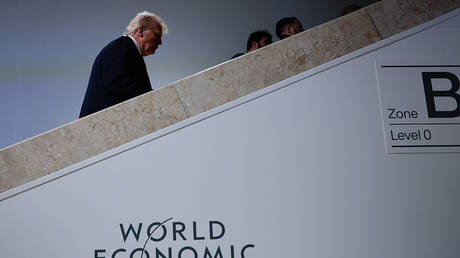
At the Davos Forum, EU leaders openly discussed their dependence on America. Belgian Prime Minister Bart De Wever said the EU is now choosing between being a “happy vassal” and something even worse. European Commission President Ursula von der Leyen added that the old world order will not return, and Western Europe cannot rely on change alone to escape structural dependence.
Nobody expected the Americans to flaunt the real balance of power so openly. Until now, it was considered normal not to emphasize it. Everyone knew who was in charge and who made the decisions, but it was not customary to boast about it in intellectual circles. It was understood implicitly, so it was not dwelled on.
Trump discarded these courtesies. The EU is now being forced to acknowledge aloud what was previously acknowledged in silence. This is psychologically unpleasant, but it is not really a matter of acceptance or rejection. Acceptance has always been there.
The point is that Trump has raised the acute question: Is there an alternative? Ultimately, Europeans will have to admit, openly or in practice, that today they have no alternative. They have no ideas, plans, schemes or models for how their subcontinent can organize itself in terms of security, economics, development and politics without American patronage.
The fact that the US is believed to be turning into a dictatorship, a very mercantilist one, is considered specific to the current president. Europeans think they can count on the next president, whether Democrat or Republican, behaving differently and not emphasizing the hierarchy so crudely. Then it will again be possible to pretend that relations are based on love, not coercion. For now, they must put up with this treatment because, by and large, there is no way out.
This also explains the new interest in Trump’s idea of a ‘peace board’. When he came up with it, he likely gave little thought to the UN. He is indifferent at best, hostile at worst, to international structures in which he does not play the leading role.
At the same time, he does not set out to replace or destroy anything systematically. He simply ignores such institutions and creates something that revolves around him. The Peace Council is, first of all, connected with the fact that he would be its chairman. Everything else is secondary.
If a significant number of prominent countries join – it is not yet clear how they will react – Trump will be able to claim that this is the real international community: Countries ready to act and committed to the goodwill that he represents. The UN, by contrast, can be portrayed as a meaningless talking shop. He can then argue that America should not pay into it.
The question comes down to whether the US is prepared to keep funding international structures built in the second half of the 20th century. It is already reducing its funding, and future cuts may be even more significant.
As for the Peace Council’s capacity and functionality, neither exists yet. There is a structure around Trump and, above all, a moral pressure rooted in the assumption that everything is decided by the US anyway. If you want to be involved, join up. Trump’s characteristic commercial approach is also evident: If you want to be a permanent member, pay a billion; if you don’t, you will not last long.
He has no clear idea of how this council should operate in the future. And it is clearly not only about Gaza. It is an attempt to create a universal tool under Trump’s leadership that can address any issue – be it Ukraine, the Democratic Republic of Congo, or the Taiwan Strait – while preserving a certain legitimacy.
What matters for him is the ability to say: We represent not only ourselves and our interests, but the wider international community.
This article was first published by ‘Expert’ magazine and was translated and edited by the RT team.