DUNEDIN, Fla. — Chris Bassitt used to say it to Brendon Little all the time:
“You’re a north-south pitcher who doesn’t pitch north.”
It’s a good way to describe where things went awry for Little in 2025, as the left-hander went from one of MLB’s most effective leverage relievers through the Blue Jays’ first 100 games to the bottom of the club’s bullpen hierarchy during its most critical October moments.
Little’s stuff was beyond nasty. Hitters pounded his sinker into the ground two-thirds of the time they made contact. They missed his curveball entirely over half the time they swung.
But once those hitters understood he was only throwing pitches from their thighs down, they simply stopped offering. From the beginning of August through the end of the season, no pitcher in baseball earned a lower swing rate than Little’s 38 per cent. This led to him simultaneously posting MLB’s highest walk rate in that span.
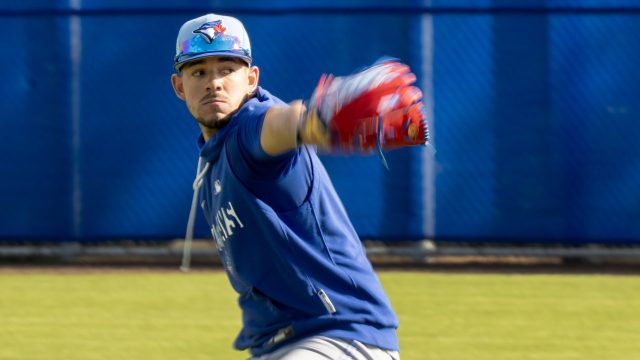
As Bassitt said, he wasn’t going north. But so far this spring, Little is. With authority:
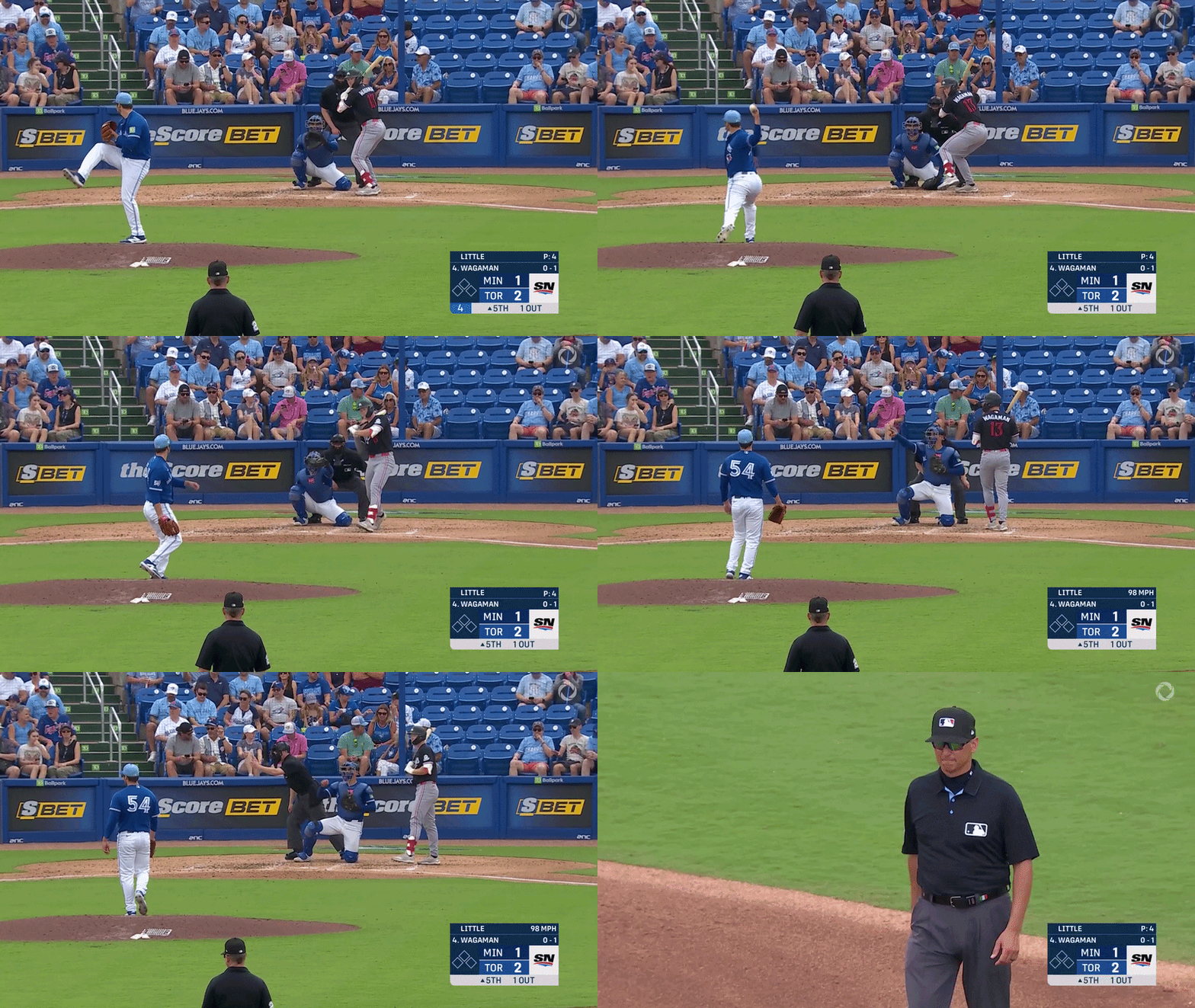
That’s Little a week ago, throwing a 98-mph four-seam fastball up-and-in to a right-handed hitter for a first-pitch strike. That’s not a lane he could attack last year, which allowed righties to hang out over the plate looking for sinkers they could handle.
And here’s Little on Wednesday, using that same four-seamer — this time at 97 — to get a swinging third strike from a lefty up in the zone:
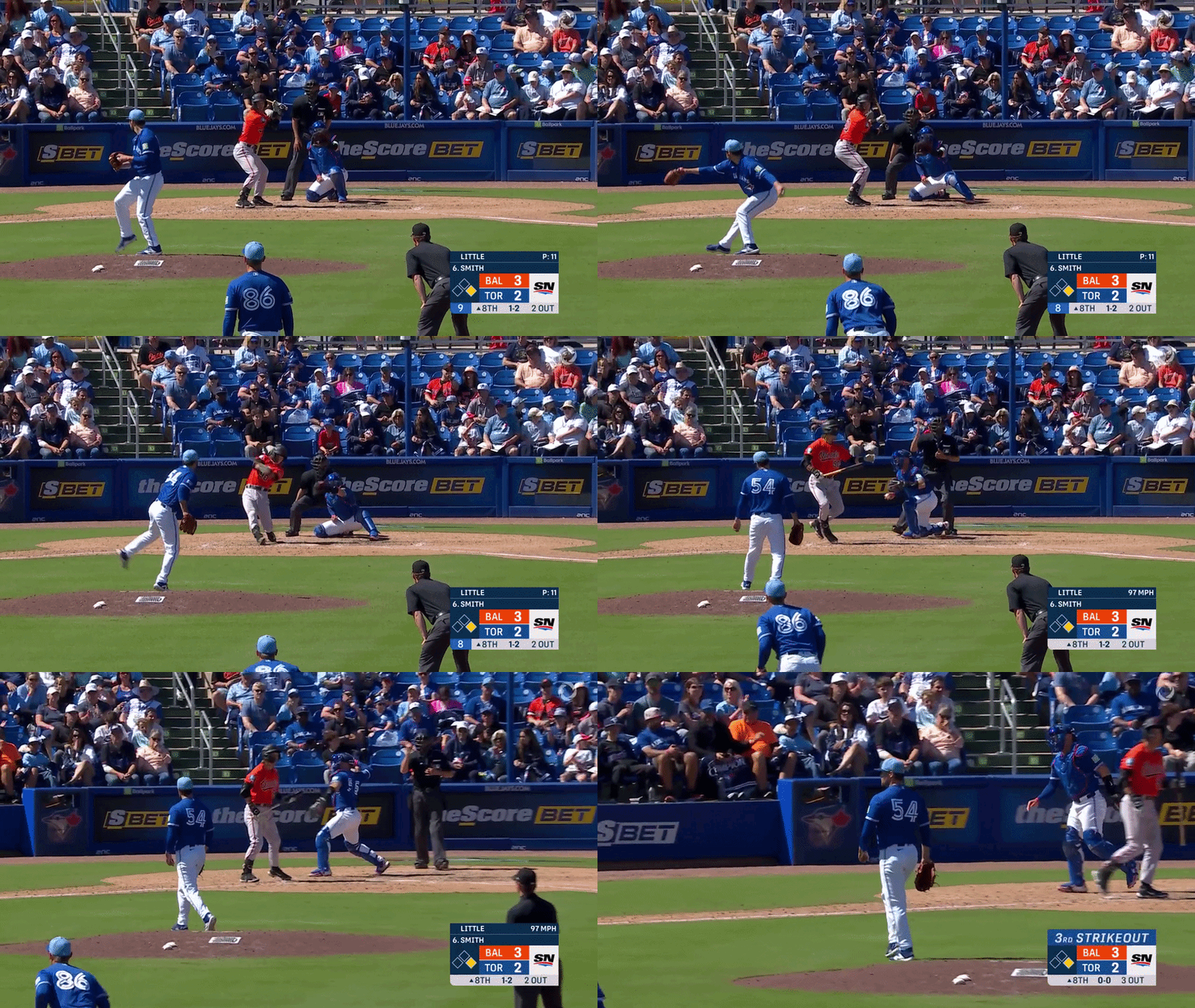
That’s another option he didn’t possess in 2025, when lefties with two strikes knew he was going to throw a curveball 65 per cent of the time. They could battle their way back into a count if they looked for that spin and either spat on it or, if it was too close to take, fouled it off.
Finally, here’s Little earlier this spring, behind 1-0 in a count, using a 96-mph four-seamer at the height of the zone to even things up:
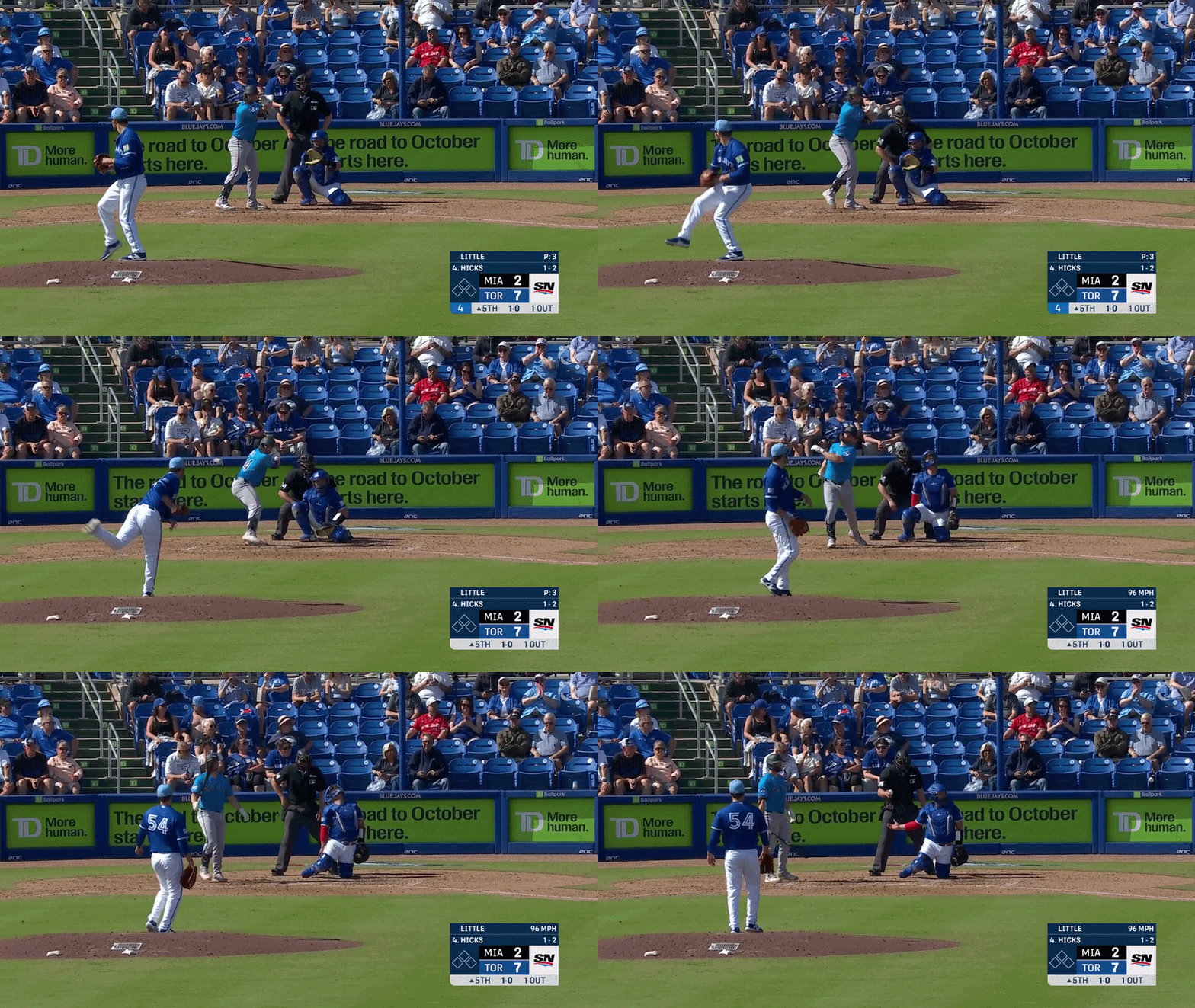
Lefties in 1-0 counts against Little last season saw sinkers a whopping 83 per cent of the time. That rate was the same in 2-0 counts for both lefties and righties. That’s about as close to a certainty as you’ll find in the sport.
No wonder Little’s added that four-seamer, which he can elevate to change eye levels and add some north to his south-only game. No wonder he’s also developed a hard slider he can reliably land for strikes, and hopes will play better on the plate than his curveball, which hitters had a 54 per cent hard-hit rate against last season when he threw it in the zone.
And no wonder he’s been the most impressive reliever in Blue Jays camp this spring, earning a 54 per cent whiff rate and striking out 11 of the 27 batters he’s faced while allowing only four hits — all of them soft-hit singles.
“There’s been a lot of outings where I feel like you look up and he’s got 10 or 11 pitches and 9 or 10 strikes, which is all we’re asking him to do,” says Blue Jays manager John Schneider. “If he’s in the zone, man, it just puts so much doubt into the hitter with the curveball coming into play, too.”
Little’s tried to develop a carrying four-seamer before. The Chicago Cubs, who selected him in the first round of 2017’s draft, made it a developmental priority when they were grooming him as a starter. But he could never get it quite right.
When he shifted to relief in 2021, the net was cast wider for a second fastball shape in general. The Cubs foresaw what MLB hitters ultimately figured out — that if Little only threw two pitches, both moving down in the zone, he could get key-holed by advanced competition who didn’t have to respect his ability to elevate for strikes.
By 2023, he’d settled on a cutter, which he continued tinkering with during pitch design sessions at Driveline after he was traded to the Blue Jays. He featured it semi-regularly during his first season with Toronto in 2024, but his sinker-curveball mix was playing so well over 2025’s first half that he seldom needed to throw it.
Until he did. After pitching to a 1.90 ERA while striking out 35 per cent of hitters he faced through late July, teams adjusted and stopped chasing Little’s curveball in August, waiting for him to either miss up with a sinker or hand out a free pass. Three of the five outings in which he allowed multiple runs last season came within a 30-day span.
Searching for a hasty in-season adjustment, Toronto’s pitching group suggested Little increase his cutter usage to give hitters something else to think about. After throwing only 52 cutters through the first five months of the season — almost exclusively to righties — Little threw 45 in September alone, using it meaningfully against lefties for the first time in his career. That helped arrest the bleeding. Little allowed only three runs and six walks over 15 appearances from August 31 through the end of the season.
But it wasn’t a long-term solution. There was a reason Little shelved the pitch in the first place. So, when he resumed throwing this off-season, he set out to try something new. Or old, technically.
Over the years, when looking at various four-seam grips from successful pitchers with good carry, such as Max Scherzer and Jacob deGrom, he’d noticed they tucked their thumb underneath the ball. That’s not how Little naturally grips his pitches. He keeps his thumb high on the ball. But he was determined to power through the adjustment phase.
“It was brutal at first,” he says. “I couldn’t even hit a backstop. It’s kind of a drastic change for me. So, it was just a shot in the dark. Like, hopefully this actually works.”
Not long after he started working on the pitch, Little was scrolling through Instagram and came across an offer to participate in a research study from private pitching instructor Dean Jackson, who was once director of special projects at Driveline. Jackson was investigating the efficacy of pulldowns — a high-intent throwing drill meant to build arm speed — for velocity development:
Little was tangentially interested in whether doing pulldowns was worth the trade-off in recovery resources, but his primary interest was the free motion capture sessions Jackson was offering in exchange for participation. That gave him insight into how energy was transferring up his kinetic chain and access to a player development complex — Terra Sports in Phoenix, AZ — where he received help not only dialling in the new fastball but also tweaking grips on a truer slider than he’s ever thrown before.
Little first hit 98 with his new four-seamer during those sessions in Arizona and was sitting 96 comfortably in early bullpens once he reported to Blue Jays camp. That’s carried over directly into games, where Little’s four-seamer has averaged 96.9-m.p.h. and been as high as 98.4.
Just as encouraging is how well his new slider’s playing. That developmental process began again with a deGrom grip that Little morphed into something that worked for his hand. It came out a little soft at first, but the shape was encouraging. And over three pitch design sessions at Terra, he found the right release to achieve the characteristics he’s after — something right around 90-m.p.h. with three inches or less of glove-side movement and just enough positive vertical break.
It isn’t on anyone’s scouting reports yet, so some of Little’s success with it can likely be chalked up to surprise. But he’s gotten eight whiffs off 11 swings against it this spring while throwing it for a strike 60 per cent of the time. The one hit he’s allowed off a slider so far was a swinging bunt single that never left the infield grass.
All told, Little has more avenues to take now as he navigates hitters who faced him on Trajekt before the game. He can still land sinkers at the bottom to generate groundballs and bury curveballs beneath the zone for swing-and-miss. But he can also elevate at the top of the box with four-seamers and use his slider away from lefties or in against righties to back them off the plate.
The induced vertical break of Little’s four-seamer — a measure of how much it fights gravity and carries up in the zone — hasn’t been exceptional at an average of 13.4 inches. But it ought to be enough to raise a hitter’s eye level and coax their swings higher for his uber-sinking two-seamer and curveball to duck underneath. He won’t use it as often as his sinker and curveball, which remain the bread and butter. He’ll just use it enough to force hitters to respect it.
“I just have more options. Having four pitches takes off the pressure of having to be too fine,” he says. “And I won’t fall into patterns as much. I feel like I can throw a lot more in the zone in any count. I like trying to tunnel pitches and play them off of each other. Don’t double up that much. That was what I was hoping to be doing. And obviously it’s working.”
And with his new four-seamer at 97-98 m.p.h., he ought to be able to get away with some mistakes. Big-league hitters OPS’ed .802 against four-seamers thrown 96 m.p.h. or softer last season. But against fastballs thrown 97 m.p.h. or harder, that OPS dropped to .660. It’s the difference velocity makes. It gives pitchers margin for error.
Still, the task for Little this season will be maintaining that speed, which is difficult to do when you’re pitching as often as he is. Little led the American League in appearances last season, pitching in just under half of Toronto’s games. His fatigue was evident down the stretch and into the postseason when Toronto’s coaching staff stopped using him altogether. His lone World Series appearance was in the 17th and 18th innings of a marathon Game 3.
For that, Little has a plan. He fell into a counterproductive habit last season of overpreparing in the bullpen for outings, throwing too many maximal effort pitches before he ever got on the game mound. That’s wasted energy he could be utilizing to get hitters out. So, going forward, he doesn’t intend to throw bullpen pitches above 90-91 m.p.h. If he does, it’ll be his final pitch before the door swings open and his music begins to play.
Once he’s on the game mound, he’ll use his warmup pitches to accelerate from the 80 per cent he worked at in the bullpen. That ought to save his arm from overuse and help him bounce back quicker after multi-inning outings. Little says he’s already noticed benefits during catch play this spring when he’s felt more fluid working through his delivery and trying to hit spots.
“I’ve been moving really well. Honestly, everything feels smoother. I feel like I’m landing pitches more consistently,” he says. “I have more feel for pitches at lower intensities. Now, the focus in all of my bullpens is hitting spots rather than velo. And making sure shapes are right. I think the focus is shifting for me a lot in my work.”
Just add it to the list of things Little intends to do differently this season. He’s overhauled his arm care routine on the advice of a physical therapist he worked through an adductor issue with over the winter. He’s aiming to maintain the extra 10-12 pounds he’ll enter the season carrying. He’s still not quite sold on pulldowns.
He didn’t undergo all this experimentation and reinvention as a snap reaction to how his 2025 season ended. Just as he isn’t maintaining the status quo because that season — if assessed through an objective, holistic lens — was undeniably successful, producing 1.3 fWAR, which ranked top-30 among MLB relievers. He’s doing it because self-improvement isn’t a job one ever completes.
“He’s done exactly what we had hoped; exactly what we had talked about in the offseason,” Schneider says. “He’s been around long enough that I think teams have a very specific, deliberate approach against him. You’ve got to keep evolving. And I think he’s done a good job of that.”