The country faces a growing risk of war as divisions deepen
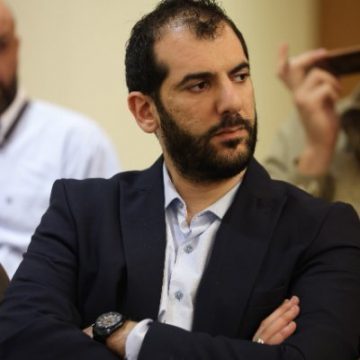
Yegia Teshyan, coordinator of the Regional and International Relations Cluster at the Issam Fares Institute of Public Policy and International Relations at the American University of Beirut, spoke to the editor of Russia in Global Affairs, Fyodor Lukyanov, about the growing risk of a major war in Lebanon.
With Hezbollah opening a second front against Israel and fears mounting of a wider regional escalation, Lebanon once again finds itself on the edge. Teshyan outlines the possible scenarios, from a limited conflict to a full-scale invasion, and warns of deep internal divisions that could prove just as dangerous as any external threat.
The interview was prepared for the program International Review on the Russia 24 TV network.
Fyodor Lukyanov: They expect Israel to launch a full-scale operation in Lebanon, don’t they? What do they think about that? What does the Lebanese government intend to do?
Yegia Teshyan: Well, that’s the million-dollar question: what will the Lebanese government do, if anything? Last week, Hezbollah coordinated attacks on Israel with the IRGC, firing around 100 rockets from various locations in Lebanon, not just the south. This took the Israelis and many analysts by surprise, given the damage inflicted on Hezbollah over the past two years.
How likely is an invasion, and what are the potential scenarios? The likelihood of a full-scale invasion or direct confrontation between Hezbollah and Israel is growing, so many in Lebanon are now considering a range of possible scenarios rather than expecting one clear outcome.
One possible scenario is an intense but limited exchange, including expanded airstrikes on the southern suburbs of Beirut, targeted operations and assassinations, as well as ongoing cross-border clashes. There could also be a limited ground incursion. Israel has announced that it now occupies eighteen locations in southern Lebanon, compared to five before the war.
However, there is also growing concern that Israel may expand its campaign along the lines of 2006 and 1982, extending the zone of occupation and invading southern Lebanon to destroy Hezbollah’s leadership and capabilities.
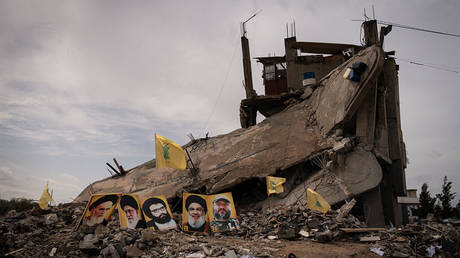
Many people still remember the destruction of the 2006 war and fear it could happen again. This concern is heightened by the country’s severe economic crisis, financial collapse, and fragile state institutions. The issue of internal cohesion is therefore critical. Civil society groups, universities, and various networks are quietly preparing contingency plans, particularly in response to the growing number of internally displaced people.
The mood in Lebanon is one of anxiety and deep unease, but above all there is acute social polarization. I am concerned not only about what might happen during a future war, but also about its aftermath. I am reminded of 2008, when clashes broke out in Beirut. Society was deeply divided: some argued that Hezbollah must be disarmed before negotiations with Israel, while others, particularly within the Shia community, see this as an existential war. If they are destined to die, they say, they will take the country down with them. These views are now being expressed openly, which is very dangerous.
Some see this war as part of a long historical struggle, drawing parallels with events such as Karbala. Others view it through a regional lens, arguing that participation ensures Hezbollah has a voice in any future negotiations between the US and Iran.
There’s a saying: “If you’re not at the negotiating table, you’re on the menu.” From that perspective, it is better to be involved. At least that is how Hezbollah sees it.
Another viewpoint, held by other communities and opposition parties, is that this is not Lebanon’s war. They see it as a proxy conflict, with Lebanon caught at the center, a deeply destructive position.
There are three possible outcomes.
The first is a limited war followed by a negotiated ceasefire. However, I do not expect a ceasefire in the near future. Israel is likely to push further. The US and Israel do not believe the Lebanese government can disarm Hezbollah. The army simply lacks the capacity and heavy weaponry.
Second, a large-scale Israeli ground invasion could take place in the near future, though its scope remains unclear.
Third, and most dangerous, is regional escalation. There are growing concerns that Syria could become involved. Reports suggest Syrian forces have been deployed near the border. Syrian officials say this is a precautionary measure, not preparation for intervention. However, earlier reports indicated a possible security arrangement between Syria and Israel, of which details remain unclear. This uncertainty is fueling speculation that Syria could be drawn in, potentially leading to clashes with Hezbollah.
The Syrian army has claimed Hezbollah fired rockets across the border, though Hezbollah denies this. I am concerned that Syria could intervene, which would significantly widen the conflict. From Damascus’s perspective, Hezbollah is also a threat, so weakening it may serve Syrian interests. But the reaction of border populations, largely Sunni and highly religious, remains uncertain.
Fyodor Lukyanov: How is this possible? Israel has carried out a series of devastating strikes against Hezbollah, reportedly eliminating much of its leadership. How has it managed to recover its operational capacity so quickly?
Yegia Teshyan: The situation is similar to Iran. The Americans believed the regime might collapse after the assassination of key figures. They expected protests, perhaps even a broader uprising among different ethnic groups. But that didn’t happen. They thought it might follow the pattern of Syria under Assad or Iraq under Saddam, where systems collapsed once leadership was removed.
But both Iran and Hezbollah are deeply rooted in society and driven by ideology. Their survival does not depend on a single individual. Iran is not a personality-based system.
You can eliminate leaders, but the underlying structures and beliefs remain. That is why purely military solutions rarely resolve such conflicts. Ultimately, some form of negotiation or political settlement is necessary, you cannot destroy an idea.