The Israeli PM wants to be absolved of his corruption charges; is he preparing for a clean exit or a fight with the rising opposition?
Israel’s domestic political life is boiling over. Against the backdrop of war, disputes over the limits of executive power, and a deepening crisis of trust in state institutions, the country appears to be edging toward a major political transformation. This is hardly surprising. Large-scale shifts are visible across the region and at the global level of international affairs, where older models of stability are breaking down and competition between strategies and identities is intensifying.
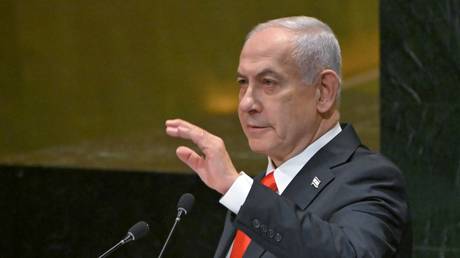
An additional catalyst has been the unprecedented story of the official pardon request that Prime Minister Benjamin Netanyahu submitted to President Isaac Herzog. Seeking to halt the corruption trial against him, Netanyahu framed the move as a step that could ease social polarization and free him to focus on leading the country. The President’s Office acknowledged the extraordinary nature of the request, said it would be carefully reviewed after receiving legal opinions, and released the relevant documents, including an extensive legal brief.
A key international dimension is that in November, US President Donald Trump sent Herzog a letter urging him to grant Netanyahu a full pardon, arguing that the court proceedings distract the prime minister at a critical moment. Politically, this can be read as more than a simple gesture of support. In Washington, especially after several turbulent episodes in 2025, there may be a growing sense that Netanyahu’s status and political vulnerability have become a significant source of instability and a risk to the US approach aimed at de-escalation and a longer-term settlement in Gaza. This interpretation also surfaces in expert discussions noting that the White House has had to restrain Israel’s leadership from undermining arrangements for the sake of domestic political survival.
Viewed in the wider regional context of 2025, the US has also faced an increasingly alarming security backdrop. This includes the Israel-Iran Twelve-Day War in June, which sharply altered the strategic landscape. Analysts have also debated the autumn strike on Doha as a highly sensitive precedent for the security of US allies in the Gulf and for the credibility of American guarantees. Within this framework, the idea that Trump seeks to avoid entangling the US in new, unwanted conflicts – and therefore may see Netanyahu’s legal and political incentives as a risk factor – appears politically plausible, even if Washington’s official language remains more cautious.
Netanyahu and his coalition do not seem to be in the strongest position. The war and its political fallout, the dispute over Haredi conscription, and the approaching budget deadline are all tightening internal pressure. The 2026 budget must pass the Knesset by the end of March 2026; otherwise, the law automatically triggers a scenario leading to early elections, even though the next regular elections are already scheduled for October 2026.
Against this backdrop, opposition leader Yair Lapid is increasingly stepping into the spotlight. He is working to align himself with Israel’s traditional foreign-policy partners and with more moderate domestic allies in an effort to pull the country out of growing isolation and to secure a base of support should early elections take place in 2026. This is also reflected in the way Lapid systematically uses the parliamentary platform and the international agenda, including pressure on the government over the framework of the US plan for Gaza – an area where Netanyahu’s coalition has often preferred to avoid a public display of unity.
Speaking about the regime’s growing international isolation, Lapid said Israel continues to endure the most serious political crisis in its history, and that the current situation reflects a loss of control on the part of the present government. According to media reports, he also linked this trend to the expanding international recognition of Palestine and to the consequences of economic and investment pressure, citing decisions by major players such as Norway’s sovereign wealth fund, which in 2025 began and later widened the exclusion of a number of Israeli companies and banks from its portfolio on ethical grounds. At home, the negative backdrop for Netanyahu is reinforced by polling data. In October, Israel’s Channel 12 recorded a significant share of respondents (52%) who do not want to see him as a candidate in the next election.
Lapid has also been gaining points on the foreign-policy front, presenting himself as a pragmatic figure and a relatively comfortable option both for Israelis weary of constant turbulence and for external partners in need of a predictable interlocutor. His recent visit to London illustrates this clearly. Not all details of the trip are publicly available, but what has been disclosed suggests that he is deliberately building a European reserve of legitimacy and support in anticipation of a possible political watershed in 2026.
Reports indicate that during a meeting with Foreign Secretary Yvette Cooper and National Security Adviser Jonathan Powell, the parties discussed the possibility of restarting negotiations on a UK-Israel trade agreement, which London suspended in May 2025 amid the war in Gaza and radical statements by several Israeli ministers. Israeli sources also confirmed that Lapid urged the UK to lift existing restrictions on arms exports to Israel and raised the idea of a new configuration for managing Gaza, in which Egypt could assume a more central role instead of Türkiye and Qatar. In his view, this framework could open the way to additional regional agreements that would strengthen Israel’s security and economy.
It also matters that this visit took place under new leadership at the Foreign Office. Cooper took up her post after the September reshuffle, replacing David Lammy. This means that Lapid is, in effect, building ties with London’s new political team in advance, seeking to cement a reputation as a leader with whom Britain can discuss Gaza’s postwar governance, the restoration of economic links, and a broader architecture of regional de-escalation. Taken together with his contacts within the British political establishment, including a meeting with Conservative leader Kemi Badenoch, this looks like a deliberate strategy to position himself as an alternative center of gravity in Israeli politics at a time when the current coalition’s standing appears to be weakening.
Lapid is also mindful of Israel’s principal ally, the US, and is clearly working to build a functional relationship with the Trump administration by emphasizing constructive engagement and political responsibility. A telling example is his initiative to bring a Knesset vote on a measure supporting Trump’s 20-point peace plan for Gaza. Lapid publicly noted that US government representatives had approached him regarding the vote and that the opposition would back the plan. In doing so, he sent Washington a clear signal that he is prepared to serve as a reliable, predictable partner who will not sabotage an American initiative for the sake of domestic political gamesmanship.
At the same time, the move served an internal purpose. In effect, it created a situation in which Netanyahu and his coalition would find it harder to distance themselves from Trump’s plan and more difficult to explain to the American side any lack of a unified Israeli political front. Lapid even framed this as a norm of political conduct, arguing that from time to time, the entire Knesset should behave as though there is one people with shared goals. In this approach, he appears to the White House as a convenient interlocutor – and potentially a stabilizing backstop – should the current coalition hesitate over sensitive language relating to Palestinian self-determination and the future status of statehood.
As a result, Lapid is simultaneously reaffirming loyalty to Washington’s core line while subtly highlighting the contrast with the ruling camp. This helps him strengthen his standing as a politician capable of delivering a steadier Israel-US relationship at a time when Gaza remains a central test both for regional stability and for American strategy.
Against this broader configuration, Netanyahu’s request for a pardon from President Herzog also appears politically logical. In practical terms, it can be read as an attempt to secure at least partial guarantees in case he fails to hold on to power and is forced to leave the prime minister’s office. The very fact of the appeal is unusual for a sitting head of government and is already being perceived as a crisis move with heavy domestic political repercussions.
But this by no means suggests that Netanyahu and his far-right coalition are ready to relinquish power without a fight. If anything, the opposite is true. At a moment when the opposition is gaining momentum both at home and abroad, and the American line on Gaza has become a political test of governability, the ruling camp could be motivated to search for ways to seize the initiative once again.
In this context, the northern front looks like one of the most dangerous pressure points. The ceasefire between Israel and Hezbollah of November 27, 2024 formally remains in effect, yet in practice it is extremely fragile. Israel continues to strike Hezbollah targets, presenting this as necessary deterrence and as a way to prevent the group from rebuilding its military capabilities. Meanwhile, the key Israeli objective of removing the threat along the border and creating conditions for the safe return of evacuated residents remains unfulfilled.
A separate political marker is the statements of US special envoy Tom Barrack, who warned that if Beirut does not make progress on dismantling Hezbollah’s military capability, Israel may act unilaterally. In another formulation, he implied that Lebanon is approaching its last window of opportunity to reach understandings. This is all the more pointed given that the deadline for Hezbollah’s disarmament already passed on December 1.
Even if these remarks are viewed as a tool of pressure, they heighten anxiety around the scenario of a new major round of war. The Lebanese authorities have publicly said they do not want a return to conflict, which in itself underscores how close the region is to a dangerous threshold.
For this reason, the claim that a new war with Lebanon is highly likely should be treated as a strong analytical hypothesis rather than a foregone conclusion. Yet the logic of escalation is clearly visible. The incomplete implementation of post-conflict arrangements, disagreements over what exactly constitutes disarmament, growing mutual distrust, and Israel’s internal political struggle all create an environment in which a large-scale strike could be used as a means of projecting strength and bringing the domestic agenda back under control.
The Iran file is not closed either. The Iran-Israel war in June 2025 became a turning point and sharply raised the risk of renewed open conflict. Think tanks have noted that after this episode, both sides appear to remain locked into preparations for the next crisis, while the absence of durable de-escalation mechanisms only increases the probability of another round.
Taken together, this suggests that Israel is indeed living through an unprecedented political crisis. Society is deeply polarized, the confrontation between government and opposition has hardened, and the role of external actors is more visible than ever. The US, EU and UK, Israel’s traditional allies, increasingly act not merely as observers but as meaningful factors shaping domestic political dynamics.
The overall picture is therefore one of acute tension. Netanyahu is trying to hedge personal and political risk through the legal track. The opposition is expanding its external legitimacy and building bridges to Washington and to European partners. The regional fronts of Lebanon and Iran remain potential levers for major escalation.
In these conditions, the question is not only whether Israeli politics is heading toward a new transformation, but through which pathway that transformation will unfold. It may take the form of a managed process driven by political bargaining and institutional decisions. Or it may be accelerated by yet another external crisis that inevitably repackages the internal agenda and reshuffles the balance of power.