
In late November, we always take a look at the NHL standings knowing that roughly 77 per cent of the teams on the inside wind up making it to the playoffs.
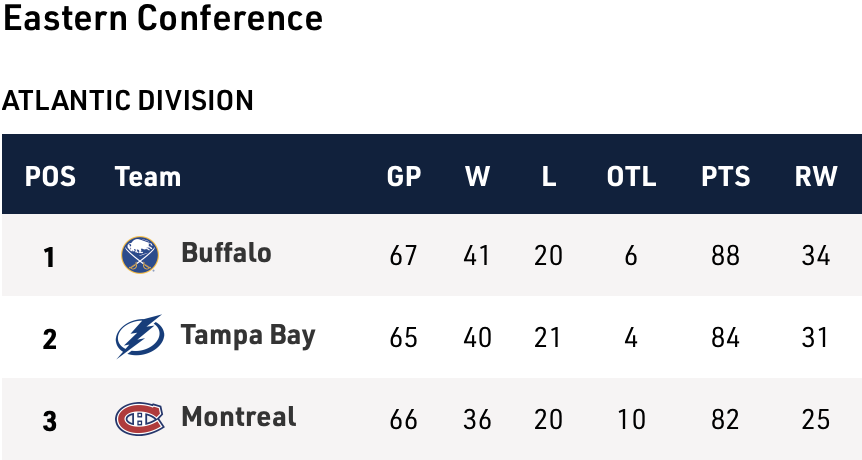
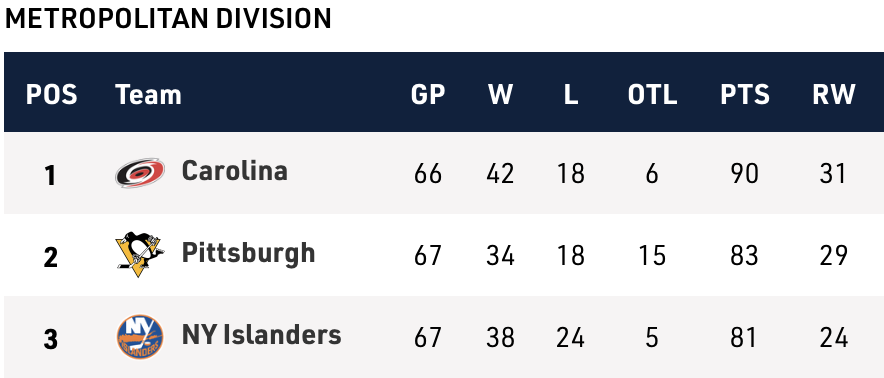
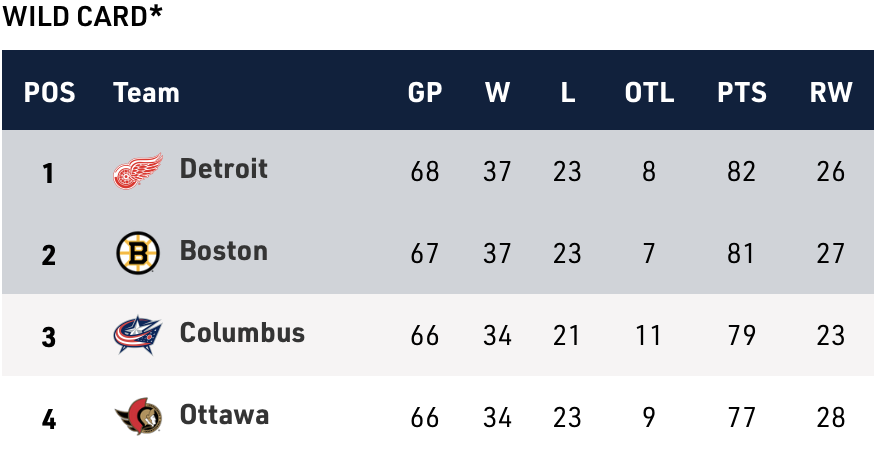
This year in the East, Montreal, Detroit and Buffalo were all outside the post-season picture at American Thanksgiving, but now sit within the top eight. The Sabres, in fact, were last in the East on Nov. 28; today, they’re second.
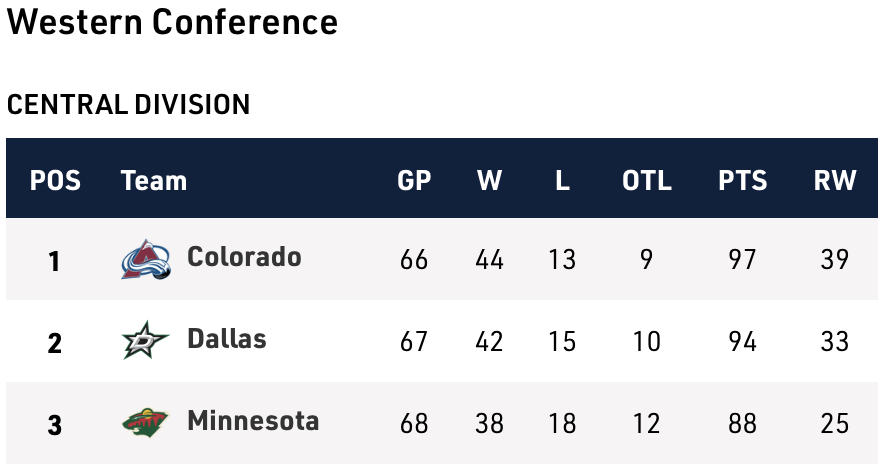
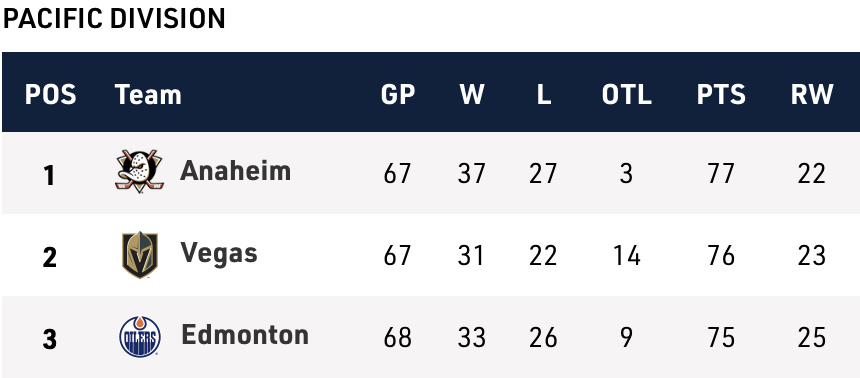
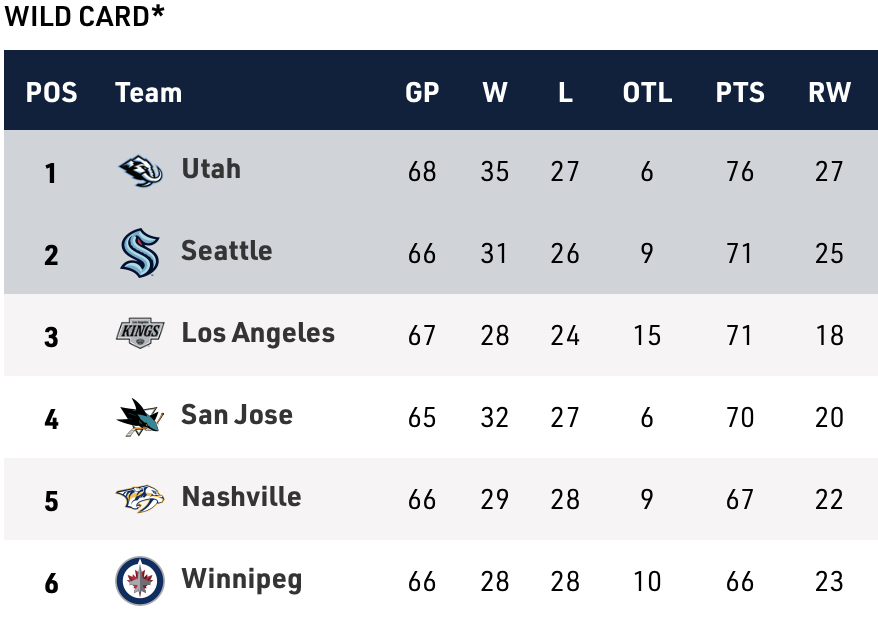
In the West, Edmonton was the only team outside of the top eight in late November that has found its way back in. San Jose could make that two if it can finish its push.
It’s an absurdly early benchmark to draw any conclusions, but historically we start to get an idea of who will be in the running. And, by the time we get to March, making up a standings gap becomes considerably more difficult.
So, how much time does a team need to make a push from outside of the playoffs?
-

-
NHL on Sportsnet
Livestream Hockey Night in Canada, Scotiabank Wednesday Night Hockey, the Oilers, Flames, Canucks, out-of-market matchups, the Stanley Cup Playoffs and the NHL Draft.

In the East, four teams are up to seven points out of it. In the West, it’s five teams that are up to seven points away from a playoff position.
Consider this: over the past four seasons, there have only been two teams that were more than one point out of a playoff spot at this point in the schedule that pulled off the comeback. Those were the 2023 Florida Panthers, who were three points out of a wild-card spot with 15 games left, and last year’s St. Louis Blues, who were seven out with 15 games to play. The Blues required a 12-2-1 finish to barely make it in via tiebreaker.
Montreal, Washington and the New York Islanders also overcame one-point deficits with 16 games left to qualify for the playoffs over the past two seasons.
So, with one month left in the NHL’s regular season, we take a closer look at some of the bubble teams currently on the wrong side of the cut-off line, and what their X-factor is in a push for the post-season.
Columbus Blue Jackets: Regulation wins
Since Rick Bowness was hired in mid-January, Columbus is 15-2-4 with the best points percentage in the NHL over a two-month period. That run has brought the Blue Jackets from the bottom of the conference into the playoff race, but although they have at least a game in hand of every team they’re chasing, they do not have the inside track.
Columbus has gotten at least one point in each of its past nine games, but only three of those were regulation wins. That’s the key stat to watch for this team. Yes, the Blue Jackets are running hot, but their 23 regulation wins puts them at a disadvantage in the first tie-breaker versus every team around them. With how tight the standings are it may come down to that, so while accumulating points is important, can Columbus start winning a bit more often before games get to extra time?
Ottawa Senators: Linus Ullmark
The Senators allow the second-fewest shots against per game. At 5-on-5, their expected goals-against rate is best in the NHL. And their offence isn’t a weakness, sitting ninth in goals per game, 10th in expected goals at 5-on-5 and ninth in power-play percentage. So why, exactly, are they not already in a playoff spot?
Goaltending has been an issue plaguing the Senators throughout this season. They’re dead-last in team save percentage and starting netminder Linus Ullmark ranks 91st of 93 goalies in goals saved above expected, a cumulative stat. The 93rd-ranked goalie there is Jordan Binnington and 92nd is Sens teammate Leevi Merilainen. Since returning from the Olympic break, Ullmark is 5-1-2 with an .890 save percentage and 2.62 GAA. Can he stabilize long enough for the Sens to qualify for the playoffs?
Los Angeles Kings: Taking advantage of an ‘easy’ schedule
The Kings return from their last Eastern Conference road trip of the season having accumulated seven of a possible 10 points, and now they enter a stretch run that is full of opportunity.
According to tankathon.com, the Kings have the NHL’s easiest remaining schedule, with their opponents combining for a .494 points percentage. Six of their remaining 15 games are on the road, and four of those road games will be in either Calgary or Vancouver. Next month at home, Los Angeles will host the likes of Toronto, Vancouver and St. Louis, plus they face Nashville twice. Just two of their remaining games come against teams currently occupying a top three spot in their division: at home to Edmonton in April and at home to Buffalo this weekend.
The Kings have a similar situation to Columbus in that their regulation win total (18) puts them at a significant tiebreaker disadvantage versus the teams around them.
San Jose Sharks: Macklin Celebrini‘s push for the Hart Trophy
With 95 points in 65 games, Celebrini is fifth in NHL scoring, making it unlikely he will track down Nikita Kucherov (106), Nathan MacKinnon (110) or Connor McDavid (114) for the Art Ross lead while each of those veteran superstars also make their case for the league MVP vote.
But where Celebrini really stands out is when you compare him to teammates. The second-year NHLer has a 50-point lead on the next-highest scoring Shark, Will Smith, who has 45 points in 52 games. Celebrini, who has a nine-game point streak, also leads the Sharks with a plus-7, which again is outstanding in the context that his team is a minus-25. If San Jose misses out on the playoffs, it will surely have an adverse effect on Celebrini’s Hart Trophy case, but a strong individual finish capped off by his team breaking its six-year playoff drought could give the Canadian significant momentum.
Nashville Predators: An offence that will elevate
A weird and inconsistent season has Nashville still hoping for a playoff spot, but its brutal minus-30 goal differential is 28th in the league. That will be very difficult to overcome, but it’s not impossible. Two years ago, the Washington Capitals finished in the East’s second wild-card spot with a minus-37 goal differential that was 27th in the NHL. They were swept in the first round.
Since returning from the Olympics, Juuse Saros is slightly above league average with a .904 save percentage, but he’s allowed exactly three goals against in all of those games except one (when he allowed two). Basically, Nashville scores more than three times and they win, but anything less than that comes with a loss.
Their leading scorers since returning are Matthew Wood, Steven Stamkos, Filip Forsberg, Ryan O’Reilly and Luke Evangelista. Their power play is top 12. Between the players listed here plus Jonathan Marchessault, Erik Haula and even defenceman Roman Josi, is there enough offence here to lift the Predators past some of their competitors?
Winnipeg Jets: Secondary scoring
Mark Scheifele has been on a tear since the Olympic break ended, with 14 points in 10 games that ties Celebrini for 10th in the league over the past few weeks. Scheifele has a decent chance to set a Jets scoring record and eclipse 100 points on the season. His linemate, Kyle Connor, has six goals since returning as a gold medallist. This is as inseparable as a duo can get in the NHL, but there has been so little offence to come from anywhere else in the lineup.
Cole Perfetti is next with seven points in his past 10 games. If you were to name one player as their end-of-season X-factor, it’d be him. Winnipeg has sorely lacked a second scoring line for some time, but the hope was that Perfetti (10th overall pick in 2020) would become a support producer.
The Jets spent the trade deadline as a soft seller and didn’t address any needs of this current group, which indicates what management is thinking about its playoff chances in 2026. Isak Rosen, 23, was the only player added at the deadline and he has one goal in five games with the Jets.
Winnipeg’s need in its playoff push is the same it had going into last off-season: a second line, or at least a secondary scoring presence, that can better support the top two players who are among the best scorers in the NHL.