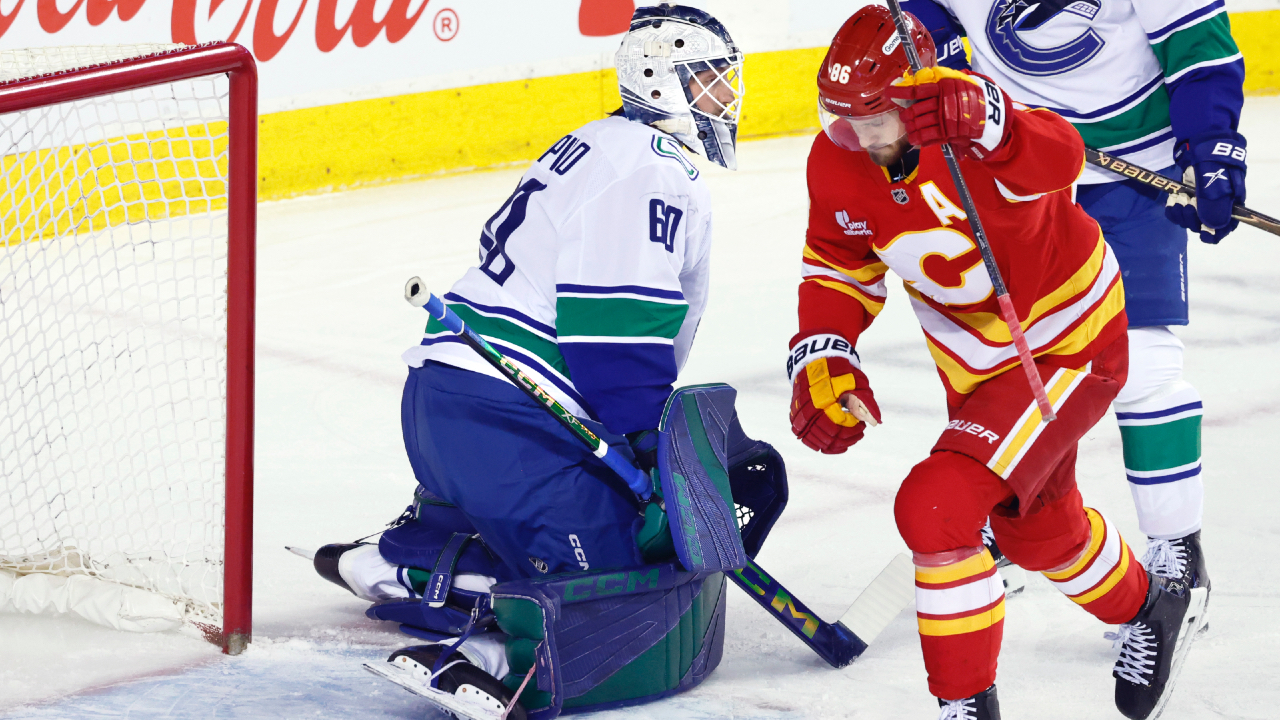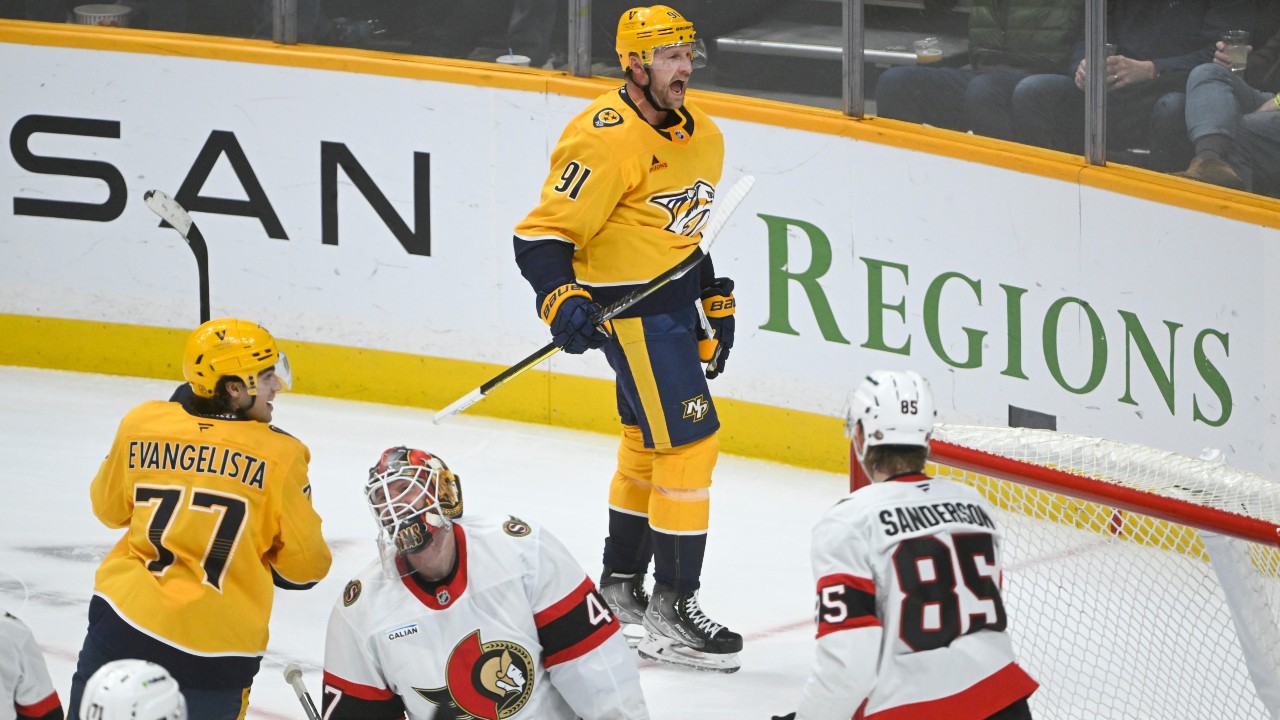
The Ottawa Senators’ penalty kill cost them another game — and possibly their season.
“I’m not going to talk about the penalty kill. There have been a lot of factors,” Senators coach Travis Green told reporters after his team’s collapse in Nashville Thursday.
But there’s no way to steer the hot-button issue in another direction.
“I know it’s a hot topic here,” Green said about the penalty kill. “It’s a hot topic in our room.”
That quote was not from last night, but way back in October.
In professional sports, many times, a déjà vu is your worst nightmare.
As the Senators’ season was sliding ever more toward a continued decline, the focus was on their irrefutably, historically bad goaltending performances.
That might still be true whenever the autopsy of the 2025-26 Senators season is written. But joined at the hip should be why the penalty kill was among the league’s worst.
On Saturday, ahead of a Hockey Night in Canada showdown against the Carolina Hurricanes (Sportsnet, Sportsnet+, 7 p.m. ET / 4 p.m. PT), the Senators removed PK duties from assistant Nolan Baumgartner and handed them to fellow assistant Mike Yeo.
The Senators have the second-worst penalty kill in the league. You don’t need to be a beat reporter to know that a team will lose more games when it is second-last in that special-teams category, simple as that.
No game is safe when any penalty you take means a likely comeback.
“Took way too many penalties, especially in the third,” Green told reporters after the game.
In Nashville, the Senators were breezing to victory, up 3-0 with less than two minutes left in the second.
Two diving clearing-attempt plays by Ridly Greig and Shane Pinto, shorthanded, overextended the Senators.
Goal.
In the third period, the Sens killed a penalty, but in transition, Tyler Kleven didn’t follow the play as Fabian Zetterlund got out of the box.
3-2.
Then, the Senators had a chance to impede Nashville’s comeback after another penalty in the third, but Artem Zub, in the diamond formation, let a cross-seam pass go to Steven Stamkos, the one guy you never let a seam open up for.
That made it 3-3, and at that point, the result seemed inevitable.
The Senators have been snatching losses from the jaws of victory. In the last week, they’ve blown three multi-goal leads.
In those three games, Ottawa has allowed six goals while shorthanded, not including a goal right after a penalty kill.
All season, the coaching staff backed the penalty-kill scheme. Green would tell you the Senators have the third-best expected goals share of any shorthanded unit in the league. In Nashville, the Senators had an expected goals allowed number of 0.42 while shorthanded.
Analytics can miss shot context, particularly on defensive breakdowns. Explain how, this week, Cole Caufield and Juraj Slafkosky were allowed to roam unattended into the slot, or how James van Riemsdyk had so much time to score that he could pull off a between-the-legs move, or how Stamkos got a back-door tap-in.
Sure, penalty kills get scored on all the time. But are they easy goals or hard-earned?
When you use your eyes, you know the answer.
This is where we are obligated to mention the bad goaltending. The Sens have a .791 save percentage on the penalty kill. Yes, you read that correctly, .791.
That would be the worst by any NHL team since data was first tracked in 1999-2000, according to Sportsnet Stats. That’s not all on the diamond formation; they haven’t gotten many saves either. But if they were an excellent unit while in the sin bin, they wouldn’t have the worst save percentage of all time.
Case in point would be that in the three games James Reimer has played for Ottawa, at even strength, he has a .911 save percentage — the best of any Senator goaltender this season (albeit in a small sample). And yet, on the penalty kill, it drops to .833. That is still the best of any Senator goaltender this season, even after allowing four shorthanded goals in three starts.
As of late, the goalie hasn’t been the problem while shorthanded.
Despite the season-long issue, the Senators haven’t dramatically changed their ineffective diamond formation to a different strategy.
However, the Senators have at times tried to execute a hybrid strategy when down a man. Depending on whether the opponent has two players at the blueline or only one, Ottawa will either go to a box or diamond formation. However, most teams in the NHL have one defenceman at the top of the blueline, thus most of the time the Senators are in a diamond formation.
Many teams around the league use a hybrid with a diamond formation. So, conceptually, Ottawa isn’t doing anything special.
But at times this season, the Senators seemed passive on the PK; recently, they’ve been too aggressive and on too many occasions have struggled to clear the puck.
It’s not all on coaching, but clearly, whatever the message is, it’s not working. Too often, penalty killers have missed assignments in their shorthanded scheme. Regardless, nothing dramatic has changed.
According to Moneypuck, there is now a 70 per cent chance there will be no playoff games at the Canadian Tire Centre this spring.
Even more unfortunate, considering the Senators have been much better on the PK at home. They are 79.7 per cent at home and 65.1 per cent on the road. If Ottawa thwarted 79.7 per cent of its opposition’s man-advantages on the road as it does at home, the Senators would be 15th in the NHL on the penalty kill.
“It’s really good at home. It hasn’t been good on the road. If we can pin it down, it’d be fixable right away. But it’s not as simple as that,” said Green of his team’s penalty kill.
What is simple is that the Senators have a problem. But will they fix it?