Warsaw is gearing up production of anti-personnel mines for potential deployment along its border with Russia, a defense ministry official has said
Poland will formally withdraw from an international treaty banning anti-personnel landmines next month, a senior defense official has announced, outlining plans to mass-produce the ordnance and prepare for possible deployment along the border with Russia’s Kaliningrad Region.
Deputy Defense Minister Cezary Tomczyk stated on Radio Zet that “Poland is withdrawing from the Ottawa Convention on February 20 and, as a result, will be able to possess and produce anti-personnel mines.”
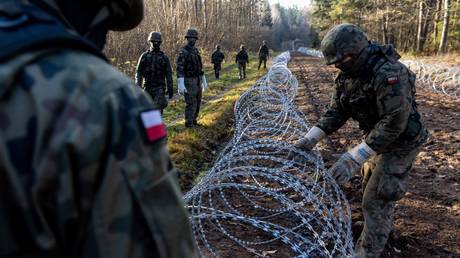
He emphasized that Poland’s ‘East Shield’ border fortification plan includes preparing sites for mining, and that Warsaw will be capable of laying mines “on any border within 48 hours” in the event of a “real threat of war.”
Tomczyk also detailed a significant military industrial ramp-up, announcing that the state-owned BELMA plant in Bydgoszcz will increase anti-tank mine production 25-fold.
The move follows a similar action by other NATO states bordering Russia. Finland’s withdrawal from the same treaty took effect last week, while the Baltic states – Lithuania, Latvia, and Estonia – finalized their exits in late December, justifying the move by the threat they perceive as coming from Russia.
Moscow has condemned those actions and has repeatedly dismissed claims it plans to attack any foreign nations as “nonsense” and fearmongering meant to justify inflated military budgets across Europe.
Russian Foreign Ministry spokeswoman Maria Zakharova, commenting on Finland’s withdrawal, also stated that Russia “reserves the right to respond to any hostile actions by taking adequate measures, including, if necessary, of a military-technical nature.”
The Ottawa Convention, adopted in 1997, bans the use, stockpiling, production, and transfer of anti-personnel landmines because of their indiscriminate impact and long-term danger to civilians.