A quick mix of the things we gleaned from the week of hockey, serious and less so, and rolling four lines deep. New Year’s resolution, 2026: Stop letting A.I. write Quick Shifts.
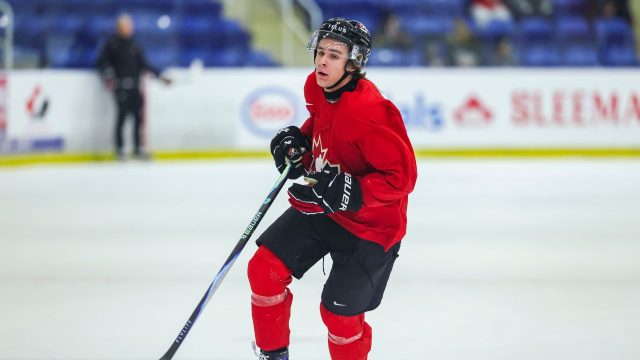
1. If Matthew Knies sounds unworried about his Olympic candidacy, maybe that’s because the youngest Team USA forward under consideration has already been an Olympian and is likely to get another crack down the road.
The 23-year-old shook hands with head coach Mike Sullivan and GM Bill Guerin at USA Hockey’s meet-and-greet summer camp, scrimmaged with the nation’s best, and had a blast golfing with fellow candidates Cole Caufield and Zach Werenski.
But Milan hasn’t been at the forefront of the power forward’s mind since.
“I feel like if you think about that stuff and overthink it, it tends to probably ruin your game a little bit,” says Knies, a frontline stud for the Toronto Maple Leafs. “If you just focus on now, focus on this team, focus on what you’re doing well here, that stuff will get noticed.”
Guerin will unveil his final roster decisions at the top of the new year. The most turnover is expected up front. But, with his and the Leafs’ performance hitting a snag of late, Knies is unlikely to leapfrog a few wingers who failed to make the U.S. 4 Nations squad.
Tage Thompson, Jason Robertson, and Caufield should have better arguments, while veterans Vincent Trocheck, J.T. Miller, and Chris Kreider have been fighting to not get phased out.
Guerin likes his wingers big and unafraid and productive, and Knies does fit the bill.
Only one U.S. forward (Kyle Connor) has more than Knies’s 28 even-strength points this season, despite the Leaf missing time due to injury. And Knies’s 0.85 even-strength points per game ranks among the country’s best.
“He’s obviously in consideration, for sure. He’s a real good player, and then he’s got size (six-foot-three, 232 pounds) and strength,” argues Leafs coach Craig Berube. “He can be a real complement to some of the skill and talent they have over on the USA side, and just a guy that’s going to forecheck hard and be a heavy player around the net and being around the net front and being physical.
“He could be a real good player for them. Hopefully it happens, but that’s not my call.”
Guerin probably goes back to his own Wild star, Matt Boldy, who excelled at 4 Nations. But Knies does have two-plus seasons of built-in chemistry with U.S. captain Auston Matthews.
And, heck, Knies is that rare U.S. candidate who can already say he’s had the Olympic experience in 2022. (Defencemen Jake Sanderson and Brock Faber are the others.)
When the NHLers backed out of the Beijing Games for fear of the virus, Knies was one of the NCAA stars who answered the call. The Phoenix native skated on a line with Matty Beniers and Nick Abruzzese. He posted a goal and an assist for the fifth-place Americans in what he describes as a “surreal” tournament.
No family was permitted to join the players, who resided in a gated village, took COVID tests every morning after breakfast, and bussed around with non-hockey athletes in a “loose” bubble.
“It was incredible. It was cool. It was definitely unique with COVID happening. And just being in Beijing, it was just a completely different type of world over there,” Knies says.
“Half the team’s college; half the team was pro guys over in Europe. So, we had a mix of almost everything, and it was just so fun to be with that group.”
Be it in February 2026 or — better bet — February 2030, Knies has a fantastic shot of a more normal Olympic experience.
“Tremendous honour. It’d be surreal, really, to be part of that team, to be named. It’ll be the best hockey that the world has seen in… I don’t know how many years,” Knies says. “Yeah, I’d be really fortunate. But I think I still got some work left to do here.
“If not, try the next time.”
2. Welcome back to the show.
Now feast on the December 27 NHL experience, where players rush to make short-haul flights the morning before puck drop and face important divisional rivals with heavy legs and clogged arteries.
Minnesota-Winnipeg, Tampa-Florida, New York–New York, Ottawa-Toronto…
Matthew Tkachuk: “How bad is that game?”
Brady Tkachuk: (lets out deep sigh) “It’s like you’re five pounds heavier. Just polished off some food and drinks.”
Matthew: “It is the worst pre-game skate by far. By the time you start to feel somewhat good, you’re off the ice…. Good thing is, everyone’s in the same boat. Everyone’s a lot heavier. Everyone’s a little sluggish.”
Brady: “Everyone smells like a brewery.”
Matthew: “That’s a muck of a game. I love that game. It’s like the practice after rookie party. They’re the best.”
(Conversation cribbed from the Tkachuk brothers’ Wingmen podcast.)
3. The sample size (35 games minimum) is large enough. A few meaningful trades have been consummated. A couple eyebrow-raising firings have gone down. Christmas has passed. Playoff races are starting to feel real.
And yet, every single team in the Eastern Conference has at least a .500 points percentage. They all feel in it.
Last-place Columbus (.500) has announced itself a buyer, shelling out a second-round pick to add Mason Marchment as star defenceman Zach Werenski calls the Blue Jackets’ losing ways “outrageous” and “unacceptable.”
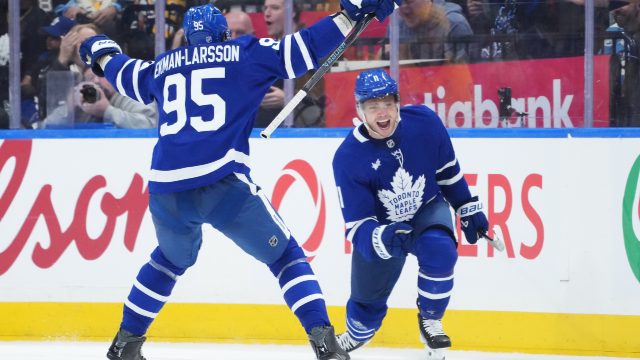
Second-last-place Toronto (also .500) did axe assistant Marc Savard before stockings were stuffed, but GM Brad Treliving was quick to tell fans that he’s “not waving the white flag.” And Treliving’s boss, Keith Pelley — who was decked out in a Roots Maple Leafs varsity jacket and congratulating his team in the dressing room following their Festivus win over Pittsburgh — has given Treliving and head coach Craig Berube a vote of confidence heading into the new year.
Even the most dismal of eastern franchises, Buffalo, is suddenly hotter than the pistols in Griselda rap. The Sabres have won seven in a row since new GM Jarmo Kekalainen took over, injecting belief into captain Rasmus Dahlin’s proclamation: “I think Jarmo’s going to be the one that turns it around.”
Losers acting like winners, public endorsements amid public failings, Swedes trusting Finns… call it the wild, wild East.
Yes, the right-hand conference is as crowded and as difficult to navigate as a pre-Internet mall on Boxing Day.
Shaping up to be a fascinating sprint to the finish line.
4. Which, in our opinion, presents incentive for middling clubs to sell in a sellers’ market.
We’re looking at you, Pittsburgh Penguins, losers of nine of their past 10 — that lone W coming via shootout.
Kris Letang and Erik Karlsson were quite the adventure Tuesday. Evgeni Malkin has been out since Dec. 4, and Sidney Crosby has his franchise mark.
More than half the roster is on expiring deals, and features useful rental pieces abound.
Power forward Anthony Mantha, 31, hasn’t looked this effective in years.
Kevin Hayes, properly slotted, could still contribute, and centres are impossible to come by.
Brett Kulak, Connor Clifton, and Ryan Shea present blue-line depth.
And eventually a decision must be made on UFA goalie Stuart Skinner, who has plenty of playoff experience. But let’s allow the man to get a new paint job for his mask first.
Of course, GM Kyle Dubas’ real assets come with term. Rickard Rakell (eight-team no-trade list) and Bryan Rust (zero protection) should yield multiple pieces if dealt.
And then there is the elephant in the room.
Would the franchise’s leading scorer dare try on a new outfit? Join the juggernaut Avalanche in as close to a slam-dunk Stanley Cup as one could imagine in a cap era? Suit up for his beloved boyhood Canadiens? Or allow agent Pat Brisson and buddy Bill Guerin to work on another Minnesota blockbuster?
These ideas are in the ether.
We wonder, though, how Crosby’s Olympic experience shapes his thinking.
If he leads Canada to another gold, does that satisfy his craving for winning or only pour gasoline on top?
If Canada settles for a lesser medal or — gasp — misses the podium, is Crosby capable of turning down a shot at playoff hockey and settling for another long summer staring at some other captain’s framed photo of glory?
We won’t know the answers till March.
5. Quote of the Week.
“They’re coached better.” — Dean Evason, former Minnesota coach, on what’s different about the Wild
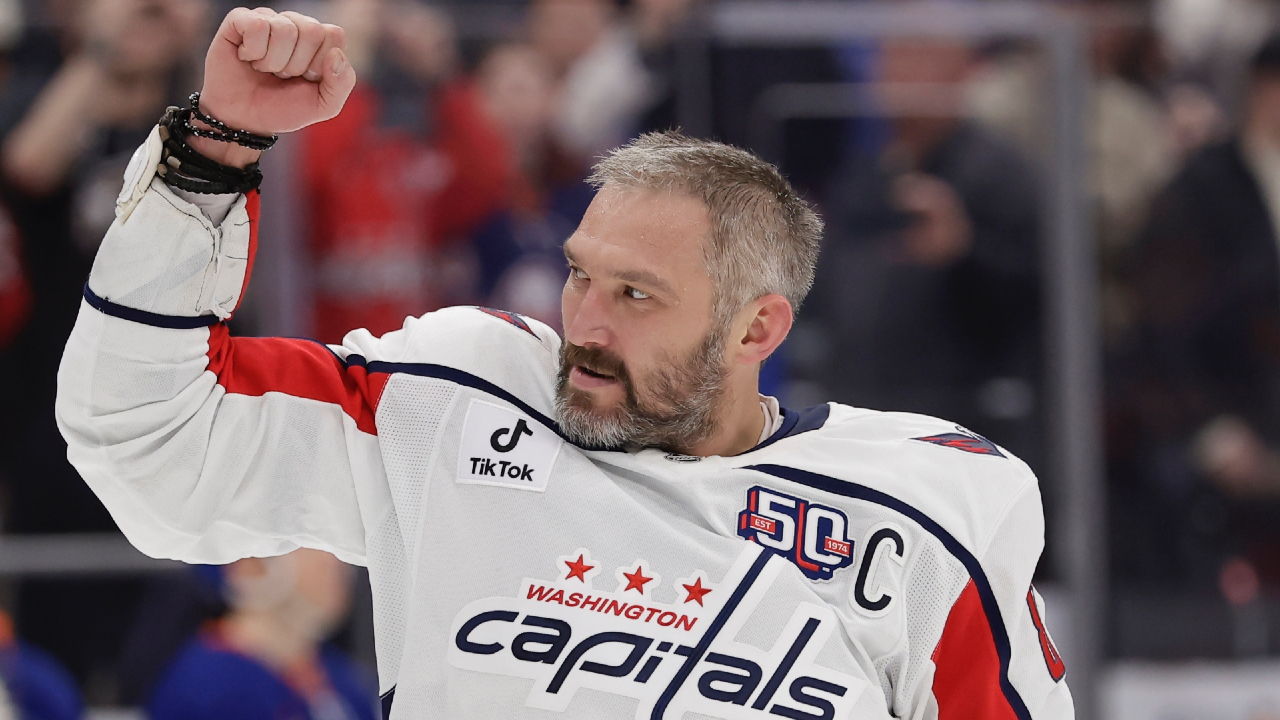
6. Capitals coach Spencer Carbery gave a great answer about the art of winning a puck battle:
“I can tell you this: It is not just size and strength. A lot of people equate a puck battle as, ‘Oh, if you’re six-foot-four, 220 pounds, you automatically get to win all the puck battles because you’re bigger and stronger.’ And it’s just not the case. There’s skill involved; there’s technique involved. There’s a will and a mental part to it. And I think it’s an easy thing to just slip five per cent, and it ends up hurting you.
“We remind our group that we need to come up with 50 per cent of those — but we want to come up with 70 per cent. Because if you do that, you have the puck for majority of the night. So, winning puck battles, winning space, absolutely is something that we can do a better job of.”
Carbery, a former Maple Leafs assistant, then pointed to 35-year-old veteran John Tavares as “one of the best that I’ve ever seen” at puck battles.
“He just is so slippery and so good in that tight area of getting the puck out, spinning there,” Carbery said. “All of a sudden, he’s to the inside.”
7. A little inside baseball here, but the Seattle Kraken’s handling of the post-game availability in which only a team employee was permitted to ask questions of head coach Lane Lambert is worrisome.
If anything, reporters should have more access, not less. (Eighty-two is a lot of games. Mixing in interviews with assistant coaches, assistant GMs and referees, when the timing makes sense, would add variety and insight.)
Bob Condor, editor of the Kraken’s website, acted as pool reporter in the post-game availability, asking submitted questions. Having team control over both sides of an interview prevents follow-up questions and spontaneity.
It’s a slippery slope that leaves a bitter taste.
At least Seattle’s public relations department owned the mistake.
“The questions that were posed to Lane during the press conference were, I guess you want to call it, funnelled through Bob, who writes for the Kraken,” a team representative told SoundOfHockey.com. “And other reporters weren’t given the chance to ask questions in that moment.
It doesn’t reflect what we’re trying to do in Seattle as a new team and trying to make inroads with a new market and build relationships with media.”
The Kraken are already struggling on the ice. To not open themselves up to outside questioning is a dangerous step toward not being taken seriously off it.
Good on them for copping to the error.
8. With Chris Tanev’s surprising pre-break return and Troy Stecher’s surprising excellence in Toronto since getting scooped off the waiver wire, the Maple Leafs’ top two right-shot defencemen have reunited on a third Canadian team (Vancouver, Calgary).
Wild story for a pair of guys who were never drafted.
“I was in his wedding (party). He’s one of my best friends. When I learned that we were going to get him, I was pretty pumped up,” Tanev says. “He works his behind off and does his job. Isn’t flashy but works like he’s double the size than he actually is.”
9. Team Canada’s roster will be announced Dec. 31. Can’t wait for the final decisions and ensuing outrage.
New additions I’m betting are locks: Tom Wilson, Macklin Celebrini and Logan Thompson.
Serious consideration: Matthew Schaefer and Connor Bedard. The Blackhawks’ falloff in the wake of Bedard’s shoulder injury — they’re suddenly 32nd in wins and (13) points percentage (.444) — only underscores Bedard’s value.
Still, health questions give Canada’s brass an easy out if they wish to pass on Bedard, and Seth Jarvis for that matter.
The more we watch Schaefer, the more we believe he should get a plane seat in February, even if it comes at the expense of, say, Travis Sanheim.
Assuming Jordan Binnington’s reputation trumps his recent performance, the nation still needs a third goalie. Darcy Kuemper’s Cup ring probably gives him the edge over Colorado’s tandem of Scott Wedgewood and Mackenzie Blackwood.
10. Auston Matthews gives his thoughts on fellow first-overall draft pick Bedard, who got some flak for topping out at 23 goals and not being a point-per-game force in his first two NHL campaigns.
“You see it every year. There’s always a lot of hype for the young guys coming into the league. Especially if you go first overall, there’s a lot of pressure and stuff,” Matthews said.
“But, in the end, I think people forget, these are 18-year-old kids coming into the league. It’s not easy going from playing junior hockey or college, stepping in and playing against really good players — men — on a nightly basis. And sometimes it takes a little bit of time to get your feet under you, to get comfortable, to adjust to that kind of pace, the style of play, the physicality of it all.
“I find it funny, because it’s like they expect so much of them right away, and they kind of write them off after a year or two. And then look at a guy like (Nathan) MacKinnon, who struggled the second year (14 goals, 38 points) and now is a top-two player in the world. Sometimes it takes time for guys to adjust.”
11. Martin Necas since arriving in Colorado: 1.14 points per game.
Mikko Rantanen since leaving Colorado: 1.07 points per game.
12. Here’s Connor McDavid on the stress Team Canada faces at the world junior tournament — which, next to reheating turkey sandwiches, is the most delicious thing about the final week of the year:
“World Juniors has always been important. I remember my year with it being in Montreal and Toronto (in 2015), the hype was huge. I remember camp, I think they took us outside the noise, and kind of set up outside of town to try to quiet the noise a little bit. And it can be a lot for these young guys. It’s a lot of expectation. So, the pressure’s on for them. But it’s such a great experience. It’s so much fun. Great opportunity for them.”