Now that all of the 2026 draft prospects I’ve been monitoring have gone well past a segment of 10 games played, I have a better understanding of how the players are trending. Some of the players you are going to read about here are off to fantastic starts, while other highly touted pre-season prospects have struggled out of the gate.
I’m excited about the depth of the 2026 NHL Draft class. Last year’s group provided teams with options to select players who projected more as middle-of-the-lineup contributors. The 2026 class seems to project more top-six forwards and top-pairing defencemen.
Without further ado here are my first rankings for the 2026 NHL Draft, based on what I’ve personally seen from the players.
TOP 16: THE LOTTERY PLAYERS
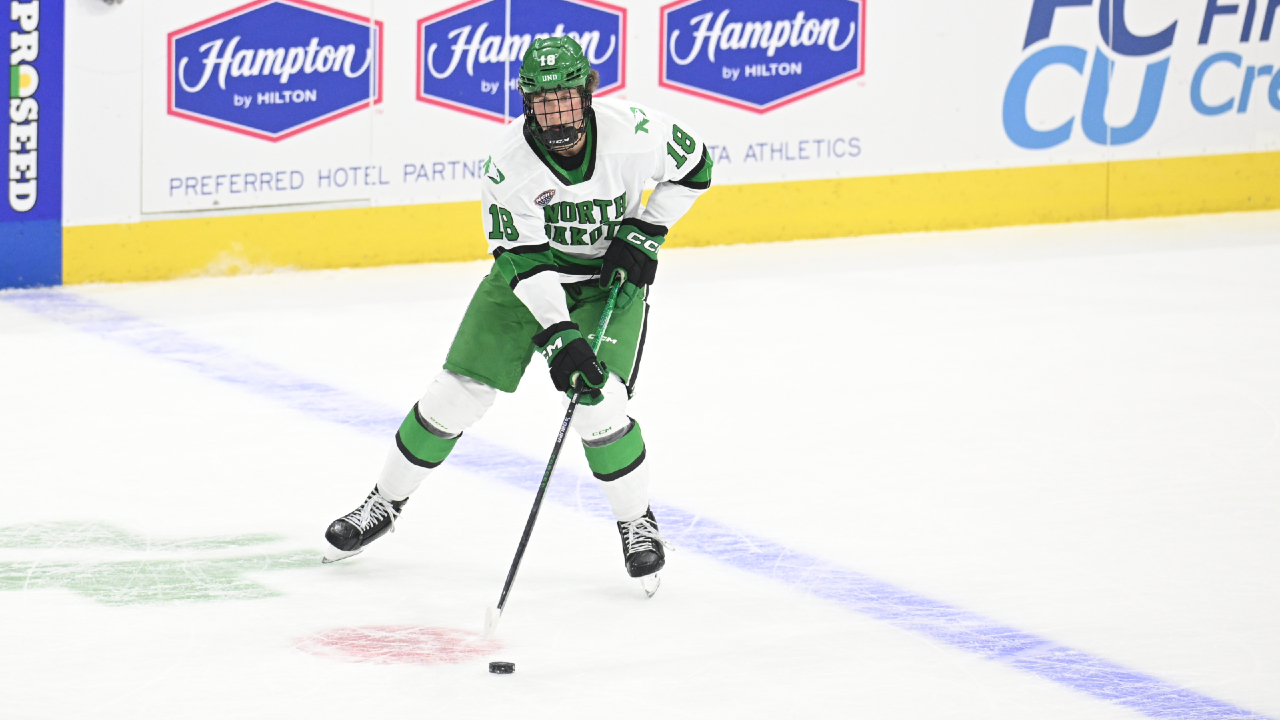
No. 1: Keaton Verhoeff, D, 6-foot-4, 208 pounds, North Dakota (NCAA)
Verhoeff has been averaging over 20 minutes per game in his freshman year at North Dakota. The bulk of his shifts come at even strength and on the power play.
When Verhoeff isn’t contributing offensively, he’s providing consistent detail defensively. He’s plus-3 to start the year and earning more trust in all situations as his game continues to mature. Right-shot defencemen with Verhoeff’s size and skill are highly valuable assets at the NHL level. At this stage of the year Verhoeff is my top-ranked prospect, and I wrote about why more in-depth here.

No. 2: Gavin McKenna, LW, 5-foot-11, 170 pounds, Penn State (NCAA)
On November 14 the Nittany Lions were defeated 7-1 in their game versus Michigan. Penn State had been suffering through some significant growing pains as a team before that game — they were swept the previous weekend at Michigan State — but to their credit they dug in and have persevered since that night, running off three straight wins.
In McKenna’s first 10 games he contributed 4G-10A, but he was minus-8 in the segment. Since the lopsided Michigan defeat he has four assists in his last three games and he’s plus-3. His attention to detail off the puck and effort tracking back the entire length of the ice has noticeably improved.
McKenna averages over 21 minutes of ice time per game, with the majority of his shifts coming at even strength and the power play. His 4G-14A land him in the top 20 of NCAA scoring. I only require McKenna to commit to average results defensively. I recognize his elite offensive element is what projects him as a top-line NHL scoring forward. If he continues to play the way he has in his last three games, he will undoubtedly retake the first-overall ranking on my list.
No. 3: Ivar Stenberg, LW, 5-foot-11, 183 pounds, Frolunda (SHL)
Stenberg is having an incredible season at the pro level playing for Frolunda in Sweden’s top league. He’s averaging 0.95 points per game despite only being deployed for around 13 minutes of ice time per game. At the time of writing Stenberg had produced 5G-17A in his first 23 SHL games.
I’ve been tracking Stenberg for the past two seasons. He’s part of the leadership group on the Swedish national team and will be a key member of their roster for the WJC tournament in Minneapolis at the end of the month. Stenberg has the hockey sense and commitment to be used in a variety of roles, and in time he will mature into a complete player at the NHL level. He’s stocky/strong, plays fast and is always engaged in the trenches. He’s a relentless competitor.
For perspective on how historically incredible Stenberg’s season has gone so far at the SHL level, here are some of the results from top scorers at that level in their draft seasons:
|
PLAYER |
SEASON |
TEAM |
GP |
G |
A |
PTS |
PTS/G |
|
Daniel Sedin |
1998-99 |
Modo |
50 |
21 |
21 |
42 |
0.84 |
|
Henrik Sedin |
1998-99 |
Modo |
49 |
12 |
22 |
34 |
0.69 |
|
Elias Lindholm |
2012-13 |
Brynas |
48 |
11 |
19 |
30 |
0.63 |
|
Nicklas Backstrom |
2005-06 |
Brynas |
46 |
10 |
16 |
26 |
0.57 |
|
Leo Carlsson |
2022-23 |
Orebro |
44 |
10 |
15 |
25 |
0.57 |
|
William Eklund |
2020-21 |
Djurgardens |
40 |
11 |
12 |
23 |
0.58 |
No. 4: Carson Carels, D, 6-foot-2, 202 pounds, Prince George Cougars (WHL)
Carels is a two-way defenceman who can be trusted in all situations. He battles in the trenches to win pucks and is physically capable to handle weight. He’s a very efficient skater who’s quick in small areas and powerful in open ice. Carels is efficient with the puck. He outlets on time, and from long range. He’s also not shy about joining offensively as an extra layer off the rush.
Carels is a name to keep a close eye on throughout the season. He’s a complete player — not outstanding in any one category, but very strong in all of them — with top pairing upside.
No. 5: Caleb Malhotra, C, 6-foot-2, 182 pounds, Brantford Bulldogs (OHL)
Malhotra is one of the most intriguing prospects for the 2026 draft and he’s on the rise. He is, arguably, the most trustworthy centre in the draft class. Malhotra has the skill to create off the rush and make plays on the power play. He also can match-up against top lines in a shutdown role if required. His combination of speed, hockey IQ, consistent compete, and skill project Malhotra as a potential top-line NHL forward in time. His approach to the game is similar to Nick Suzuki with the Montreal Canadiens.

No. 6: Chase Reid, D, 6-foot-2, 188 pounds, Sault Ste. Marie Greyhonds (OHL)
Reid sprung on to the scene as a priority prospect when he arrived in the Soo, via Bismarck in the NAHL, before Christmas last year. He’s an intriguing right-shot defenceman who averaged over 25 minutes per game of ice time in his recent 10-game segment while contributing 7G-5A. Almost all of his ice time comes at even strength and on the power play. He’s a high-volume shooter and creative playmaker. Four of his five assists were primary ones in this segment. The two-way defenceman and Michigan State commit (2027) projects as a potential top-pairing defenceman.
No. 7: Tynan Lawrence, C, 6-foot-1, 185 pounds, Muskegon Lumberjacks (USHL)
Lawrence has been in and out of the Lumberjacks lineup to start the season after suffering a lower-body injury at training camp. The team is being cautious with his recovery. So far this season he has contributed 6G-3A in the five games he has played.
Lawrence is highly skilled and plays the game fast. He’s a threat in transition with the puck on his stick and sees the ice exceptionally well. When he moves the play to a linemate his ability to keep his feet moving and find open ice in high danger areas speaks to his hockey sense. He has top-six NHL upside.
Tynan’s hockey journey, so far, has taken him from his hometown of Fredericton, New Brunswick to Shattuck-St. Mary’s prep school in Minnesota and Muskegon in the USHL. He’s a Boston University commit (2026).
No. 8: Ethan Belchetz, LW, 6-foot-5, 228 pounds, Windsor Spitfires (OHL)
Belchetz is a towering forward who uses his long reach to his advantage offensively and defensively. He’s a strong skater who, when he gains the edge off the rush, is very hard to defend on his way to the crease. Belchetz leans goal scorer more than playmaker. His first instinct generally is to direct pucks on net. He has the hockey sense and ability to be deployed in a variety of roles.
In his last 10-game segment Belchetz contribute 5G-5A. He averaged over 22 minutes per game of ice time with almost all of his shifts coming at even strength and the power play. He also has the commitment and IQ to be deployed on the penalty-kill if required.

No. 9: Alberts Smits, D, 6-foot-3, 205 pounds Jukurit (Liiga)
Smits is a Latvian native who is playing in Finland’s top pro league. He’s a player to watch closely. Smits has a ton of upward momentum and could end up disrupting the draft inside the top six by the time the season is over.
Smits is logging big minutes playing for Jukurit in Liiga. His combination of size and skill are attractive attributes. He’s engaged defensively, gets in shooting lanes on the penalty-kill, and averaged over 21 minutes of ice in his latest 10-game segment. So far this season he has contributed 6G-6A. He’s being deployed in all situations depending on the opponent and the flow of the game.

No. 10: Adam Novotny, LW, 6-foot-1, 204 pounds, Peterborough Petes (OHL)
Novotny is adjusting to the way the game is played in North America. He’s a powerful winger who possesses a fantastic release. He shoots the puck accurately and with authority. I appreciate how Novotny uses his strength to leverage and extend plays along the boards and working off the cycle. His three zone reads can range at times, but his detail and consistent compete is on the rise. Novotny’s primary ice time comes at even strength and on the power play. He’s a potential top-six scorer in time, but if he’s going to maximize his upside, he has room to play faster every time his number is called.
No. 11: Mathis Preston, RW, 5-foot-11, 177 pounds, Spokane Chiefs (WHL)
Preston provides a combination of speed, skill and tenacity. He isn’t the biggest, or strongest, prospect but he doesn’t shy away from contact or battling for pucks in traffic. He’s a strong skater, quick out of the blocks and fast in transition. He shoots the puck with authority, either in stride or working the weak side flank on the power play. Preston is willing to block shots defensively. He’s the kind of energetic player who can be deployed in a variety of roles. I’m monitoring his offensive output. Preston isn’t elite offensively — in his recent 10-game segment he produced 2G-4A — but players who are programmed the way Preston is contribute to team success overall.
No. 12: Ryan Lin, D, 5-foot-11, 177 pounds, Vancouver Giants (WHL)
Lin is easily defined as a two-way, transitional defenceman and power play quarterback. He’s an outstanding skater, quick and agile, who easily tracks the full 200 feet. Lin will pinch down to extend plays in the offensive zone, plus he sees the ice and works off the perimeter to make plays. He leans distributor more than shooter, but does have the ability to one-time pucks from the weak side and beat goalies clean from mid-range.
Lin is generally engaged defensively. His skating allows him to close on opponents quickly, which leads to more of a ‘puck on stick’ approach than physicality. Lin projects as a top four NHL defenceman. He’s best paired with a stay-at-home ‘D’ partner who allows him to roam freely for offence.
No. 13: Daxon Rudolph, D, 6-foot-2, 206 pounds, Prince Albert Raiders (WHL)
Rudolph is a two-way defenceman who contributes secondary offence. He provides a generally low risk approach. He doesn’t stray too far out of position seeking offence or to lead the rush. Rudolph does, however, have the pace and vision to recognize when to join as an extra layer off the puck.
I appreciate how Rudolph engages physically. He might end up as a ‘match-up or shut-down’ defenceman more than two-way/secondary scorer at the NHL level, but his combination of size, sense and compete are attractive attributes and he’s hard to play against. I compare Rudolph’s game to that of New York Rangers defenceman Braden Schneider.
No. 14: Marcus Nordmark, LW, 6-foot-1, 180 pounds, Djurgardens (Sweden J20)
Nordmark can be polarizing at times. It’s important to digest this kind of prospect’s overall body of work to fully grasp his potential upside.
Nordmark has the skill to take over shifts at the U20 level and when skating on the international stage representing Sweden. When fully engaged defensively he creates turnovers and explodes up ice with the puck on his stick. Opponents have to respect his speed and puck skill and time their gaps appropriately or Nordmark will expose them by making plays and driving the play to the net.
Nordmark has produced 6G-7A recently, but there have been some nights where he left me concerned about his three-zone detail. His offence wins out, but I’m monitoring Nordmark’s commitment when his group doesn’t have the puck.
No. 15: Viggo Bjorck, RW, 5-foot-9, 177 pounds, Djurgardens (SHL)
Bjorck is another player on my list who I believe could move into the top 10 by season’s end. He’s a highly skilled, darting forward who has played the bulk of his games at the SHL level in Sweden and contributed 3G-4A in a limited role. Bjorck generally skates between nine and 11 minutes a game at the pro level, with almost all of his shifts coming at even strength, compared to averaging around 16 minutes and being deployed in all situations with Sweden’s national team.
I trust Bjorck’s overall detail and his stature has not been a concern in my viewings. He has reliable hockey sense and defensive commitment to go along with his explosive offensive upside.

No. 16: Xavier Villeneuve, D, 5-foot-11, 172 pounds, Blainville-Boisbriand Armada (QMJHL)
Villeneuve is the most active offensive defenceman in the 2026 draft class. He craves having the puck on his stick and making plays in the offensive zone. He quarterbacks the power play and has become more of a shooting threat in addition to his elite vision and playmaking. Villeneuve competes to the best of his ability every shift. He’s engaged in the play and is always noticeable. There’s some risk/reward with this approach, but he works to win pucks back defensively and, despite his stature, he engages physically.

THE REST OF THE FIRST ROUND
No. 17: Pierce Mbuyi, LW, 5-foot-10, 160 pounds, Owen Sound Attack (OHL)
Mbuyi is the fifth-leading scorer in the OHL overall, but he’s first among draft eligible prospects. As of Sunday he had contributed 14G-22A and is also a plus-9, which speaks to his well-rounded game. I especially appreciate Mbuyi’s combination of “skill and will”. He’s an energetic forechecker who creates turnovers, never quits on a play and is a shooting option working the weak side flank on the power play.
No. 18: Elton Hermansson, RW, 6-foot-1, 181 pounds, Modo (Allsvenskan)
Hermansson is an intriguing player who has potential to soar in my rankings in the second half of the year playing in Europe. He’s split time between the U20 and pro team at Modo and plays to a consistent identity. Hermansson has loads of room to add strength to his frame, which will lead to more open ice power and pace. He’s best described as equal parts shooter/playmaker. Hermansson is deceptive with the puck on his stick. He draws attention before making a decision to release the play to the net or wait out a better passing option. Hermansson has scored 4G-3A in 11 games of pro hockey.
No. 19: Maddox Dagenais, C, 6-foot-4, 196 pounds, Quebec Remparts (QMJHL)
Dagenais is another prospect who combines his size with a relentlessly competitive approach. He was one of Team CHL’s most noticeable players at the Prospects Challenge versus Team USA. He’s on the rise overall. Dagenais is a two-way centre who is mostly deployed at even strength and the power play, but has the commitment to be used in a checking role if asked.
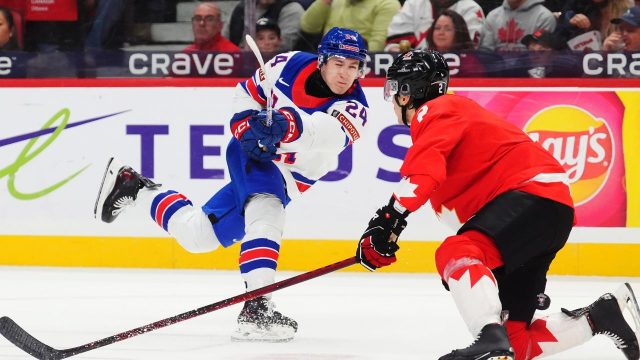
No. 20: Tomas Chrenko, C, 5-foot-11, 170 pounds, HK Nitra (Slovakia)
Chrenko is a darting, undersized forward who’s playing pro in Slovakia. He’s difficult to check. He has the ability to escape pressure and make plays in small areas, and has produced 4G-11A in 23 games. All of his ice time comes at even strength and the power play. The team that selects Chrenko will be banking on his offensive upside to translate to the NHL in time.

No. 21: Niklas Aaram-Olsen, LW, 6-foot-1, 184 pounds, Orebro (Sweden U20)
Aaram-Olsen hails from Norway, but in Sweden is splitting time at the U20 and pro level with Orebro. Aaram-Olsen is a solid skater who possesses a fantastic release. In my opinion he leans shooter more than playmaker. I also appreciate his commitment off the puck on the defensive side. He’s a well-rounded prospect overall.
No. 22: Juho Piiparinen, D, 6-foot-3, 201 pounds, Tappara (Liiga)
Piiparinen is the definition of a two-way/shutdown defenceman. He’s the kind of player who complements a defence partner like Xavier Villeneuve, who we mentioned earlier on this list. Piiparinen is capable with the puck. He outlets on time and recognizes when to maintain his position on the offensive blue line to extend plays. He’s a big, strong, agile, right-shot defenceman who is capable of playing hard minutes at even strength and on the penalty-kill.
No. 23: Malte Gustafsson, D, 6-foot-4, 200 pounds, HV71 (Sweden J20)
Gustafsson is a big, rangy defenceman who has the pace, vision and puck skill to lead the rush and make plays in the offensive zone. His defensive detail ranges at times, but he’s working to use his length as more of an asset when killing plays in his zone. I would like to see Gustafsson add more small area burst and quickness to his game, but he has time on his side and a solid foundation to work with overall.
No. 24: William Hakansson, D, 6-foot-4, 207 pounds, Lulea (SHL)
Hakansson is one of the many defencemen available in this draft class who has towering size. He makes life difficult on opponents when the game slows down along the boards and out front of his net with his physicality. His skating is sound for a young player with his size and he generally keeps things simple with the puck, although he can surprise at times and lead the rush up ice before distributing to support arriving later in the sequence.
No. 25: J.P. Hurlbert, LW, 5-foot-11, 176 pounds, Kamloops Blazers (WHL)
To say Hurlbert’s move from the USNTDP to Kamloops in the off-season agrees with him is an understatement. Hurlbert is thriving with the Blazers, being deployed in all situations, and contributing 20G-28A in his first 27 games, which leads the WHL in scoring. I’m monitoring Hurlbert’s skating and looking for him to add more explosiveness as he matures, but his puck touch and overall impact speaks for itself. Hurlbert has committed to the Michigan Wolverines and is slated to head to the NCAA next fall.
No. 26: Egor Shilov, C, 6-foot, 177 pounds, Victoriaville Tigres (QMJHL)
Shilov is an intriguing prospect who has the potential to be a difference maker offensively. He has fantastic puck skill and the ability to elude checks with his crafty approach. Shilov can play the game quickly when he wants to, but I’m looking for more consistency from a shift-to-shift perspective as the season rolls along. He’s contributed 12G-21A in 33 games.
No. 27: Jack Hextall, C, 6-foot, 185 pounds, Youngstown Phantoms (USHL)
Hextall is a Michigan State commit (2026) who started his season on a high note representing Team USA at the Hlinka/Gretzky Cup in the summer and contributing 2G-5A for the gold medal-winning American side. Hextall provides a combination of high-end compete and skill. He’s a playmaker who’s exceptionally dangerous on the power play.
No. 28: Oscar Holmertz, C, 6-foot, 192 pounds, Linkoping (SWE J20)
Holmertz is best described as a two-way centre. He’s reliable on and off the puck in all three zones and is an outstanding skater. He uses his reach to intercept plays and pounce on pucks in open ice. He isn’t the most elite offensive prospect in the first-round, but he plays the game the right way and provides better than secondary scoring. Holmertz has contributed 5G-12A in 20 games at the U20 level.
No. 29: Oliver Suvanto, C, 6-foot-3, 207 pounds, Tappara (Liiga)
Suvanto has a lot in common with Holmertz, but he’s bigger and projects to provide a shade less offence. Suvanto is playing pro in Finland. He’s understanding what it takes to defend and lean on mature opponents, but it comes at a bit of cost in relation to his scoring output. In time he might provide more offence — he’s contributed 2G-4A in his first 26 games — but it’s his attention to detail in all three zones that earns my trust.
No. 30: Luke Schairer, D, 6-foot-3, 195 pounds, USNTDP (USHL)
Schairer is a “glue guy” for the U18 American team. He’s deployed in all situations and thrives on the defensive side. Schairer is capable moving the puck and extending plays in the offensive zone, but he’s not much of a shooter — he doesn’t have a goal, but has been credited with nine assists so far this year. What I appreciate most about this two-way/matchup prospect is his consistent buy-in to kill plays defensively and lean on opponents. He isn’t the most dynamic player, but teams need players like Schairer to complement their roster.
No. 31: Nikita Shcherbakov, D, 6-foot-5, 187 pounds, Neftekamsk (Russia, VHL)
I’m intrigued with Shcherbakov’s upside. He’s a very strong skater for his stature, smooth out of the blocks and agile. He handles the puck with confidence and leans distributor more than shooter. Defensively he’s a bit of a work in progress. Shcherbakov is engaged physically, but on occasion he could use his long reach and overall length to cut down plays more aggressively on the defensive side. At the end of the day, young defencemen who skate like Shcherbakov and can make plays offensively, are attractive assets to pursue.
No. 32: Ilya Morozov, C, 6-foot-3, 205 pounds, Miami of Ohio Redhawks (NCAA)
Morozov is the youngest player in the NCAA this season and skating on Miami’s top line. He’s averaging over 19 minutes of ice time per game with the bulk of it coming at even strength and on the power play. Morozov, especially for a young freshman in the NCAA, is reliable on and off the puck in all three zones. He’s improving his win/loss rate in the face-off dot and contributes on the power play by ripping pucks from the weak side flank. Morozov is a solid skater who’s produced 7G-6A in his first 14 games and he’s a plus-7.