DUNEDIN, Fla. — Because spring games include everyone from Aaron Judge and Shohei Ohtani to Bennett Hostetler and Rayne Doncon, making sense of what’s real and what’s not is an essential skill for coaches and front-office decision makers alike.
And sometimes knowing what to ignore is just as important as knowing what to watch closely. Maybe the dream of a former star returning to greatness is too good to be true, as it was for Joey Votto and the 2024 Blue Jays. Or maybe a spring training storyline gets a little more attention than it actually merits, like last year’s Jays batting order.
With spring training now well underway, let’s identify six myths, consider where they come from and apply them to the 2026 Toronto Blue Jays:
Myth 1: Spring batting orders matter
Why it happens: As Opening Day draws closer, there’s typically more discussion about lineups. Fans are interested, media members are intrigued by the storyline and even those in uniform care.
Why it can be a trap: Regardless of what teams expect in spring, the season’s inevitably full of surprises in the form of injuries, breakout performances and disappointments.
-
-
Watch Blue Jays in spring training on Sportsnet
The Blue Jays begin their ramp up to the 2026 with spring training action in Florida. Sportsnet will broadcast 23 spring training games on TV and Sportsnet+.

Applied to the Blue Jays: This time last year, Will Wagner and Andres Gimenez were among the leading candidates to hit high up in the batting order while George Springer opened the year hitting sixth before finishing third in all of baseball in wRC+, trailing only Aaron Judge and Shohei Ohtani. By year’s end, the 2025 Blue Jays used 146 different lineups over the course of 162 games. So no matter what we all expect this time of year, the only thing we really know is that there will be a different lineup just about every day.
Myth 2: A former star is about to bounce back
Why it happens: Remember Curtis Granderson leading the team in spring homers back in 2018? Or Joe Panik hitting .364 in 2020? How about Greg Bird’s epic spring in 2022? And Joey Votto homering off Zach Wheeler two years later? It’s always fun to dream about a veteran who’s about to recapture the magic. Spring training is long. It would be lunacy to go through an entire six-week ramp-up without discussing stories like this, and yet …
Why it can be a trap: Granderson hit a bit, but his 11-homer season didn’t exactly match the hype. Panik was OK, but not great. And neither Bird nor Votto ever played a big-league game again. Ultimately, spring training is just one month and it’s far noisier than any other month of the year because the quality of competition varies so much. Going yard against a few minor leaguers is great but it doesn’t necessarily forecast success against the best pitchers in the world. In fact, it doesn’t even guarantee a big-league roster spot.
There’s another side to this, of course. It was just last year that Max Scherzer signed a one-year deal and went on to start Game 7 of the World Series. But the key here is to remember that veteran bounce backs are never guaranteed.
Applied to the Blue Jays: Eloy Jimenez is having a big spring for the Blue Jays. Still just 29 years old, he’s a genuinely intriguing player. But around baseball many established players are looking for the bounce back and some of them — Mike Yastrzemski with Atlanta, Santiago Espinal with the Dodgers — are also having huge springs. Not all of them will see that production translate to the MLB level. The Blue Jays are optimistic Jimenez can be an exception.
Myth 3: He’s in the best shape of his life
Why it happens: When a player shows up in great shape, it’s a fun story. In the course of a six-week spring training camp, media members will inevitably gravitate toward a player who’s trimmed down or added muscle.
Why it’s a trap: Lots of players are in great shape — these are pro athletes, after all — and not all of them have career years.
Applied to the Blue Jays: There’s no singular best-shape-of-his-life story in Jays camp, but Jimenez is among the players who showed up noticeably stronger. That’s a great starting point — it just isn’t a guarantee of results.
Myth 4: Results don’t matter in spring
Why it happens: Most results don’t matter, so this is a useful guideline. Reminding fans can be a way for teams to take the pressure off players who are struggling. Take Bo Bichette’s early spring fumbles with the Mets, for instance. That’s not a big deal in February, so there’s some truth to this one.
Why it can be a trap: Some results do matter. If a pitcher can’t find the strike zone or his velocity’s down, that’s significant. If a position player has trouble adjusting to a new position, that matters, too. So while we shouldn’t over-react to spring stats, we can’t discount spring results.
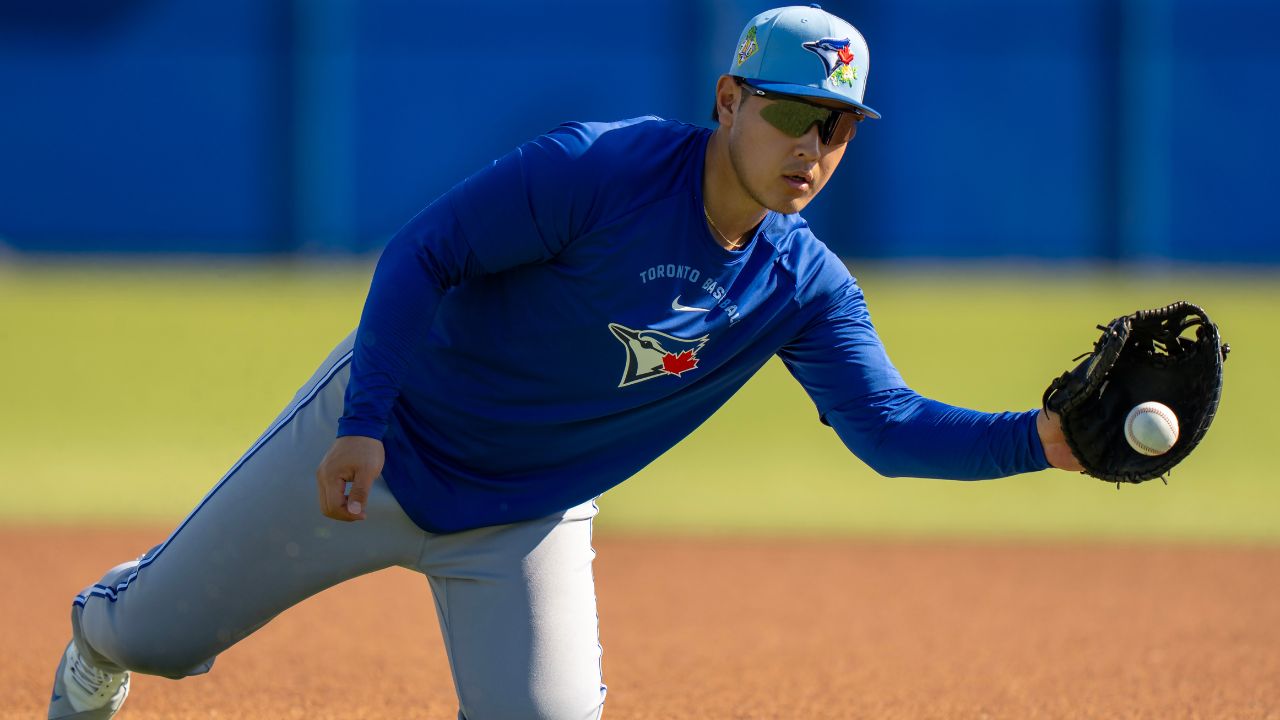
Applied to the Blue Jays: Kazuma Okamoto’s third-base defence has looked good; Max Scherzer sat at 94 m.p.h. in his first spring outing; Jose Berrios found his velo after a slower start. All of those developments fall into the results-that-matter category.
Myth 5: Spring is all about building the opening-day roster
Why it happens: The opening-day roster is a fun topic for fans, media, players and coaches alike. After weeks of games that don’t count for anything the opener represents the moment everything starts to matter. Plus, deadlines spur action in baseball and as teams pare their rosters down to 26, minor trades tend to follow. The intrigue is real.
Why it can be a trap: Opening Day is just one game out of 162, no more important than the results on May 9 or Aug. 21. A quick glance back at last year’s Blue Jays roster shows how much things change. Jacob Barnes, Chad Green, Richard Lovelady, Nick Sandlin, Will Wagner and Alan Roden all opened the season in the majors while Tommy Nance, who would go on to post a 1.99 ERA last year, was designated for assignment.
Applied to the Blue Jays: Opening Day matters, and so does the roster the Blue Jays select. The important thing is keeping the big picture in mind and knowing that the roster will keep changing every few days for the duration of the season.
Myth 6: He’s day-to-day, we’re just taking precautions
Why it happens: Teams often downplay injuries. Sometimes, players simply sometimes prefer privacy. Plus, being completely transparent can diminish leverage in trade and free agent talks.
Why it can be a trap: Sometimes an injury that appears to be day-to-day can extend well into the season. One memorable example in this category: Josh Donaldson’s calf issues in 2017 and 2018.
Applied to the Blue Jays: At this point, it’s unclear how soon Shane Bieber will be ready to contribute in the major leagues. On Feb. 10, he was described as week-to-week. Nearly a month later, he has yet to pitch off a mound. Best-case scenario, he’s able to get off a mound soon and build up toward game action. Yet, until he starts a mound progression, it’s simply hard to say what the Blue Jays can expect from the 30-year-old.