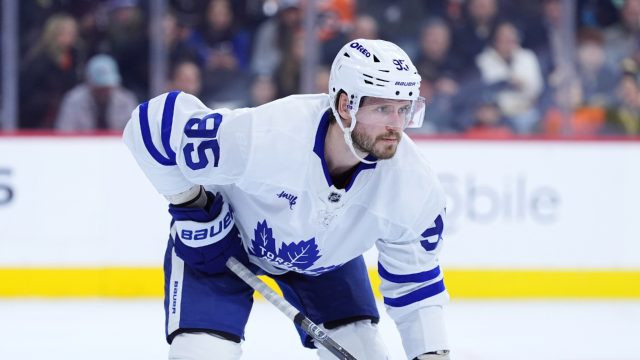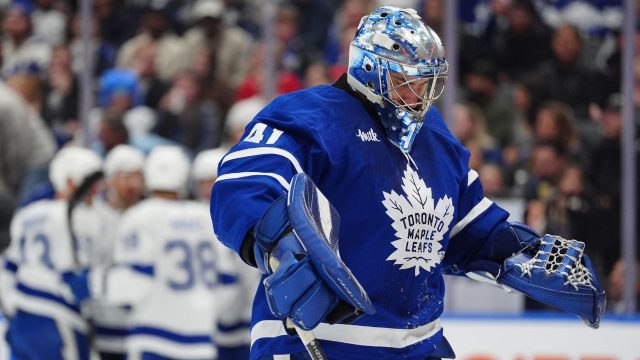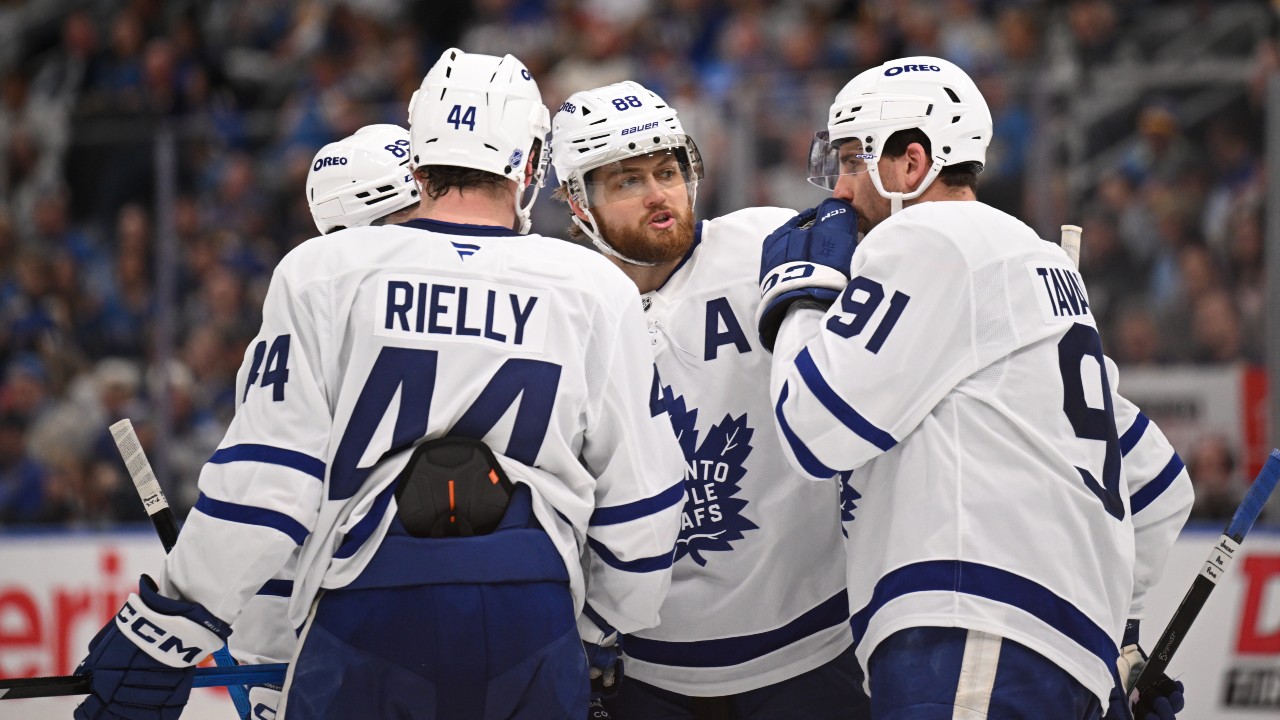
The trade deadline for the Toronto Maple Leafs was a microcosm for their season. Uninspired, indifferent and nowhere near good enough. There was no creativity, no weaponizing of cap space to add assets and no clear plan.
For the first time in nearly a decade, the Leafs are destined to miss the playoffs, forcing Brad Treliving to begrudgingly accept his fate as a seller on Friday. The Maple Leafs general manager finally came to grips with the fact that his team wasn’t good enough to invest any more draft capital and assets into, as Toronto begins a journey in an uncertain direction.
Ideally, Treliving would like that path to be a quick retool. With Auston Matthews, William Nylander and Matthew Knies still in the fold, along with capable goaltending, there is a world where some savvy moves in the summer to bring in some new faces around that group could get things back on track. That’s easier said than done, though.
Barring a miraculous set of circumstances where they plummet into the bottom five, Toronto doesn’t own their first-round pick this year, and the Maple Leafs are not one or two players away from contending again. They need a number one defenceman, a top-six centre and a bunch of other skaters to rebuild their forward group and blue line. Sure, you might be able to solve some of that through free agency or maybe promote an AHLer or two, but the idea that this team can fix all its issues overnight is starting to feel like a pipe dream.
Leafs are much closer to a rebuild than retool
Toronto did bring back five draft picks by the time the deadline arrived. Nicolas Roy, Bobby McMann and Scott Laughton were offloaded for a first-round pick, a second rounder, a conditional third, as well as a fourth and fifth. That’s not a bad restocking of the cupboards, but how many of those picks are going to make a difference in 2026-27? The first rounder isn’t until 2027, and the highest pick they have this summer is the third they got back for Laughton, which becomes a second if the Los Angeles Kings make the playoffs.
The fact that they only got one first-round pick and one second out of this haul is also problematic for immediate help via the trade front. It’s hard to imagine the Leafs being able to package any of these selections together to bring back a difference maker in a summertime swap.
A primary reason for the Leafs to try to turn things around so quickly is the future of Auston Matthews. The Leafs captain can sign an extension in the summer of 2027, and Toronto will want to know what Matthews is thinking sooner rather than later. If the Leafs again look like a team nowhere close to the playoffs, Matthews could decide he doesn’t want to stay long-term. Toronto will want to make sure it gets a good return for its superstar if he decides he wants out in order to avoid another Mitch Marner situation.
If you want an illustration of how quickly things can change for a contending team, look no further than the Vancouver Canucks. We saw the Canucks go from one game away from the Western Conference Final to full-on rebuild in less than two years, and it’s starting to feel like the Maple Leafs are heading down an eerily similar path. Much like Canucks, Toronto was one game away from the East final last year and will miss out on the post-season this spring.
A half a season later, the Canucks were forced to trade Quinn Hughes roughly 18 months out from his free agency when it was clear his intentions weren’t to stick around, and Matthews will be on the exact same timeline this December. Time is running out for Treliving to give these Leafs a second act.
Overreaction? – No
In order to execute a good re-tool on the fly, you can’t just trade for a bunch of draft picks. You also need to add good young players to freshen up your roster. Take the Boston Bruins, who went the re-tool route at last year’s trade deadline. Boston did stockpile a handful of quality picks, but they also brought in guys like Fraser Minten, Marat Khusnutdinov and Casey Mittelstadt. All three are playing in the Bruins middle six right now and scoring at roughly a 20-goal pace.
The Leafs didn’t bring in a single player this past week who they could get a look at down the stretch and possibly utilize next season. Toronto needed to shed more bodies, and guys like Brandon Carlo and Oliver Ekman-Larsson with term likely would’ve returned a bigger package that could’ve included some young talent ready to play.
Now Treliving will have to look to free agency and deals around the draft to reshape the roster, where any returns figure to be less substantial. The Leafs would probably be fine moving on from players like Morgan Rielly, Max Domi and Simon Benoit, but the assets they recoup in those deals, if they can even pull them off, will likely be minimal. Maybe they can try and move one of the goalies to bring back a more impactful piece, but that is also challenging. Netminders don’t often have a ton of value, and Joseph Woll and Anthony Stolarz both struggle to stay healthy. Dennis Hildeby played well in a small sample size this year, but how much responsibility is he really ready for if Stolarz or Woll gets moved?
Compounding matters is that the Atlantic division is suddenly loaded with talented teams. Buffalo, Montreal, Detroit and Ottawa, who were bad for a huge chunk of the Matthews era, all now appear to have surpassed the Leafs by leaps and bounds. Florida and Tampa aren’t going anywhere, and the Bruins feel like at least a step or two ahead of Toronto in their retool.
There’s a very real possibility things could go off the rails even further next season, and come the 2027 trade deadline, the Leafs could be looking at a complete teardown.
The Wild didn’t do enough at the deadline to keep pace with the Avalanche
Minnesota made its biggest splash back in December by trading for Quinn Hughes, so they understandably didn’t land a big name on Friday. Instead, the Wild opted for depth pieces like Bobby Brink, Jeff Petry, Nick Foligno and Michael McCarron. One could argue Bill Guerin has put together the most formidable Wild roster in years, and they are definitely Cup contenders, but their centre depth could certainly be questioned. With Colorado adding Nazem Kadri and Nicolas Roy, the Avalanche loaded up down the middle and solidified a potential weak spot. There’s a good chance Minnesota will meet Colorado in one of the first two rounds, and strength at the centre position could be the deciding factor.
Overreaction? – No
The two teams are very evenly matched, with very little separating the rosters. Both teams have good goaltending and elite talent. Hughes and Cale Makar are the two best defencemen in the league, while Nathan MacKinnon and Kirill Kaprizov have the ability to take over a game for each side. Avs forwards Martin Necas and Brock Nelson are a good counter for Matt Boldy and Joel Eriksson Ek, but things start to sway in Colorado’s favour after that. The Wild have a centre depth chart right now of Eriksson Ek, Ryan Hartman, Danila Yurov and McCarron, compared to MacKinnon, Nelson, Kadri and Roy. Minnesota was in the market for players like Vincent Trocheck, but a deal never materialized. If the Wild can’t overcome the juggernaut Avs, their lack of centre depth will likely be the reason.
Oilers should’ve traded for another goalie
We’re about to head into another postseason where the Edmonton Oilers have major question marks in goal. The Oilers revamped their crease this season by trading for Tristan Jarry and Connor Ingram, and things have gone anything but swimmingly for the new Edmonton tandem. Jarry (.862) and Ingram (.890) have really struggled to find their footing. The Oilers have now allowed at least four goals in nearly 50 per cent of their games this season. That’s bad news for a team operating in win-now mode in hopes of keeping Connor McDavid around long-term. Even though they already spent some assets in a Jarry trade a few months ago, there’s an argument to be made that the Oilers should have been desperate enough to trade for another netminder like Sergei Bobrovsky or Jordan Binnington.
Overreaction? – Yes
The Oilers have cycled through several goalies in McDavid’s tenure, and it might be time to focus more on the defensive side of the puck. Edmonton ranks in the bottom half of the league in high-danger chances allowed and is one of the worst teams on the penalty kill. It would be foolish to spend more draft capital or young players to try and find an upgrade in goal again so quickly. Bringing in Connor Murphy and Jason Dickinson should help on both of those fronts, as well as aid in shutting down the opposition’s best players. It was a good move to try and upgrade on Stuart Skinner and Calvin Pickard, given how the past couple of post-seasons have gone, but constantly shuffling in and out goalies is a risky proposition. The Oilers need to focus on protecting their netminders more and helping them keep the puck out of the net.
Blues were the big winners of the deadline
Most people were quick to crown the Colorado Avalanche as the big winners of the deadline, and why not? The Avs added Roy and then, at the buzzer, a reunion with Kadri. Their centre depth is unrivalled, even if it did cost them a couple of first-round picks and there might be some questions about how Kadri’s contract will age. That’s why there might be a case that the St. Louis Blues made out the best on Friday. The Blues accumulated a haul of future assets, which includes two first-round picks, two third-rounders and a couple of prospects. St. Louis clearly came into the deadline looking to move some older players while re-stocking the cupboards, and even with the Colton Parayko deal not materializing, they’ve now positioned themselves very well moving forward.
Overreaction? – No
What made Doug Armstrong’s deadline so impressive is that he did it all without moving his high-end players. The Blues didn’t end up dealing Robert Thomas, Jordan Kyrou, Parayko or even Jordan Binnington. That leaves St. Louis in a flexible position moving towards the summer, as they could move some of those aforementioned names around the draft to add pieces for a full-blown rebuild, or they could try to come back and compete with more draft capital at their disposal. Getting the haul the Blues got for Justin Faulk and Brayden Schenn, two players in their mid-thirties, was a huge win for Armstrong.
The new retention and LTIR rules put a damper on the deadline
It wasn’t the most exciting of trade deadlines, was it? There were only a few trades for the first five or six hours of the day before a late flurry right around three o’clock. We also didn’t see big names like Robert Thomas, Vincent Trocheck or Sergei Bobrovsky change teams. One reason for that could be the new rules in the CBA that took effect this year, which prohibit double retention in trades and require teams to declare a player out for the entire season to get full LTIR cap relief. There was concern these new rules would make the deadline quieter than usual, so could this be a trend going forward?
Overreaction? – Yes
The retention and LTIR changes definitely played a role in a slower-than-normal deadline, but there were other factors at work. There was a lack of significant rentals in play this year, which may have made teams more cautious about taking on players with term. Almost 40 per cent of the league now also has some form of trade protection, complicating potential deals. Let’s also not discount how high some of the prices were earlier in the week, which could’ve made some teams hesitant about getting into bidding wars over players. Depth centres like Roy and Dickinson returned first-round picks prior to Friday, which likely meant the prices for guys like Trocheck and Thomas weren’t attainable for most teams. With the cap rising next year, it should give teams more flexibility, and hopefully that leads to more deals on deadline day.