Another Friday blockbuster.
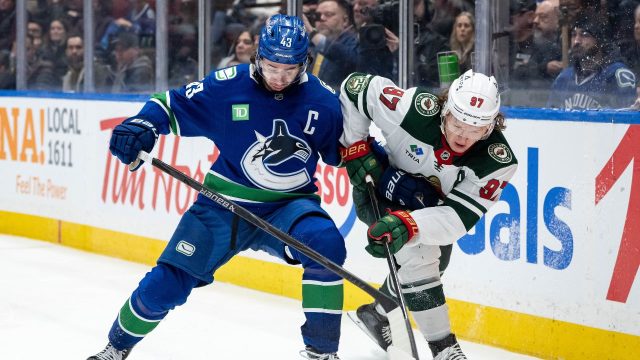
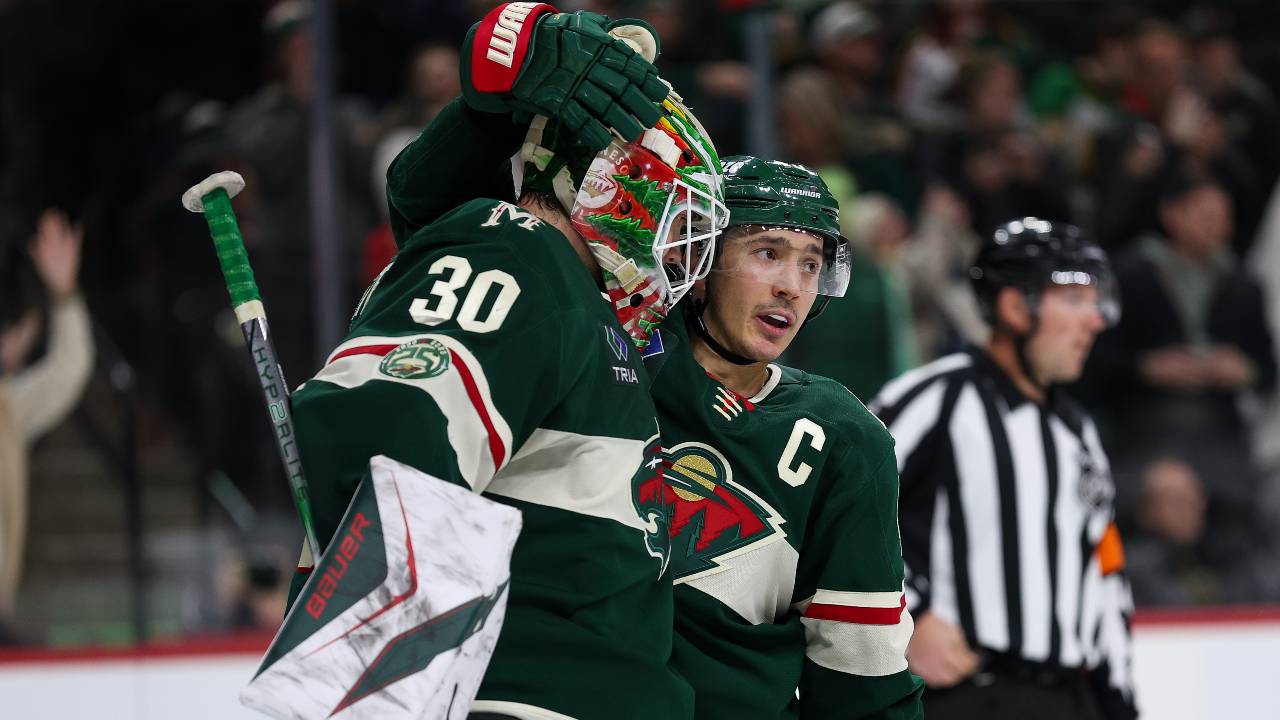
The Jonathan Huberdeau-for-Matthew Tkachuk swap as well as the Mikko Rantanen and JT Miller trades have all jolted us from casual Friday night plans in recent years, so we probably should’ve seen the massive Quinn Hughes deal coming. But very few saw Minnesota in the Hughes sweepstakes or would’ve predicted the massive haul the Wild gave up to acquire the former Norris winner. Minnesota gets a premier puck mover on the back end and now have no glaring weaknesses as they ready themselves for what will be a gauntlet in the Central division.
The Wild are now legit championship contenders
Hughes may very well have been the missing piece for Minnesota, which hasn’t made it past the first round in a decade. A first pair of Brock Faber and Hughes may be able to play half the game. Add in talent up front like Matt Boldy, Kirill Kaprizov and Joel Eriksson Ek, and you’ve suddenly got a very balanced team.
Marco Rossi goes the other way and is a tough loss for the Wild, but keep in mind, Minnesota only used him sparingly in the post-season last year anyway. Rossi barely played 11 minutes per game last spring, as the Wild perhaps didn’t trust him to take on heavy minutes and assignments when the games mattered most. Zeev Buium should be a great player someday, but Hughes is a massive upgrade for the immediate future. The reality is the Wild pushed all their chips to the middle of the table and gave up what should be some great future talent for a chance to win it all in the next couple seasons.
They also will have cap space to add pieces next summer and are the only team that will be able to offer Hughes an eight-year deal before the CBA changes in September. Minnesota will have a year and a half to convince Hughes to stay long term and extend a championship window that now appears to be wide open.
Overreaction? No
Make no mistake about, the Wild are in a really tough division looking up at arguably the two best teams in the league in Colorado and Dallas. That said, Minnesota should feel pretty good about itself in a seven-game series against any of the league’s elite teams. The Wild already have the 10th-best power play in the NHL without Hughes and adding him gives them a realistic chance to make that a top five unit. Minnesota can also trust Faber and Hughes to play in any situation and split them up if needed to give them more balance. That should put them in a good position when potentially matching up with other division rival duos on the back end like Cale Makar and Devon Toews as well as Miro Heiskanen and Thomas Harley.
Hughes is also joining one of the few teams with elite goaltending. The Wild are tied for second in the NHL in team save percentage and lead the league in shutouts, with two goalies playing at a very high level. Jesper Wallstedt and Filip Gustavsson have combined for nearly 17 goals saved above expected this season and Wallstedt specifically has been a revelation, leading the league with four shutouts.
It’s never easy to win a championship, but the Wild can keep the puck out of their net and fill the scoresheet with regularity with the likes of Boldy, Kaprizov and now Hughes. They are better positioned perhaps than ever before in franchise history to take a run at the Cup.
Tristan Jarry could push the Oilers over the top in the post-season
They finally did it.
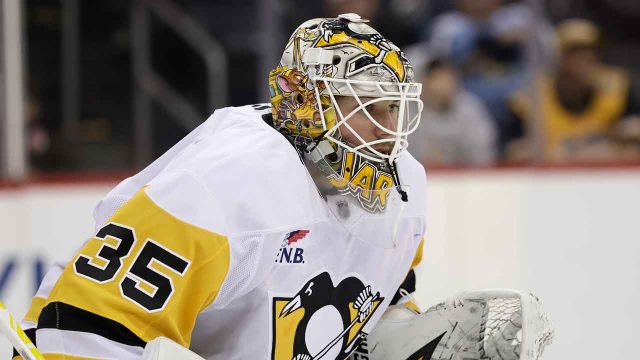
After years of mediocre goaltending and being linked in rumours to seemingly every netminder on the market, the Edmonton Oilers acquired Tristan Jarry on Friday. When he’s at his best, Jarry is a clear upgrade over Stuart Skinner and Calvin Pickard, but the issue with the former Pittsburgh Penguin has always been consistency and staying healthy.
Jarry is coming off a dreadful 2024-25 season, one that included a demotion to the AHL and an .893 save percentage. It’s been a different situation this year, though, as Jarry has bounced back to the tune of a .909 save percentage and 9.8 goals saved above expected. If the Oilers are getting this version of Jarry, it’s reasonable to believe he can help them get over the hump in the post-season.
Last year’s rough campaign was probably a little overblown for Jarry. He wasn’t great, but half of his 36 appearances were actually quality starts where he had a save percentage above .900. Jarry also finished the season strong, posting nine quality starts in his final 14 outings. What really skewed Jarry’s numbers was a small sample size of really bad games. The 30-year-old had 10 starts where he gave up four or more goals and was pulled early a handful of times. Pittsburgh also wasn’t giving Jarry much help. The Pens ranked 25th in high-danger chances allowed in 2024-25, continually putting Jarry in less than ideal spots.
If we take a step back and look at Jarry’s much larger career sample size, he’s actually been a very solid goaltender. In more than 300 games, Jarry has a .909 save percentage and a goals-against average well under three. If he can provide the Oilers anything even in the ballpark of those numbers in the post-season, it’s going to be a huge win for Edmonton.
Overreaction? No
Sure, people will point to the fact that Jarry has never won a playoff series, but how much of Edmonton’s success in the post-season was because of Stuart Skinner as opposed to in spite of him? Four of the Oilers’ 14 wins last spring came when the opposition scored four goals, as Connor McDavid and company had to outscore their deficiencies in net. Skinner and Calvin Pickard ended up combining for an .888 save percentage in the 2025 post-season, which would have been the worst mark by any Cup-winning team in the cap era. The lowest save percentage of any Cup-winning team in the past 30 years was .902, and the Oilers were miles away from that.
All this is to say Edmonton doesn’t need prime Patrick Roy or Terry Sawchuk in goal. If Jarry can even give them league-average goaltending or slightly below, it would be a huge step up from what the Oilers have been getting in the post-season. Adding Jarry, who is signed for two seasons after this, is a reasonable gamble to make in order to try and maximize every season where Edmonton has McDavid under contract.
Leafs should trade a goalie to boost another area of their roster
It makes sense, right? Trade a player from a position where you have a surplus of talent to fill another area of need. With the emergence of Dennis Hildeby, the Toronto Maple Leafs suddenly have an embarrassment of riches in net. Anthony Stolarz had an incredible season last year, leading the league in save percentage and ranking fourth in goals saved above expected. Joseph Woll may have saved the Leafs’ season when he returned to the team earlier this year and was incredible for a few weeks. Now Hildeby has been a revelation with both Stolarz and Woll sidelined, sporting a .923 save percentage in 11 appearances.
With Chris Tanev’s unpredictable return timeline and Brandon Carlo potentially being sidelined for a substantial amount of time, Toronto could move a netminder to add to the blue line or fill a hole in the top six.
Overreaction? Yes
On the surface this seems like a good idea, but the problem is can the Leafs really rely on any of the three goalies? Stolarz and Woll can’t seem to stay healthy for any reasonable stretch and it feels like you can’t lean on either of them for more than a handful of games in a row. Their strength is in a tandem by alternating games and keeping them fresh and healthy.
Hildeby could end up being durable, though we haven’t seen enough of him yet to make that assumption. He’s also on a very cheap $841,000 contract for the next three seasons — if Hildeby can sustain even anything in the ballpark of what he’s delivering now, he’s going to provide the Leafs major value. Hildeby could be a big part of the Leafs’ future.
The Maple Leafs currently have two goalies out of the lineup, which is why Hildeby got an opportunity in the first place, and if they moved someone, the Leafs could find themselves in a disastrous spot. So much of Toronto’s success is based on high-level goaltending and when you have a pair of injury prone goalies, you really don’t have the luxury of moving one. The Leafs must hope at least one guy is healthy at any given time and by removing one from the equation, they would be in a risky situation.
Alexis Lafreniere needs a change of scenery
Was Lafreniere’s 2023-24 season just a mirage?
The former first-overall pick had 28 goals and 57 points in a breakout campaign, following that up with an impressive post-season run of eight goals and 14 points in 16 playoff games. Lafreniere took a big step back last year though, dropping all the way down to 17 goals. Now, he’s pacing for right around another 17-goal, 42-point campaign. Those aren’t horrible numbers by any means, but nothing close to what you’d expect from a No. 1 pick. Perhaps it’s time for the Rangers to explore the trade market and see if they can acquire a more proven piece for Lafreniere.
Overreaction? No
Lafreniere is still only 24, though the likelihood of him popping off for elite production after six seasons in the league are slim. He’s spent the majority of his time this season and last with some combination of Artemi Panarin, Vincent Trocheck or Mika Zibanejad and his numbers have still been very average. That should cause the Rangers concern that Lafreniere doesn’t have a very high ceiling.
-

-
32 Thoughts: The Podcast
Hockey fans already know the name, but this is not the blog. From Sportsnet, 32 Thoughts: The Podcast with NHL Insider Elliotte Friedman and Kyle Bukauskas is a weekly deep dive into the biggest news and interviews from the hockey world.

New York also has a Panarin contract extension to worry about and moving on from Lafreniere for a cheaper option and perhaps some draft capital would free up precious cap space. It’s not like Lafreniere has a massive average annual value with the cap going up, but paying someone nearly $7.5 million per season who struggles to hit 50 points isn’t ideal. The Rangers may find a team with more cap space that thinks it can unlock something in Lafreniere who’s willing to take his contract. That would free up New York to re-sign Panarin or potentially re-shape the roster in other ways.
Devils’ playoff hopes in jeopardy without Jack Hughes
There is a pattern emerging for the New Jersey Devils without Jack Hughes and it isn’t good. New Jersey really struggles without its best player in the lineup (shocking, I know), but the extent to which the Devils are sliding could be problematic for their playoff chances. After a great start that made them look like the class of the East, the Devils are now 6-9-0 since Hughes went down, including a five-game losing streak where New Jersey was outscored 20-7. This trend goes further back to last season, where Hughes suffered a season-ending injury in early March. New Jersey closed the campaign 9-11-1 and barely held onto a playoff spot. Could the same thing happen again?
Overreaction? Yes
The difference this time around is Hughes isn’t lost for the season and should be back some time in the new year, giving the Devils more runway to get back on track. Plus, the East is really bunched up right now and no one is running away with it, so New Jersey should have time to make up ground if it does slide further without Hughes available. Plus, the Devils don’t have an incredibly difficult December schedule. There are a few tough games in there but they also play Vancouver, Buffalo, Columbus and some others that should be beatable minus Hughes. If they can just stay in the mix until after the holidays, they should be OK.