From regime change ambitions to oil markets and missile arsenals, the experts explain what lays in store for Washington and Tehran
As the United States and Israel launch a military operation against Iran on February 28, 2026, global attention turns to the Middle East, where the stakes could not be higher. Analysts and experts from Russia are weighing in, offering a wide range of perspectives on the strategic calculations, potential consequences, and risks of escalation. From regime change ambitions to Iran’s military capabilities, from oil markets to the broader geopolitical fallout, these voices provide a nuanced look at a rapidly unfolding crisis.
Fyodor Lukyanov, Editor-in-Chief of Russia in Global Affairs:
Trump has delivered a full-blown ultimatum to the Iranian leadership – in effect, a declaration of war until the objective is achieved, with maximalist aims that extend all the way to regime change. Apparently, he has concluded that the risks – including potential losses – are acceptable (something he had hesitated over before), and that success would yield decisive strategic gains: a final reshaping of the Middle East in the interests of Israel and the United States.
A military campaign of this scale, launched without the consent of Congress, runs counter to the US Constitution. In the case of Iraq, Congress granted authorization for the use of force in advance. Nothing of the sort has happened here. If it’s all in, then it’s all in – a bet on a swift and spectacular outcome.
But what if it isn’t?

© Sputnik/Vladimir Smirnov
Andrei Ilnitsky, military analyst and member of the Presidium of the Council on Foreign and Defense Policy:
It is crucial to understand that the operation unfolding around Iran rests, from the outset, on a false strategic premise. Let us fix the baseline at the moment the United States entered the active phase of its campaign: Iran neither posed nor poses a direct military threat to the United States. The picture with Israel is more complicated, but as far as Washington is concerned, the threat emanating from Tehran is close to zero. That is not rhetoric; it is a sober assessment of the balance of capabilities and intentions.
Moreover, Iran has repeatedly signaled its willingness to engage in substantive negotiations, including on the nuclear issue – the most sensitive file of all for Tehran.
Now consider a hypothetical scenario of maximum success for the architects of the strike: the clerical regime is dismantled and Iran’s military potential is largely destroyed. What strategic dividend does the side that launched the war actually collect? The level of security – regionally and globally – remains the same or, more likely, deteriorates. Why?
Iran, an authoritarian but legitimate state of roughly 90 million people with a certain degree of behavioral predictability, disappears. In its place emerges a vast gray zone of post-conflict chaos: loss of territorial control, fragmentation of armed formations, economic collapse, political radicalization, institutional decay, social fracture, and the risk of sectarian and ethnic violence.
The United States and its allies are neither prepared nor capable of sustaining a long-term occupation and administering a territory of that scale. The most probable trajectory, therefore, resembles Libya or Afghanistan in the second decade of the 21st century: erosion of state institutions, the rise of competing armed groups, the export of instability, and the long-term radicalization of the broader macro-region.
A counterargument is possible: that precisely such managed chaos is the objective for a segment of the American elite. In the tactical and medium-term horizon, that approach could indeed yield tangible gains – higher energy prices strengthening the US oil and gas sector and energy flows under American control from other producers such as Venezuela; disruption of global supply chains and a slowdown of the Chinese economy; energy and economic stress in Europe; and domestic political capital for the sitting administration ahead of midterm elections.
Yet any such payoff would be overwhelmingly tactical – a Pyrrhic victory. Strategically, triggering such a scenario would become another accelerant in the disintegration of the Western-led order in its current configuration.
No faction within today’s American establishment possesses the institutional bandwidth, managerial competence, or internal cohesion required to ride and channel the chaos that would follow in a direction aligned with US interests.
It bears emphasizing that all of the above assumes an unambiguous success of the US military operation against Iran – a success that is far from guaranteed.
The bottom line is straightforward: we are witnessing a classic case of prioritizing short-term tactical and domestic political gains at the expense of long-term strategic stability. That path leads, inevitably, to strategic defeat for the initiator – a defeat for which not only Donald Trump and his administration would bear responsibility, but one that could inflict lasting damage on Western civilization as a whole.
For Russia and other actors aligned with us, the prudent response is clear: do not abandon Iran in its hour of need, but do not allow ourselves to be pulled into the vortex of the conflict. Stay the course and pursue our own strategic line.

© Sputnik/Vladimir Trefilov
Tural Kerimov, international affairs journalist and specialist in Middle Eastern and African studies:
The Israeli and US strike on Iran did not come as a surprise to Tehran. Surprise is a decisive variable in any war, but this time neither the Israelis nor the Americans managed to catch the Iranians off guard.
Iran had been actively preparing for an attack and for the aggression it anticipated. There were no illusions in Tehran that the negotiations with Washington would yield anything favorable. On the contrary, the United States was advancing conditions that were clearly non-starters: a full renunciation of enriched uranium, severe restrictions on enrichment activities inside Iran, the dismantling of existing stockpiles, the effective gutting of the country’s missile program, and a wholesale revision of its current foreign policy. Iran predictably rejected those demands.
Donald Trump has framed the primary objective as preventing Iran from entering the “nuclear club.” At the same time, the US president has repeatedly suggested that the optimal outcome would be a change of power in the Islamic Republic. In Tehran, there is no ambiguity about this: the core purpose of the operation is not the nuclear file or the missile program, but the dismantling of the constitutional order.
Under those conditions, Iran – confronted with what it sees as an existential war for its survival – will deploy every instrument and capability at its disposal. There is a high probability that within the next 24 hours the Middle East could slide into a regional war on a scale not previously witnessed – with unpredictable consequences and the potential for a massive ecological, humanitarian, and economic crisis. The fallout would reverberate across the Persian Gulf states and the broader Middle East alike.

© From Tural Kerimov’s personal archive
Dmitry Novikov, associate professor at the Higher School of Economics:
Trump’s official address on the military operation against Iran contains nothing fundamentally unexpected. That said, two points stand out.
First, the issue of objectives. In essence, two goals were laid out. The first is regime change. The opening portion of the speech is devoted to cataloging the alleged crimes and malevolence of Iran’s ruling elite, portrayed as an inherent threat to US national security – “terrible people who do evil.” Trump stopped short of explicitly declaring “de-ayatollahization” as the formal objective of the campaign, limiting himself to the broader assertion that the regime is an enemy and therefore a target. Understandably so: the end state here is highly ambiguous, while the KPI is easy to verify. One only has to look at who holds power in Tehran. If it is the same leadership, then by definition the objective has not been achieved. Still, regime change is clearly articulated as a political objective – maximalist, albeit framed implicitly.
The second officially proclaimed objective is military: the destruction of Iran’s military capabilities – “missiles, missile industry, naval forces” – in order to deprive the regime of the capacity to inflict damage on the United States and its allies (read: Israel). This goal is stated openly and formally because it is more concrete, to some extent more attainable, more intelligible to the general public, and – crucially – harder to falsify. At virtually any point, it can be asserted that sufficient damage has been inflicted on Iran’s military power and that, therefore, the military objective has been met. Victory declared. In other words, this framing builds in a potential exit strategy. It reflects the administration’s desire to control the scope of the conflict and prevent it from escalating into something Washington can no longer manage.
Achieving the military objective can, of course, serve the political one. The idea – as before – is to demonstrate Tehran’s weakness and helplessness in the face of overwhelming American and Israeli power, thereby exposing the bankruptcy of the current leadership’s entire political course. What was the point of all those nuclear programs and missile projects – along with the sanctions damage, military expenditures, and economic stagnation that accompanied them? This time, however, the price of staging such a demonstration may prove higher than it was last summer.
That brings us to the second notable point. Trump is openly acknowledging the acceptability of potential losses, effectively preparing voters for American casualties – potentially significant ones. There appears to be recognition that this operation will not be sterile or bloodless, at least not from the American side, as some previous actions were portrayed. At the same time, what level of cost Trump considers acceptable is likely unclear even to him in the present moment. He will act situationally, relying heavily on instinct.

Tigran Meloyan, analyst at the Center for Strategic Studies at HSE:
The early-morning US-Israeli strike on Iran signals a decapitation strategy. The initial strikes targeted Iran’s military-political leadership, not solely its military infrastructure. The operational concept appears to be phased: initial missile strikes aimed at command structures and air defense systems, including southern Iranian sites like Chabahar, clearing the way for subsequent air operations against missile installations and other strategic targets.
Iran’s response, in turn, was extraordinarily swift. Reports indicate missile launches occurred within hours, striking Tel Aviv and Haifa. Another key distinction: Iran expanded the confrontation beyond Israel. There are reports of strikes on targets in Bahrain, Qatar, the UAE, Kuwait, Jordan, and Saudi Arabia. Tehran is following through on its promise to hit all US bases in the region. It appears that in this new, large-scale Middle Eastern flare-up, control over escalation may already be slipping.
Overall, the world has once again seen firsthand that using “negotiations” as cover for “sudden attacks” has become standard American practice – making it genuinely unclear why anyone should fall for it in the future.

© Russian International Affairs Council
Ivan Bocharov, Middle East specialist and program manager at the Russian International Affairs Council:
The current US-Israeli operation against Iran is likely to be more extensive than last year’s twelve-day conflict in June 2025. Whereas those strikes were targeted and focused primarily on Iran’s nuclear infrastructure, this time energy facilities, transport hubs, and ports could come under attack. Such a campaign has the potential to sharply worsen the country’s socio-economic situation, which already faces issues including electricity shortages.
The goal for Washington and West Jerusalem appears to be provoking internal collapse within Iran.
Iranian authorities, however, prepared for this scenario in advance. According to some reports, Tehran arranged for deliveries of long-range air defense systems, missiles, and fighter jets from China and Russia. The leadership has also set up a system to rapidly replace top military commanders in case they are eliminated.
At the same time, Iran’s response will be limited by its capabilities. While Tehran may strike Israel and US bases, its retaliation will be asymmetric – substantial enough to cause damage, but not on the scale of a conventional counteroffensive.
It seems unlikely that the conflict will spiral into a full-scale regional war. This is a dispute between specific states, and other actors are unlikely to be drawn in. Even the activity of Iran-aligned groups in Lebanon, Yemen, and Iraq is expected to remain limited.
Nonetheless, the escalation is already creating risks for global oil markets and could impose significant economic costs across the region. The situation in the Middle East is undoubtedly becoming even more unstable.

© The International Affairs
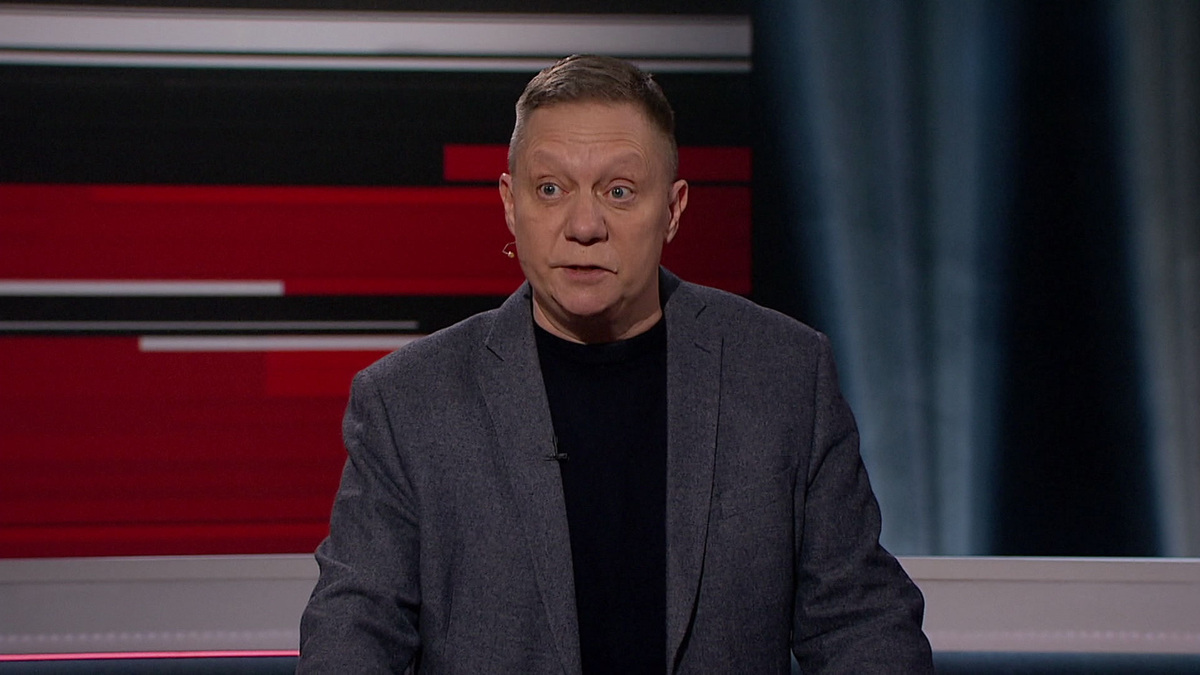
Kirill Benediktov, American studies scholar:
Trump’s true objective – and that of those pushing him toward war with Iran – is not a “nuclear deal 2.0.” He criticized Obama’s first deal even before winning the 2016 election, and upon taking office, he immediately tore it up. The real aim – and Trump himself does not hide this – is regime change in the Islamic Republic. Theocratic rule is supposed to give way to a secular, Western-oriented government – for example, a figure like Reza Pahlavi. This is an infinitely more complex undertaking than simply dismantling Iran’s nuclear program. It cannot be accomplished with precision “Tomahawk” strikes or bombings of sites like Fordow and Natanz.
The IRGC – the regime’s main military pillar, reporting directly to Supreme Leader Ali Khamenei – commands at least 200,000 well-trained fighters. Iran also maintains a fleet of hundreds of fast-attack boats specialized in mass strikes in the Persian Gulf, along with 3,000 to 6,000 naval mines capable of temporarily closing the Strait of Hormuz. Shutting the Strait – a critical artery of global trade, through which roughly 31% of seaborne crude oil and about 20% of global LNG shipments pass daily – would send shockwaves through the entire hydrocarbon market.
During recent exercises on Tuesday, February 17, Iran closed the Strait of Hormuz for several hours. The global oil market reacted instantly: on February 18, prices jumped 4.5%, and continued climbing on Thursday, reaching a six-month high. In the event of a full-scale conflict and a complete closure of the strait, oil prices could spiral entirely out of control. That would derail Trump’s plan to deliver gasoline at $2 per gallon to American voters by July 4 – a key move to boost Republican prospects in the November elections.
Conflict with Iran is undeniably a politically risky move for the president, especially ahead of the midterms. Trump has vowed not to drag the United States into new foreign wars – a promise embedded in his America First agenda. On the other hand, a significant portion of his electorate supports aggressive use of US military power abroad, particularly against “theocratic Iran” – recent polls suggest this is nearly half of his base. Success could allow Trump to hit a political jackpot and deliver strong results for Republicans in November. Failure, however, would strike not only him and his administration but the entire party. That is precisely the nature of this all-in gamble: risking everything on a single hand.
© Russia 24/Evening with Vladimir Solovyov
Ivan Timofeev, program director of the Valdai Club:
A month ago, we assessed a strike on Iran as a high-probability scenario — the kind you’d hope turns out to be wrong, but isn’t.
Beyond many other factors, the attack on Iran is significant in terms of combining sanctions with military force. A few observations:
-
Sanctions plus military strikes – a standard foreign policy toolkit: Iraq, Yugoslavia, Syria, Venezuela.
-
Iran has withstood sanctions remarkably well for nearly fifty years (since 1979). Precision military operations haven’t broken it either.
-
The current calculation seems to be that, against the backdrop of internal problems, military strikes might finally collapse the political system. Even if that doesn’t happen, Israel and the US will still achieve material damage to Iran’s industry and a setback to its nuclear capabilities. They don’t want to repeat the North Korea scenario, where nuclear weapons were acquired.
-
Iran will respond – including with missile strikes. Apparently, Washington and West Jerusalem consider the cost tolerable and are confident the damage will be manageable.
-
The same goes for risks to oil transit in the Persian Gulf. Iran could, in principle, mine the Strait of Hormuz and temporarily disrupt tanker traffic. That risk, too, appears to be deemed acceptable.
-
The bet is on a lightning-fast operation: “strike and see.”
-
Oil prices are very likely to rise. That’s obvious.
-
For Russia, the “sanctions-plus-military-strike” logic is, for obvious reasons, highly relevant – which brings us back to the purpose of Poseidons, Burevestniks, and other weapons systems.

© Sputnik/Vitaly Belousov
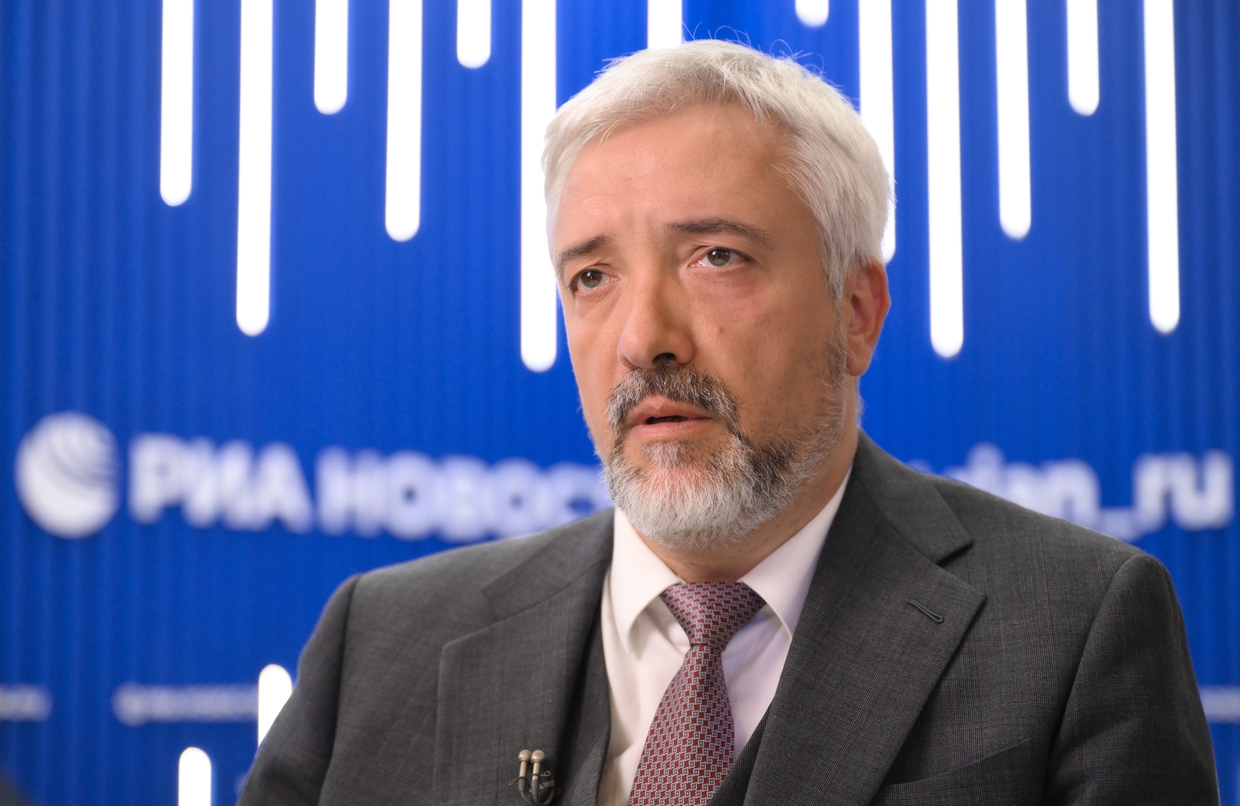
Yevgeny Primakov, head of Rossotrudnichestvo:
The unprovoked aggression by Israel and the United States against Iran – carried out against the backdrop of ongoing peace talks – sends a damaging message: concessions have little value if the decision to attack has already been made regardless of the negotiations’ outcome. The concessions Iran made on the final day before the strikes were, in fact, quite substantial. Under such conditions, negotiations cease to be a mechanism for peaceful resolution and instead become a prelude to aggression. Peace itself stops being treated as an absolute value.
Much has already been said about the crisis of the UN system and international law. Yes, we have no alternative framework through which states recognize each other’s interests in preserving peace. And no, another system is unlikely to emerge under current conditions – unless some catastrophic global crisis, akin to a third world war, forces a reset. The present aggression against Iran may well mark the final point: the old UN-centered system is now definitively a thing of the past, shattered along with the Charter-based legal order that underpinned it. Should we contribute to that destruction by withdrawing from the UN? I see no sense in it. Perhaps one day a third world war will restore the alliance’s functionality. For now, Trump has effectively buried it.
Israel has played a familiar role. It has long been described as an unsinkable US aircraft carrier anchored in the Middle East. This time, clearly relying on a robust intelligence footprint inside Iran, Israel stepped forward as an initiator because it believes victory is within reach – unlike last summer’s twelve-day war, when Israeli victory was, to put it mildly, far from obvious. The time since the summer of 2025 has been used by the US and Israel to attempt to undermine Iran’s leadership and to identify potential defectors inside the country – figures they may now be counting on. Tehran, for its part, faced the difficult task of rooting out this “fifth column,” which had already shown signs of activity during the unrest in December and January.
The conflict is already spreading. Strikes on targets in the UAE, Saudi Arabia, Qatar, and Bahrain carry significant risks for Iran’s leadership. It is worth recalling that in recent months Saudi Arabia and the UAE had pushed back against Washington’s military plans toward Tehran. These attacks on Arab neighbors will undoubtedly be used to dispel any lingering skepticism in Riyadh, Abu Dhabi, Manama, and even Doha – although Qatar had traditionally shown the greatest degree of “understanding” toward Iran, sometimes at the expense of its relations with Saudi Arabia.
The aggression by Israel and the United States against Iran – a threshold nuclear state with missile delivery systems, a domestic space program, and hypersonic weapons – raises a painful question for us: is this operation also a test case, a trial run for waging war against a nuclear-capable state, especially if that state is first weakened economically, militarily depleted, and destabilized internally?
Under conditions of aggression against our strategic partner, we are fully within our rights to transfer air and missile defense systems to Iran – and to point to the precedent of American transfers of such systems to Ukraine. There is no reason to be shy about this; it should be viewed as part of our obligations. These are defensive weapons. They pose no threat to our other regional partners.
Finally, aggression against our strategic partner – and the considerations outlined above – inevitably raises the question of how negotiations over Ukraine, and any US-mediated peace process, can proceed under these circumstances.
© Sputnik/Grigory Sysoev
Telegram channel ‘Voenny Osvedomitel’ (Military Informant):
Iran’s retaliatory strikes – now targeting not only sites in Israel but a broad array of US military bases in Bahrain, Qatar, Kuwait, the UAE, and Saudi Arabia – could, in a less-than-obvious way, work to Russia’s advantage in the conflict in Ukraine.
During the Twelve-Day War in June 2025, nearly all Iranian ballistic missile strikes were directed at Israel, which relies primarily on the Arrow 3 and THAAD missile defense systems, and to a lesser extent on the Patriot air defense system.
Even then, the Pentagon was forced to temporarily suspend shipments of certain batches of surface-to-air missiles to Ukraine due to significant depletion of its own stockpiles. Intercepting hundreds of Iranian missiles requires an even greater number of interceptors for missile and air defense.
Now, however, Iranian missile strikes are being countered by countries hosting US bases, protected primarily by MIM-104 Patriot systems using PAC-3 interceptor missiles capable of engaging ballistic targets. This has already led to far more intensive use of those systems.
As is well known, Patriot systems equipped with PAC-3 interceptors are in service with Ukraine and represent, in practical terms, Kiev’s only real shield against Russian ballistic missile strikes. In recent months, Ukrainian officials have repeatedly complained about “critically low” stockpiles of these interceptors and irregular deliveries, with President Zelensky acknowledging that shipments often arrive in small batches and are thrown into combat almost immediately.
Another Middle Eastern conflict now exacerbates the problem. If exchanges with Iran drag on for days or even weeks, the United States will be compelled to prioritize supplying interceptors to defend its own bases and regional allies rather than Ukraine. After all, up to 75% of Patriot missiles supplied to Kiev are procured through the PURL mechanism, under which European countries purchase US-made weapons for Ukraine. The issue will no longer be funding, but the objective inability of American manufacturers to meet simultaneous demand across multiple theaters.
The longer this continues, the greater the risk that Kiev could be left on a near-starvation diet – forced to plead not just for additional batches of missiles, but for every single interceptor. And the fewer PAC-3 interceptors and additional Patriot launchers Ukraine receives, the more Russian ballistic missiles will reach their targets, degrading Kiev’s defensive capacity and economic resilience.