MIAMI — Perhaps this World Baseball Classic will be remembered as the one that, finally, led people to embrace all of what this tournament is, and stopped the complaining about what it isn’t.
Drama. Emotion. National pride. Electric crowds, particularly at loanDepot park. High stakes. Big names. Bigger moments. All in March, no less, a gift amid the dullest days of spring training, when everyone is biding time until Opening Day. Sure, there are lingering, somewhat unsolvable issues in terms of club restrictions, prohibitive pitching rules and, to a new degree this time, insurance troubles, but really, the main problem with the WBC right now is that there isn’t going to be another one until 2029 or 2030, depending on a number of factors.
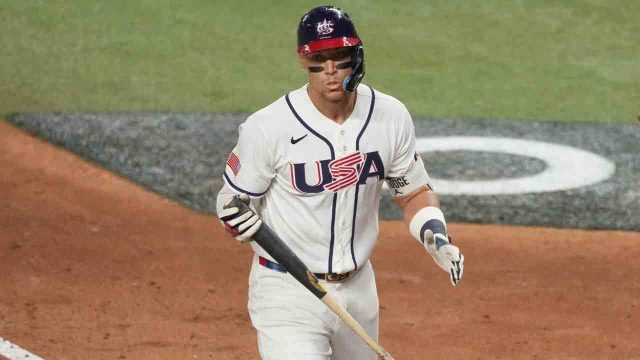
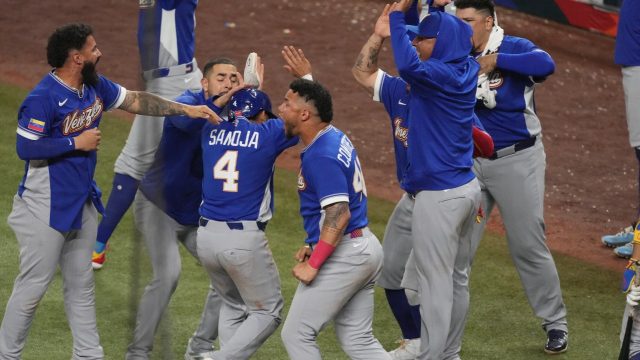
A tremendous final, won 3-2 by first-time champion Venezuela over the United States on Eugenio Suarez’s RBI double in the ninth, right after Bryce Harper’s two-run homer in the eighth tied it up, capped 2½ weeks of baseball that showcased the best of what the sport has to offer.
“It’s hard to explain right now,” Toronto Blue Jays shortstop Andres Gimenez said of winning for his country. “I just want to cry because I’ve got so many memories. I’m so happy right now.”
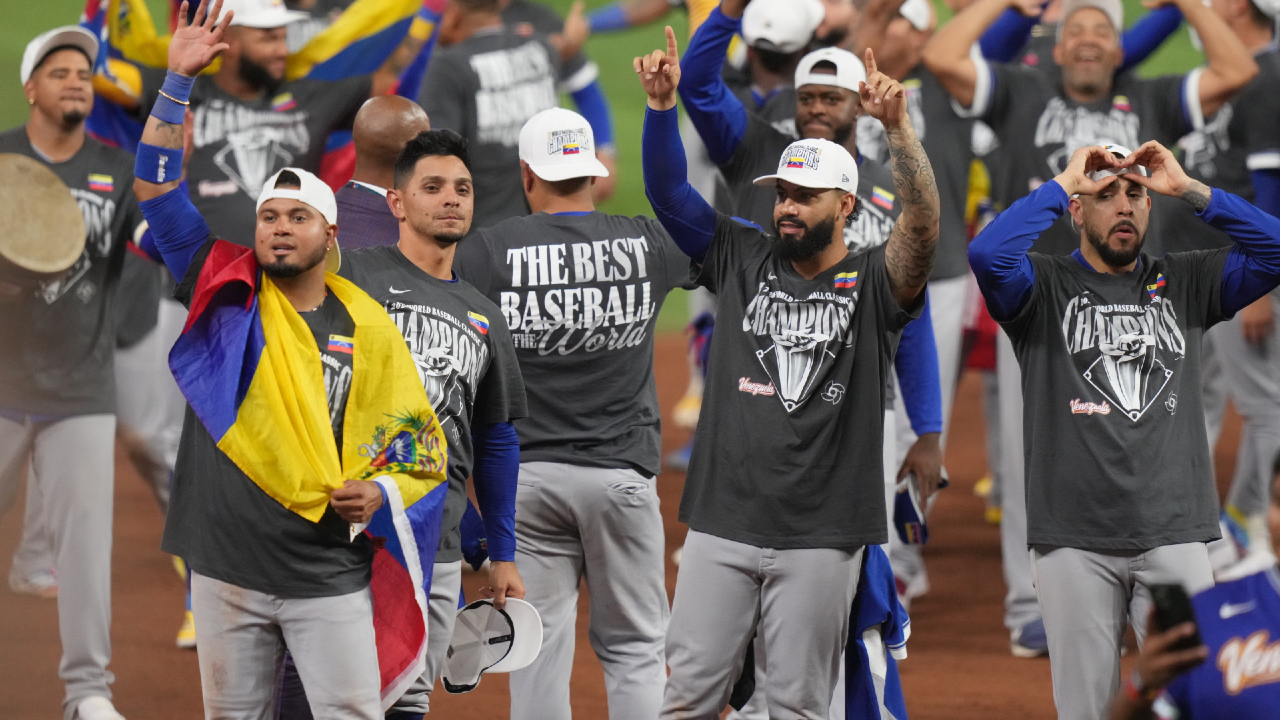
Surrounded by a strong majority of the 36,190 who turned loanDepot park into an extended party Tuesday night, he was far from the only one. Venezuelan fans sang and danced and partied in the stands long after the medals were handed out and the players posed for pictures on the WBC-shaped dais.
Even after they cleared out, the Venezuelans continued to celebrate on the first-base side of the field while the American players and their families milled about on the third-base side, taking in their own moments.
Like Canada in international hockey, the United States enters each Classic expected to win, and after being accused of not taking early editions of the event seriously enough, they’ve gone to three straight finals, beating Puerto Rico in 2017 before falling to Japan in 2023 by the same 3-2 score as against Venezuela.
Harper’s two-run drive in the eighth, following Bobby Witt Jr.’s two-out walk off Andres Machado, briefly raised American hopes. But they were dashed almost immediately as Luis Arraez opened the top of the ninth versus Garrett Whitlock with a walk, pinch-runner Javier Sanoja stole second by a hair and Suarez doubled him home, an advantage Daniel Palencia, the fourth Venezuelan reliever pitching on back-to-back days, closed it out.
The way the Venezuelans locked down both Monday’s 4-2 semifinal win over Italy and the final over the Americans will be closely watched, too, as Angel Zerpa (13 and 15 pitches), Eduard Bazardo (nine and 12), Andres Machado (nine and 18) and Daniel Palencia (15 and 11) combined for 3.2 innings twice on consecutive days.
Given the caution around pitching in the tournament, it’s no surprise that manager Omar Lopez awoke Wednesday morning to three text messages from big-league clubs asking not to have their relievers pitch on back-to-back days. But “one of my strengths is talk and I send my text back fighting for my guys and then set a phone call with everybody,” he said. “When you talk and you get an agreement, you negotiate it, everything is going to go well.”
In contrast, American counterpart Mark DeRosa said he didn’t turn to Mason Miller in the ninth because he was “honouring” the wishes of the San Diego Padres that the right-hander only be used in a save situation. The U.S. team also agreed with the Boston Red Sox that Whitlock would get the ball in a tie game, underlying how complicated decision-making can be.
“For them to battle (Tuesday) night against Italy, for them to use their entire bullpen, and those guys to come back out on no rest was pretty special to watch,” said DeRosa.
No doubt, and combined with 4.1 shutout innings from starter Eduardo Rodriguez, the Arizona Diamondbacks lefty coming off a middling season after a shoulder injury marred his 2024, they’re a big reason why Venezuela holds the reins.
Until when isn’t clear.
The timing for the next Classic is up in the air, in part because baseball’s labour deal expires after the season and the players will have a say, in part because Major League Baseball could take part in the 2028 Los Angeles Olympics and there’s debate over whether it makes sense for the Classic to follow the next spring, or wait until 2030 instead.
Regardless, that the Americans only reached this point thanks to an Italian victory over Mexico to cap off opening-round play in Pool B highlights the volatility that exists in tournament play. Under the right circumstances, a Mexico win over Italy would have eliminated the U.S. before the quarterfinals, where they just squeaked by a Canadian team felled by a couple of defensive mistakes in a 5-3 final.
In the semis, they met a stacked Dominican Republic team that beat all its opposition, Venezuela included, until a 2-1 loss to the Americans.
“You’re either hot or not in a seven-game blast like this,” said DeRosa.
The Venezuelans, like the Dominicans, were hot and their outward joy — exemplified by their pre-game dugout dances — is one of the tournament’s signatures. So too are the grace of the Italians, with their espresso shots after homers; the passion of the Puerto Ricans and their post-game prayer circle; and the tenacity of the hockey-jersey-clad Canadians, all part of what makes this event so endearing.
Outside the strict confines of Major League Baseball culture, each national team brings its people together and does baseball the way it’s done back home, instead of conforming to American norms. With their countrymen, they are not the others they are in the majors, so each game, each victory, especially the ultimate one, hits a little differently.
“The World Series is the most important championship in the major leagues, but when you fight for your country, that goes beyond,” said catcher Salvador Perez, who singled and scored on Maikel Garcia’s sacrifice fly in the third to open the scoring. “That feeling, the country where you were born and raised, the sacrifices made by our parents, those people that helped us, that’s why this means a lot to me and to Venezuela.”
The United States players, in contrast, are more reflective of a big-league vibe and it makes sense because the big leagues are the standard they not only grew up with but also helped set. Everyone else comes to America — they actually are America.
“I credit the Latin American countries, I credit Japan, I credit the other countries for kind of forcing the United States’ hand to kind of get in on this,” said DeRosa, who also played for the U.S. in 2009. “To see it grow has been incredible.”
In that way, growth is a product of what happens when everyone shows up in a global sandbox and differences aren’t tamped down but celebrated. The power of that experience is why the calibre of talent at each tournament keeps rising, as players keep seeing how much fun others are having and don’t want to miss out.
Now, it’s back to reality, as both the Venezuelans and Americans rejoin their teams and refocus on the season ahead, with Opening Day a week-and-a-half away.
“Obviously it gives me a lot of motivation, especially because last year we felt like we could have won and unfortunately it didn’t come our way,” Gimenez said of platforming off a WBC title. “A lot of motivation, and I know with the Blue Jays we’ve got a really big chance to get it done.”
This World Baseball Classic did get it done, and maybe it will turn the conversation on the next one, too.