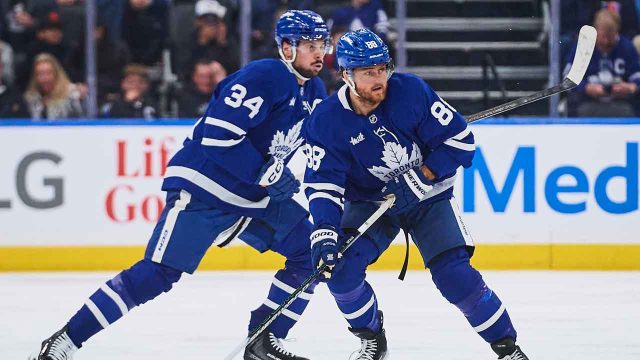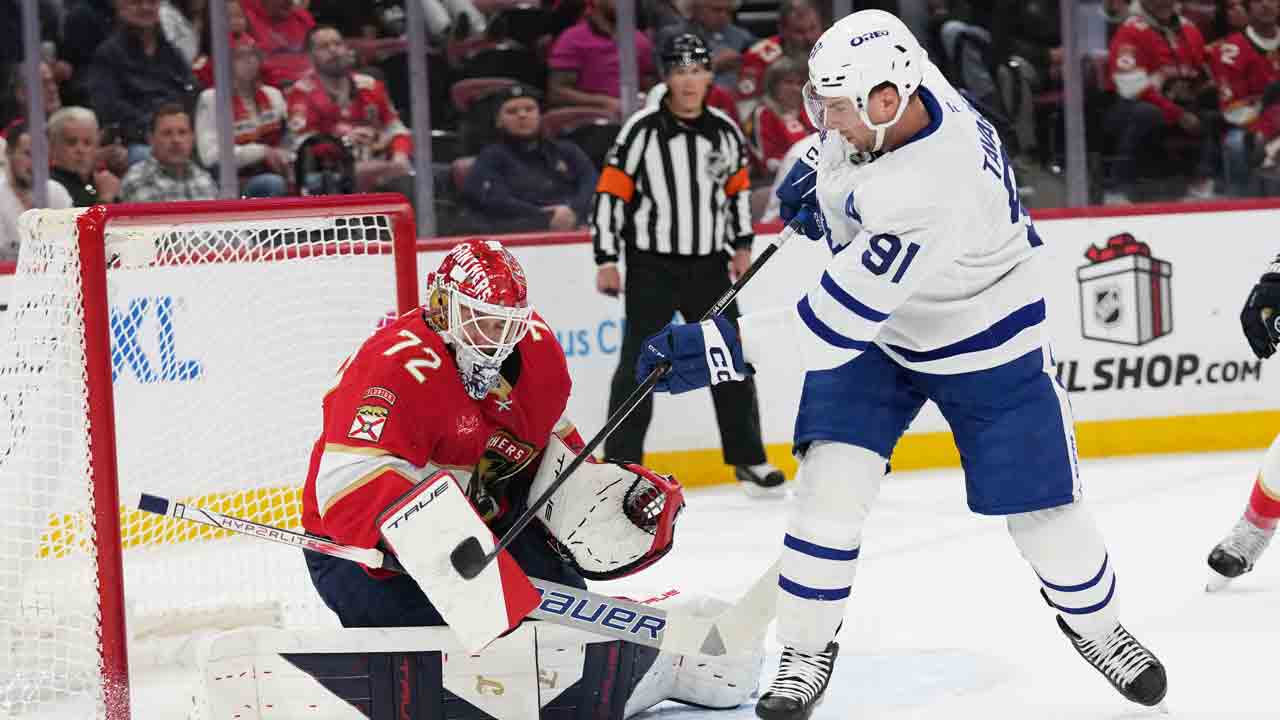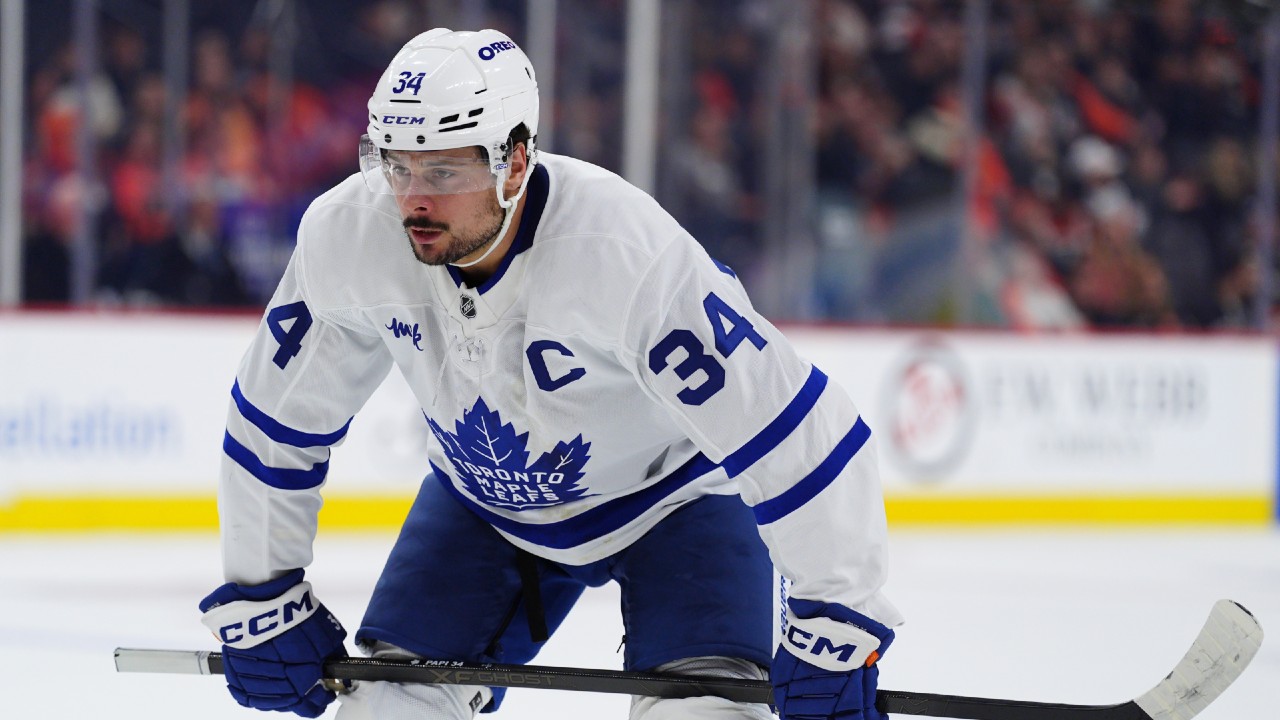
Auston Matthews is 28 years old and on pace for a 37-goal, 70-point NHL season, and yet I’m here to reflect on “what’s wrong with him,” so please allow that as context for the type of player we’re talking about here.
This is a player not being judged against his peers, by which any metric would show his season and contributions to date have been very good. Rather, he’s being judged against himself as someone who’s set the bar so high it’s only attainable by the best few players on the planet.
Matthews is less than 20 months removed from finishing up a 69-goal, 107-point season, then a couple seasons more from his Hart Trophy win as the league’s MVP. For years he’s won faceoffs, stripped the opposition of pucks with a deft stick, and put up defensive numbers that earned him a Selke Trophy nomination.
But today, in every category, he’s taken steps back. He now throws fewer hits, has fewer takeaways, scores less, and is just generally less dominant. He doesn’t have the puck as much, doesn’t shoot it as hard, and isn’t skating as fast.
So, what gives? He’s 28, not 38, and the true elite tend to have long plateaus of greatness in their careers, even when they fade a bit from their absolute heights.
Last season we know a lot of Matthews’ step back was injury related. Almost all of it, I’d wager. Maddeningly, we don’t know exactly what that injury was, but we know at some point his wrist was an issue, and I’ve pieced together enough bits of information to believe his back has given him trouble too (without real info, all we can do is speculate.) How much, we can’t know, but last year we plainly saw with our own eyes that he tried to play through it all, but was just not the same player.
That effort was admirable, but for a Leafs team that went to Game 7 of Round 2 against the eventual Cup champs, the elite version of Matthews could’ve made all the difference. It was frustrating, and they hoped to see their captain get back to greatness.
This season he was supposedly healthy, but his stats lagged behind his usual output (and I’m referring to his usual output when he played without Mitch Marner), he eventually took a couple hard pieces of contact from Nikita Zadorov and missed five straight games over two weeks.
The questions that were once quiet have grown in volume.
Will he ever be the same player again?
What are the Leafs if he’s only very good, and can they still win playoff rounds like that?
He’s given them four points in four games since returning, and his underlying numbers have been way better, but folks aren’t here for his “underlying numbers.” Neat shot attempts dude, etc. etc.
He spoke with The Athletic this week, and said a lot about his progress, though it included phrasing like “I think I’m getting there,” and implications that he would “certainly like to get to another level” and that “I think it’s turning in the right direction.”
What’s hard with those questions is that the player and team prefer there to be an information vacuum around his injuries, so we can only speculate about what that means (gotta be his back, right?).
For the question: “Will he ever get there again,” the answer is “no.” He will never again be the league’s best player, in part because Connor McDavid and Nathan MacKinnon are co-holding that title with merciless grips, while rising superstars like Macklin Celebrini and Connor Bedard try to climb their way up. Matthews was always on the fringe of that top tier, and for a couple seasons things went just perfectly. I think it’s impossible to even see him being a top-five player again, in part because of age (he’s not likely to get better post-28), and in part due to these injury slow-downs.
But that’s not to say Matthews can’t still be great…and I do mean great-great.
A lot of the game’s best players have adapted their style as they’ve gotten older. I’m thinking of Sidney Crosby specifically, and to a lesser degree, even former Hart Trophy winner Corey Perry. They don’t get faster or more dynamic, they get smarter. Those are more grindy types of players, but Matthews is routinely among the NHL’s shot-blocking leaders for forwards, and he does have great defensive ability. There’s a more calculated version of his game, a more methodical one, that can still be impactful given his ability to flat out rip pucks into the back of the net on minimal chances.
-
-
Real Kyper and Bourne
Nick Kypreos and Justin Bourne talk all things hockey with some of the biggest names in the game. Watch live every weekday on Sportsnet and Sportsnet+ — or listen live on Sportsnet 590 The FAN — from 4 p.m. to 6 p.m. ET.

If he settles into a version of his game that’s maybe less powerful, but more all-around, can he be reliable and still have 50-goal seasons in him? A healthy Matthews could still do that. And if he scores 50 with an all-around defensive game, it’s reasonable to say he could still have years where he’s around the league’s top-10, which the Leafs could still build a winner around.
But my biggest question about Matthews’ loss of ability is, will he ever be the take-away king we saw him be for a couple seasons? That ability was a huge part of what kept his lines on offence and out of their own end, but if he’s slower or less strong, it may be nullified now. The Leafs need that part of his game to come back, and it’s an area that would worry me if I were them.
Barring some sort of off-season surgery, whatever injuries he’s had seem likely to bite off enough of his fastball to keep him from that “generational talent” tier of players. But again, that’s not writing the guy off as someone who could still be at the top of a winning team.
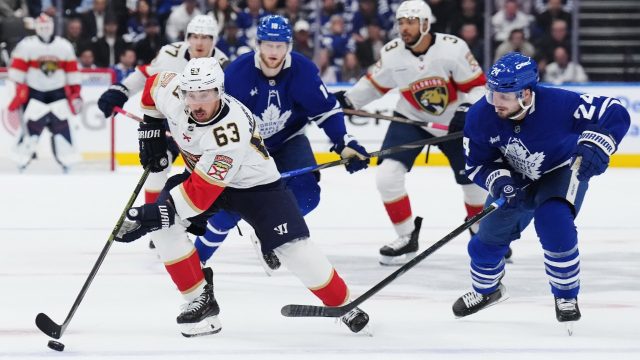
Against Florida this week, Matthews showed those flashes. At even strength he had six scoring chances, a breakaway, and even passed up a few other looks where a more confident version of himself would pull the trigger.
And can’t that also come with more confidence?
One of his superpowers of old were these quick shots from bad angles where the goalies wouldn’t expect it, and only the most supremely confident players would even bother attempting. Making those sorts of efforts, which have nothing to do with injuries or age, is just about pure confidence. There’s no reason why he couldn’t find some runs of feeling good where those start to go in, too.
The Leafs need Matthews to build on the success he’s had since returning so far, and to stay healthy, so they in turn can build something sustainable this season. To keep him healthy, they’d do well to back off his penalty-killing ice time and only deploy him on the third forward pair, if at all. They could try to keep him closer to 20 minutes a game than his season average, which is up over 21 (it’s already dropping from his October time on ice average, which was around 22 minutes). They need him to play, and to play better than his sub-1.00 points per game pace.
It’s tough to forecast what the rest of Matthews’ career will look like, but other greats have had injury worries at different times in their own careers. When those subside, the skills that brought them to their great success are still lying in wait. Matthews is no different.
The more games big 34 plays in a row, the more reason the Leafs have to believe he’ll get closer to the version of his game that we’ll have to start calling his “best.” Even if he’s not going to be a Hart Trophy guy, there’s surely a version of Matthews’ game with which they can still win.