The medal round for the 2026 World Junior Hockey Championship is set to begin with some intriguing quarterfinal matchups on Friday. Team Canada and Team Sweden enter the medal round as top seeds after winning their groups in the preliminary round.
Here’s a look at who will be facing off against each other in the quarters, including some of my notes on each team:
QUARTERFINAL MATCHUPS
Canada (1B) vs. Slovakia (3A)
Canada
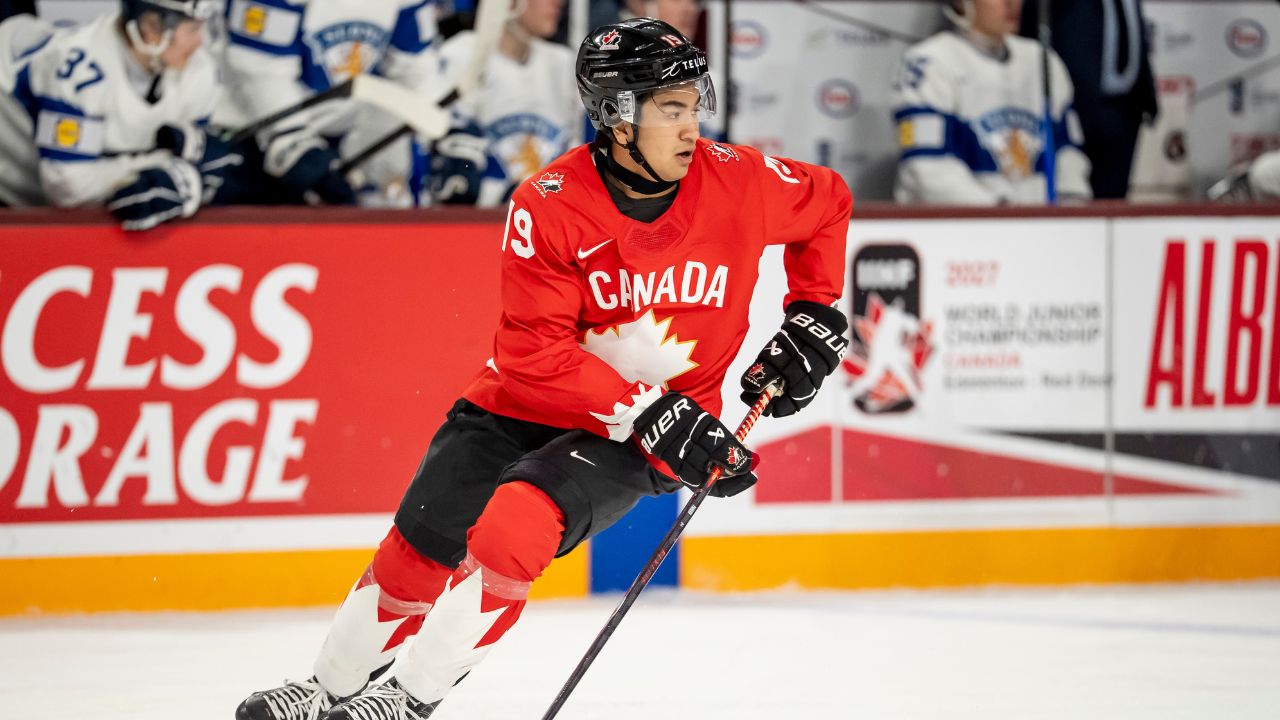
Canada’s top line of Gavin McKenna – Michael Hage – Brady Martin has carried the bulk of the offence. McKenna and Hage are tied for the tournament scoring lead with eight points each, followed closely by Martin, with seven points.
Everyone recognizes McKenna is an elite offensive talent and one of the top three prospects for the draft, but there have been questions about his off-puck effort and defensive-zone commitment. He’s been better than average defensively this week and his overall effort has been consistent. His offensive upside easily wins out when he’s at least average in those other key categories.
Hage (Montreal Canadiens) has been Canada’s top forward. He drives play in transition, rips pucks from the weak side on the power play and makes himself noticeable every time he’s on the ice. I appreciate how hard he has competed every time his number is called.
Martin (Nashville Predators) attacks every shift like it’s his last. His combination of power and skill stands out among his peer group. Teams go on deep playoff runs with players like Martin on their roster.
Zayne Parekh is a fascinating player to watch. For every turnover he makes, he responds with a tape-to-tape long-range outlet pass or going bar-down for a goal off his elite release. He makes me shake my head with confusion but also brings me out of my seat with his undeniable skill.
Parekh is tied with Hage and McKenna for the scoring lead and is a massive part of the reason Canada has the top-ranked power play in the tournament (54 per cent).
It was nice to see Cole Beaudoin (Utah Mammoth) score two goals against the Finns. Canada will require more secondary offence from its forward group in the medal round and a big (six-foot-two, 213-pound) power forward like Beaudoin has the ability to wear down opponents and score timely goals.
Watching Sam O’Reilly leads me to project his future role with the Tampa Bay Lightning as similar to that of current Lightning centre Anthony Cirelli. O’Reilly is a relentless competitor who produces better than secondary offence without sacrificing defensive detail. Coaches love these kinds of prospects. O’Reilly can be deployed in all situations, blocks shots on the penalty kill and pushes opponents off the puck with his physicality along the boards and in front of the net. He’s averaged over 18 minutes per game in the tournament, with almost all of his ice time coming against top-six opponents and on the penalty kill, while contributing one goal and three assists with a plus-5.
Slovakia
If the Slovaks are going to have a chance against Canada, they will need to stay out of the penalty box and hope for an all-world performance from goaltender Michal Pradal (Detroit Red Wings). Pradal is a six-foot-five, 199-pound left-catching goalie who plays for Tri-City in the USHL.
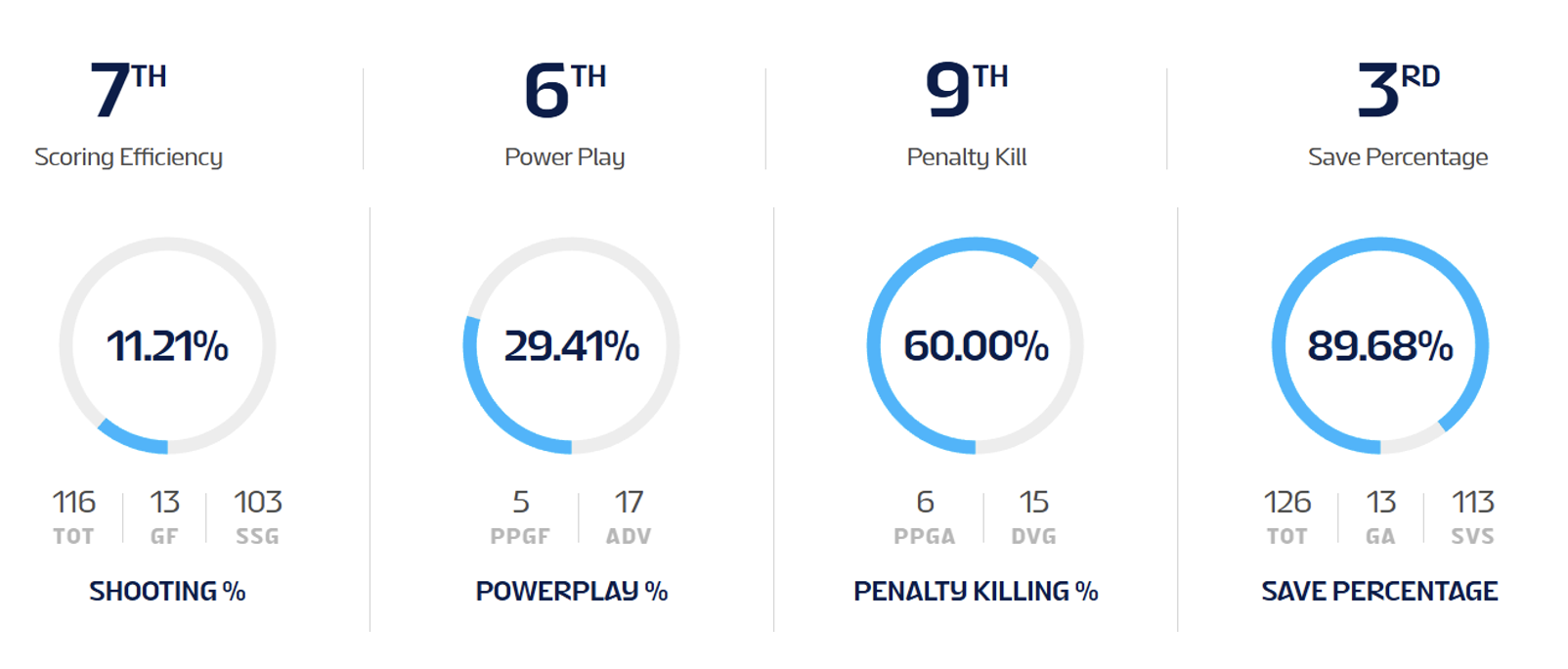
The Slovaks are led in scoring by two draft-eligible prospects.
Tomas Chrenko is a five-foot-11, 172-pound centre who is tied for the tournament scoring lead with five goals and three assists. He’s a creative player who has some dart and dash to his game and the ability to make plays in tight quarters.
Winger Adam Nemec is listed at six-foot-one, 176 pounds. He’s contributed one goal and four assists in the tournament and averaged over 18 minutes of ice time. Nemec is a reliable player who is deployed in all situations and displays a willingness to battle for pucks in the trenches.
Sweden (1A) vs. Latvia (3B)
Sweden
Jack Berglund (Philadelphia Flyers) leads the team with two goals and four assists, good for ninth in the scoring race at the tournament.
The Swedes have a very deep team. Their depth has resulted in six skaters being among the top 20 in tournament scoring and has led to hard matchups for their opponents. They don’t really have a top line; they have three solid scoring lines.
Anaheim Ducks prospect Lucas Pettersson has impressed me. The five-foot-11, 178-pound winger has produced four goals and one assist, but it’s his all-around game that stands out. He’s above the puck when his team doesn’t have possession and tracks the entire 200 feet to assist defensively. Pettersson has been around the play consistently. When he isn’t scoring, his detail and compete have been noticeable and led to a plus-7.
Ivar Stenberg is one of the top-rated prospects for the 2026 draft and he’s playing to his identity. He too is a very detailed player who doesn’t cut corners defensively while trying to chase offence. Stenberg has contributed two goals and two assists while being deployed, primarily, at even strength and the power play. He skated a tournament-high 16:39 versus Team USA, including 2:52 with the man advantage.
Viggo Bjorck is another top-flight forward prospect on the Swedish roster. He’s trending to be a top-10 pick in June. The five-foot-10, 177-pound right-shot winger has contributed three goals and two assists in the preliminary round. It’s interesting to note that Bjorck has been deployed in all situations and averaged over 18 minutes of ice time per game. The darting forward is especially dangerous when making plays from his weak side on the power play.
Latvia
Draft-eligible defenceman Alberts Smits has been deployed in all situations for Latvia and is averaging over 22 minutes per game ice time. He quarterbacks the power play and leads his team with one goal and three assists. Smits is listed at six-foot-three, 205 pounds. He’s a fantastic agile skater who tracks up and down the ice with ease and uses his length to take away time and space defensively. Smits is a potential top-10 draft prospect.
USA (2A) vs Finland (3B)
USA
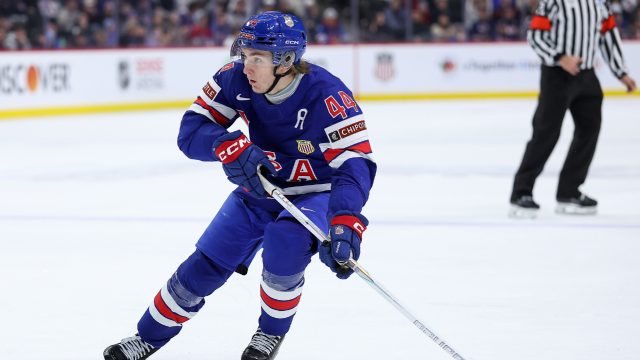
The American team has looked unorganized for long stretches and is coming off a mostly one-sided loss to the Swedes. They should get a boost from the return of all-world defenceman Cole Hutson, who appears ready to return from a neck injury he suffered in the preliminary round versus Switzerland. But I can’t recall an American team with this kind of statistical analysis at the WJCs … maybe ever.
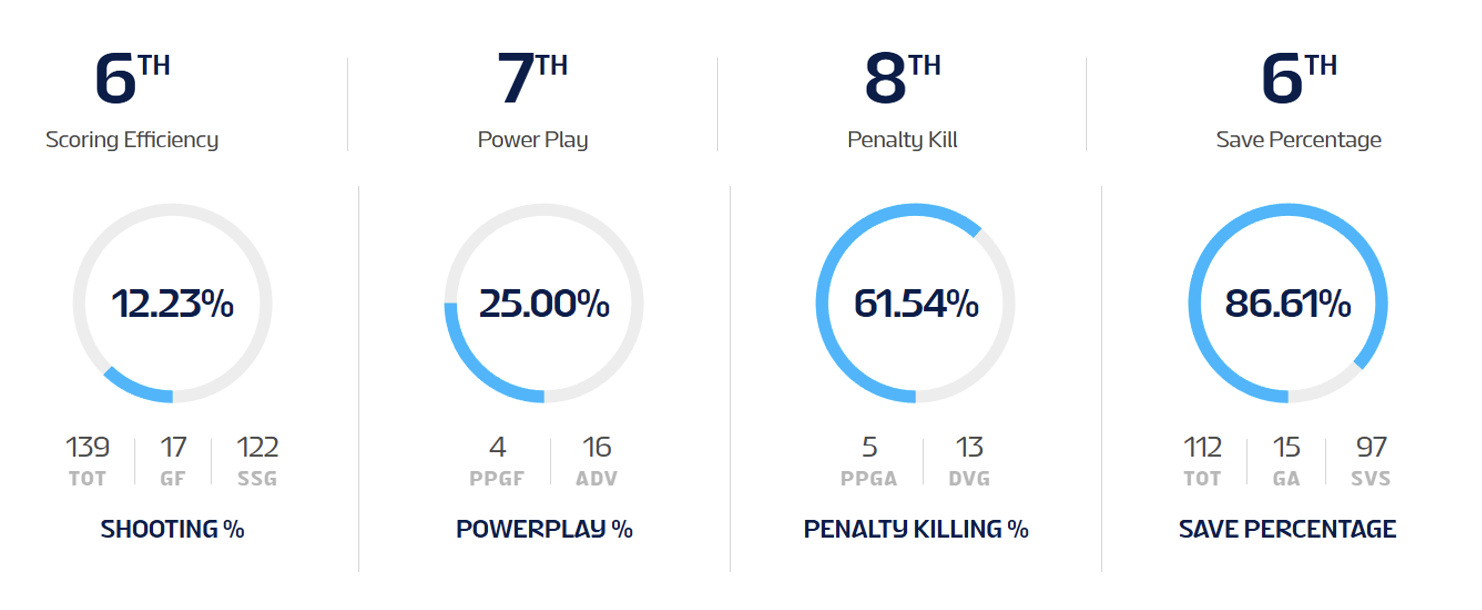
Draft-eligible defenceman Chase Reid (Soo Greyhounds, OHL) continues to impress. He’s being deployed in all situations and is one of the American power-play quarterbacks. He’s contributed two goals and two assists, and battled to the best of his ability defensively.
The Colorado Avalanche are the most prolific offensive team in the NHL and they have a goal-scoring prospect in Will Zellers on the horizon. Zellers historically has leaned shooter more than distributor. Before arriving at the tournament, he had produced 10 goals and five assists at North Dakota (NCAA) after contributing 44 goals and 27 assists last year playing for Green Bay in the USHL. Zellers has been the most dangerous shooter for the Americans at the tournament (five goals, two assists).
James Hagens (Boston Bruins) has had a solid week for the Americans. He averages over 20 minutes per game ice time, with almost every shift coming at either even strength or the power play. The team will be relying on Hagens to be its top offensive threat in the medal round if it hopes to advance and defend its title. He’s contributed two goals and three assists so far.
Finland
If the Finns are going to defeat the Americans, they will need a big-game performance from goaltender Petteri Rimpinin (Los Angeles Kings), who has a history of rising to the occasion. Rimpinin was the top goalie at last year’s tournament in Ottawa.
Outside of the game versus Canada, where Rimpinin gave up six goals, the Finnish goaltender has been having a solid tournament. His .865 save percentage overall is largely due to the game versus Canada.
Team Finland’s captain, Aron Kiviharju (Minnesota Wild), missed the game versus Canada with illness. He’s averaged over 25 minutes per game ice time and quarterbacks the top power-play unit. Needless to say, his return to the lineup is extremely important for the Finns. Kiviharju has contributed three assists in three games. He has a plus-3 as well.
Everett Silvertips forward Matias Vanhanen has impressed me this week. He went through the draft in June but he has my full attention this time around. Vanhanen is a crafty playmaker who scans the ice for passing options and executes in a timely manner. The puck goes through him on either the weakside flank or top bumper position on the power play. He’s contributed five assists.
Czechia (2B) vs. Switzerland (3A)
Czechia
The Czechs have been the most enjoyable team to watch in the tournament for me and are a contender for gold. They have depth in all positions and challenge their opponents to keep up with their speed and skill. They’re an aggressive team on and off the puck.
Czechia is led offensively by Los Angeles Kings prospect Vojtech Cihar (two goals, five assists). Cihar is another prospect in this tournament who has been contributing to his team’s success with his overall detail and never-quit approach.
Defenceman Tomas Galvas might be a late bloomer. He’s gone through the draft twice but I would be surprised to see him passed over a third time. Galvas has defended with purpose and played to his strengths offensively. He makes plays at even strength and when quarterbacking the power play. Galvas is the second-leading scorer among defencemen at the tournament (two goals, five assists).
The Czechs have a massive D-core, led by six-foot-six, 218-pound Radim Mrtka (Buffalo Sabres). In total, they have five defencemen at six-foot-four and above. They have the size, skill and physicality to make life miserable for opponents when contesting open ice and battling for pucks.
Switzerland
Switzerland has the top penalty-killing unit in the tournament. The Swiss have yet to allow a goal against while shorthanded.
A big part — maybe the only reason — Switzerland has had so much success when killing penalties is the fact its goaltenders, Christian Kirsch (San Jose Sharks) and Elijah Neuenschwander (Anaheim), have been by far the best at the tournament.
Kirsch has posted a 1.01 goals-against average and a .950 save percentage in his two starts, while Neuenschwander has contributed with a 2.51 goals-against average / .902 save percentage.