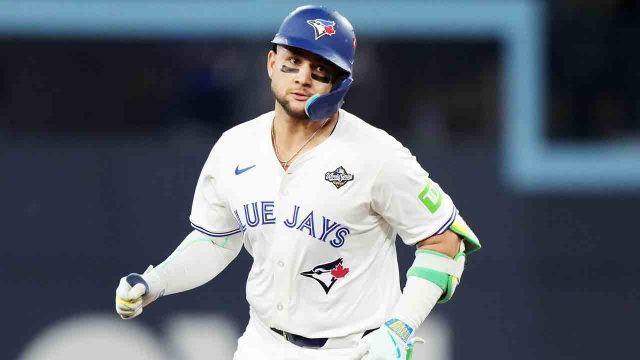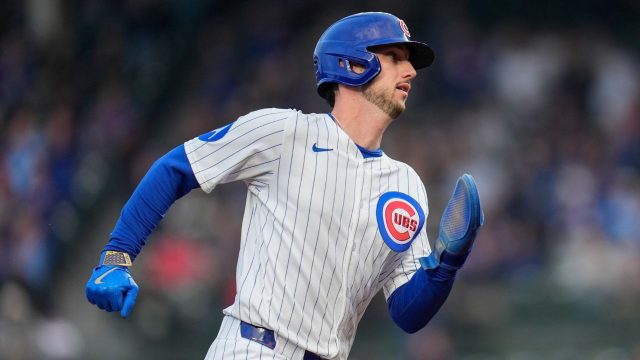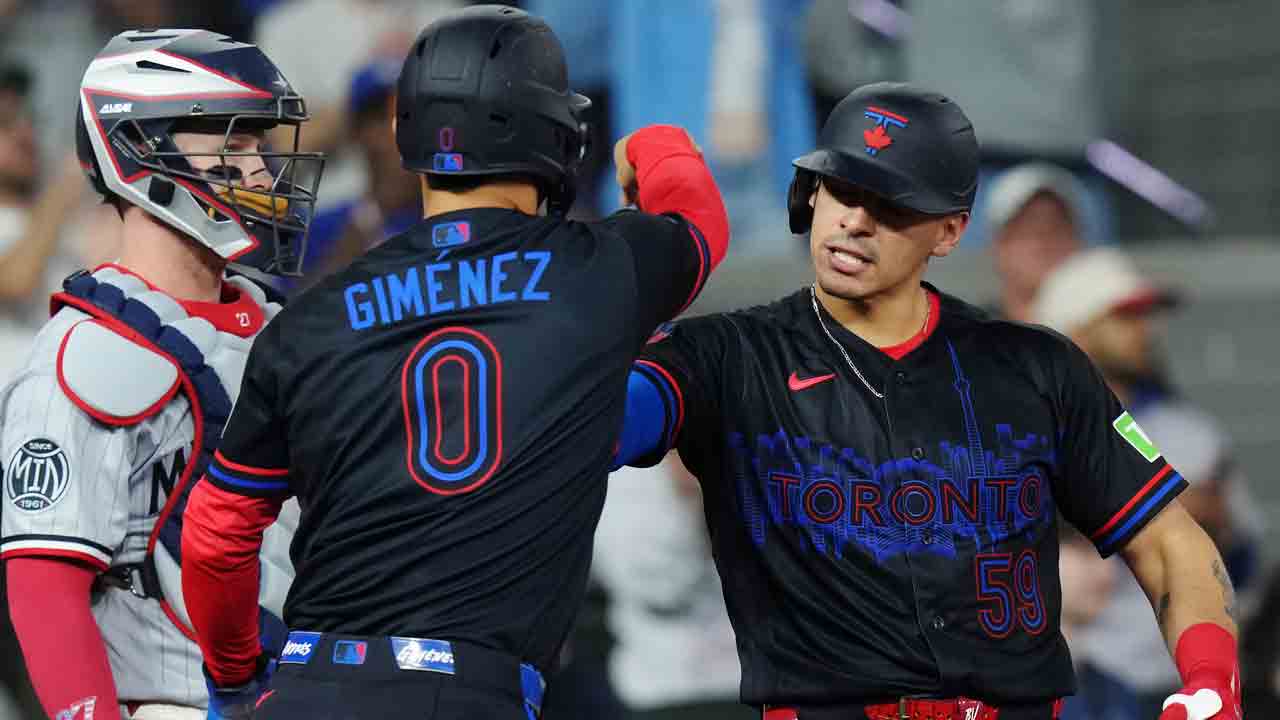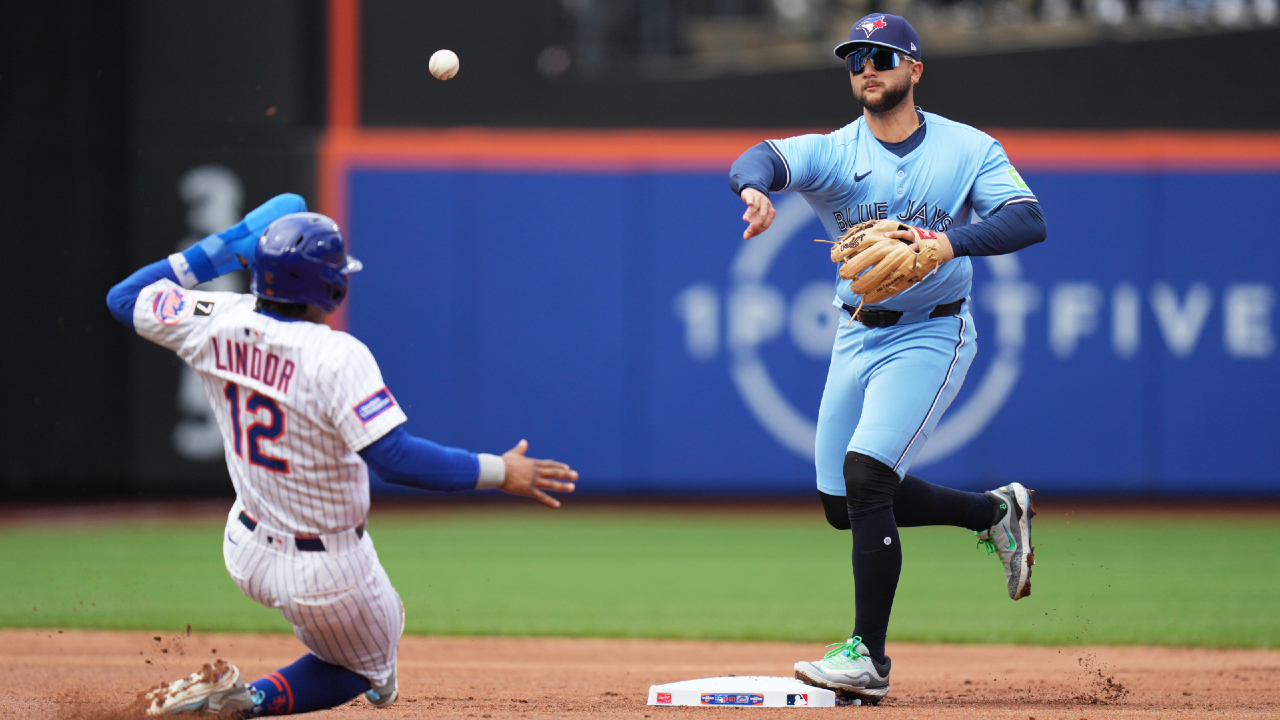
TORONTO — Suspense turned quickly into disappointment for the Toronto Blue Jays after Kyle Tucker chose the Los Angeles Dodgers Thursday night and Bo Bichette landed with the New York Mets Friday morning.
While nothing can fully be ruled out as long as Cody Bellinger’s still out there, Tucker clearly represented the Blue Jays’ best shot at turning a strong off-season into a historic one. The specifics aren’t known, but the Blue Jays made a legitimately competitive long-term offer to Tucker, who preferred the Dodgers’ record-setting proposal of $240 million over four years with opt-outs after the second and third seasons.
The parting with Bichette will be more emotional for fans, players and staff alike considering he first joined the Blue Jays nearly 10 years ago as a second-round pick in 2016. The 27-year-old singled in his first ever MLB at-bat, homered off Shohei Ohtani in Game 7 of the World Series to end his Blue Jays career and hit .294 with 111 home runs in between. Now, he’s set to play third for the Mets, who signed him for $126 million over three years with opt-outs after each season.
Barring a scenario in which the Blue Jays swoop in on Bellinger and out-bid the Yankees for his services, their major off-season moves are now done, meaning an off-season that started with a record deal for Dylan Cease would end a little anticlimactically.
Now, as Blue Jays fans can attest after 2025, you can have a great season without necessarily winning the off-season. And with a roster that has more projected FanGraphs WAR than any team but the Dodgers, the Blue Jays are positioned well. Still, those two deals sting.
As ever, contracts of that magnitude have lots of ramifications throughout the baseball world. Here’s a closer look at a few of them:
• While the Blue Jays made Tucker a serious long-term offer that he was considering until the end, it’s not yet clear if they made Bichette a formal offer or simply lurked on the edges of his market. The Phillies were reportedly hopeful of signing Bichette to a seven-year, $200 million deal before their division rivals jumped in and got the deal done.
• Interestingly, both Tucker and Bichette passed on longer-term offers with higher total guarantees in favour of short-term, high-AAV deals that offer all kinds of flexibility. Important context here: the next couple free-agent classes are light on position-player stars, allowing Tucker and Bichette to re-enter the market and do even better if they continue to play well.
• Bichette’s AAV of $42 million represents a new record for infielders, surpassing Alex Bregman’s record of $40 million set last season. Meanwhile, Tucker’s deal reportedly carries a net present value of $57.1 million, shattering Juan Soto’s $51 million mark for the all-time AAV record.
• These deals are especially interesting in the context of a collective bargaining agreement that expires after the 2026 season. Any small-market owners that were already hopeful of getting a salary cap can now point to two more examples suggesting the gap between rich teams and poor teams has grown too wide. Some agents expect MLB’s negotiators will now use these deals to bolster arguments for major structural changes. Mind you, that push was likely coming regardless, and it’s something players have strongly resisted for decades.
• For years, contracts have been assessed by comparing the cost in dollars to the player’s production as measured by wins above replacement. In Bichette’s case, if he’s a 3.5-WAR player for the next three years, the Mets would be paying about $12 million per win, which is about the going rate for free-agent production and not an unreasonable ask considering Bichette has generated 3.5 WAR in four of the past five seasons.
As for Tucker, though, you have to just throw dollars per WAR aside. No one would reasonably project Tucker as a 5-WAR player for the next four seasons, but the Dodgers aren’t going for maximum efficiency here; they just want to get the best players, cost be damned. It’s behaviour reminiscent of the turn-of-the-century Yankees, the last team to win three World Series titles in a row.
• Remember, Tucker and Bichette weren’t supposed to be the stars of this off-season — Vladimir Guerrero Jr. was. So how would Guerrero Jr., now 26 years old and coming off the greatest offensive performance in Blue Jays post-season history, fare in this market? Thankfully the Blue Jays don’t have to find out. Some executives around the league will argue that $500 million for a first baseman is too much, and they’re not wrong to forecast eventual decline. But at a time in which lesser hitters are signing for $60 million per season with multiple opt-outs, $35.7 million for a Guerrero Jr. deal with no opt-outs looks like a real positive for the defending American League champs. By extending him and Alejandro Kirk last spring, the Blue Jays strengthened their long-term core.
• Bichette will now be reunited with Marcus Semien, someone he grew close to when they played together in Toronto. He’ll also be playing third base, a position he’s never manned at the MLB level. Various talent evaluators questioned Bichette’s ability to stay at shortstop this winter, but everyone I’ve heard from fully expects him to be a real offensive difference maker for the next few years.