The Toronto Raptors have their flaws.
Three-point shooting? An area for growth. Clutch offence? More growth. Roster-wise, there is a lack of size past their starting unit and a lack of experience coming off the bench.
How much any of these qualities or lack thereof will come into play as they pursue their first playoff appearance in five years will doubtless be the bullet-point items for the end-of-season postmortem, whether that takes place in mid-April, early May or beyond.
But what the Raptors have working in their favour for now is a high degree of “limbic resonance,” as the scientists say.
“Good vibes” to the rest of us.
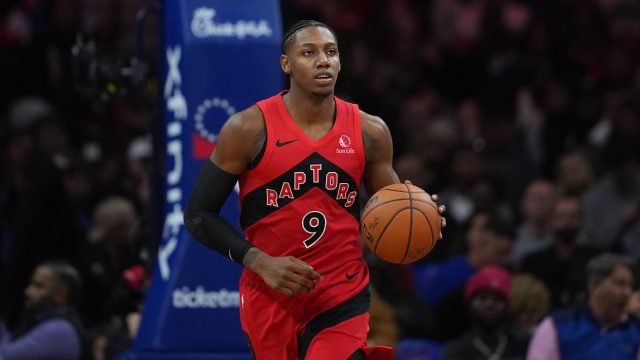
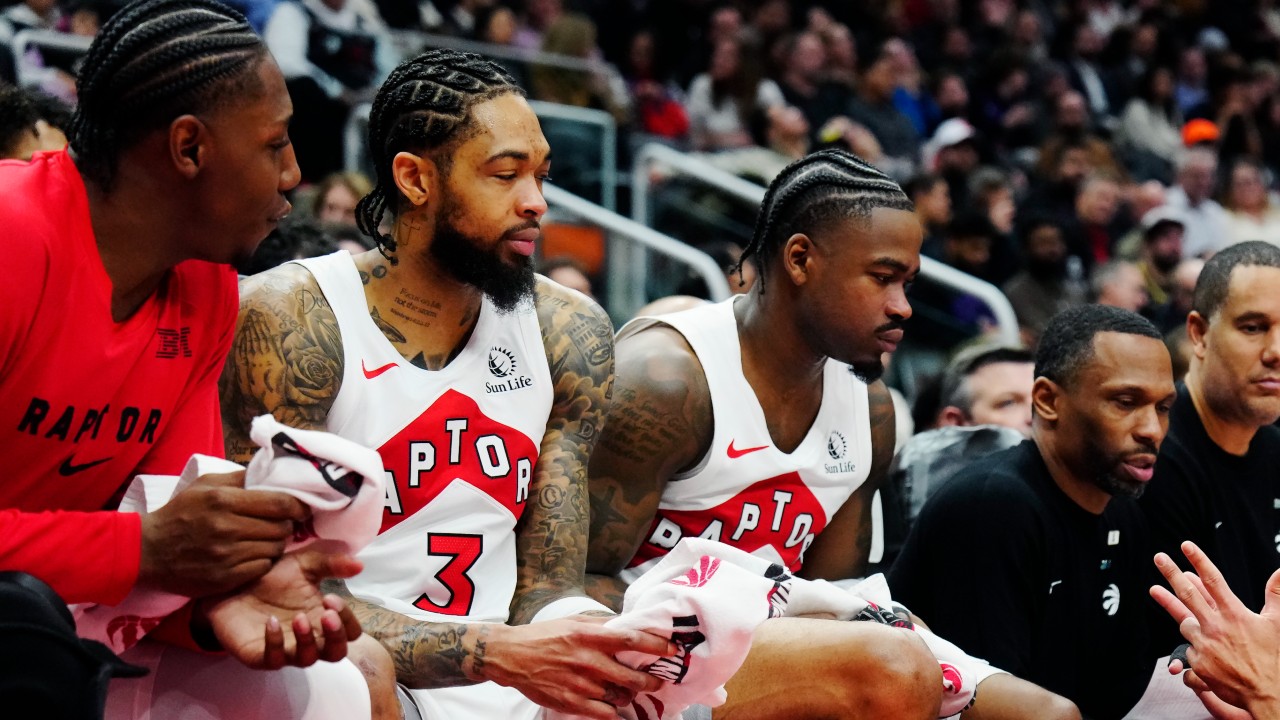
And more often than not, they emanate from the odd-couple relationship between the team’s most pedigreed veteran, Brandon Ingram, and its scrappy young point guard, Jamal Shead.
-
-
The Raptors Show
Sportsnet’s Blake Murphy and two-time NBA champion Matt Bonner cover all things Raptors and the NBA. Airing every weekday live on Sportsnet 590 The FAN from 11 a.m.-noon ET.

As the Raptors make a quick tour through Houston on Tuesday to play the Rockets, where Shead played four years of college, and then New Orleans for Ingram’s first game back since he was traded by the Pelicans to Toronto in February 2025, the strong team chemistry Toronto has relied on all season will continue to be tested. With just one game separating the Raptors in fifth place and a playoff spot in the East from seventh place and a berth in the play-in tournament, it all matters.
But as the Raptors have shown over and over again in the past two seasons, their vibes have held up, and Shead and Ingram — the all-star in the starting unit and the hard-nosed role player coming off the bench — are a big reason.
“Their relationship is a great dynamic for the team,” said the Raptors veteran-in-residence Garrett Temple, who is tight with both Ingram and Shead. “It helps bring everyone together.”
Though not in exactly the way some might think.
NBA norms and customs would normally call for Ingram, a two-time all-star and professional scorer in his 10th season, to be somewhat of a mentor to Shead, who is in his second season as a second-round pick in the 2024 draft.
It would not be unreasonable to expect Ingram — who joined the Raptors last season at the trade deadline and almost immediately struck up a friendship with Shead — to become the then-rookie’s vet, a big-brother figure who guides a younger player through the various dramas and drudgeries of NBA life.
Problem:
“I don’t think he’s responsible enough to be anybody’s vet yet,” Shead said. “I don’t give a damn if he’s a 10-year guy or not. He’s not responsible enough to be somebody’s vet.”
Shots fired?
Uh, no.
When I relayed Shead’s assessment — word-for-word — to Ingram outside the Raptors dressing room on a recent road trip, there was a long pause and then a genuine belly laugh as a giant smile spread across Ingram’s typically placid face.
In the moment, Ingram comes across like the kid standing behind the curtain in a game of hide-and-seek, but with his feet showing out the bottom. It was only a matter of time before he got found out, and he knows it.
“I’m in the middle of both (groups),” said Ingram, 28. “I’m part of the young crowd, but I’ve been around long enough to give some pointers every now and then, tell people what spot to be in, tell people what to do and what not to do. But also, on the other side, I’m just as bad as (the young guys) when we just bull-s——- around.”
And there’s plenty of that. Ingram and Shead are one locker apart in the Raptors dressing room and sit one seat behind the other on the team plane. In addition to Ingram doing plenty of things that a good veteran does for young players on a properly functioning team — hosting the Raptors youngsters for an off-season training camp in Malibu, for example, or helping pay (along with Temple) for a private jet so that Shead could get back for practice on time after watching his University of Houston Cougars compete in the NCAA national championship game last April — his best gift might be that he likes to be part of things, rather than stand apart.
After the Cougars beat Ingram’s Duke Blue Devils in last year’s Final Four, Ingram wore Shead’s No. 1 Houston jersey on the bench. A man has to pay his debts.
But there’s a reason Ingram is more of a ‘vet without a portfolio’ rather than one charged with an official mentorship role.
“Nah, man, Brandon’s too chill,” said Temple, a polished enough veteran presence in his 17th season that everyone from Raptors general manager Bobby Webster to 22-year-old Grady Dick relies on him for counsel. Temple played two seasons with Ingram in New Orleans and vouched for his old teammate when the Raptors made the trade for him last season.
Shead can’t say he’s surprised that he’s developed such a close relationship with Ingram — he gets along with everyone, seemingly, and Ingram is as low-key and approachable as they come.
But there are plenty of superficial differences that make their friendship fun to watch from afar.
Shead is all fire and energy, while Ingram’s languid calm makes his claims of four-hour game-day naps completely believable. Ingram is a one-and-done, second-overall pick who has made a living in the NBA as a scoring machine, while Shead played all four years of college and has made his mark with rabid on-ball defence and selfless passing. Shead plays fast and can hold multiple conversations at once. Ingram plays according to his own internal clock, never seemingly in a hurry, and only rarely speaking above a whisper.
What they do share is a propensity to find the same things funny.
“I think we got the same type of sense of humour,” said Shead. “I think everything that I find funny, he thinks is (expletive) hilarious. I think that’s why we’re so close.”
Said Ingram: “I’m an introvert and he’s an extrovert, so I think that helps, too. He’s an attractive spirit to deal with, that’s for sure.”
What matters more is that their relationship has translated onto the floor as the duo has played the most minutes of any pairing featuring a starter with a second-unit fixture and has maintained a positive net rating all season.
Their dynamic has also set an expectation that on a team with a large group of young players and a smaller core of veterans, accountability doesn’t only have to be top down.
“Jamal can tell B.I. things on the court, challenge him on the court. And that’s one of the things people don’t realize about Brandon,” said Temple. “He’s an all-star and a high-level scorer in this league, but he takes constructive criticism, even from a second-year guy.”
It helps that it’s coming from Shead. Ingram has an affinity for tough-minded players who have had to fight for their place at the table. In New Orleans, one of his best friends was Jose Alvarado. When the Knicks (Alvarado’s new team) were in Toronto last week, the pair spent a good 20 minutes catching up outside the Raptors locker room.
“I think I’m connected to the underdog’s personality,” Ingram said. “People that bring the energy in the room, that have high character. Alvarado’s like that, Jamal’s like that. And he (Shead) loves the game of basketball, like, I feel like he really loves the game of basketball. He has the knowledge, and he wants to get better. He wants to learn. He has an open ear. He listens, but he also responds well, too. So, I think it’s just easy to connect.”
Ingram won’t take credit for any of the Raptors’ team dynamics. He said that when he arrived in Toronto in February 2025, a newcomer sidelined by a pre-existing injury, he just tried to fit in with what was already in place.
But Shead sees it differently. Ingram could have withdrawn while rehabilitating his (ankle) injury last season, or the high-profile veteran star could have tried too hard to shove his way into the pecking order once he returned to the lineup this season. Ingram did neither.
Instead, it’s been a natural, positive, organic growth, which the second-year guard believes Ingram deserves plenty of credit for allowing to take shape.
“He does take on that leadership role,” said Shead. “The biggest thing is he’s just not an (expletive) about it. Like, he’s not, ‘Oh, I’m Brandon Ingram, I’ve been 10 years in the league, you do what I say.’ No, it’s like if he tells you something and you have a different point of view, you tell him and he listens. I think that’s one big, big leadership quality that he has and all the best leaders have.”
Tellingly, no one is happier for Ingram’s return to NBA relevance than Shead.
“People are starting to actually see the good side of B.I. and how playful and just goofy he is half the time, but also that he’s a really serious player,” Shead said. “When he steps on the court, it’s a different mindset. Off the court, he’s really fun to be around and it makes it fun to be part of his new steps with the Raptors, and him getting back to being an all-star.”
And although Ingram has made some welcome and meaningful gestures toward the team’s younger players, it’s his day-to-day interactions that have come to define that relationship.
“I think the biggest thing that he does is every time we go out to eat, you’re gonna see him pull out some Uno cards from his pocket. Every single time, no matter where we go,” said Shead. “He loves playing Uno and that’s his way of making sure he talks to everybody and making sure that he’s being present with everybody. He gets off his phone when we’re all together. He gives everybody attention when we’re all together. It’s just an everyday thing with him being around.”
And the reverse is true of Shead as it relates to Ingram. Like all the best relationships, it’s built on a steady stream of small gestures.
“He does a lot of nice (things) but what stands out the most for me is him asking me how I’m feeling at the game,” Ingram said. “Him telling me where I can be better and him telling me how he can make it easier for me.
“I think that goes a long way. Him asking about my son, him asking me different things. That goes a long way for me. And it just shows how much he cares off the floor and on the floor. … And when you build that chemistry off the floor, it’s way easier to get it on the floor because you can say anything to each other because they know it’s coming from a good place.”
The Raptors’ team chemistry, their vibes, their limbic resonance, have served them well this season, papering over some flaws and helping make their team become more than the sum of its individual parts.
But as crunch time approaches, they’ll need more of it. Fittingly, as they travel through Houston and New Orleans this week, their defence-first, second-unit point guard and their leading scorer, all-star forward, will be ready to contribute to it as they have all season.
Why has the bond between Shead and Ingram become so strong and part of the Raptors’ DNA this season?
“We two different types of players,” said Shead. “But two of the same types of people.”