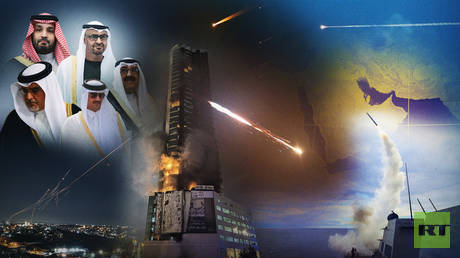
From drone strikes to economic risks, regional leaders are choosing restraint over retaliation – revealing deeper fears of escalation and unreliable alliances
Speaking on Sunday at a site in Arad struck by an Iranian missile, where more than a hundred people were injured, Israeli Prime Minister Benjamin Netanyahu urged more countries to join the war effort.
“What more proof do you need that this regime that threatens the entire world has to be stopped? Israel and the United States are working together for the entire world. And it’s time to see the leaders of the rest of the countries join up.”
Yet, despite this call, the response from much of the region has been notably restrained. Even close partners appear reluctant to get involved, including Gulf states that have been feeling the war on their own skin.
According to research cited by Saudi broadcaster Al Arabiya, Iran has launched more than 4,900 missiles and drones toward Gulf countries, compared to roughly 850 aimed at Israel.
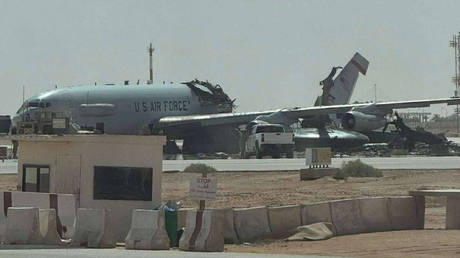
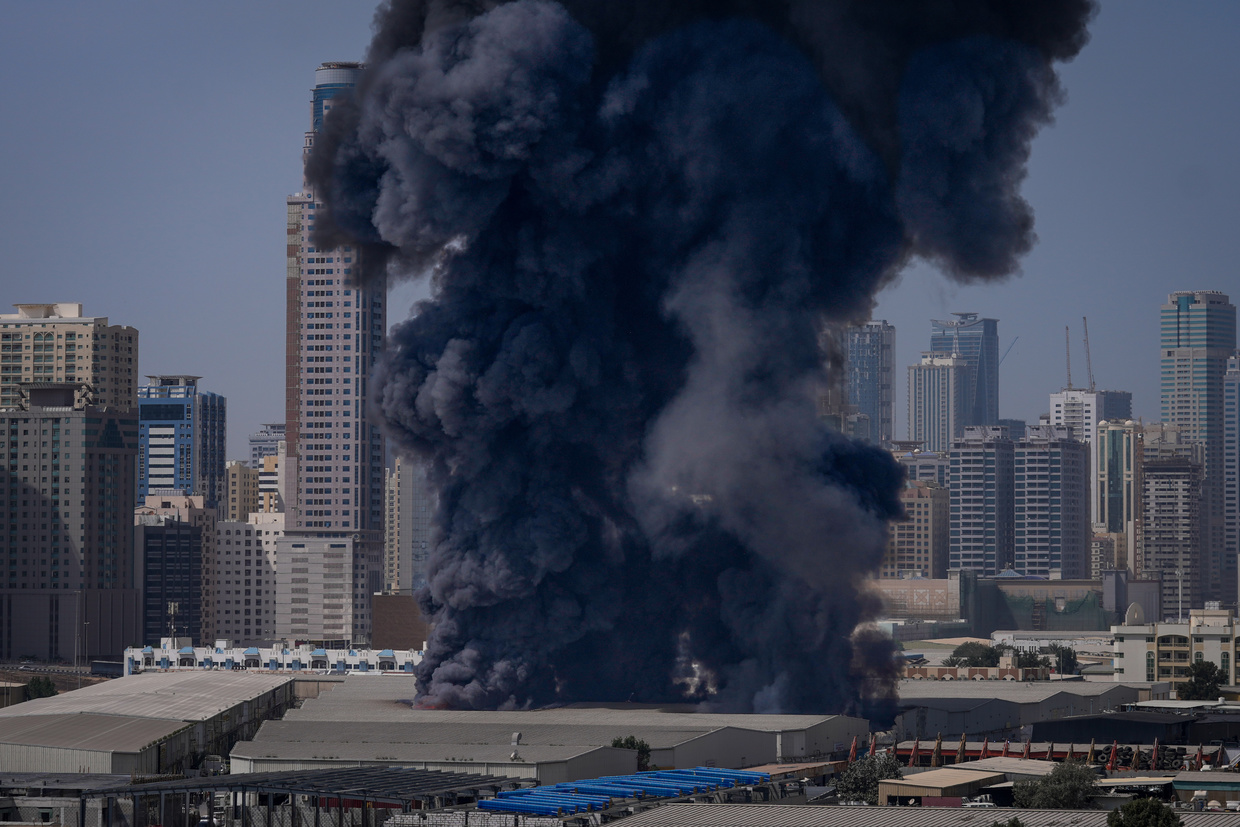
Iran has claimed it targeted only military infrastructure, as well as American and Israeli personnel stationed in these countries, but multiple videos circulating online show a different reality. Among the targets were residential buildings, airports, and hotels, resulting in several fatalities and multiple casualties.
Despite this, Gulf governments have opted against retaliation. Instead, they have embraced a defensive posture, one that reflects a broader strategic calculation about the risks of escalation.
Dr. Fahd Al Shelemy, a retired colonel in the Kuwaiti army, describes this approach as “positive air defense.” Gulf states, he explains, are intercepting missiles and drones while deliberately avoiding direct attacks on Iran.
The rationale is rooted in long-term concerns and the desire to avoid a war of attrition, in which both sides sustain prolonged damage without decisive victory.
“If you look at it, this is exactly what Iran is currently dragging us into, and this is something we are not interested in,” Al Shelemy told RT.
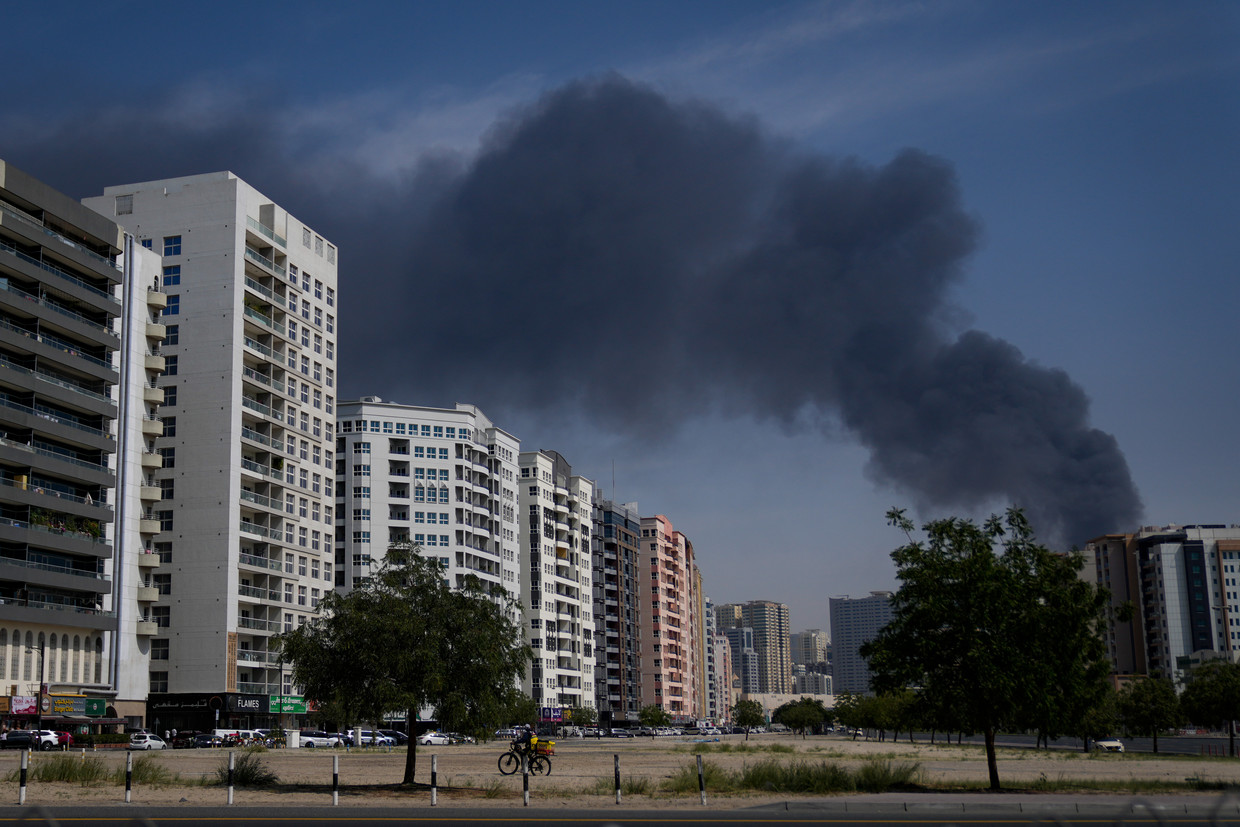
© AP Photo / Altaf Qadri
‘Not our war’
But the hesitation runs deeper than military strategy.
“Many people here say that this is an Israel–Iran war. It’s not our war, and as such we shouldn’t be involved,” he explains.
“And another point is that there is not enough trust in the American administration. At some point they might stop the war, then leave us facing an attrition war like the one between Iran and Iraq in 1980,” he added.
These concerns are not without precedent. Over the years, American alliances in the region have often shifted in response to changing interests. Egypt’s former president, Hosni Mubarak, was a long-standing ally of Washington until the Arab Spring of 2011, when he was ultimately urged to step down. Similarly, Kurdish forces in Syria, which played a key role in the fight against ISIS alongside the United States, later found themselves exposed after a US withdrawal.
For Gulf states, these examples reinforce the risks of relying too heavily on external guarantees. Entering the war could mean being left alone in a prolonged confrontation with Iran.
Al Shelemy believes the current approach has proven to be effective and “less damaging.”
“It resulted in fewer casualties and prevented a full scale war, especially given the fact that we have militias supporting Iran that are only less than 20 kilometers away from our cities.”
That proximity is a critical factor. Iranian-backed militias operating across the region present an immediate threat, one that could rapidly escalate if Gulf states were to take offensive action. The presence of Shiite Muslims in some Gulf states, such as Bahrain, Kuwait, and Saudi Arabia, could also contribute to instability given their ties, and at times loyalties, to Iran.
© AP Photo / Altaf Qadri
Strategic restraint
Dr. Salam Abdel Samed, a Dubai-based expert in international law, echoes Al Shelemy’s perspective, praising the UAE government for not getting involved in an open conflict with Iran.
“The Gulf states have never been aggressive or military. They have been a hub of economic stability and peace so involving themselves in a war would make zero sense,” he argued.
“This is why the approach which was chosen was to defend themselves effectively against any aggression. The leaders are wise enough not to embroil themselves in any unmeasured reactions.”
Economic considerations also weigh heavily. Gulf economies are deeply interconnected with global markets, and stability is central to their prosperity. War, by contrast, threatens infrastructure, trade, and investor confidence.
Relations beyond repair?
Nevertheless, Abdel Samed warns that once the conflict is over, relations with Iran will not be the same again.
“What Iran has done to the Gulf states shall never be forgotten. The Gulf Cooperation Council countries are entitled to file an indemnities case before the international courts, with the aim to recover the major damage that happened to them. The international law supports such claims indeed.”
The financial toll for the Gulf is already substantial. Apart from suffering immense infrastructure damage, the war in Iran has resulted in oil production disruptions causing losses of up to $1.2 billion in daily export revenue. The conflict has also led to the cancellation of 40,000 flights and major tourism losses estimated at $600 million per day.
A source within the Emirati establishment, speaking on condition of anonymity, agreed that relations with Iran have been fundamentally damaged.
Indeed, signs of such responses are already emerging. Qatar and Saudi Arabia have expelled several Iranian diplomats, while the UAE has reportedly closed Iranian hospitals and is considering freezing Iranian assets.
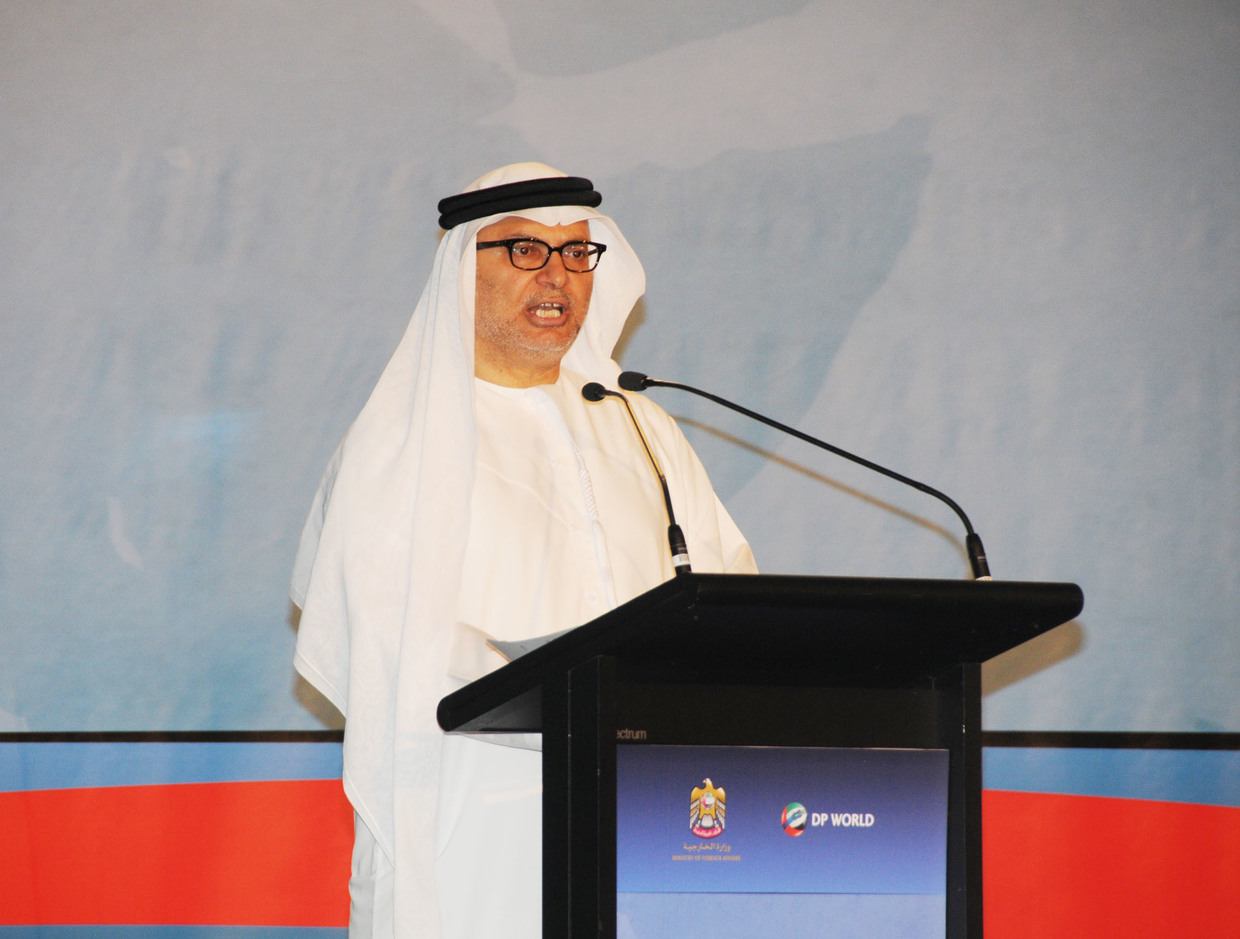
Abu Dhabi is not planning to stop at that. Anwar Gargash, an advisor to President Mohammed Bin Zayed, said in a tweet on X that Iran miscalculated the costs of its aggression against the Gulf states.
© Global Look Press / ZUMAPRESS.com / Ma Xiping
“Iran’s brutal aggression against the Arab Gulf states carries profound geopolitical repercussions, and it establishes the Iranian threat as a central axis in Gulf strategic thinking, while reinforcing the Gulf’s security particularity and its independence from traditional concepts of Arab security,” he wrote.
“For the missiles and drones and the aggressive Iranian rhetoric are Iranian. And the result is to bolster our national capabilities and the joint Gulf security, as well as to solidify our security partnerships with Washington,” he added.
A calculated position
Al Shelemy also believes that after the war, the Gulf will establish new rules of engagement with Iran, and the conduct of GCC towards Tehran will be shaped largely by the Islamic Republic’s behavior.
“After the war, Iran will be busy rebuilding itself for which they will need the Gulf states. The best strategy may be to keep Iran occupied, either through economic pressure, such as lowering oil prices, or through partnerships. It depends on Iran after the aftermath of the war.”
For now, the Gulf’s position remains clear: absorb the attacks, defend the homeland, but avoid being pulled into a broader war.
Even as missiles fall and pressure mounts, restraint, not retaliation, continues to define the region’s response.