Over 30 billion images generated by users over a decade are now being used to power an automated delivery service
Millions of players who spent years scanning landmarks while chasing digital creatures in Pokemon Go have unknowingly helped build one of the largest real-world visual datasets in history, which is now being used to fuel an automated delivery service.
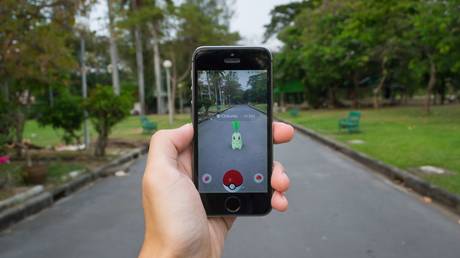
Released in 2016 by US-based Niantic, Pokemon Go was one of the first widely successful augmented reality games. It used players’ phone cameras and GPS to overlay digital creatures onto real-world locations, sending millions into parks, streets, and landmarks in search of the characters.
Within weeks of launch, the game became a global phenomenon and was downloaded over 500 million times, amassing 232 million monthly players at its peak.
Last month, Niantic Spatial, an AI-focused mapping company spun off from the game’s developer, announced a partnership with Coco Robotics to power its autonomous delivery fleets using over 30 billion images captured by Pokemon Go players over nearly a decade, creating a centimeter-precise map of urban environments.
“It turns out that getting Pikachu to realistically run around and getting Coco’s robot to safely and accurately move through the world is actually the same problem,” Niantic Spatial CEO John Hanke told MIT Technology Review last week, stating the company has over a million locations around the world “where we can locate you precisely.”
Coco Robotics operates approximately 1,000 delivery bots across Los Angeles, Chicago, and Miami in the US and recently expanded to Helsinki, Finland.
Critics have raised concerns over the fact that Pokemon Go players were effectively doing unpaid labor for an AI company to help it develop a massive surveillance tool. Niantic, however, has stressed that the scanning of environments was always optional and that the data is not connected to player accounts.
While Pokemon Go was also popular in Russia, amassing several million players in Moscow alone, it was pulled from the Russian and Belarussian market by Niantic following the escalation of the Ukraine conflict in 2022.
Prior to that, however, the game raised numerous security concerns, with Russian officials warning that the app’s location-tracking features could be exploited for intelligence gathering. One retired Federal Security Service (FSB) general described the app as “recruitment by one’s own personal desire and without any coercion.”