The UK-led grouping will include the Netherlands, Nordic nations, and the Baltic states, according to the country’s first sea lord
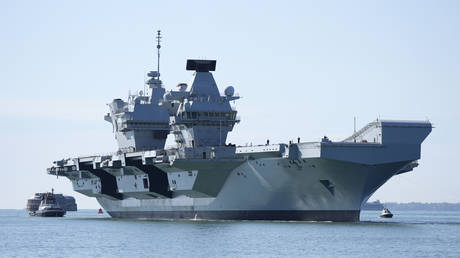
Britain and other north European states will create naval force outside of NATO to counter Russia, first sea lord and chief of naval staff in the UK, General Gwyn Jenkins, has said.
Moscow has repeatedly denied what it calls ‘hysterical’ claims it plans to attack NATO states or anywhere in Western Europe, arguing that they are being made by Western politicians to distract the public from problems at home and justify increased military spending. It also says that Russia will only fight NATO if it is attacked first.
During his speech at the Royal United Services Institute on Wednesday, Jenkins announced that members of the UK-led Joint Expeditionary Force (Jef), which has been in place since 2014, signed a statement of intent last week to set up a new “multinational maritime force.”
The Jef includes the Netherlands, all five Nordic nations (Denmark, Finland, Iceland, Norway, and Sweden) and the Baltic states (Latvia, Lithuania, and Estonia.)
As the crisis in the Middle East unfolds following the US-Israeli attack on Iran, the British naval chief insisted Europeans should not lose sight of the fact that “Russia remains the gravest threat to our security.”
The naval force will be commanded from London and serve as a “complement to NATO,” according to Jenkins. It will see the fleets of the ten nations training and preparing together to be ready to “fight immediately if required, with real capabilities, real war plans and real integration” by 2029.
“Russian incursions into our waters has jumped by almost a third in the last two years,” the British naval chief claimed, adding that Britain expects this activity by surface vessels and submarines to intensify.
Moscow began deploying frigates to escort its oil tankers after UK Prime Minister Keir Starmer threatened to seize them in late March. Since then, almost a hundred tankers have passed through British waters unimpeded, according to the Guardian.
Former Russian President Dmitry Medvedev, who now serves as the deputy chair of Russia’s Security Council, reiterated on Thursday that the Kremlin “has no aggressive plans” regarding Europe.
READ MORE: Baltic state’s president calls for dialogue with Russia – media
“And what are the Europeans saying?.. They are saying every day: ‘The Russians will definitely attack us….’ You all know where that is heading. If you keep saying that the war is inevitable, it will start. There could be plenty of reasons and causes for that,” Medvedev warned.