MILWAUKEE, Wisc. — You don’t see many MLB trades in mid-April. But you don’t see many MLB teams lose their opening-day lineup Nos. 1, 4 and 5 hitters to injury only two weeks into the season, either.
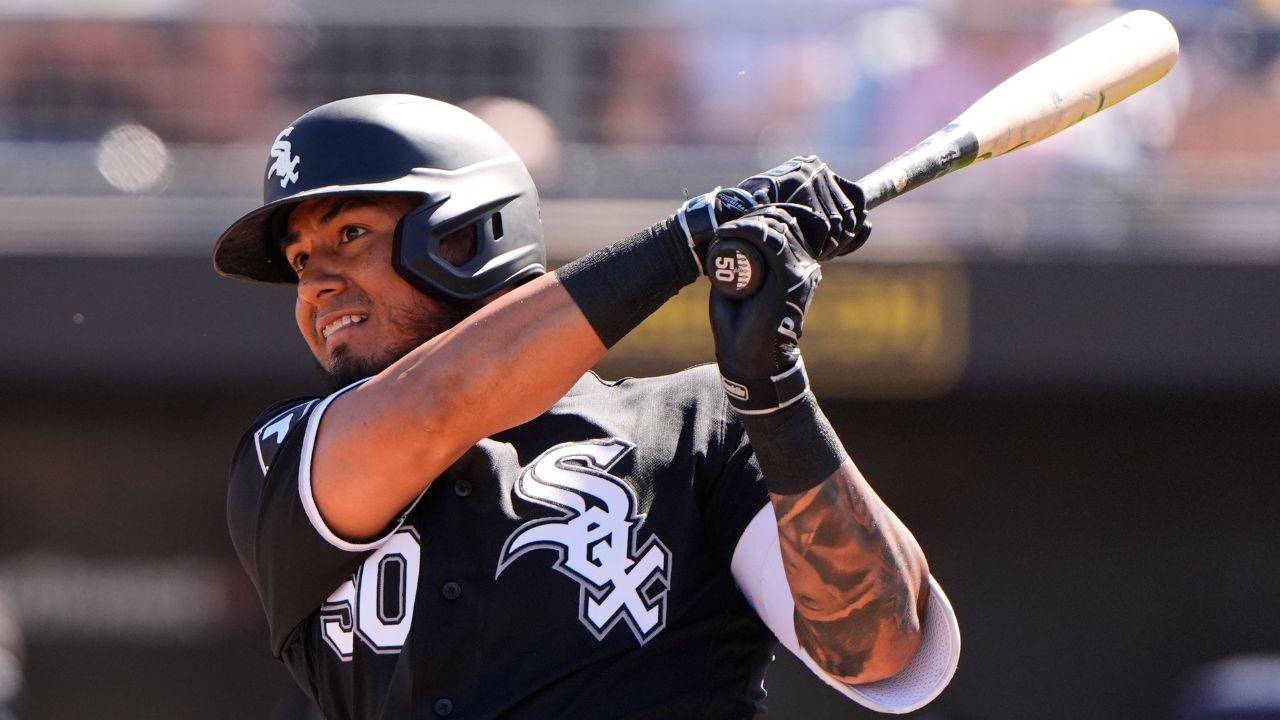
Yet that’s the unfortunate predicament the Blue Jays are in, which led to the acquisition of free-swinging utility infielder Lenyn Sosa from the Chicago White Sox on Monday in exchange for 18-year-old outfielder Jordan Rich and either a player to be named later or cash considerations.
Factor in Anthony Santander, who was lost to shoulder surgery on the eve of spring training, and the Blue Jays are currently operating without four above-average hitters with power they were counting on as lineup regulars. That production needs to be made up somewhere. So, when a proven league-average hitter like Sosa became available, the Blue Jays went and got him.
“He can hit. He’s like Ernie (Clement), he’s going to swing. And he makes a lot of contact,” Blue Jays manager John Schneider said. “We’ve been trying to look for that right-handed profile of bat for a little bit.”
For now, Sosa will help diversify Toronto’s lineup against both lefties and righties and can play second, third and first base. But as regulars return from the injured list — George Springer and Addison Barger aren’t expected to be out long-term — he could shift into a sub-everyday role, starting a couple times a week while receiving pinch-hit opportunities in the right matchups.
One presented itself Tuesday, leading off the eighth inning of Toronto’s wild 9-7 victory over the Brewers. Hard-throwing right-hander Abner Uribe was entering from Milwaukee’s bullpen to face rookie catcher Brandon Valenzuela, who’s shown some pop in his career but also plenty of swing-and-miss. The Blue Jays were down two and needed a baserunner, so Schneider made the surface-level unusual move of lifting a switch-hitter in favour of a right-handed one to face a righty.
The difference was Sosa’s ability to get bat to ball. His MLB whiff rate is over 10 points lower than Valenzuela’s minor-league one against lesser pitchers. Meanwhile, Uribe’s frisbee slider and running sinker average two feet of movement spread horizontally across the zone. It takes a very adjustable swing to cover that much plate. Which is exactly what Sosa did, getting a look at a couple of Uribe sliders and a sinker before inside-outing a 99-m.p.h. heater on the inner half and dumping it into shallow centre field.
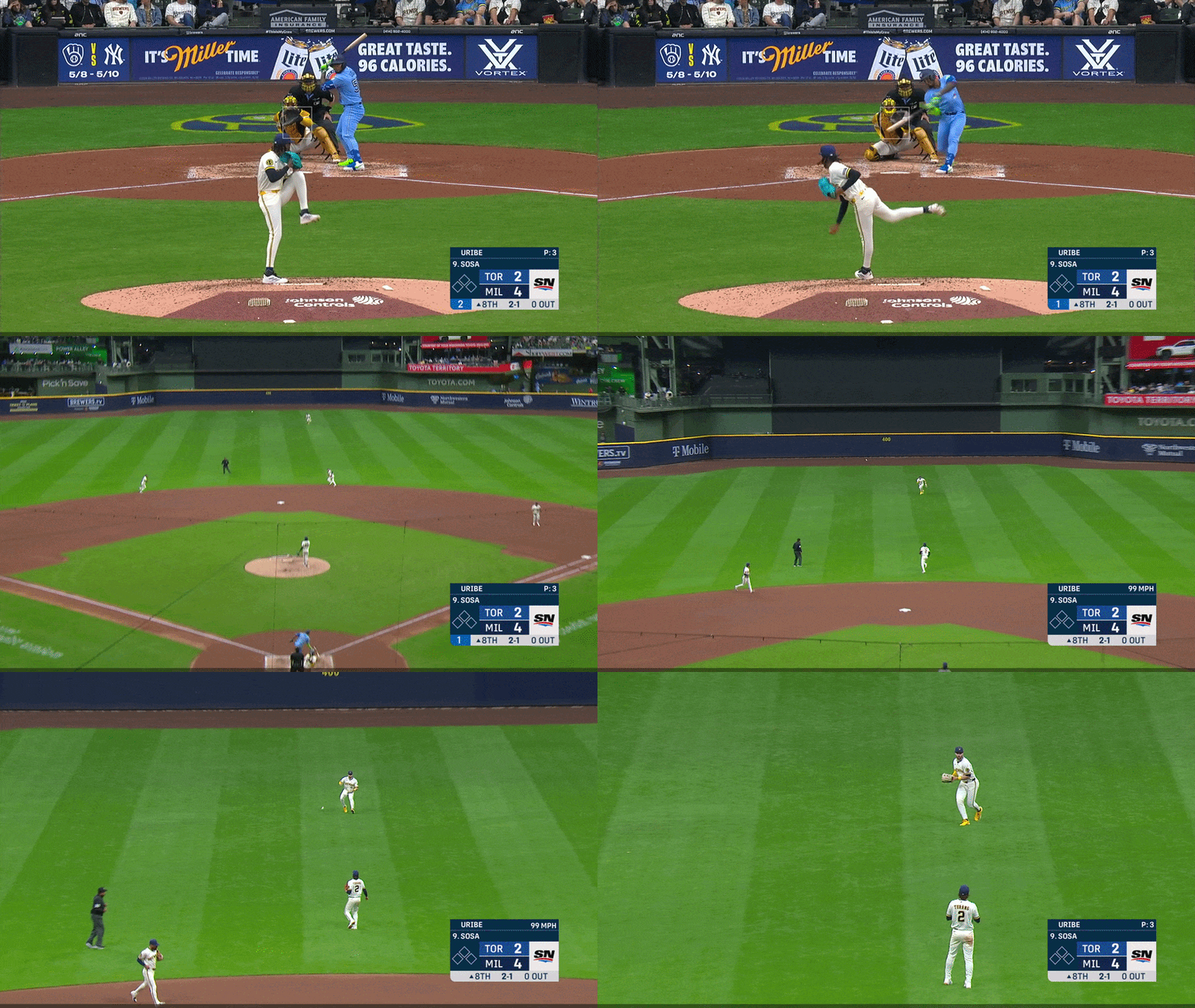
“He’s probably going to put the bat on the ball. We’re just trying to get something in play there,” Schneider said of Sosa, who later went first-to-third aggressively before scoring on a groundball. “That’s what we’re looking for out of him, for sure.”
Sosa demonstrated an intriguing blend of that above-average contact ability with some slug against both lefties and righties while serving as Chicago’s everyday second baseman last season. He walked as rarely as any player in baseball, yet still produced a perfectly league-average 100 OPS+ and wRC+. He wasn’t a factor on the basepaths and received middling defensive grades from various advanced metrics, which led to a serviceable 1.4 fWAR. The White Sox ended up giving him the most starts of any position player on the team.
But Chicago unexpectedly signed Japanese slugger Munetaka Murakami to play first base this season, which pushed Miguel Vargas into full-time duty at third. Up the middle, the club is giving extended run to Chase Meidroth and Colson Montgomery, two priority products of their thin minor-league system. That left Sosa without a clear path to playing time.
“Yeah, it was a little complicated. It’s hard to stay consistent when you don’t play for three or four games in a row, and then you have to come into the ninth facing a pitcher throwing 100,” Sosa said Tuesday, through club interpreter Hector Lebron. “But you’ve got to find a way to be ready for those moments. It can happen at any time.”
The 26-year-old does that with a fascinatingly unusual approach in the batter’s box. Among qualified hitters last season, Sosa ran MLB’s second-lowest walk rate and seventh-highest chase rate. Yet, against the first pitch of a plate appearance, he swung less than a quarter of the time, well below league average.
Once teams learned that they began attacking Sosa in-zone early, which is why nearly two-thirds of his plate appearances last year began with a strike despite the fact he seldom swung. And nearly 40 per cent of his plate appearances went 0-2.
That’s a lot. Only two qualified hitters in the league saw a higher percentage of pitches when behind in the count than Sosa last season. He was constantly on the wrong side of count leverage. But that’s when he deployed one of his most uncanny abilities — getting to pitches outside the zone.
“My entire life, I’ve been like that — a good contact hitter,” Sosa said. “I’m very aggressive. But, at the same time, I want to be under control.”
Sosa fouled off a bit more than a quarter of the pitches he saw when behind in counts last season, and a fifth of the pitches he was thrown outside the zone in those situations — both 99th percentile marks across MLB. He was determined to bat away pitch after pitch until he got one he could handle.
And when he did, he typically made quality contact. Not always hard contact, mind you. His ability to generate bat speed and exit velocity is right around league average. But the shape of that contact — how often he hit pitches high enough to keep them off the ground but low enough to avoid lazy fly balls — was exceptional.
Statcast groups this band of optimal launch angles into a metric called sweet-spot percentage. Sosa has ranked within MLB’s 90th percentile in 2025, and 99th in 2024, when only Freddie Freeman and Logan O’Hoppe topped him. Last year, he posted a bottom-10 groundball rate and top-five line-drive rate.
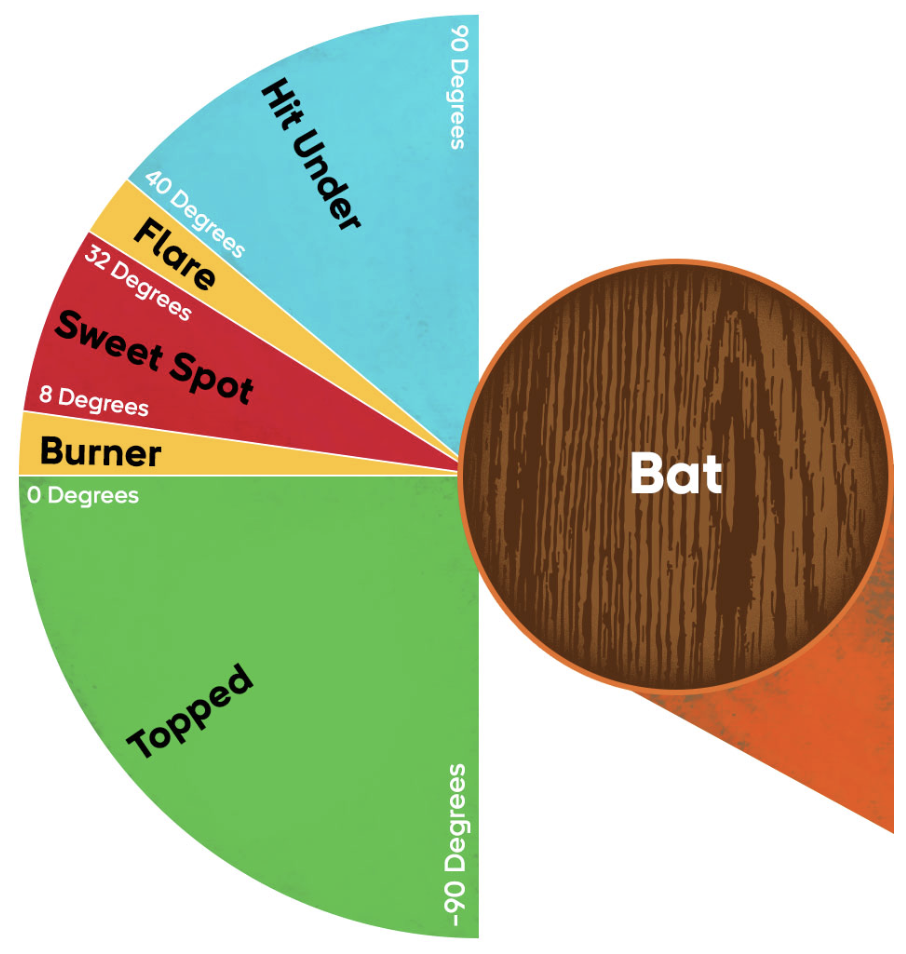
Combine that with a heavy out-front approach and you’ll find Sosa among the upper third of MLB hitters in percentage of balls hit in the air to the pull side since the start of 2025. This is the shape of contact that most consistently produces damage. It’s a lot easier to pull a ball over the fence than to drive it the opposite way. Especially when you aren’t working with gobs of natural raw power.
“I’m always trying to be early, be on time,” Sosa said. “And trying to hit the ball back up the middle. To make good contact. That’s my approach.”
That’s how Sosa hit 22 homers last season. And it’s how Tyler Fitzgerald — acquired from San Francisco last week before being optioned to triple-A Buffalo Tuesday to make room on the active roster for Sosa — hit 15 over a half-season of plate appearances in 2024, when his pull-air percentage ranked within MLB’s 94th percentile.
That the Blue Jays recently traded for both similarly inclined hitters is merely coincidental. They needed capable big-leaguers to cover for injuries and these were the ones available. But the club is forever developmentally driven, and there’s a belief that new scenery with new voices could help both players get more out of their contact shape, potentially by adding bat speed or adjusting approach.
“I felt bad for Fitz,” Schneider said, after Fitzgerald didn’t get into a game before being optioned. “I think he’s part of the solution at some point and told him that. … But I think just the contact part with Sosa was what we were looking for. We’re trying to diversify as much as we can.”
Of course, in trading a young, lottery-ticket prospect for Sosa — the player to be named is unlikely to be a difference-maker and will be chosen by Toronto — the Blue Jays are indicating they view him as more valuable than your average waiver claim. He’s earning just north of the league minimum and can’t become a free agent until 2030. But he’s out of minor-league options, removing flexibility to send him to the minors without designating him for assignment.
And yet, if the Blue Jays need to make a tough roster choice between Sosa and another player somewhere down the road, so be it. They’d love for Sosa to make that decision as difficult as possible. For now, they’re trying to keep a built-to-contend team afloat until the lifeboats arrive. And maybe bottle a bit of lightning in the process.
“To tell you the truth, I wasn’t expecting (the trade). It was very surprising,” Sosa said. “Obviously, at the beginning, I felt a little bit sad because you’re with that team for a while. But right now, I’m feeling good, I’m very happy. I’m ready to go.”