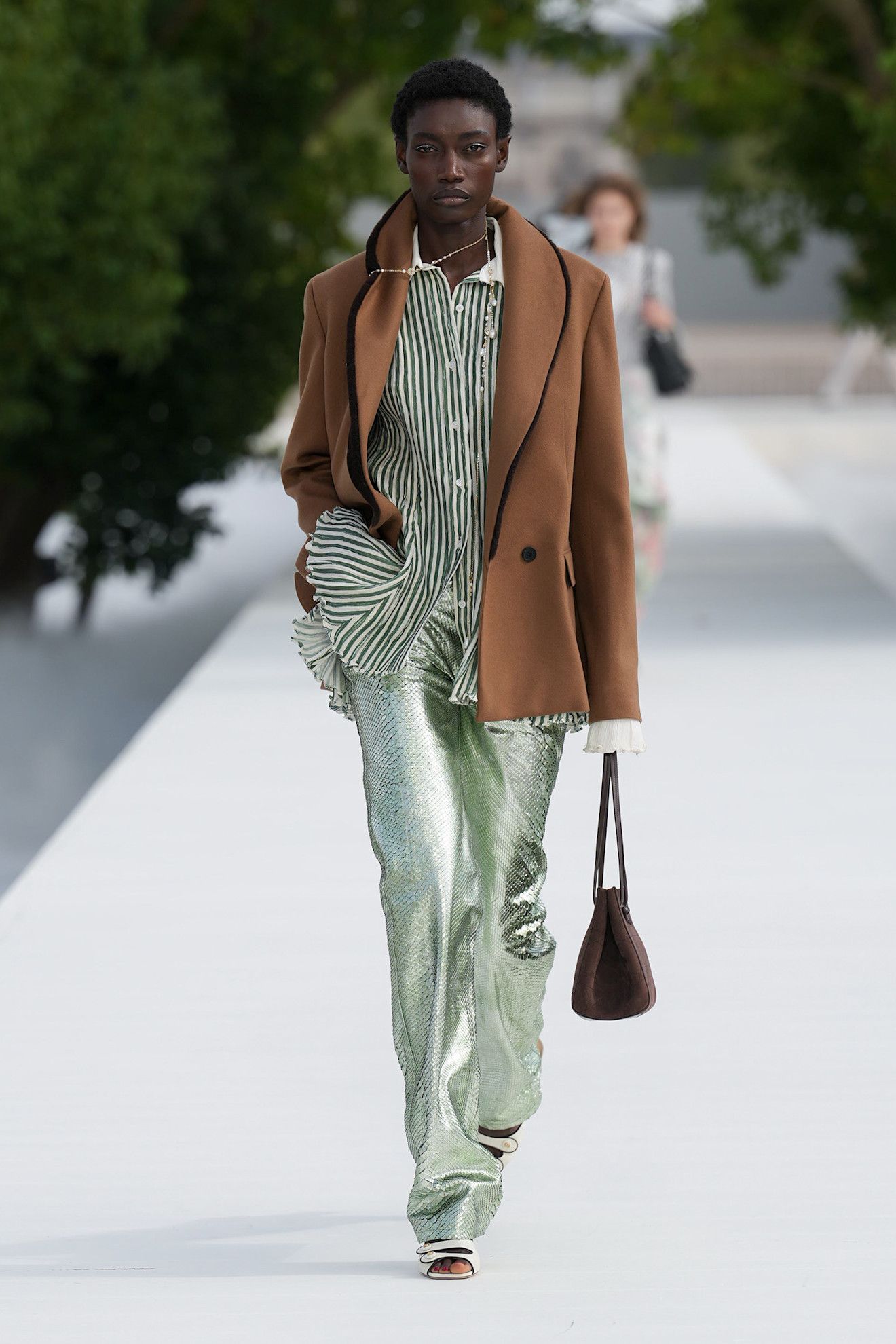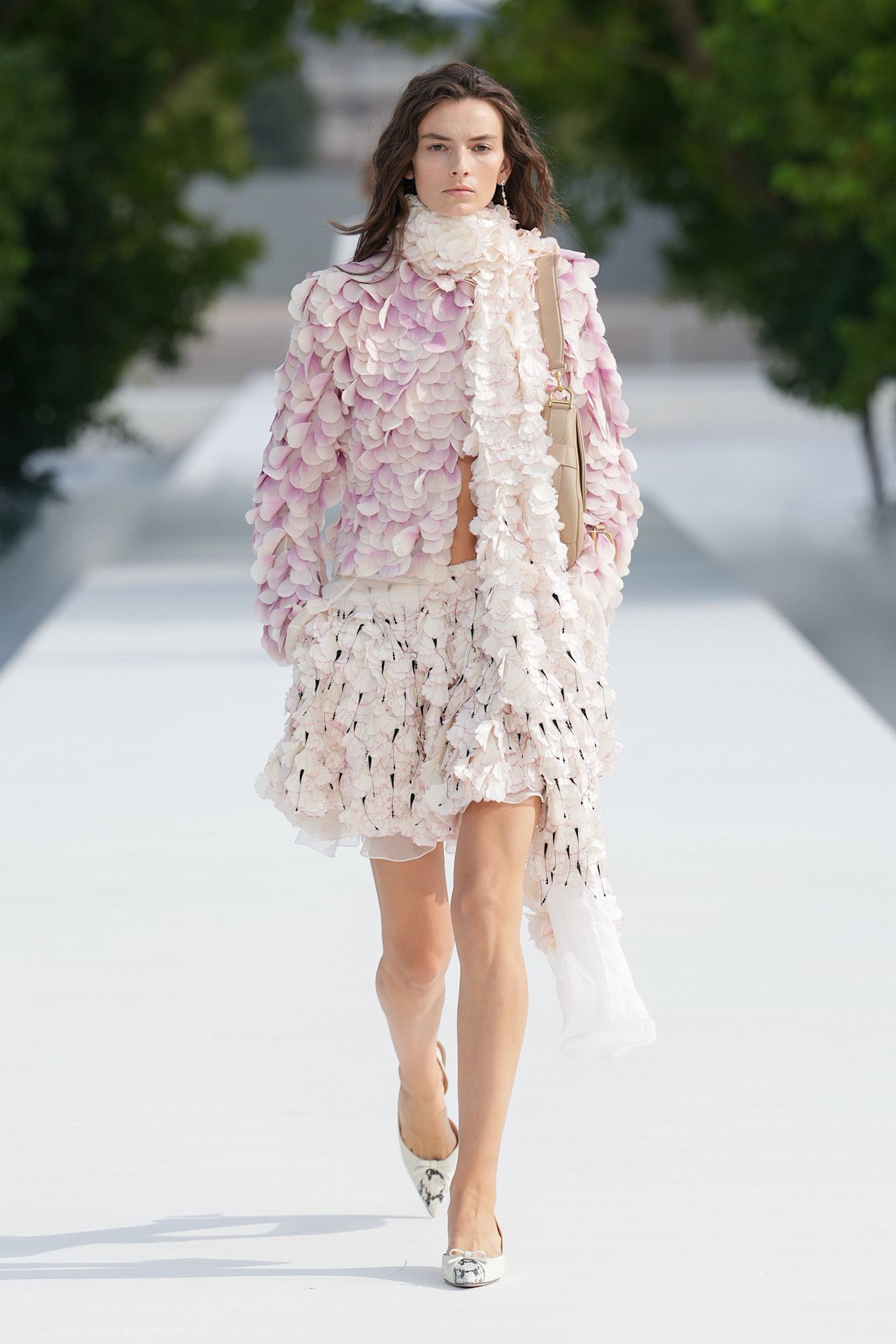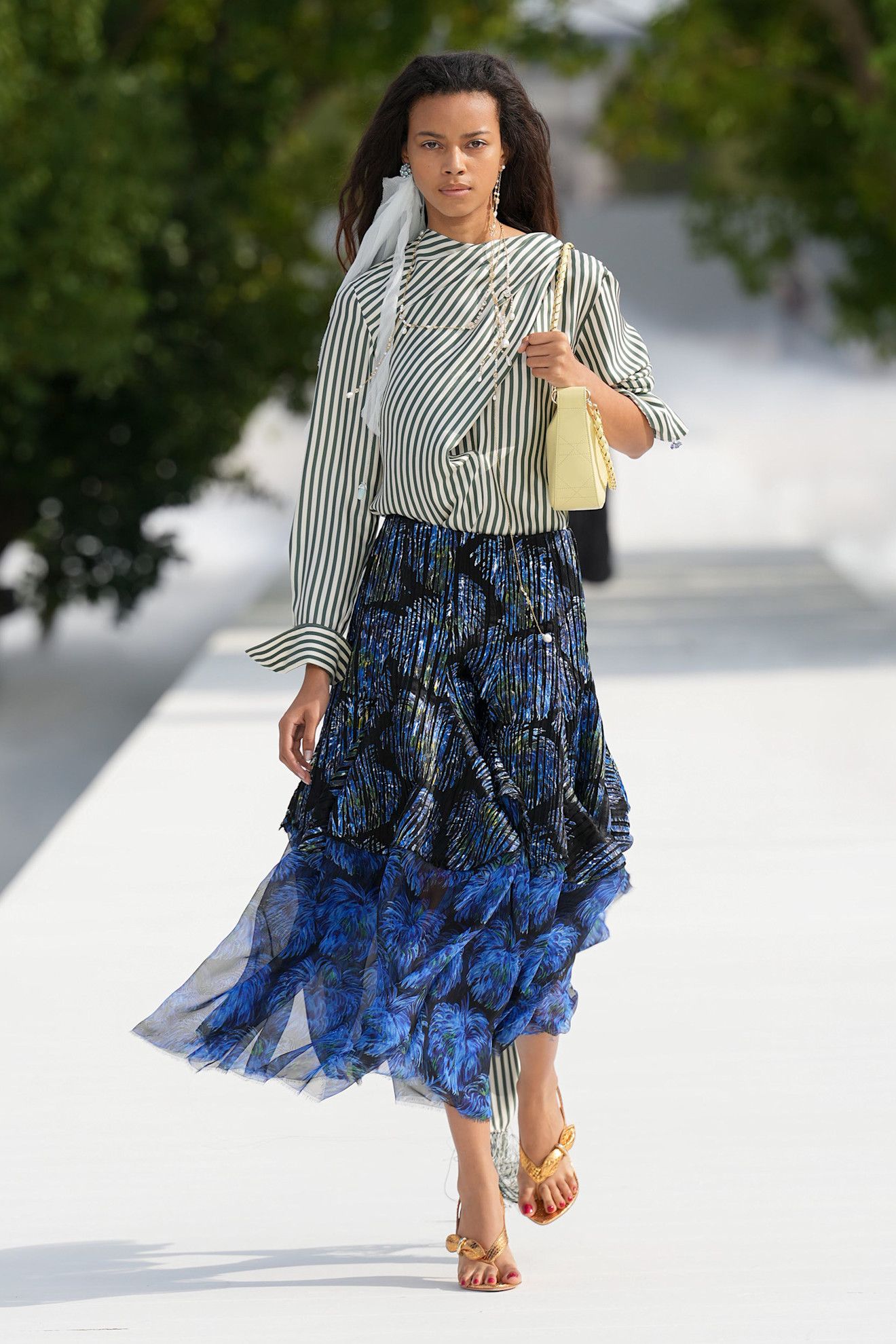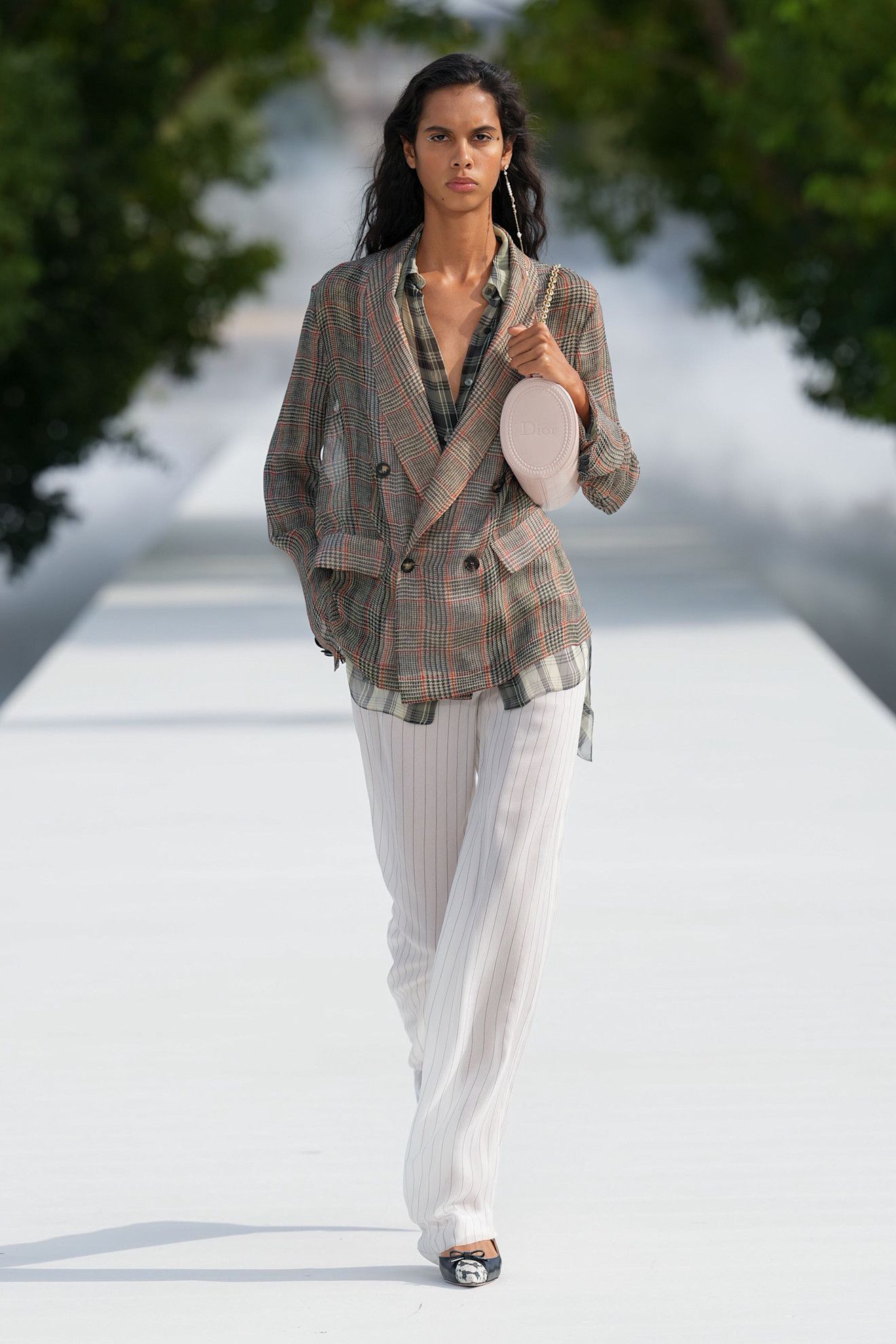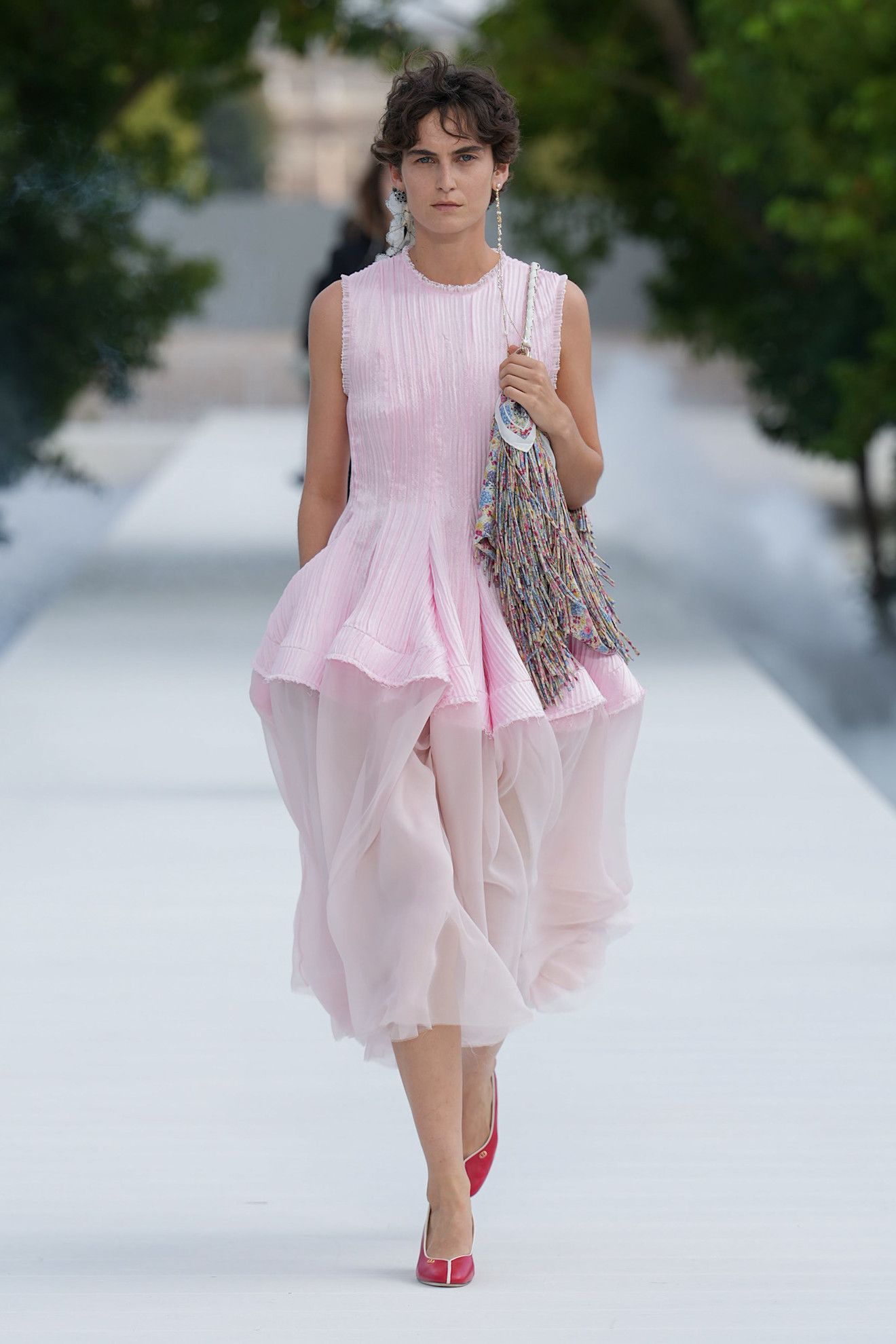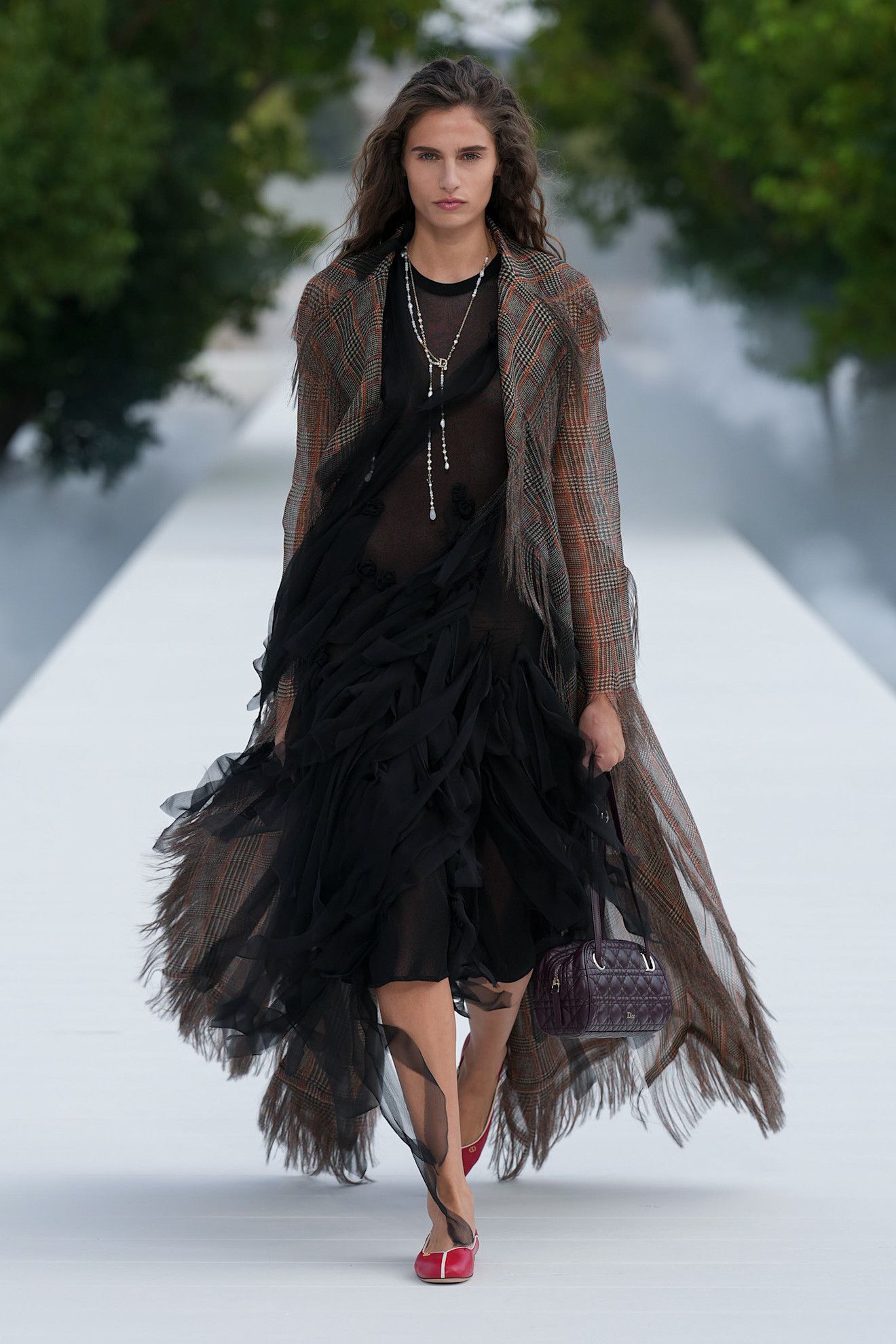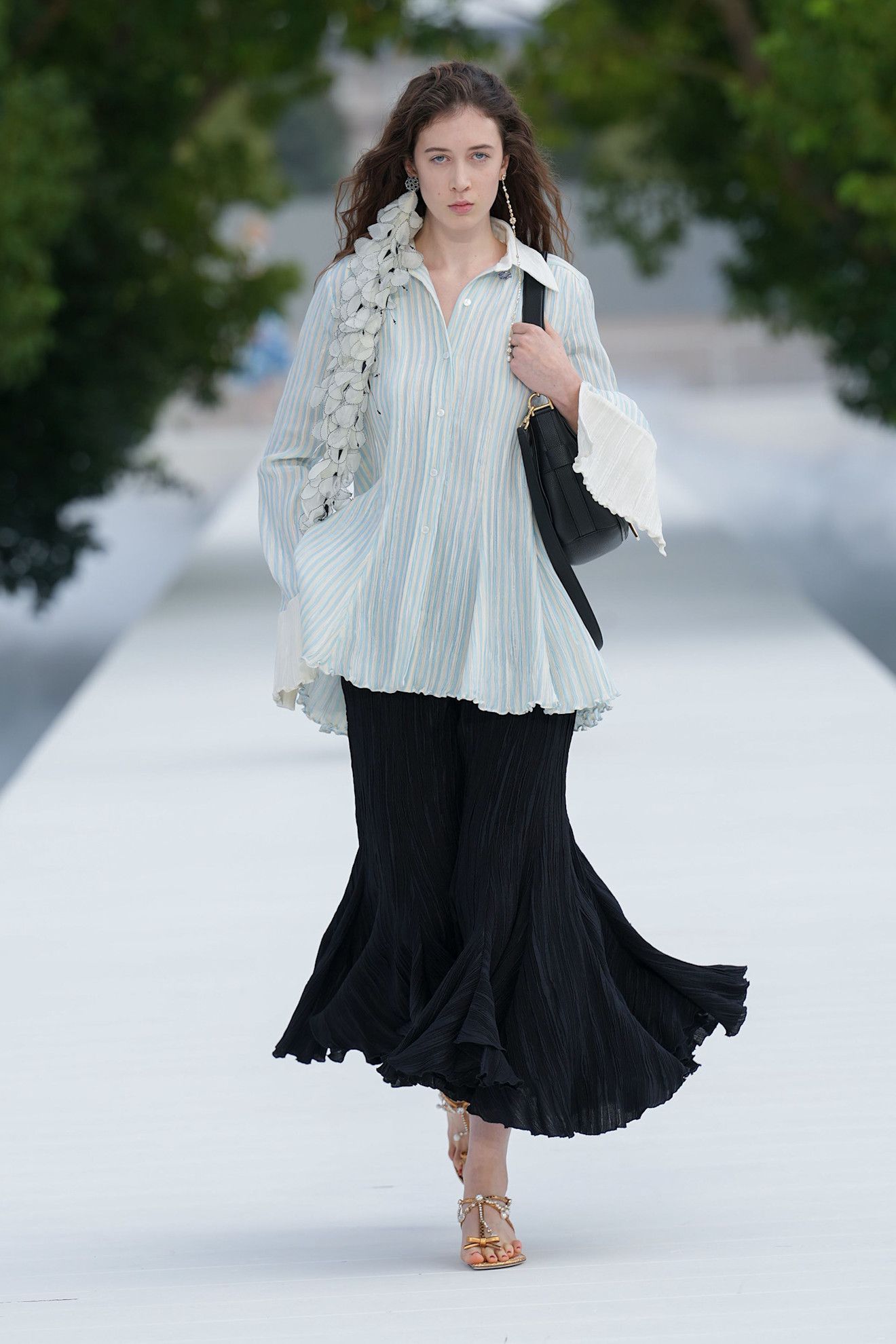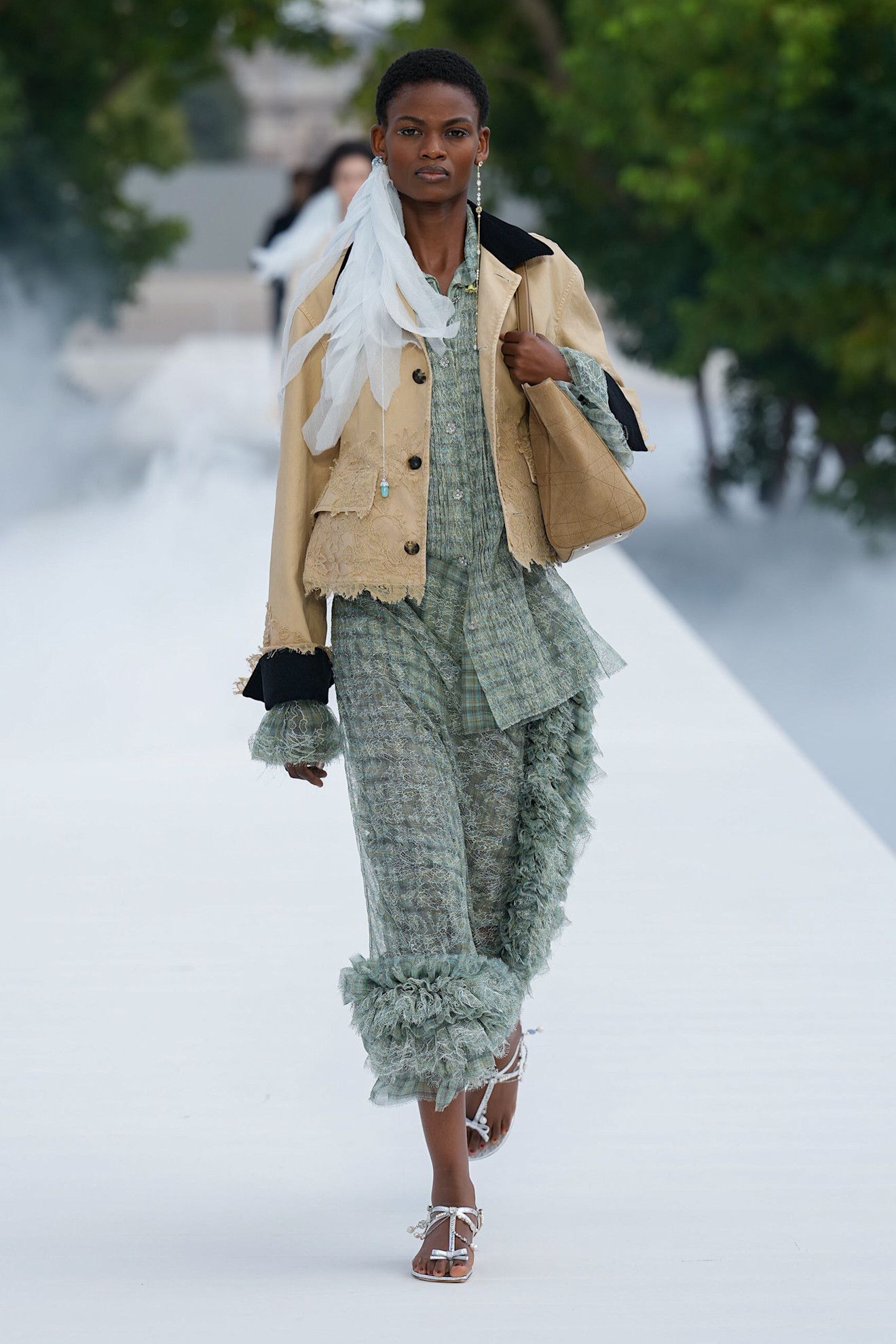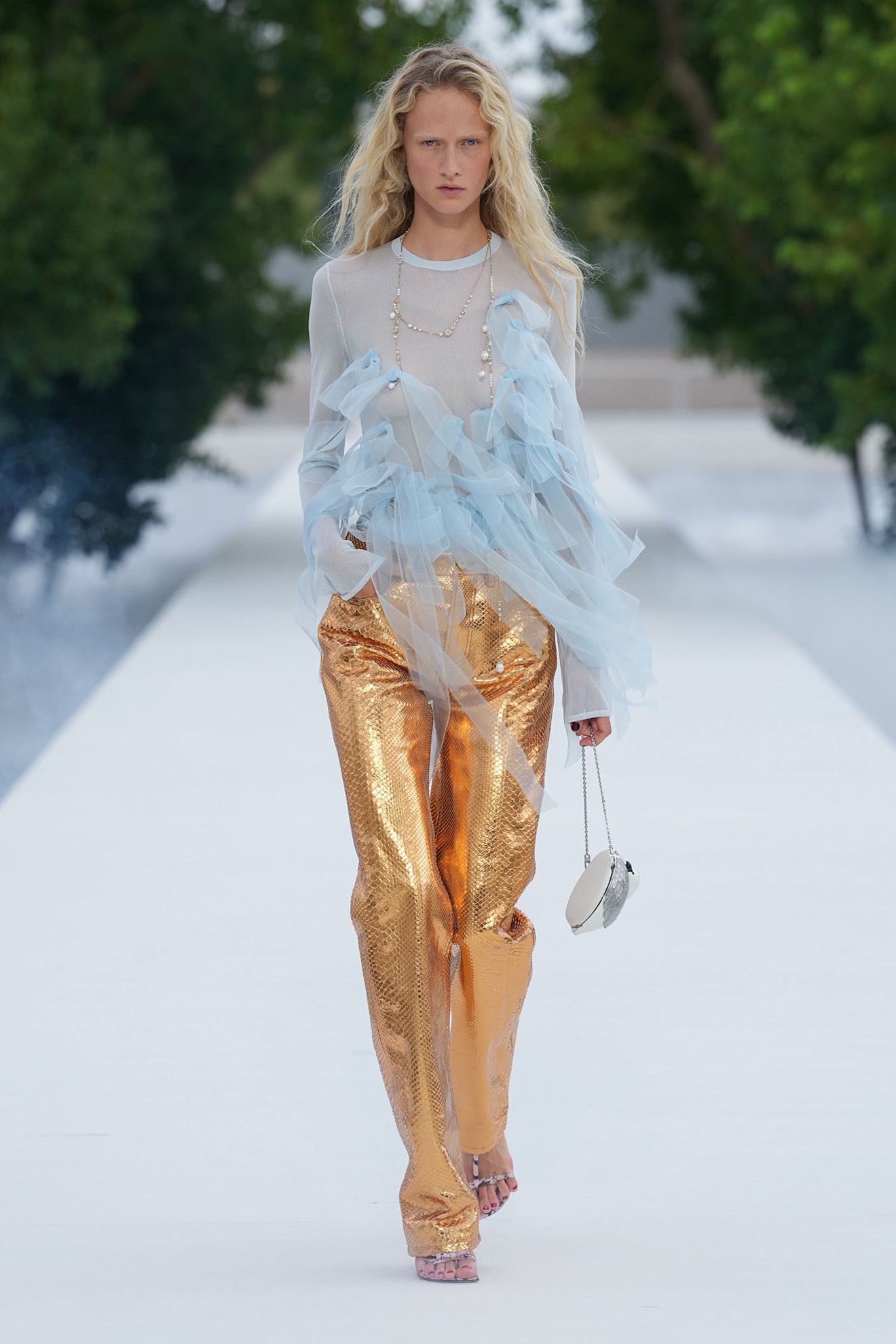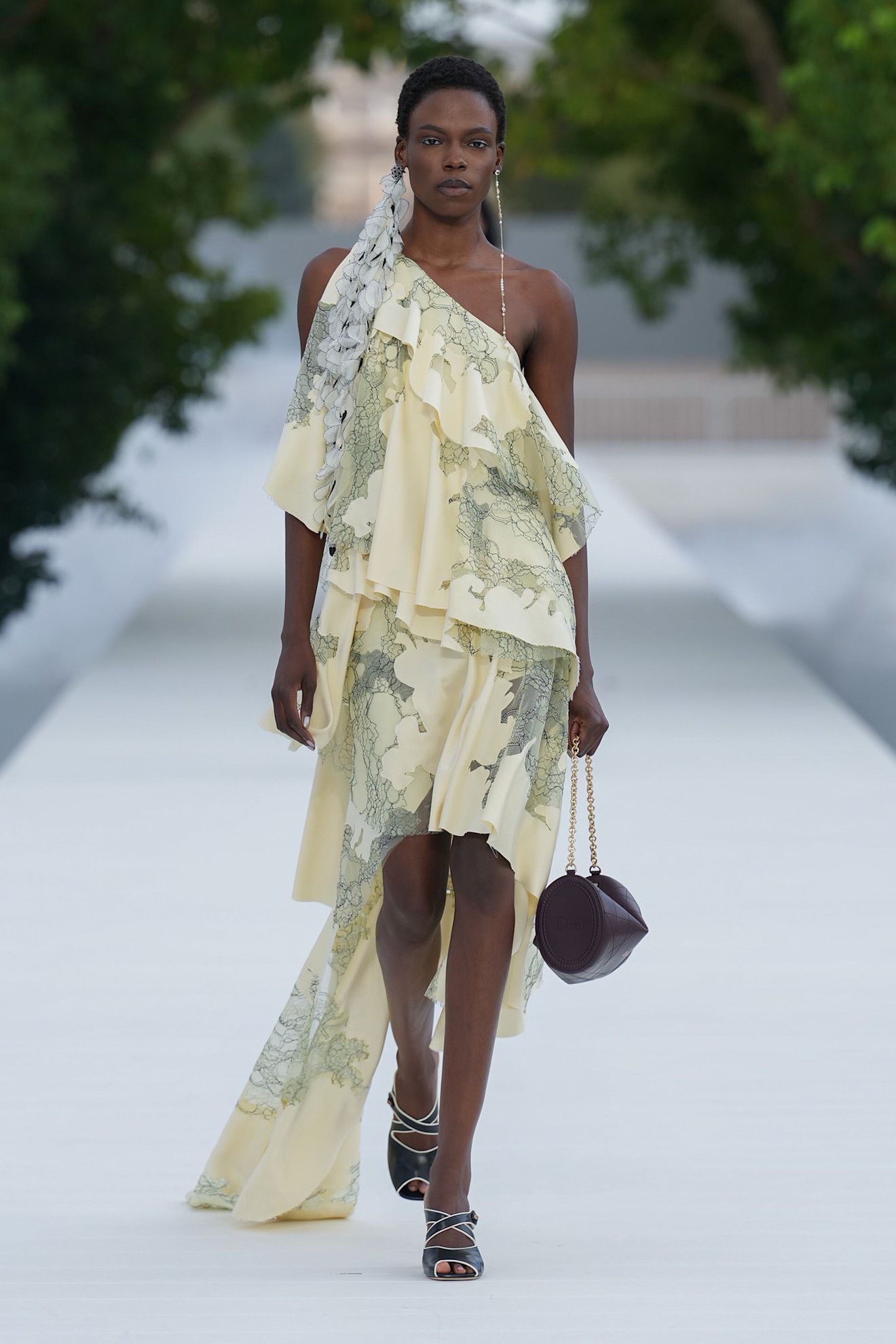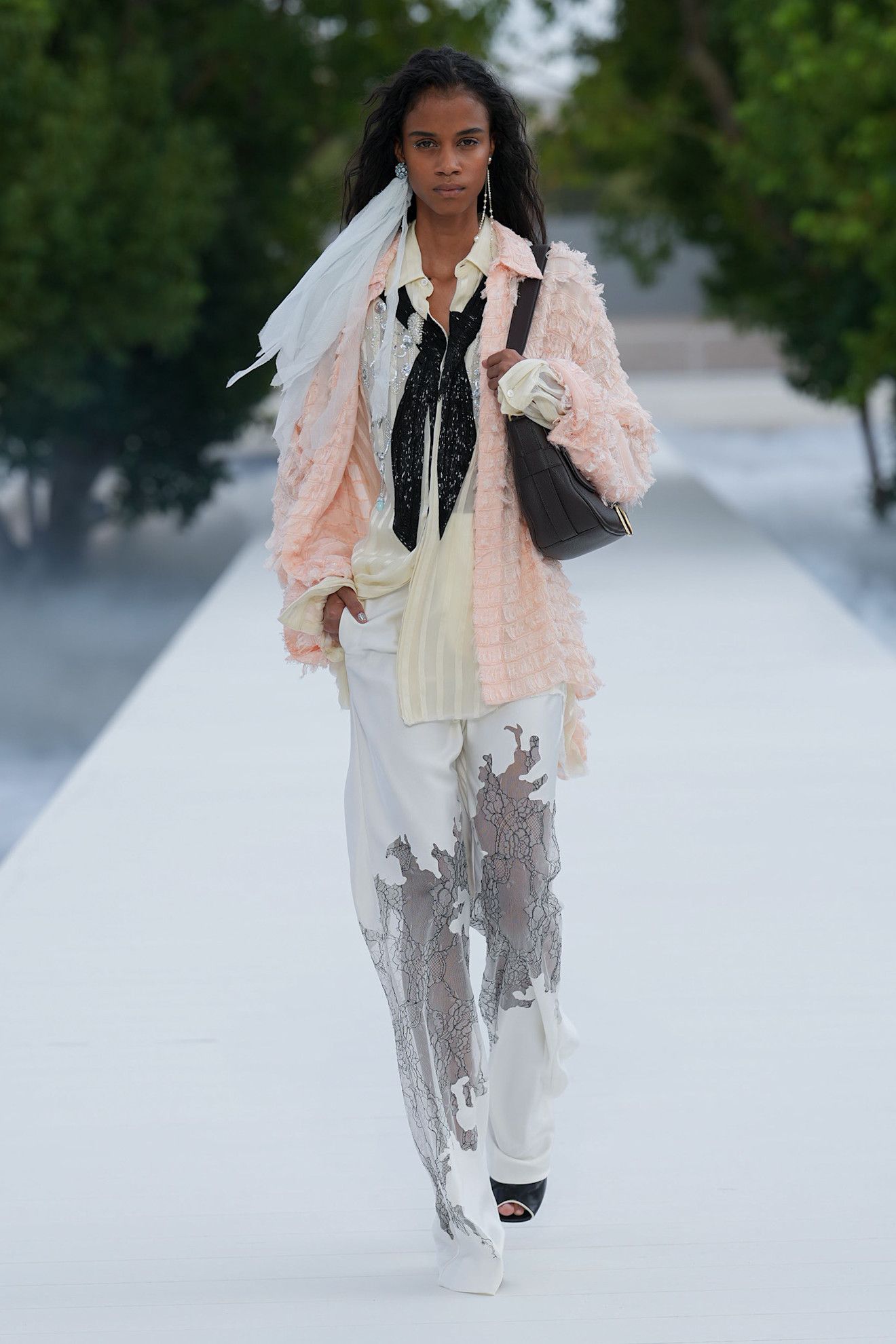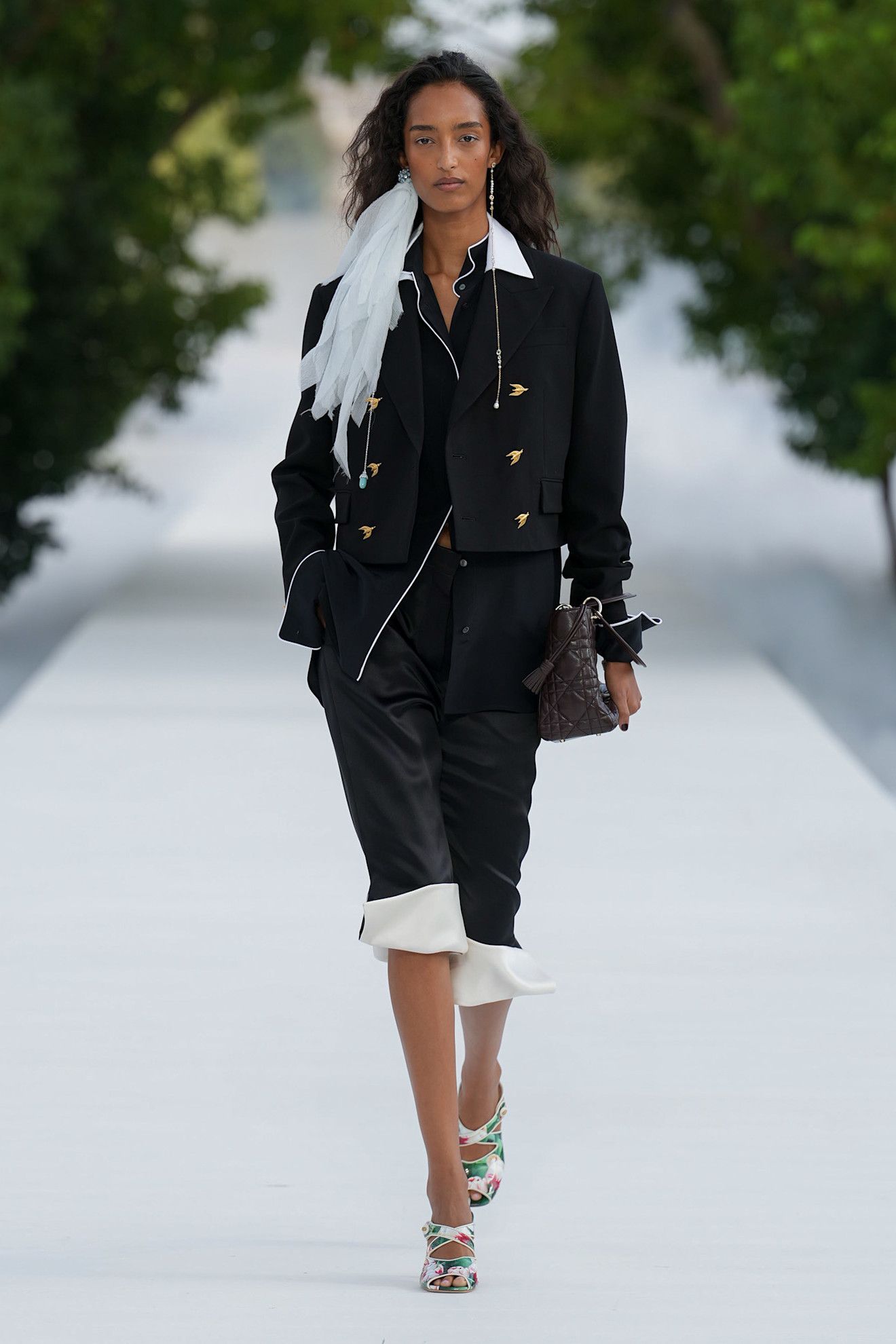
Jonathan Anderson is in a sentimental mood. Since his appointment, the Northern Irish designer has made it clear that, much like his predecessor, he is a designer who creates beautiful pieces for beautiful people. As Christian Dior said, albeit apocryphally, “My dream? To make women happier and more beautiful.”
Under his helm, Dior has returned to a more enchanting and feminine sensibility. Shows are now staged en plein air at the Le Bassin Octogonal in the Jardin des Tuileries; campaigns are shot in verdant parklands; collections are underpinned by a fascination with the natural world, resulting in darling lily pad heels and charming frog minaudières.
For spring/summer 2027, this sartorial green thumb grows more potent as a cluster of camphor trees, enveloped in mist, sets the scene for a collection that reimagines Dior’s archives through an idealised, organic lens. This process began with Anderson stumbling across the traditional Chinese practice of rolling wénwán walnuts, explaining that it “reminded me of how we can find knowledge and preciousness in nature”.
Dior Spring/Summer 2027 Review:
Over 65 looks, the concept of the sublime was mined through two distinct outlooks: a reverence for Dior’s signature motifs that were planted almost 80 years ago and an homage to the Romantic art movement from the late 18th to early 19th centuries, which saw emotion and bucolic landscapes prevail. “The inherent nature of pieces from the archive is articulated in new ways,” Anderson adds in the show notes.
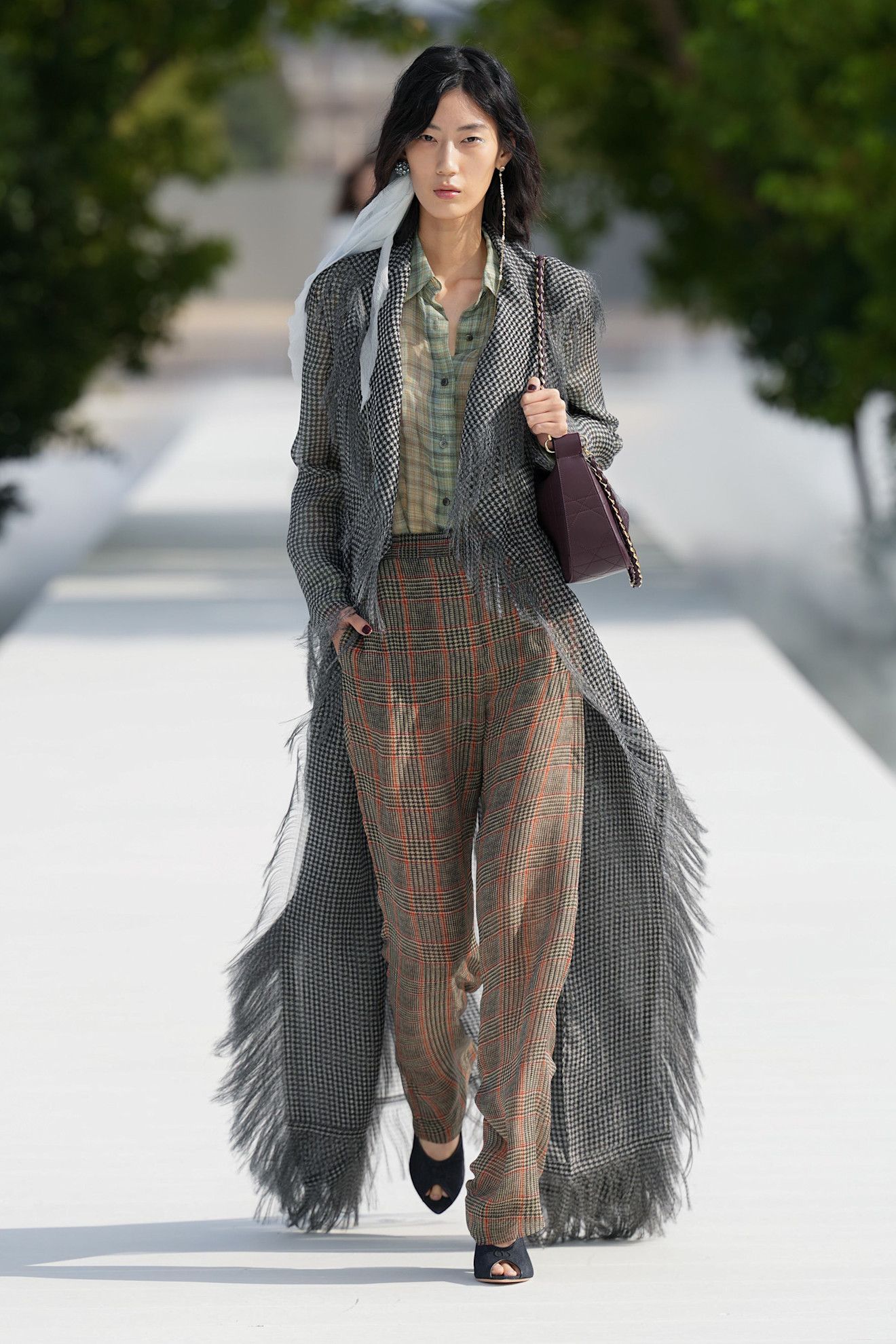
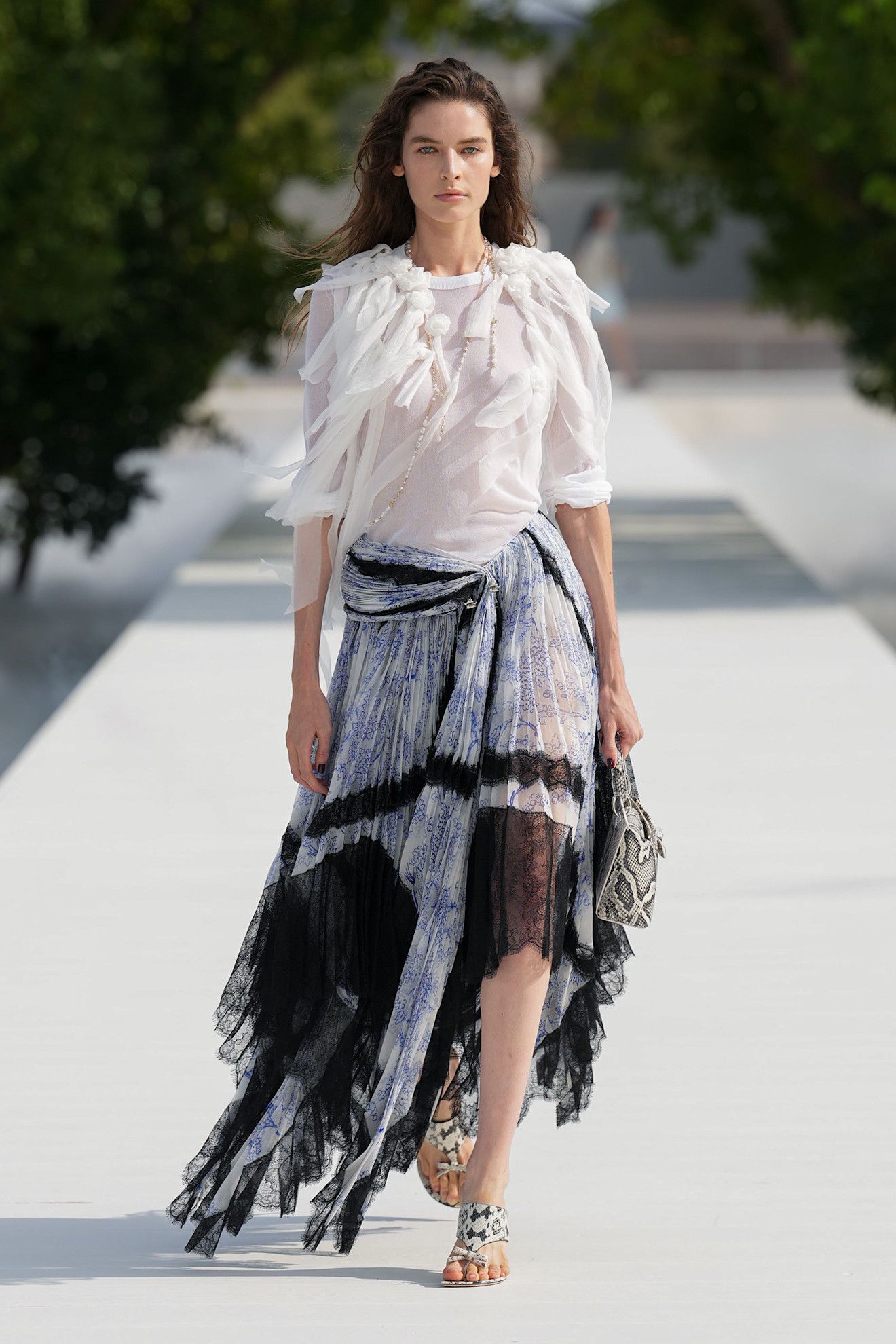
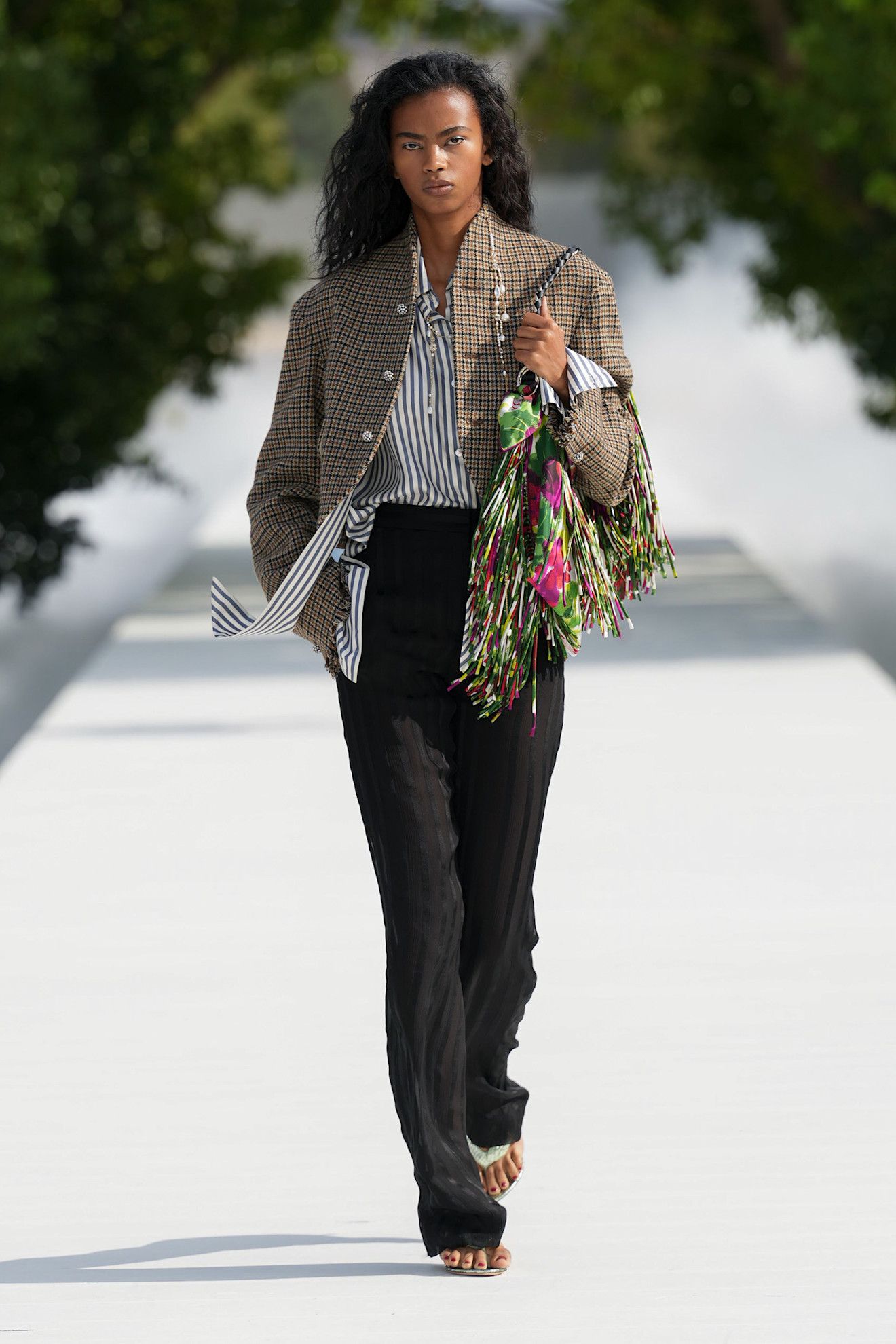
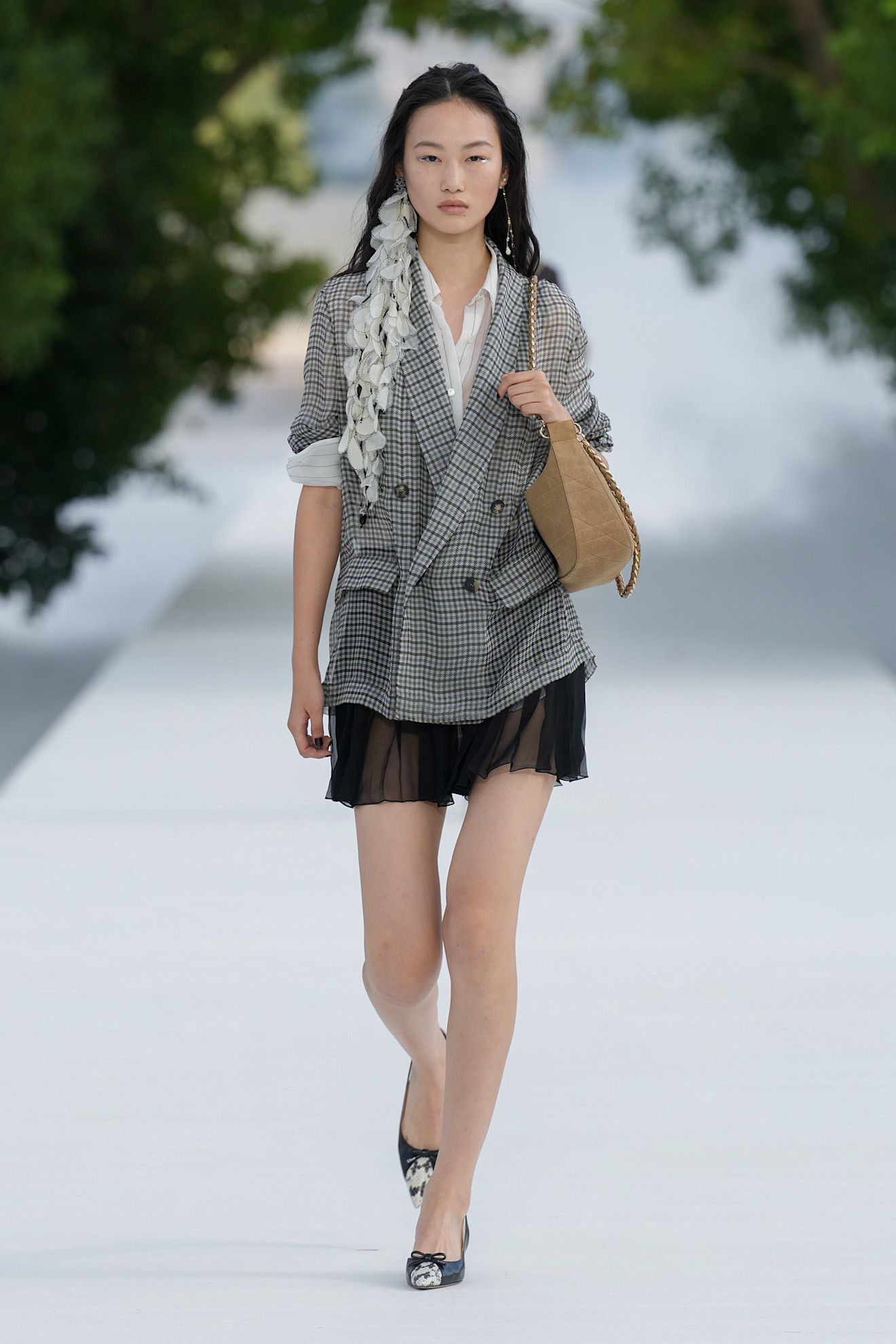
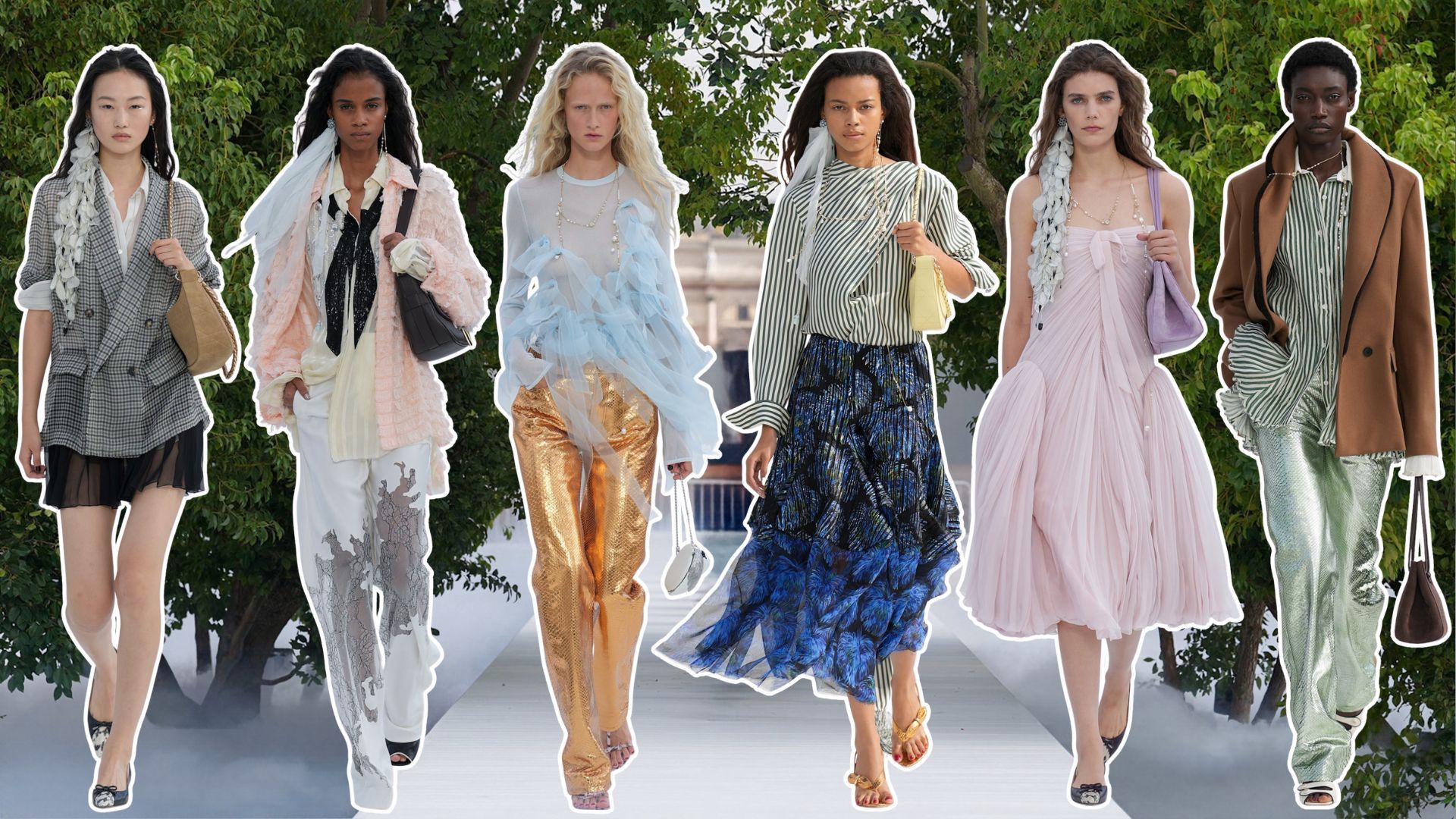
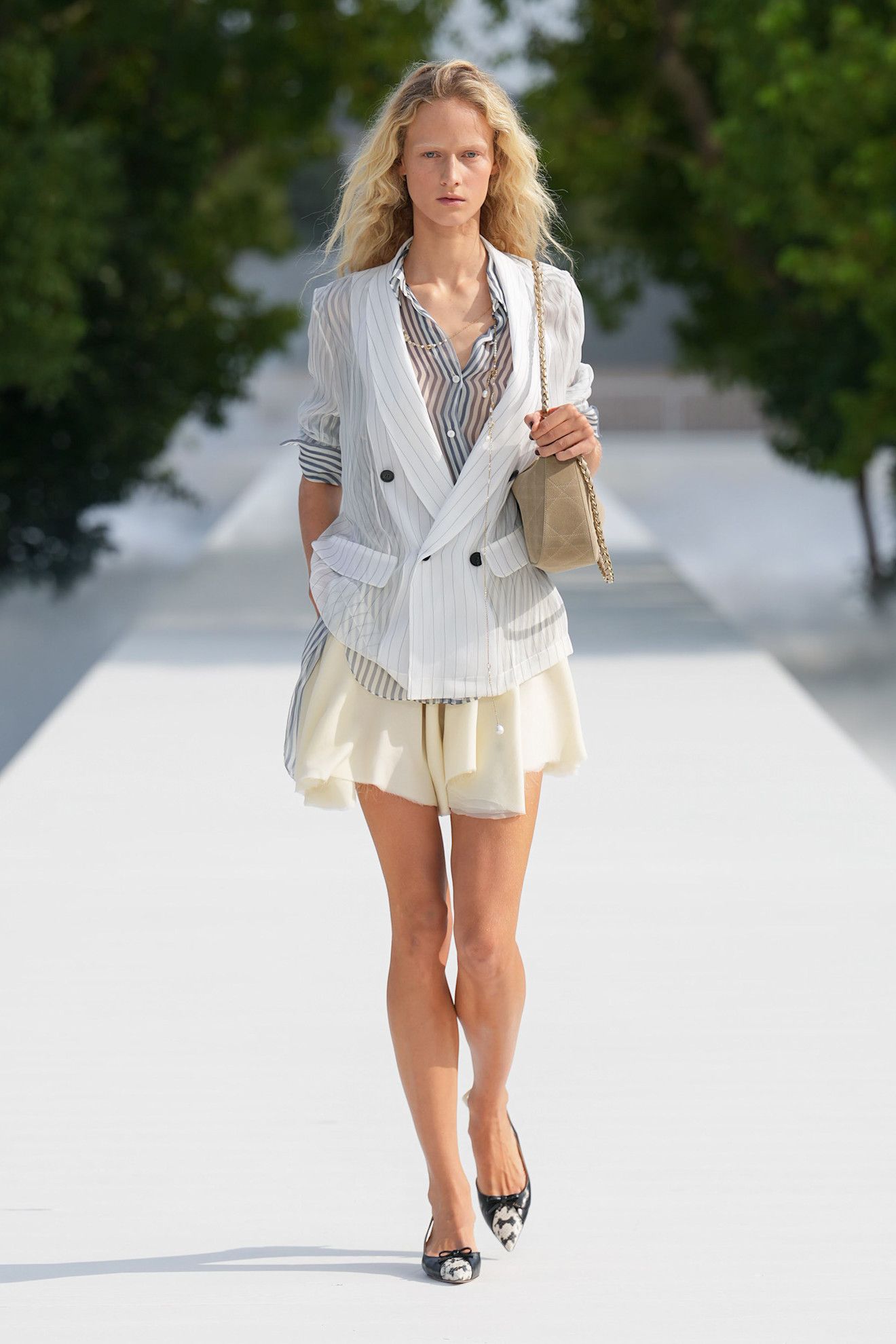
Opening the show, which is already a standout of the Paris Fashion Week schedule, was a slew of pieces that were as diaphanous as the haze that cloaked the pond-like runway. These silhouettes also closed the show, nodding to the ouroboros-like quality of the wildlife that Anderson finds so inspiring. Pieces in pinstripe, tartan and Prince of Wales checks were rendered as light as air. Breathless in their disposition, like Botticelli’s personification of Zephyrus, the West Wind, from his masterpiece Primavera, exhaled life and movement into these styles.
Elsewhere, hand-cut and featherweight petals adorned cropped jackets and mini skirts, evocative in shape of the frou-frou sets seen in his debut collection. Strings that resembled leis hung as earrings from a single ear, continuing this styling note seen in almost all of Anderson’s shows.
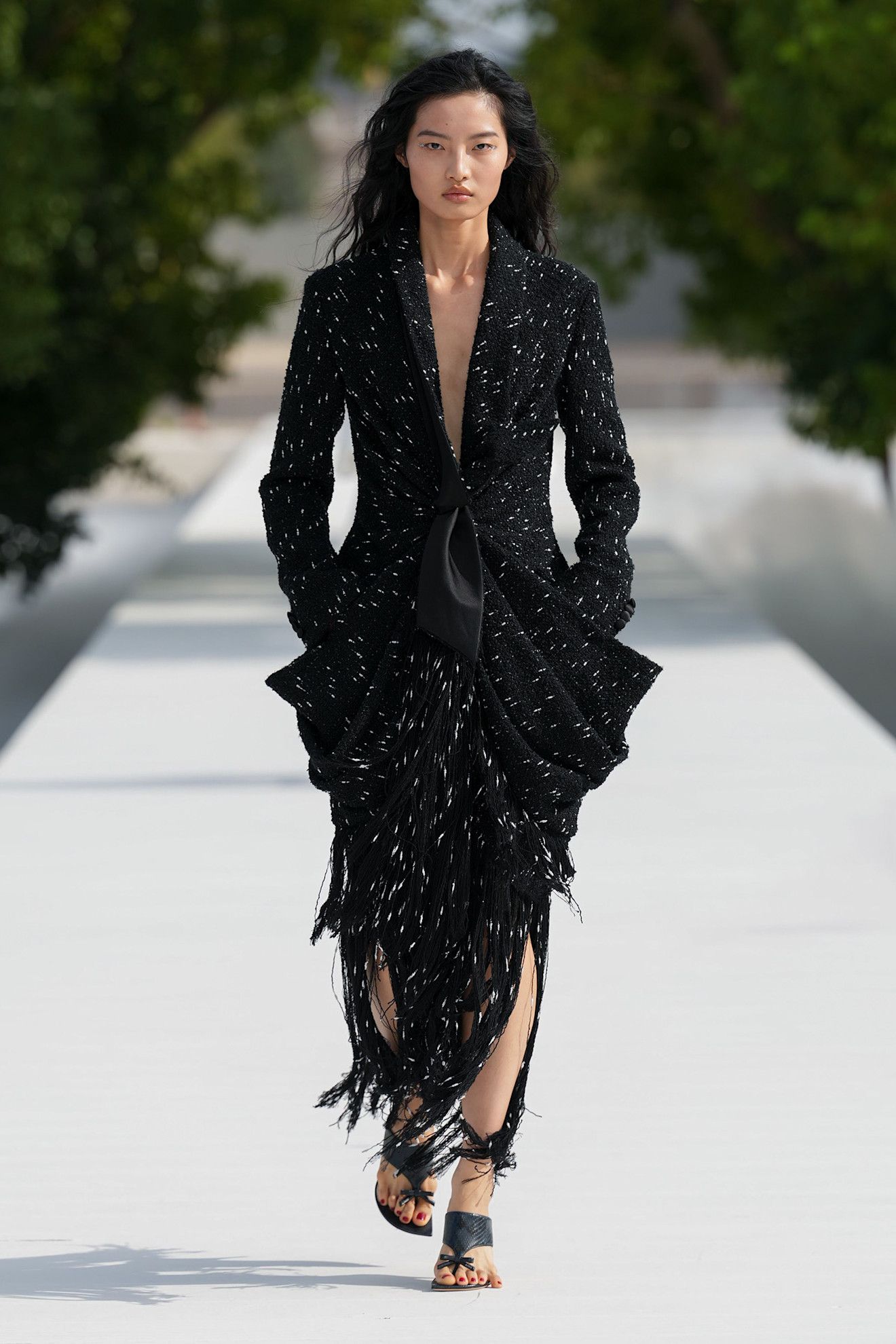
Accessories were particularly prominent throughout, especially as one of the most subversive details came through the fine body chains that dangled down torsos like wired headphones. In the back half of the show, bags were fixed with four-leaf clover motifs or presented as a swan-shaped vanity case. Eagle-eyed fans will also spot the return of the saddle bag on the runway.
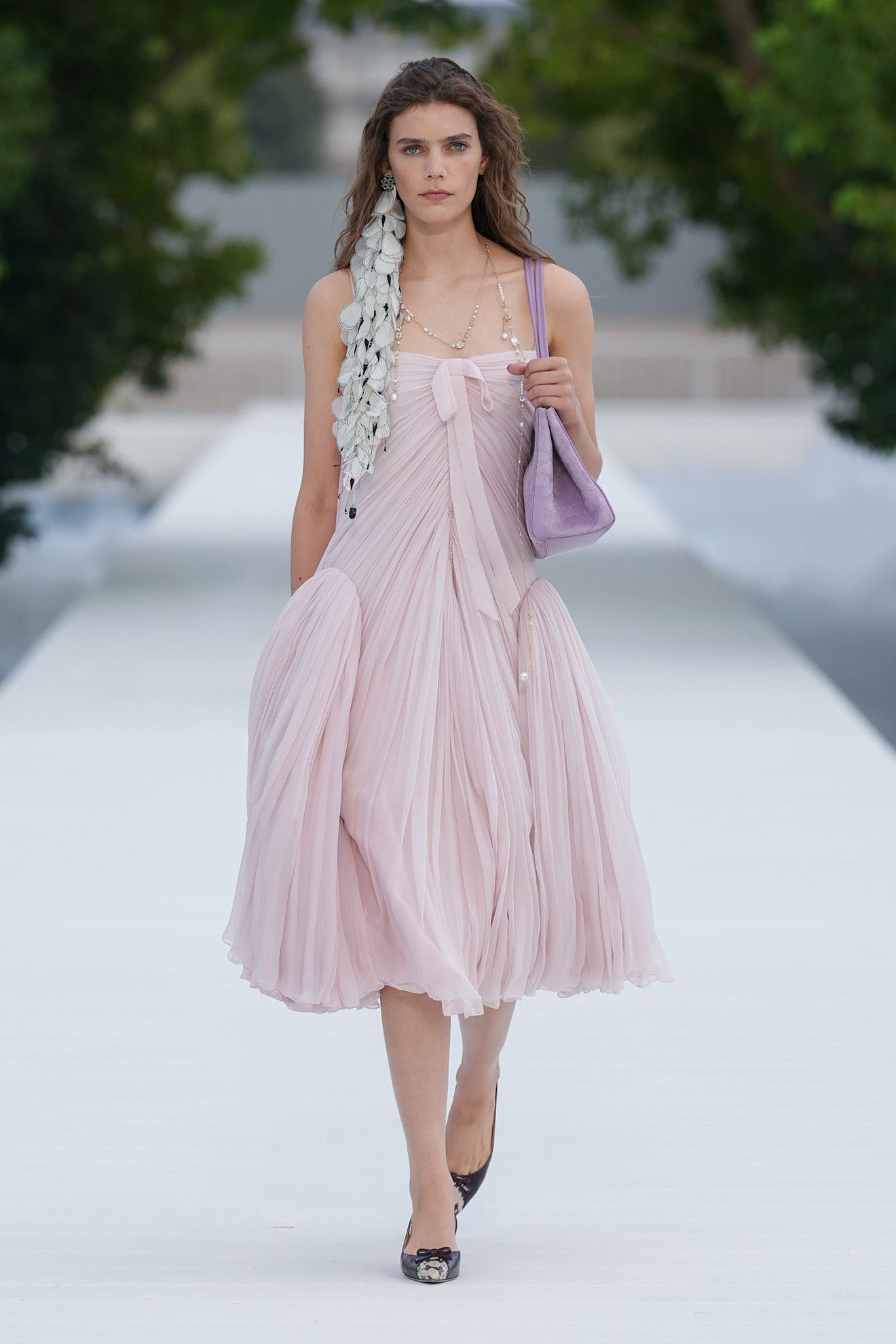
The most remarkable elements, however, were the looks that directly unravelled the past. Several pieces riffed upon Dior’s famous “La Cigale” dress from 1952. Deriving its name from a cicada, the piece itself features soft lines that protrude from the hips at a convex slant. Staying true to its cocktail origins, Anderson’s iteration is made from fairy floss-pink pleated tulle and boasts a strapless neckline.
Additionally, houndstooth, which first appeared cropped up in Dior design lexicon when designing the “English Petticoat” in 1938, appeared in wispy dusters and cropped jackets. You can already see the front row, including Rihanna, Jennifer Lawrence, Anya Taylor-Joy, Greta Lee, Rosalía and Inde Navarrette, clamoring to get their hands on these vintage-inspired shape for their next red carpet.
This act of transparency almost felt like a quiet rebellion, because in these precarious times, clarity isn’t the ultimate antithesis. The show notes summarised this best: “Shifting into a summer sensibility, the collection anticipates a warm breeze: with lightness comes movement.”
1. The Runway