The multihyphenate on her second Fabletics collection, what Pilates rebuilt after her son, and why she stopped explaining herself.
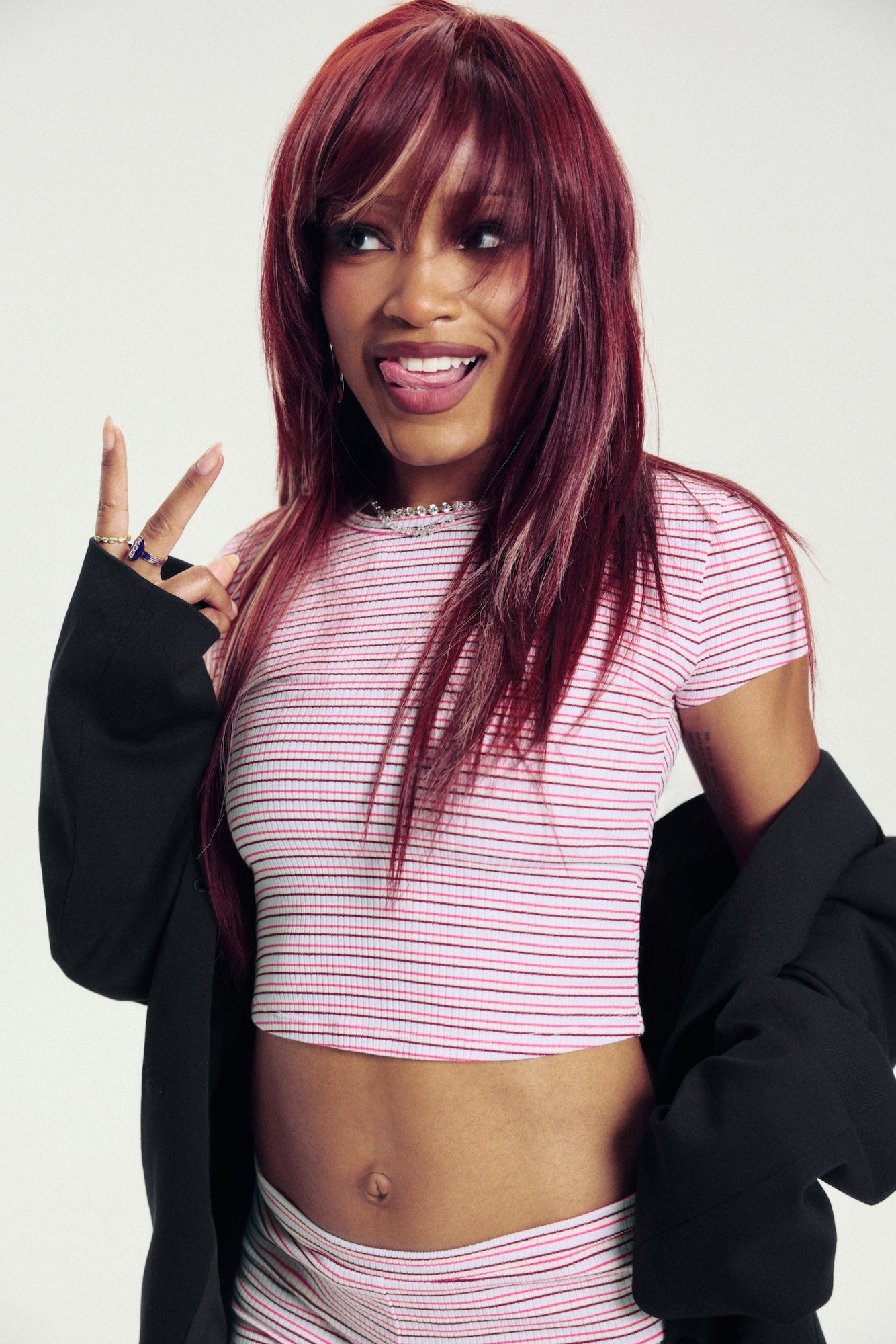
Keke Palmer interviewed Oprah Winfrey last month and she’s still processing it. It’s the first thing I ask her about when we get on the phone in Los Angeles, just after her return from New York, where she’d been doing press for Southern Belle Insults, the Audible series built around her alter ego Lady Miss Jacqueline. There’s a looseness in her voice that suggests she’s finally somewhere she can exhale.
“It’s something that maybe will really be able to be absorbed much after the fact,” she tells me. “I feel somehow connected to it, but I’m so in the moment of it, and I’m trying to just stay so in flow that it’s hard to step outside of it. Which is crazy, because I’m generally quite a zoomed-out person.”
There is a version of this moment that reads as a victory lap, and the résumé supports it: Emmy winner, podcast host with a guest list that now includes the woman who invented the format, certified Pilates instructor, founder of a wellbeing platform, mother, and as of last Friday, a second Fabletics collection. She doesn’t describe any of it that way. She describes being pulled, carried along by something she trusts more than she can currently explain.
What the second year gave back
I spent over a decade as a doula, and there’s a pattern I’ve watched hold across hundreds of mothers: somewhere after a first child turns two, the world reopens, though not into the same world. It comes back narrower and more deliberate, and mothers step into their own lives with a clarity they didn’t have access to before. When I tell her this is what’s happening from the outside, she doesn’t hesitate.
“Kids bring a different level of presence, a different level of intentionality, a different level of no-nonsense to your life that you maybe didn’t have before. With Leo, I think that’s what he’s brought to my life. Pregnancy is no joke. It literally changes you physically and chemically. Coming out on the other side of that, I became a new person. Any of the things that weren’t useful to me anymore, they were easily ridded out, and my time became even more precious. Which are things you’d imagine should always have been the case. But children have a way of putting things into perspective in a way that forces you. So I really do attribute where I am at this point of my life largely to the fact that I became a mother.”
She’s describing subtraction, the quiet removal of everything that wasn’t holding anything up.

The core is an access point
Palmer found Pilates in the wreckage of the fourth trimester, deeply disconnected from her own body and looking for something low-impact, because the idea of walking into a gym or running five miles while still hormonally underwater was more than she could hold. Most people would leave it there, a gentle way back into exercise and nothing more, but not Keke. She fell in love with it, then got certified to teach it.
When I tell her I think Pilates is mostly what happens off the reformer and the mat, she doesn’t just agree, she builds on it, moving through discipline as the practice of principles before arriving at the abdominal muscles that Pilates calls the core, and what they’re actually connected to.
“The core is really just an access point. We have tons of different access points in our bodies. Whether we’re thinking straight up and down, or across, or from our hips to our legs, or across our arms from one side to the other, or the different spinal points. When we start engaging with Pilates in that regard, when we’re actually accessing the core of what it really means to be in alignment, it absolutely changes your posture. It changes the way that you show up. It changes the way you hold your head high. It changes the way you’re able to speak to somebody.”
The core as an access point rather than a goal or an aesthetic or the thing you’re trying to flatten is a real reframe, one that treats the body as something you can enter from any direction. It’s also an accurate description of her career.
Never too much, just early
Palmer grew up watching vaudeville, Judy Garland and Sammy Davis Jr. and Mickey Rooney and Shirley Temple, performers who sang and acted and hosted and made you laugh across a single evening because that’s what the job required. That’s the multihyphenate blueprint she came up on, and everything she’s built since sits on top of it. For a long stretch, that created a legibility problem in an industry that has always preferred a box.
“A lot of people would feel like I didn’t know what I was doing, or I’m losing my way. I’m supposed to be Angela Bassett. I’m supposed to be Brandy. I’m supposed to be this person. And it’s like, I was always just trying to be Keke.”
Twenty-three years into a career that started when she was nine, the useful reframe is that the industry took two decades to build the architecture she’d already been engineering. She spent the first half of her career being told she was too many things at once, and the second half building a body, a practice, and a business where that multiplicity is the structure itself. The rest of us are only now catching up to what she was already doing.

Why this one fits
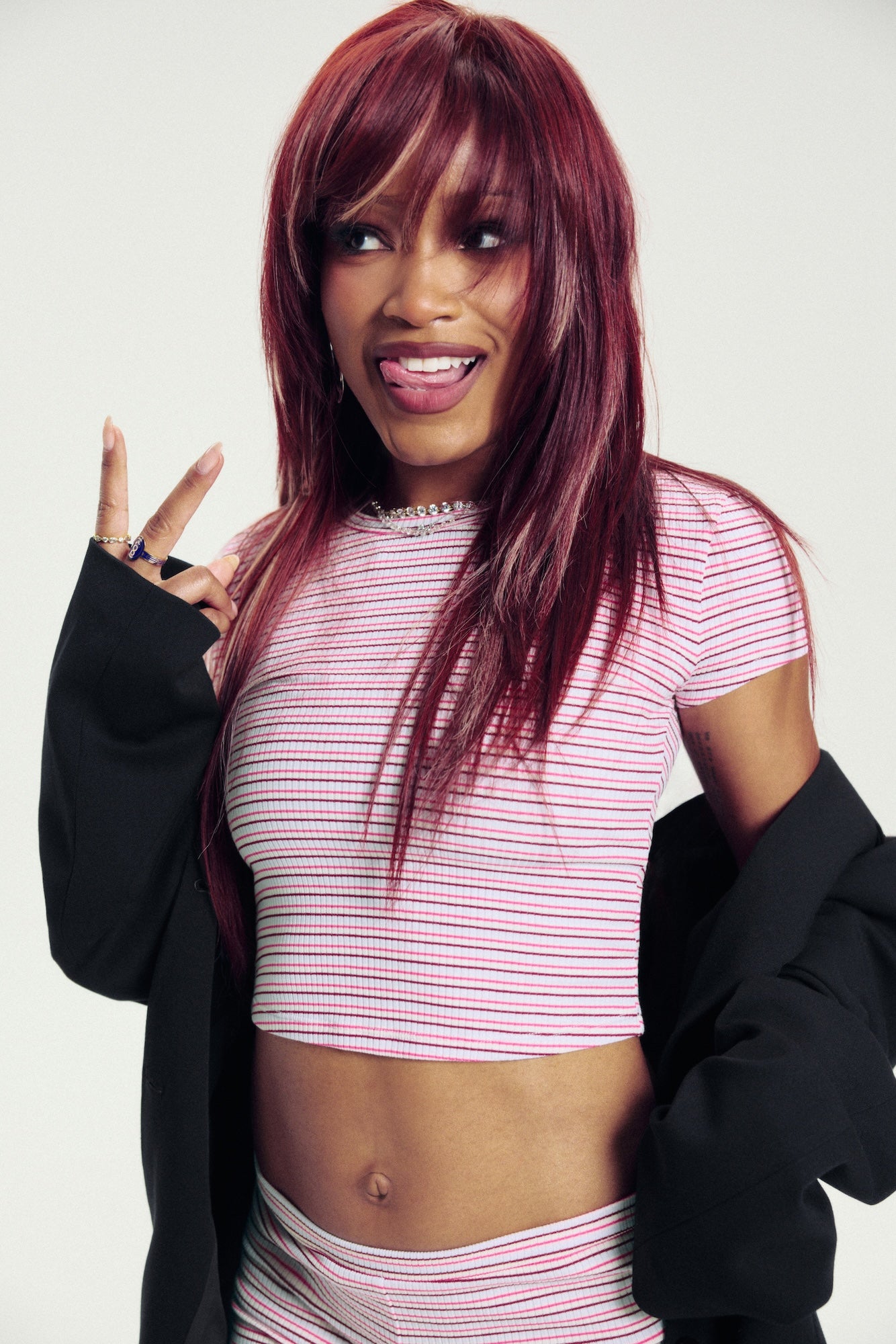
The second Fabletics x Keke Palmer collection lands as more than a follow-up. What sets it apart is the way it reflects the full architecture of Palmer’s life: not a single facet, but the whole of it. In talking about the campaign, she names the identities herself: CEO, mom, Pilates girly, podcast host, and the point is not that she wears many hats, but that this partnership seems to understand she was never meant to be reduced to one.
That recognition is part of what makes the collaboration feel unusually aligned. Palmer speaks warmly about small but telling details, like Fabletics’ bring-your-kids-to-work day, as evidence of a company that has thought seriously about what it means for a woman to show up fully, without partitioning off the different parts of herself.
There is also a larger career arc underneath it. For years, Palmer has moved in a way that outpaced the structures around her, building a career across performance, hosting, audio, entrepreneurship, and now wellness, long before the culture had easy language for that kind of multiplicity. “I had to wait years for those places to exist,” she says. “What I have to offer isn’t too much. It actually fits perfectly.”
That may be what gives this collection its particular charge. It doesn’t feel like a celebrity attachment so much as a brand ecosystem finally catching up to the person at its center.
Palmer is also bringing Practice by Palmer into the launch event, extending the collaboration beyond the clothes and into the kind of communal experience she increasingly wants her work to create.
“It’s not just you buying a product,” she says. “It’s you being a part of a space that we’re sharing together.”
The Fabletics x Keke Palmer collection is available now.
Like what you see? How about some more R29 goodness, right here?